A properly installed and tested medical gas system is the lifeblood of any modern healthcare facility. From delivering life-sustaining oxygen to powering surgical tools, these complex systems are critical for patient care and safety. For hospitals, dental clinics, and surgical centers in Fayetteville, NC, ensuring a medical gas installation meets stringent codes is not just a best practice, it's a legal requirement. This guide provides a definitive overview of the turnkey medical gas installation process, from initial design and planning to final verification, ensuring you understand what it takes to achieve a safe, compliant, and reliable system.
Medical Gas Service
Medical Gas Installation Fayetteville NC: A Turnkey Guide
Medical Testing SolutionsJune 22, 20266 min read
The Critical Role of a Compliant Medical Gas System
Medical gas pipeline systems (MGPS) are a utility unlike any other. Their failure can have immediate and catastrophic consequences for patients. A compliant installation guarantees that medical gases are delivered from the source to the patient at the correct pressure, flow, and purity. Key gases include:
- Oxygen (O2): Used for respiration and life support.
- Medical Air: A purified blend of compressed air used for respiratory applications and to power surgical equipment.
- Nitrous Oxide (N2O): An anesthetic and analgesic agent, commonly used in dental and surgical settings.
- Carbon Dioxide (CO2): Used for insufflation during minimally invasive surgeries.
- Nitrogen (N2): Used to power surgical tools.
- Medical Vacuum: Used to remove fluids and waste from the patient area.
Adherence to the National Fire Protection Association (NFPA) 99 Health Care Facilities Code is the foundation of a safe installation. This code outlines the minimum requirements for the design, installation, inspection, testing, and maintenance of these systems.
Understanding the Medical Gas Installation Process: A Design-Build Approach
A "turnkey" or "design-build" approach offers a streamlined, single-source solution for medical gas installation. This method integrates the design and construction phases under one contract, minimizing risk and improving project delivery. As a provider of turnkey solutions, Medical Testing Solutions (MTS) manages every step.
Initial Consultation and System Design
The process begins with a thorough assessment of the facility's needs. This includes determining the types and quantities of gases required, the number and location of terminal outlets, and the capacity of source equipment. An experienced team will design a system that not only meets current demands but also allows for future expansion.
Sourcing and Selection of Equipment
A turnkey provider can source all necessary components, from high-capacity air compressors and vacuum pumps to manifolds, alarms, and outlets. This ensures all parts of the system are compatible and meet the required specifications outlined in NFPA 99. You can browse our medical gas products to see a catalog of compliant equipment.
The Role of ASSE 6010 Certified Installers
This is the most critical factor. All personnel installing medical gas systems must be credentialed to the American Society of Sanitary Engineering (ASSE) 6010 standard for Medical Gas Systems Installers. This certification ensures installers have been trained and tested on every aspect of the NFPA 99 code, from material handling to installation procedures and brazing techniques.
Piping Installation: The Core of the System
The distribution network consists of medical-grade copper tubing that must be meticulously installed. The pipe must be cleaned for oxygen service, clearly labeled, and routed to prevent damage.
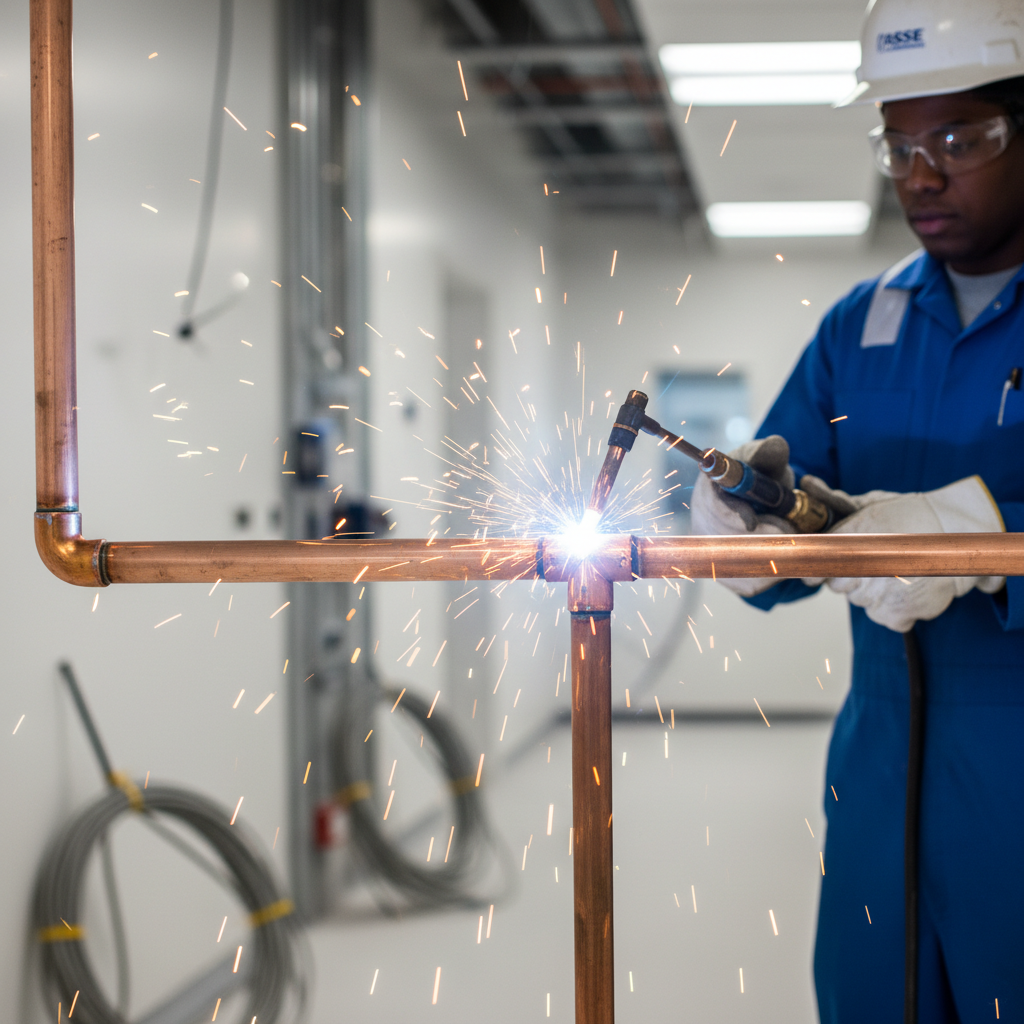
The most critical part of the physical installation is the joining of pipes, which is done through brazing. All brazing must be performed using a nitrogen purge. This inert gas flows through the pipe during brazing to displace oxygen, preventing the formation of harmful copper oxides on the interior surface of the pipe. These oxides could otherwise become dislodged, contaminating the gas stream and posing a significant risk to patients.
Why this matters for compliance: Per NFPA 99, Chapter 5, all brazing procedures must be performed by individuals certified to ASSE 6010 and following a qualified brazing procedure specification. This is non-negotiable for ensuring a leak-free, safe medical gas system that will pass the final verification.
Comparing Medical Gas Piping Standards
NFPA 99 specifies the use of seamless Type K or Type L copper tubing. Understanding the difference is key for planning and budgeting.
| Feature | Type K Copper | Type L Copper | NFPA 99 Guideline |
|---|---|---|---|
| Wall Thickness | Thicker | Thinner | Governs minimum requirements for pressure. |
| Typical Use Case | High-pressure lines (e.g., manifold to source valve) | Main distribution lines within the facility | NFPA 99, 5.1.10.1 specifies materials. |
| Durability | More robust, higher burst pressure | Standard for most medical gas applications | Both must be hard-drawn, seamless, and cleaned for oxygen service. |
| Cost | Higher | Lower | Budgetary consideration in project planning. |
The Verification Process: ASSE 6030 Certification is Essential
An installation is not complete until it has been thoroughly tested and verified by an independent, third-party agency. This process, performed by an ASSE 6030 Certified Medical Gas Verifier, confirms the system is safe for patient use. The verifier cannot be the same company that performed the installation.
The verification includes a battery of tests:
- Initial Pressure Testing: Ensuring the integrity of the piping and that there are no leaks.
- Cross-Connection Testing: Confirming that each gas-specific outlet is connected to the correct gas source.
- Purity and Concentration Analysis: Verifying that a 99% or higher concentration of the correct gas is present at each outlet.
- Alarm and Valve Testing: Ensuring all warning systems and zone valves function as designed.
Medical Testing Solutions is fully certified to perform this crucial medical gas verification service, providing the final documentation needed for your facility to go online.
Why Choose a Licensed, Turnkey Installer in Fayetteville?
Choosing a single, expert partner for your turnkey medical gas installation services simplifies a complex process. The benefits include:
- Single Point of Contact: One team manages the project from design to certification.
- Guaranteed Compliance: An experienced firm is fluent in NFPA, ASSE, and local Fayetteville/North Carolina codes.
- Reduced Risk: Eliminates the errors and miscommunications that can occur when coordinating multiple contractors.
- Ongoing Support: A long-term partner can provide ongoing support through preventive maintenance programs and annual inspections.
Your Partner for Compliant Medical Gas Installation
A compliant medical gas installation is a complex but non-negotiable aspect of healthcare construction and renovation. It demands certified expertise, meticulous attention to detail, and an unwavering commitment to the standards of NFPA 99 and ASSE 6000. Partnering with a proven, turnkey expert removes the guesswork and ensures your facility is equipped with a safe, reliable, and fully compliant system.
Ready to start your medical gas installation project in Fayetteville, NC? Contact Medical Testing Solutions today for a no-obligation quote. Call us at +1 (754) 315-1078 to speak directly with a specialist and ensure your project is done right, the first time. For more information on our credentials, see our medical gas certification page. '''
Frequently Asked Questions
They must hold an ASSE 6010 credential for installation and their brazers must be certified. The company should be licensed, insured, and able to provide or coordinate ASSE 6030 verification services post-installation.
The timeline varies based on project size—from a few weeks for a small clinic renovation to several months for a new hospital wing. A turnkey provider like MTS can give a precise schedule after an initial assessment.
Installation is the physical placement of the pipes, source equipment, and terminals, performed by an ASSE 6010 certified installer. Verification is an independent inspection and testing process, performed by an ASSE 6030 certified verifier, to ensure the system is safe and compliant before patient use.
Yes, with careful planning. We utilize infection control risk assessment (ICRA) protocols to minimize disruption and protect patient safety during renovations and additions in live healthcare environments.
Absolutely. MTS offers true turnkey services in Fayetteville, NC, from initial design and engineering support to hands-on installation by ASSE 6010 personnel and final ASSE 6030 verification. We manage the project from start to finish.
Request a quote for your facility
Talk with Medical Testing Solutions about your next inspection, repair or equipment request.