A properly installed medical gas pipeline system is not a luxury, it's a fundamental requirement for patient safety and regulatory compliance in any healthcare setting. For facilities in Covington, Kentucky, undertaking new construction, renovations, or system upgrades, understanding the complexities of medical gas installation is crucial. An improperly installed system can lead to catastrophic failures, patient harm, and costly shutdowns. This guide provides a definitive overview of the entire process, from initial design and sourcing to the final verification, ensuring your facility meets the stringent requirements of NFPA 99 and ASSE 6000 standards. You will learn about the critical role of ASSE 6010 certified installers, the key stages of a design-build project, and how to choose a qualified partner for your next installation.
Turnkey Medical Gas Installation in Covington KY
What is a Medical Gas Pipeline System (MGPS)?
A Medical Gas Pipeline System (MGPS) is a purpose-built network designed to deliver specific medical gases and vacuum from a central supply source to various patient care points throughout a healthcare facility. It's a life-support system, as critical as electrical power or water. According to the NFPA 99, Health Care Facilities Code, these systems are classified based on risk, with most hospital applications falling under Category 1, where system failure is likely to cause major injury or death to patients or caregivers.
A typical system includes:
- Source Equipment: Bulk tanks, manifolds, medical air compressors, and vacuum pumps.
- Piping Distribution Network: The network of copper piping that transports the gases.
- Station Outlets/Inlets: Connection points in patient rooms, operating suites, and other care areas (e.g., DISS, Ohmeda, Chemetron).
- Valves: Zone and source valves that isolate sections of the system for maintenance or emergencies.
- Alarms: Master and area alarms that monitor system pressure and operational status, as mandated by NFPA 99.
The Critical Role of ASSE 6010 Certified Installers
The most critical factor in a successful MGPS installation is the qualification of the personnel performing the work. The American Society of Sanitary Engineering (ASSE) 6000 series provides the definitive standard for this. An ASSE 6010 Medical Gas Systems Installer certification is a non-negotiable requirement for anyone working on these systems.
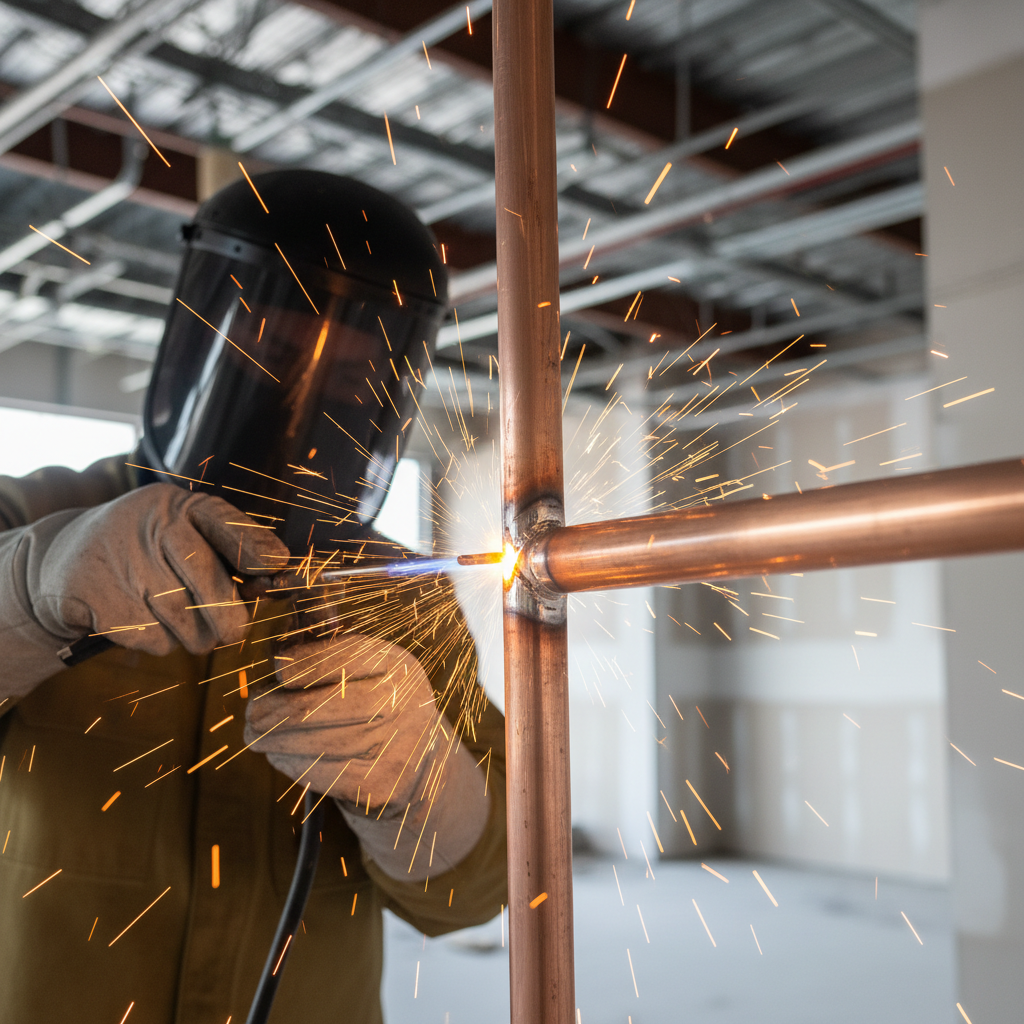
An ASSE 6010 certified installer has been trained and tested on every aspect of system installation, including the highly specialized process of brazing. Brazing, unlike soldering, is a high-temperature process that creates a strong, leak-proof bond in the copper piping. During this process, an inert gas like nitrogen is purged through the pipes to prevent oxidation, which could otherwise introduce harmful contaminants into the system.
Hiring a company that employs credentialed ASSE 6010 installers ensures that every joint, valve, and connection is made in strict accordance with NFPA 99 procedures. At Medical Testing Solutions, our team consists of licensed and insured ASSE 6010 certified brazers who are experts in the field of medical gas installation.
The Design-Build Process for a Turnkey Installation
A turnkey, design-build approach offers a streamlined, single-source solution for medical gas installation, ensuring continuity and accountability from concept to completion. This is the most effective way to manage a project for a Covington-area facility.
Step 1: Initial Consultation and System Design
The process begins with a thorough assessment of your facility's needs. This includes reviewing architectural plans, determining the types and quantities of gases required, and mapping out the locations for outlets and source equipment. An experienced team will design a system that not only meets current demands but also allows for future expansion.
Step 2: Sourcing and Material Selection
All materials and components must be compliant and designed specifically for medical gas use. This includes medically clean, degreased copper tubing (Type K or L), specialized fittings, and source equipment from reputable manufacturers. A turnkey provider like Medical Testing Solutions manages the procurement of all necessary components from our extensive products catalog.
Step 3: Piping Installation and Brazing
This is where certified expertise is paramount. The installation team will run the copper piping according to the design plans. Every joint is meticulously brazed by an ASSE 6010 certified technician following NFPA 99, Section 5.1.10.4 procedures. This includes the critical nitrogen purge to ensure the interior of the pipeline remains free of contaminants.
Why this matters for compliance: NFPA 99 explicitly states that brazing procedures and brazer performance must be qualified. Using uncertified personnel not only voids compliance but also introduces significant risk, as improper brazing can lead to leaks, particulate contamination, and system failure.
Step 4: System Verification and Testing
After the physical installation is complete, the system cannot be put into service until it has been rigorously tested and verified by an independent, third-party ASSE 6030 Medical Gas Verifier. This crucial step is explained in more detail below.
NFPA 99 Compliance: Key Requirements for Covington Facilities
NFPA 99 is the foundational codebook for medical gas systems in the United States. Adherence is mandatory. For an installation project, several key areas are scrutinized.
| NFPA 99 Requirement | Description | Why It's Important |
|---|---|---|
| Piping Material | Type K or L seamless copper tubing, cleaned for oxygen service. | Prevents introduction of contaminants and ensures pipe integrity under pressure. |
| Brazing (5.1.10.4) | Joints must be brazed with a nitrogen purge flowing. | Prevents internal oxidation (scaling) that can contaminate the gas stream and harm patients. |
| System Testing | Includes initial pressure tests, cross-connection tests, and final verification. | Confirms the system is leak-free, outlets are connected to the correct gas, and the system performs as designed. |
| Labeling | All pipes, valves, and outlets must be clearly and correctly labeled. | Prevents tragic errors during use or maintenance. |
Choosing a Medical Gas Installer in Covington, KY
Selecting the right partner is the most important decision you'll make for your project. Use this checklist to vet potential installers:
- ASSE 6010 Certification: Ask for proof of current certification for every individual who will be working on your system.
- Licensing and Insurance: Ensure the company is fully licensed and carries appropriate liability insurance for healthcare construction in Kentucky.
- Turnkey Capabilities: Can they handle the project from design to verification? A single point of contact simplifies complexity and reduces risk.
- Experience: Look for a company with a proven track record of successful installations in facilities similar to yours.
- Verification Services: While verification must be third-party, a company that also offers verification services (through separate, certified personnel) has a deep understanding of the entire compliance lifecycle. Medical Testing Solutions provides both medical gas installation and medical gas verification services.
The Final Step: Independent Medical Gas Verification
Once the installer's work is done, you are legally required to have the entire system verified by a party other than the installer. This must be an individual certified as an ASSE 6030 Medical Gas Verifier.
This verification process, as outlined in NFPA 99, is exhaustive and includes:
- Purity Analysis: Testing each gas for its identity and purity to ensure it meets USP standards.
- Particulate Testing: Ensuring the pipeline is free of construction debris.
- Pressure and Flow Tests: Confirming that all outlets deliver the correct pressure and flow rate.
- Alarm Testing: Verifying that all master and area alarms function correctly.
Only after the system passes every test in the verification process can it receive its final medical gas certification and be cleared for patient use. This ensures the long-term safety and performance of the system and is a prerequisite for maintaining it through services like annual medical gas inspections and a proactive medical gas maintenance plan.
Your Partner for Compliant Installation in Covington
For healthcare facilities in Covington, KY, and the surrounding regions, ensuring a medical gas installation is done right the first time is essential. A compliant, reliable system is a cornerstone of patient safety.
Medical Testing Solutions provides a true turnkey solution, from initial design and consultation to installation by our team of ASSE 6010 certified professionals. We are your trusted partner for ensuring your new or renovated system is built for safety, compliance, and long-term reliability.
Ready to start your project? Contact our team today for a comprehensive quote. Call us at +1 (754) 315-1078 or request a quote online.
Frequently Asked Questions
Request a quote for your facility
Talk with Medical Testing Solutions about your next inspection, repair or equipment request.