A properly installed medical gas system is not a luxury, it's a fundamental component of patient care and a stringent requirement for legal operation. For healthcare facilities in Charlottesville, Virginia, from hospitals to dental clinics, ensuring that medical gas piping is installed correctly is a matter of life and safety. This pillar post serves as a definitive guide to the turnkey medical gas installation process. We will explore the critical codes and standards, the step-by-step design-build process, the non-negotiable qualifications for installers, and the final verification required to bring a system online. You will learn what it takes to achieve a safe, compliant, and reliable medical gas delivery system built for the long term.
Medical Gas Service
Compliance & Standards
Turnkey Medical Gas Installation in Charlottesville, VA
Medical Testing SolutionsJune 22, 20266 min read
What is a Medical Gas Piping System?
A medical gas pipeline system (MGPS) is a network of pipes designed to deliver specific medical-grade gases from a central supply source to various points of use throughout a healthcare facility. It also includes systems for medical vacuum and waste anesthetic gas disposal (WAGD). These systems are as critical to a hospital as its electrical or water supply.
Gases & Systems Covered
- Oxygen (O2): Supports respiration.
- Medical Air (MA): A purified air supply for patient respiration.
- Nitrous Oxide (N2O): Used for anesthesia and analgesia.
- Nitrogen (N2): Powers surgical equipment.
- Carbon Dioxide (CO2): Used for insufflation during surgery.
- Medical Vacuum (VAC): For suctioning and aspiration procedures.
- WAGD: Safely removes exhaled anesthetic gases from operating rooms.
Core Components
The system isn't just pipes. It includes source equipment like manifolds and air compressors, monitoring alarms, zone valve boxes to isolate specific areas, and terminal outlets that connect to patient equipment.
The Critical Role of NFPA 99 and ASSE 6000 Standards
Unlike standard plumbing, medical gas installation is governed by strict, specific codes to ensure patient safety. Two of the most important are NFPA 99 and the ASSE 6000 series.
NFPA 99 (Health Care Facilities Code): This is the master codebook. It establishes the criteria for all levels of health care facilities based on a risk assessment. For medical gas systems, it dictates everything from materials and installation procedures to testing and maintenance. The code outlines requirements for different facility categories (Category 1 being the highest risk, where system failure is likely to cause major injury or death).
ASSE/IAPMO/ANSI Series 6000: This standard sets the professional qualifications for personnel involved with medical gas systems. The key certification for installers is ASSE 6010 Medical Gas Systems Installer. This certification ensures the individual has passed a rigorous exam on the codes and demonstrated practical skill in brazing.
Why this matters for compliance: Failure to adhere to NFPA 99 can result in catastrophic project delays, failed inspections, and significant risks to patient safety. Regulatory bodies like The Joint Commission (TJC), DNV, and the Centers for Medicare & Medicaid Services (CMS) survey facilities for strict compliance with these standards. A non-compliant system will prevent you from opening or operating.
The Design-Build Process for Medical Gas Installation
A turnkey medical gas installation project should follow a meticulous, phased approach from design to final sign-off. As a full-service provider, Medical Testing Solutions manages this entire lifecycle.
- Initial Consultation and System Design: The process begins with assessing the facility's needs. This includes determining the types of gases required, the number and location of outlets, and calculating flow rates to properly size the piping and source equipment. A detailed set of blueprints is then created.
- Material Sourcing: NFPA 99 mandates the use of specific materials. All piping must be seamless Type K or L copper, cleaned for oxygen service and delivered capped and sealed. Brazing filler metals must be BCuP series, which are free of cadmium and other toxic materials.
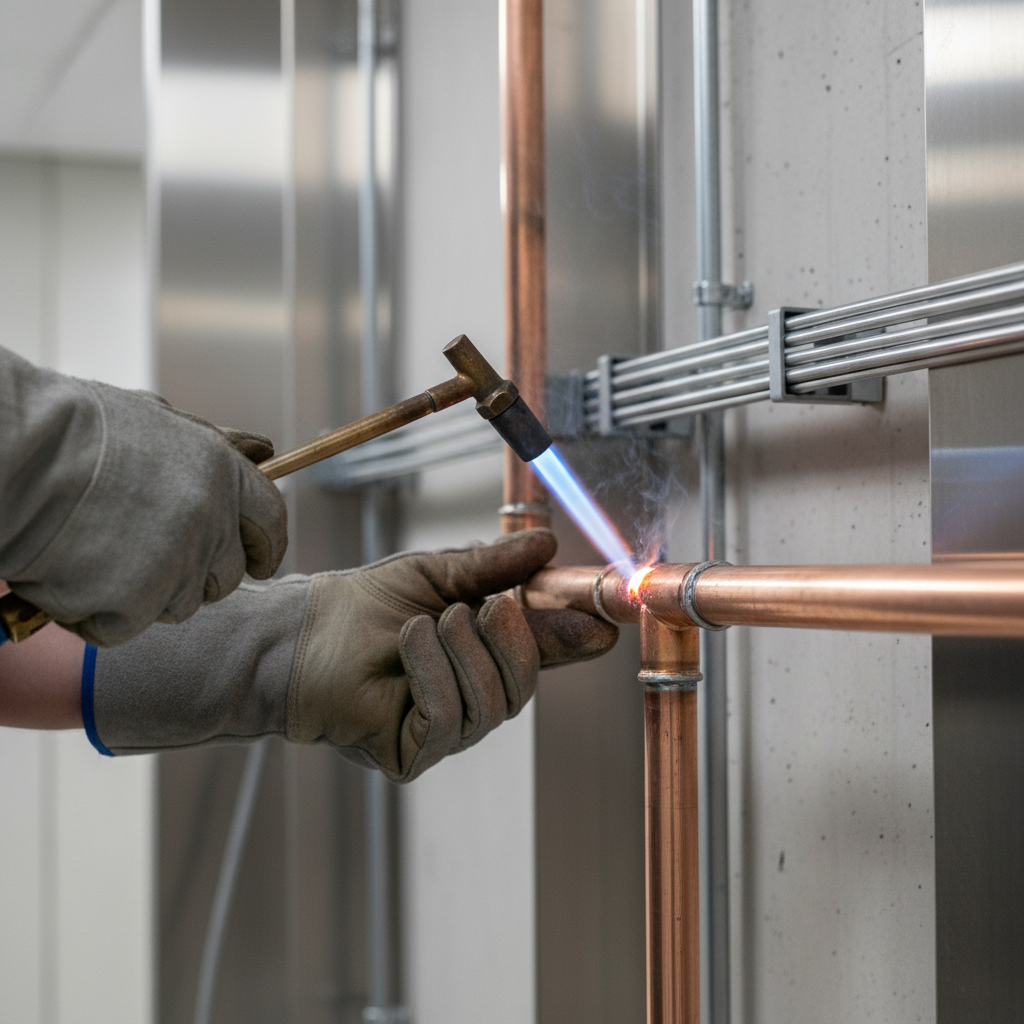
- Installation & Brazing by ASSE 6010 Technicians: Certified installers cut, fit, and join the copper piping. The most critical step here is brazing. Per NFPA 99, all brazing must be performed while continuously purging the interior of the pipe with oil-free, dry nitrogen. This prevents the formation of toxic black copper oxide on the inside of the pipe, which could otherwise be flake off and delivered to a patient.
- Initial Installer Testing: Throughout the installation, the installer performs their own tests, including an initial pressure test to check the integrity of the brazed joints before the walls are closed up.
- Final Verification by an ASSE 6030 Verifier: This is the final, mandatory step before the system can be used. It must be performed by a third-party agency (not the installer) whose personnel are certified to the ASSE 6030 Medical Gas Verifier standard.
Installer Qualifications: ASSE 6010 Certified vs. Standard Plumber
One of the most dangerous mistakes a facility can make is hiring a standard, uncertified plumber for medical gas work. The skills are not transferable, and the risks are immense. Medical Testing Solutions exclusively uses ASSE 6010 certified installers for all projects.
| Feature | ASSE 6010 Certified Installer | Standard Plumber |
|---|---|---|
| Governing Code | Expert in NFPA 99, CGA, & ASSE 6000 | Local building/plumbing codes |
| Brazing Technique | Mandatory nitrogen purge, BCuP filler | Typically uses soft solder or fluxes; no nitrogen purge |
| Materials | Uses specific ASTM B819 cleaned copper | Uses standard copper pipe, not cleaned for oxygen |
| Certification | Requires 32-hour training course, written exam, and practical brazing exam (ASSE 6010) | Standard plumbing license |
| Focus | Patient life safety, system purity, and code compliance | Potable water, drainage, and waste systems |
| Final Goal | A system that passes a rigorous ASSE 6030 verification | A system that holds water pressure |
The Final Step: ASSE 6030 Medical Gas Verification
The Medical Gas Verification process is the quality control check that ensures the installer has done their job correctly and the system is safe for patient use. An ASSE 6030 verifier, such as the team at MTS, performs a battery of over 20 detailed tests, including:
- Purity Tests: Ensuring each gas is the correct gas and is free from contaminants.
- Particulate Tests: Checking that the system is free from construction debris.
- Pressure & Flow Tests: Confirming the system operates at the correct pressures and can deliver the required gas volume.
- Alarm Testing: Verifying that all master and area alarms function correctly.
- Labeling and Component Checks: Ensuring all pipes, valves, and outlets are labeled correctly.
Only after passing this comprehensive inspection can the facility receive its official medical gas certification and connect patients to the system.
Your Turnkey Installation Partner in Charlottesville
For healthcare facilities in Charlottesville and the surrounding areas, navigating the complexities of medical gas installation requires a partner with proven expertise and end-to-end capabilities. Medical Testing Solutions offers a true turnkey service. Our team of ASSE 6010 installers can design and build your system from the ground up, ensuring compliance at every step. Because we also have a team of ASSE 6030 verifiers, we build systems designed to pass verification the first time, saving you time and money.
Beyond the initial installation and verification, we provide a full suite of lifecycle services, including annual medical gas inspections and preventative maintenance services to keep your facility safe and compliant for years to come.
Frequently Asked Questions
The cost varies significantly based on the project's scope, the size of the facility, the number and types of gases, and whether it's a new build or a renovation. The only way to get an accurate number is to request a quote for your specific project.
Installation is the physical act of building and assembling the pipeline system, performed by an ASSE 6010 installer. Verification is the final testing and inspection process performed by a separate, independent ASSE 6030 verifier to certify that the system is safe and code-compliant.
This depends entirely on the project scale. A small dental office renovation might take a few days, while a new hospital wing could take several months.
Yes. While the state may have plumbing licensure, for medical gas, the industry and regulatory standard requires installers to be certified to the ASSE 6010 standard to ensure they are competent to work under NFPA 99.
Absolutely not, unless they hold a current ASSE 6010 certification and have specific experience with NFPA 99 requirements. Using an unqualified plumber is a major safety risk and will result in a failed verification.
Request a quote for your facility
Talk with Medical Testing Solutions about your next inspection, repair or equipment request.