Proper medical gas installation is the bedrock of patient safety in any healthcare setting, from a major hospital to a local dental clinic. These systems are a life-sustaining utility, delivering everything from oxygen to surgical air. For facility managers and construction specifiers in Charleston, SC, ensuring a new or renovated medical gas system is designed and installed correctly isn't just a best practice, it's a stringent legal and ethical requirement governed by national codes. This definitive guide explains the entire turnkey medical gas installation process, from initial design and engineering to the final verification. You will learn about the critical codes, the steps involved, how to compare installation models, and what to look for in a certified installation partner to ensure your system is compliant, safe, and reliable from day one.
Turnkey Medical Gas Installation in Charleston, SC
What is a Medical Gas Piping System?
A medical gas piping system is a complex, centralized network designed to deliver specific, high-purity gases and vacuums safely and reliably to various patient care areas within a healthcare facility. Unlike standard plumbing, these systems are subject to exacting standards because their failure can have immediate and catastrophic consequences.
Gases and Vacuums Involved
Common gases distributed through these systems include:
- Oxygen: Used for respiration and life support.
- Medical Air: A purified, compressed air source for patient respiration and powering surgical tools.
- Nitrous Oxide: An anesthetic and analgesic agent, commonly used in dental and minor surgical procedures.
- Carbon Dioxide: Used for insufflation during minimally invasive surgeries.
- Nitrogen: Powers surgical tools and equipment.
- Medical Vacuum: Used to remove fluids and materials from the patient area.
Key System Components
- Source Equipment: Includes bulk oxygen tanks, air compressors, vacuum pumps, and manifolds for cylinder gases.
- Piping Network: The core of the system, typically made of special seamless copper tubing (ASTM B819) that must be meticulously cleaned and installed.
- Valves & Zone Boxes: Sectional shut-off valves that allow for isolation of specific areas for maintenance or emergencies.
- Outlets/Inlets: Station outlets at patient bedsides and in operating rooms where equipment is connected.
- Alarms: Master and area alarm panels that monitor system pressure and operational status, as required by NFPA 99.
The Medical Gas Installation Process: A Step-by-Step Guide
A compliant medical gas installation is a highly sequenced, multi-stage process that requires meticulous attention to detail and certified expertise. It flows from design and planning through physical build-out to final, independent verification.
- Design and Engineering: The process begins with a detailed engineering plan. This involves calculating the facility's peak gas demand, sizing pipes and source equipment accordingly, and creating construction documents that map out the entire piping network in compliance with NFPA 99 requirements.
- Sourcing Compliant Materials: All materials must meet strict specifications. This primarily involves using ASTM B819 seamless copper medical gas tubing, which is delivered cleaned, capped, and bagged to ensure no contaminants enter the system.
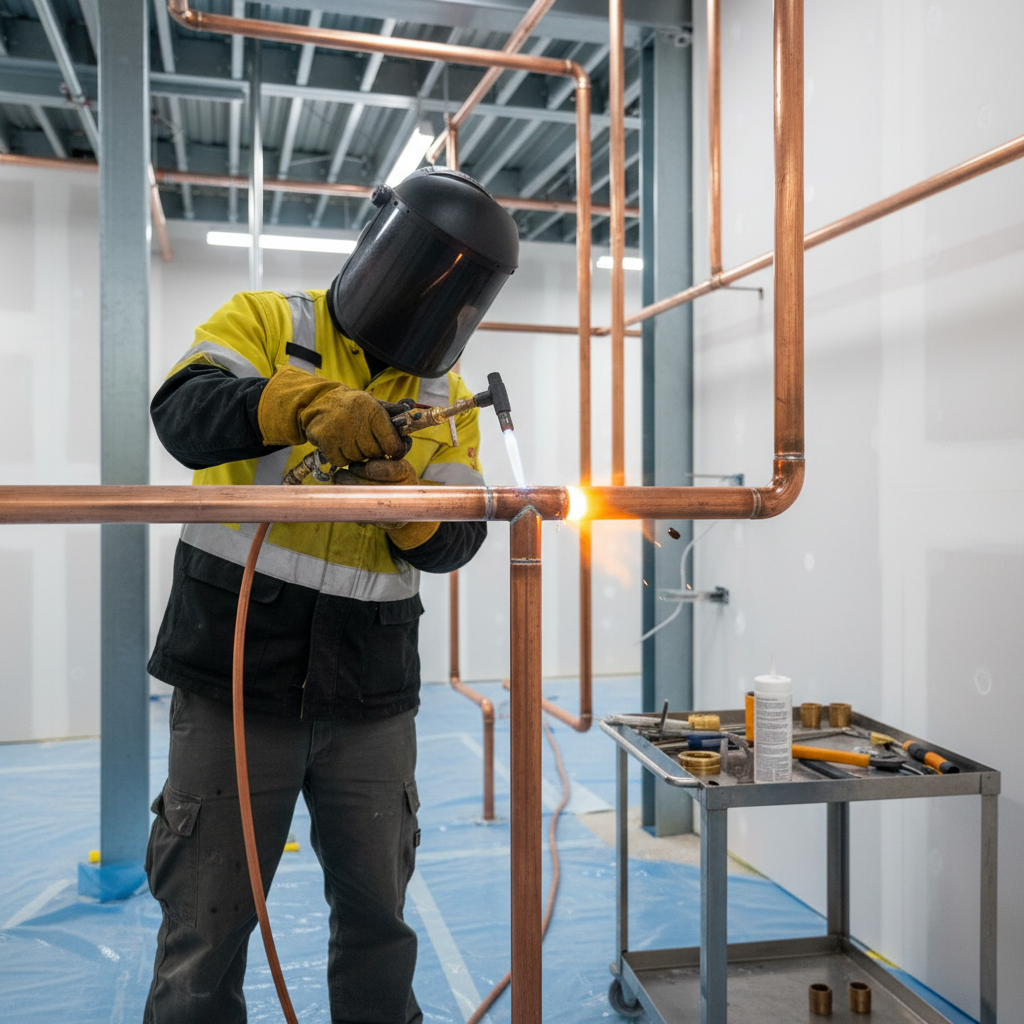
- Piping Installation & Brazing: This is the most critical hands-on phase. All joints in a medical gas system must be brazed, not soldered. This high-temperature process creates a strong, permanent bond. Crucially, it must be performed by an ASSE 6010 Certified Medical Gas Systems Installer who is trained to braze the joints while purging them with inert nitrogen gas to prevent oxidation inside the pipe.
- Initial Pressure Testing: Once a section of piping is installed, the installer performs initial pressure tests to check for leaks at the joints. This is a preliminary quality control step before the final, more rigorous verification.
- System Verification: After the entire system is installed and pressure-tested by the installer, a separate, independent ASSE 6030 Certified Medical Gas Systems Verifier must inspect and test the system. This third-party validation is non-negotiable and a core requirement of NFPA 99. The verifier confirms pipe purity, cross-connection, pressures, flows, and alarm functionality. Medical Testing Solutions provides comprehensive medical gas verification services to ensure your new system is 100% compliant.
- Final Connection and Commissioning: Only after the system has passed verification can it be connected to the source equipment and put into service for patient use.
Critical Codes and Standards: Staying Compliant in South Carolina
Adherence to established codes is mandatory for any medical gas installation. These standards are not suggestions; they are the framework for ensuring patient safety and facility accreditation.
NFPA 99: Health Care Facilities Code
This is the master code governing all aspects of medical gas and vacuum systems in the United States. It outlines the minimum requirements for the design, installation, inspection, testing, and maintenance of these systems. Any medical gas project in Charleston, SC must strictly follow NFPA 99.
Why this matters for compliance: Failure to comply with NFPA 99 can result in loss of facility accreditation from organizations like The Joint Commission, legal liability in the event of an accident, and most importantly, severe risks to patient safety. An ASSE 6010 installer builds the system to these exact specifications.
ASSE 6000 Series: Personnel Certifications
The American Society of Sanitary Engineering (ASSE) 6000 series provides consensus standards for the training and certification of individuals working with medical gas systems. Key certifications include:
- ASSE 6010 Medical Gas Systems Installer: Certification for the technicians physically building the system, including the critical brazing process.
- ASSE 6030 Medical Gas Systems Verifier: Certification for the independent third-party inspector who validates the installer's work and certifies the system for patient use.
- ASSE 6040 Medical Gas Systems Maintenance Personnel: Certification for technicians who perform ongoing maintenance and repairs.
Design-Build vs. Traditional Bid-Build: A Comparison
When planning a new medical gas installation, facilities in Charleston can choose between two primary project delivery models. A design-build approach, like the one offered by Medical Testing Solutions, often provides significant advantages.
| Feature | Traditional (Bid-Build) | Turnkey (Design-Build) |
|---|---|---|
| Accountability | Multiple points of contact (designer, engineer, installer). Can lead to finger-pointing. | Single point of accountability. The design-build firm owns the entire project from start to finish. |
| Timeline | Sequential process. Design must be complete before bidding and then installation can begin. | Overlapping phases. Design and procurement can happen concurrently, often shortening the project timeline. |
| Communication | Fragmented. The facility owner manages communication between the designer and the installer. | Streamlined. One primary contact for all questions, changes, and updates. |
| Cost Management | Can have unforeseen costs from change orders if design conflicts arise during construction. | Costs are generally more predictable. The design-builder has a better handle on the complete picture. |
Choosing Your Medical Gas Installer in Charleston, SC
Selecting the right partner is the most important decision you'll make for your medical gas project. A subpar installation can lead to costly rework, project delays, and long-term safety risks. Look for a partner with these qualifications:
- Current ASSE 6010 Certification: Ask to see the credentials for every technician who will be working on your project. This is non-negotiable.
- Verifiable Experience: They should have a portfolio of successful installations in South Carolina healthcare facilities of similar size and scope.
- Turnkey Capabilities: A firm that can manage the project from design through final verification offers a more streamlined and accountable process.
- Deep NFPA 99 Knowledge: They should be able to answer specific questions about code requirements and how they apply to your project.
- Comprehensive Support: Look for a company that also offers long-term services like annual medical gas inspections and a preventative medical gas maintenance plan.
Medical Testing Solutions is a leading provider of turnkey medical gas installation services in Charleston and across the Southeast, with a fully certified team of ASSE 6010 installers and design-build expertise.
Your Partner for Compliant Medical Gas Systems in Charleston
From new construction at a major medical center to a renovation at a dental surgery clinic, every medical gas installation demands precision, expertise, and a deep commitment to regulatory compliance. Ensuring your system is installed by certified professionals isn't just about following the rules, it's about protecting the lives that depend on it.
If you are planning a project in the Charleston, SC area, you need a partner with the proven expertise to deliver a safe, reliable, and fully compliant system. Contact the team at Medical Testing Solutions today for a consultation and a comprehensive quote.
Call us at +1 (754) 315-1078 or request a quote online to get started.
Frequently Asked Questions
Request a quote for your facility
Talk with Medical Testing Solutions about your next inspection, repair or equipment request.