Licensed Medical Gas Contractor in Virginia Beach, VA: Your Complete Guide
Medical Testing SolutionsJune 24, 20268 min read
Share
In a healthcare setting, the systems delivering oxygen, nitrous oxide, medical air, and other gases are as critical as the electrical power or water supply. These medical gas systems are a literal lifeline for patients. Consequently, the individuals and companies that install, inspect, verify, and maintain them, medical gas contractors, must be held to the highest standards of competency and safety. For healthcare facilities in Virginia Beach, selecting the right contractor is a crucial decision that impacts patient safety, compliance, and operational integrity.
This comprehensive guide explains the role of a medical gas contractor, the essential services they provide, the critical standards they must follow, and how to choose the right partner for your facility in the Hampton Roads area. We will cover the specific ASSE certifications required for this work and explain how these qualifications directly relate to the mandates of NFPA 99, the Health Care Facilities Code.
What is a Medical Gas Contractor (and Why You Need a Certified One)?
A medical gas contractor is a specialized professional or company responsible for the construction, modification, and upkeep of the piped medical gas and vacuum systems in a healthcare facility. This is not a job for a standard plumber or HVAC technician. Due to the life-sustaining nature of these systems, the work requires extensive, specialized knowledge of unique materials, processes, and safety protocols.
A non-certified individual performing this work poses a significant risk. A single improperly brazed joint, a minuscule leak, or a cross-connection between gas lines can have catastrophic consequences, including patient injury or death. This is why certification is not just a best practice; it's a necessity for ensuring that work is performed safely and correctly according to nationally recognized standards.
The primary framework for personnel certification is the ASSE (American Society of Sanitary Engineering) 6000 series. An ASSE-certified professional has undergone rigorous training and passed a comprehensive exam, proving their expertise in the specific requirements of medical gas systems.
The Core Services: Installation, Verification, and Maintenance
The lifecycle of a medical gas system involves several distinct phases, each requiring a specific skill set and, often, a specific ASSE certification. A comprehensive medical gas contractor like Medical Testing Solutions can manage this entire lifecycle, providing a single point of responsibility for your facility.
ASSE 6010 Medical Gas Systems Installer
A certified ASSE 6010 Installer is qualified to perform the initial installation of medical gas and vacuum systems. This includes laying the copper piping, brazing joints (a specialized-skill that must be performed under a nitrogen purge), and installing key components like source equipment (manifolds, air compressors, vacuum pumps), alarms, zone valve boxes, and station outlets/inlets. Every step of the medical gas installation process must be performed with meticulous attention to detail to prevent leaks, contamination, or system failures.
ASSE 6030 Medical Gas Systems Verifier
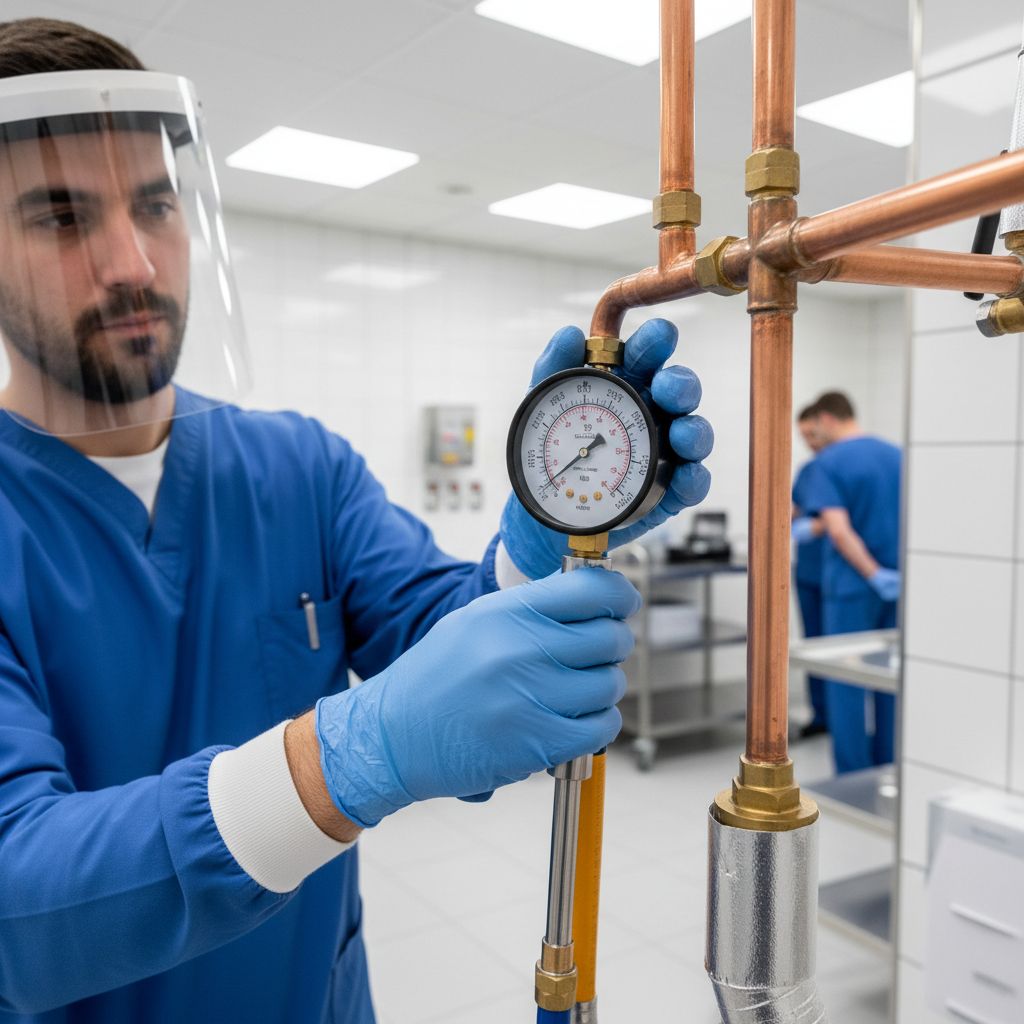
After a new system is installed or an existing one is modified, it cannot be used until it has been independently verified by an ASSE 6030 Verifier. This is a critical, unbiased check to ensure the system is safe for patient use. The verification process is exhaustive and includes tests for cross-connections, purity, pressure, flow, and alarm functionality. An ASSE 6030 Verifier acts as a third-party inspector, providing the final stamp of approval that the installer's work meets all NFPA 99 requirements. Learn more about the rigorous process of medical gas verification.
ASSE 6040 Medical Gas Systems Maintenance Personnel
Medical gas systems require ongoing care. An ASSE 6040 Maintenance specialist is trained to service and repair existing systems, including source equipment, alarms, and pipelines. Regular medical gas maintenance services are essential for preventing unexpected shutdowns, ensuring longevity, and maintaining compliance. This includes tasks like replacing compressor piston rings, calibrating pressure switches, and performing scheduled checks on all system components.
Decoding the Alphabet Soup: NFPA 99 and ASSE 6000 Standards
For facility managers, understanding the key codes and standards is vital. The two most important pillars are NFPA 99 and the ASSE 6000 series.
NFPA 99 (Health Care Facilities Code): This is the foundational rulebook. It provides the minimum criteria for the design, performance, installation, testing, and safety of all systems in a healthcare environment, including medical gas and vacuum. NFPA 99 explicitly mandates that individuals performing installation, verification, or maintenance be certified to the appropriate ASSE 6000 standard.
ASSE 6000 Series: This is the personnel standard. It defines the qualifications and knowledge base required for individuals working on these critical systems. Think of it this way: NFPA 99 sets the rules, and the ASSE 6000 series ensures the people know how to follow them.
Why this matters for compliance: The Joint Commission, CMS, and other accrediting bodies survey for compliance with NFPA 99. If they find that work was performed by uncertified individuals, or that required verification was skipped, your facility could face significant penalties, loss of accreditation, or be forced to shut down the involved systems.
For ongoing upkeep and repair of existing, previously verified systems.
How to Choose the Right Medical Gas Contractor in Virginia Beach
Selecting a partner for this critical work should be a careful, deliberate process. Use this checklist to vet potential contractors:
1. Verify Current ASSE Certifications: Ask to see the individual credentials for the specific people who will be performing the work. A company brochure isn't enough. Confirm the certification is current and for the correct standard (6010 for install, 6030 for verification, etc.).
2. Confirm They Are Licensed and Insured in Virginia: The contractor must carry the appropriate licenses to work in Virginia Beach and have adequate liability insurance. Don't be afraid to ask for their certificate of insurance.
3. Ask for References: Request contact information for 2-3 similar facilities in the Hampton Roads area where they have recently performed work. A reputable contractor will be proud to share their references.
4. Review Their Project History: Do they have experience with the type of project you have? A new hospital wing is very different from a small dental sedation upgrade. Ensure their experience aligns with your needs.
5. Ensure They Offer Comprehensive Services: Partnering with a firm that can handle installation, verification, maintenance, and medical gas certification under one roof simplifies project management and accountability. It ensures a consistent level of quality from start to finish.
Common Medical Gas System Deficiencies Found in Virginia Beach Facilities
Our experience in Virginia and across the country has shown us common points of failure, often stemming from work done by unqualified individuals. Regular inspections and working with a certified contractor can prevent these issues:
Improper Labeling: Outlet stations, zone valve boxes, and main lines must be clearly and correctly labeled with the gas name and pressure. This is a common and easily avoidable citation.
Leaking Outlets: Over time, the seals and gaskets in wall outlets (e.g., Ohmeda, Chemetron, DISS) can degrade, causing small but costly leaks of expensive gases like oxygen and nitrous oxide.
Faulty Alarms: Master and area alarm panels are your first line of defense. We often find them improperly calibrated, with incorrect set-points, or with audible/visual indicators that don't work.
WAGD Deficiencies:Waste Anesthetic Gas Disposal systems are frequently found to have inadequate suction or be improperly balanced, potentially exposing staff to harmful vapors. Having a robust WAG/chemical vapor monitoring program is essential.
Medical Testing Solutions has the ASSE-certified expertise and calibrated equipment to identify, document, and correct these and any other system deficiencies, bringing your Virginia Beach facility back into full compliance.
Your All-in-One Contractor: Medical Testing Solutions in Virginia Beach
Medical Testing Solutions (MTS) is your trusted partner for all medical gas needs in the Virginia Beach and greater Hampton Roads metropolitan area. Our team of ASSE-certified professionals provides a full suite of services, ensuring a seamless, compliant, and safe medical gas system from design to daily use. We are not just a testing agency; we are a full-service medical gas contractor providing:
ASSE 6010 Installation for new construction and renovation projects.
ASSE 6030 Verification for new and modified systems.
ASSE 6040 Maintenance & Repair to keep your systems running smoothly.
Equipment Sales of top-quality medical gas components.
We pride ourselves on our technical expertise, our commitment to NFPA 99 standards, and our focus on customer communication. When you work with MTS, you are partnering with a company that understands the critical nature of these systems. We provide the peace of mind that comes from knowing your facility is safe and compliant.
Ready to ensure the safety and integrity of your medical gas systems?
Contact us today to discuss your project. You can request a quote online or call our office to speak with a specialist.
Frequently Asked Questions
A medical gas contractor is a certified company or individual specialized in the installation, verification, maintenance, and repair of medical gas and vacuum systems in healthcare facilities, adhering to strict NFPA 99 and ASSE 6000 series standards.
At a minimum, they must hold current ASSE 6000 series certifications. Specifically, look for ASSE 6010 for installers, ASSE 6030 for verifiers, and ASSE 6040 for maintenance personnel. Your contractor should be able to provide these credentials upon request.
NFPA 99, the Health Care Facilities Code, is the foundational safety standard adopted into law in most jurisdictions. It establishes the minimum criteria for all aspects of a medical gas system, from installation to testing, to ensure the safety of patients and staff.
Most components of a medical gas system require an annual inspection to comply with NFPA 99 and CMS requirements. This includes source equipment, alarms, and outlets. A full system verification is also required after any new installation or modification.
Yes. While we are proud to be a premier medical gas contractor for Virginia Beach, we serve healthcare facilities throughout the Commonwealth of Virginia and across the United States. Our headquarters are in Fort Lauderdale, FL.
Absolutely. Our ASSE 6010 certified installers and ASSE 6030 verifiers are highly experienced in both large-scale new construction projects and the complexities of renovating or upgrading systems in active healthcare facilities.
Request a quote for your facility
Talk with Medical Testing Solutions about your next inspection, repair or equipment request.