Medical Gas Certification in Aventura, FL: A Guide to ASSE 6030 Compliance
Medical Testing SolutionsJune 22, 20268 min read
Share
For any healthcare facility in Aventura, Florida, from hospitals and surgical centers to dental offices, the safe, reliable delivery of medical gases is not just a best practice; it's a stringent requirement mandated by law and enforced by accrediting bodies. Proper medical gas certification ensures that these life-sustaining systems are installed correctly, function perfectly, and pose no risk to patients or staff. This guide provides a definitive overview of the medical gas certification process, focusing on the ASSE 6030 standard and its importance for compliance with agencies like AHCA and The Joint Commission (TJC).
Here, you will learn the critical differences between certification, verification, and installation, dive into the specific codes that govern medical gas systems, and understand the step-by-step process a certified verifier follows. We will also cover how to choose a qualified testing company and what to expect from the final, compliant report.
What is Medical Gas Certification?
Medical gas certification is the final step in a multi-stage process of ensuring a new, modified, or repaired medical gas system is safe and ready for patient use. It is a formal attestation that the system has been tested and verified according to a strict set of standards by a qualified individual. This process confirms that the correct gas is flowing from the correct outlet at the correct pressure, with no cross-connections or contaminants.
Distinguishing Certification from Verification and Installation
It's common to hear these terms used interchangeably, but they refer to distinct phases governed by different ASSE (American Society of Sanitary Engineering) standards:
Installation (ASSE 6010): This standard applies to the individuals who physically install the medical gas system components, from the source equipment to the patient outlets. A certified ASSE 6010 installer has the training to braze pipes, assemble components, and build the system according to the design specifications and NFPA 99 code.
Verification (ASSE 6030): This is the core of the certification process. A certified ASSE 6030 Verifier is a third-party inspector who performs a comprehensive battery of tests on the newly installed or modified system. This individual did not install the system, ensuring an unbiased assessment. The verification is the technical procedure that leads to the final certification.
Certification: This is the concluding documentation that results from a successful verification. When a company like Medical Testing Solutions provides medical gas certification, we are delivering a detailed report, based on our ASSE 6030 Verifier's findings, that serves as the official record for auditors from AHCA or The Joint Commission.
The Role of AHCA and TJC in Florida
In Aventura and throughout Florida, the Agency for Health Care Administration (AHCA) is the chief regulatory body for healthcare facilities. The Joint Commission (TJC) is a primary accrediting organization. Both bodies require healthcare facilities to provide documentation proving their medical gas systems are compliant and safe. A failed audit can lead to significant penalties or a loss of accreditation. The certification report provided by an ASSE 6030 verifier is the essential evidence needed to satisfy these auditors.
The Core Standard: ASSE 6000 Series and NFPA 99
Compliance hinges on adherence to two primary documents: the ASSE 6000 series standards and NFPA 99, the Health Care Facilities Code.
ASSE 6030: Medical Gas Verifier Requirements
The ASSE 6030 standard outlines the qualifications for a Medical Gas Verifier. A certified verifier must demonstrate expert knowledge of medical gas systems, testing procedures, and the relevant codes. They are responsible for conducting the series of tests that confirm the system's integrity. This includes everything from ensuring the pipes can hold pressure to verifying that the gas coming out of an oxygen outlet is, in fact, 100% oxygen.
NFPA 99 (2024 Edition) Health Care Facilities Code Explained
NFPA 99 is the foundational codebook for all systems in a healthcare facility, and Chapter 5 is dedicated to Gas and Vacuum Systems. This chapter details the specific requirements for installation, testing, and maintenance. The ASSE 6030 verification process is designed to test for compliance with the requirements laid out in NFPA 99, Section 5.1.12, "Verification of New or Modified Systems."
Why this matters for compliance: AHCA and TJC auditors base their inspections directly on the requirements within NFPA 99. Having an inspection and certification report that explicitly references NFPA 99 sections demonstrates a clear, knowledgeable approach to compliance and patient safety. It shows you haven't just "checked a box" but have ensured every technical requirement is met.
The Medical Gas Certification Process in Aventura
When Medical Testing Solutions performs a system verification, our ASSE 6030 certified technicians follow a meticulous, multi-step process to ensure every component and aspect of the system is evaluated.
Step 1: Initial System Review: Before testing begins, the verifier reviews the system design documents and checks the installer's qualifications (i.e., ASSE 6010 certification). This confirms the system was installed by qualified personnel according to an approved plan.
Step 2: Component and Piping Inspection: The verifier visually inspects all accessible components, including source equipment (manifolds, pumps), alarms, valves, and outlets. The primary focus is on ensuring proper labeling, component sizing, and adherence to code for physical placement and support. This is a crucial step after the initial medical gas installation.
Step 3: System Testing: This is the most intensive phase. The verifier performs a series of tests to confirm the system is leak-free, pure, and delivers the correct gas. This includes initial pressure tests, cross-connection tests, purity tests, and more.
Step 4: Alarm and Valve Operation: Every alarm panel (master, area, local) is tested to ensure it activates at the correct pressure points defined in NFPA 99. All source, main, and zone valves are tested to confirm they operate correctly and are properly labeled.
Step 5: Final Report Generation: Upon successful completion of all tests, the verifier compiles a comprehensive report. This document details every test performed, the results, the standards used, and provides the final certification. This is the critical document for your Aventura facility's compliance records.
Key Tests Performed During an ASSE 6030 Verification
The verification process involves numerous specific tests required by NFPA 99. Key procedures include:
Initial Pressure Tests: Pressurizing the system with oil-free nitrogen to check for leaks and ensure the piping integrity.
Cross-Connection Test: This critical test confirms that gas from one system cannot flow into another. For example, it ensures that opening a nitrogen outlet doesn't cause nitrogen to flow from an oxygen outlet.
Piping Purity & Particulate Test: After confirming no cross-connections exist, the system is tested to ensure no contaminants or particulates are present in the piping from the installation process.
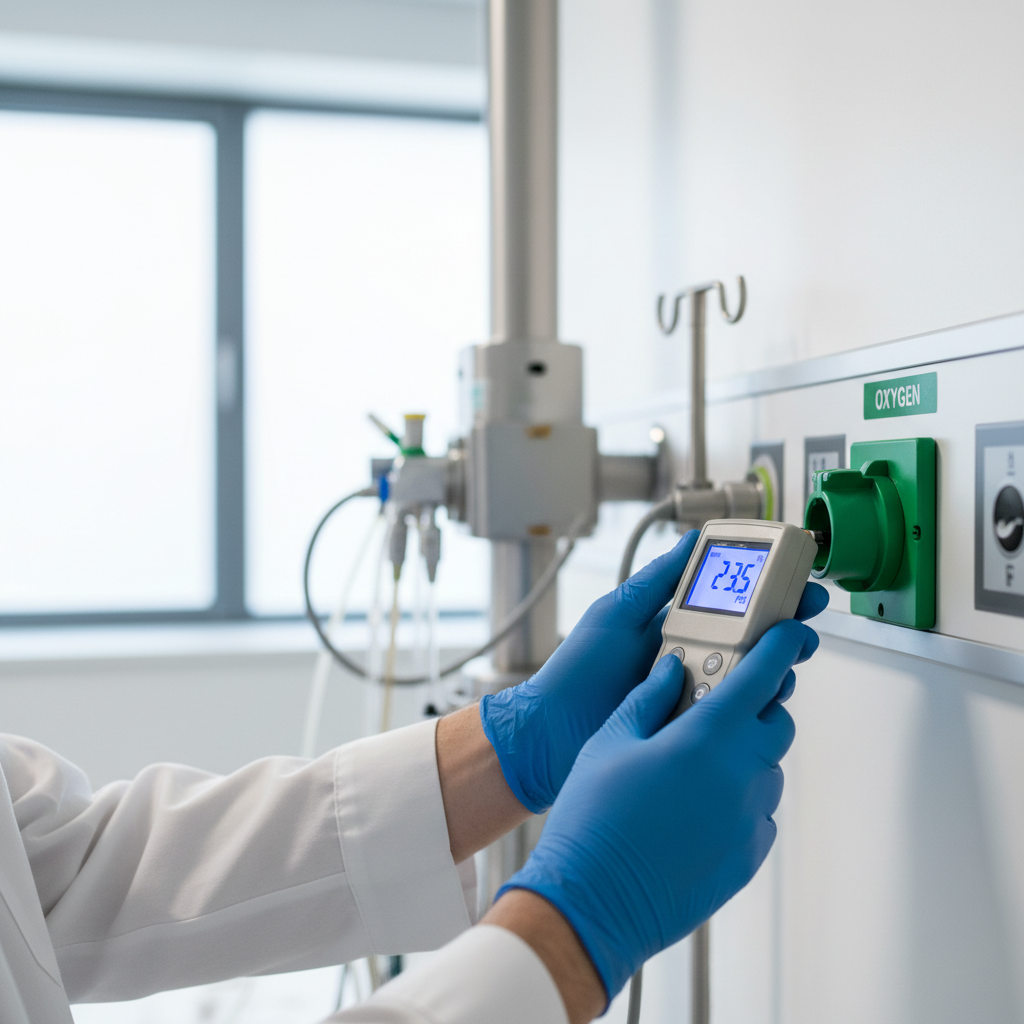
Gas Concentration Test: The verifier uses a calibrated analyzer to test the gas from each outlet, confirming the specific gas concentration (e.g., Oxygen > 99%) and ensuring no impurities exist.
Alarm and Valve Verification: Testing every alarm and valve to ensure they function as a complete system, alerting staff to issues and allowing for sections to be isolated for maintenance.
Not all testing companies are created equal. For a facility in Aventura, it is absolutely critical to choose a company whose technicians are ASSE 6030 certified. Using an uncertified individual exposes the facility to immense liability and a high risk of failing an AHCA/TJC audit.
Here’s a comparison:
Feature
In-House Staff or Uncertified Technician
Certified ASSE 6030 Verifier (like MTS)
Credentials
May have limited formal training on specific codes.
ASSE 6030 Certified, with documented, extensive training.
Knowledge of Codes
May be unaware of the latest NFPA 99/AHCA updates.
Expert-level knowledge of NFPA, ASSE, and CGA standards.
Reporting
Basic checklist; may not be AHCA/TJC compliant.
Detailed, legally defensible reports tailored for auditors.
Objectivity
Potential conflict of interest if they also installed or repair.
Insured and professionally accountable for all findings.
Medical Testing Solutions not only performs medical gas verification but also provides a full suite of services, including sales of source equipment and a robust program for annual medical gas inspections to ensure long-term compliance.
Maintaining Compliance After Certification
Certification is not a one-time event. NFPA 99 requires ongoing risk assessments and periodic inspections of your medical gas systems. After initial certification, it is best practice to establish a proactive medical gas maintenance plan to ensure your facility remains compliant year after year. This includes regular checks of alarms, outlets, and source equipment to catch minor issues before they become major problems.
Your Partner for Aventura Medical Gas Compliance
Ensuring your medical gas systems are safe, reliable, and compliant is a foundational responsibility for any healthcare provider. The process is complex, but it protects your patients and your facility. At Medical Testing Solutions, our ASSE 6030 certified team has the expertise to guide you through every step of the certification process, providing the detailed, compliant documentation you need for AHCA and TJC audits.
Don't leave your facility's compliance to chance. If you have a new construction, renovation, or modification project in Aventura, FL, ensure it's certified correctly from the start.
Ready to ensure your facility is compliant? Request a quote online or call the MTS team today at +1 (754) 315-1078 to discuss your medical gas certification needs.
'''
Frequently Asked Questions
Verification is the hands-on process of testing the system, performed by an ASSE 6030 Verifier. Certification is the final documentation and end-result of a successful verification, which serves as your proof of compliance for auditors like AHCA and TJC.
Full certification is required for any new, modified, or repaired medical gas system. It is not an automatically recurring annual requirement, though separate annual inspections are required by code to maintain the system's state of compliance.
Only a credentialed ASSE 6030 Medical Gas Verifier is qualified. To ensure an unbiased assessment, this person must be a third party who was not involved in the original installation of the system components.
If any part of the verification process fails, the verifier will document the specific deficiency. The original installer is responsible for making the necessary corrections, and the verifier will then re-test that portion of the system until it passes. A certification document will not be issued until all tests are successfully completed.
Request a quote for your facility
Talk with Medical Testing Solutions about your next inspection, repair or equipment request.