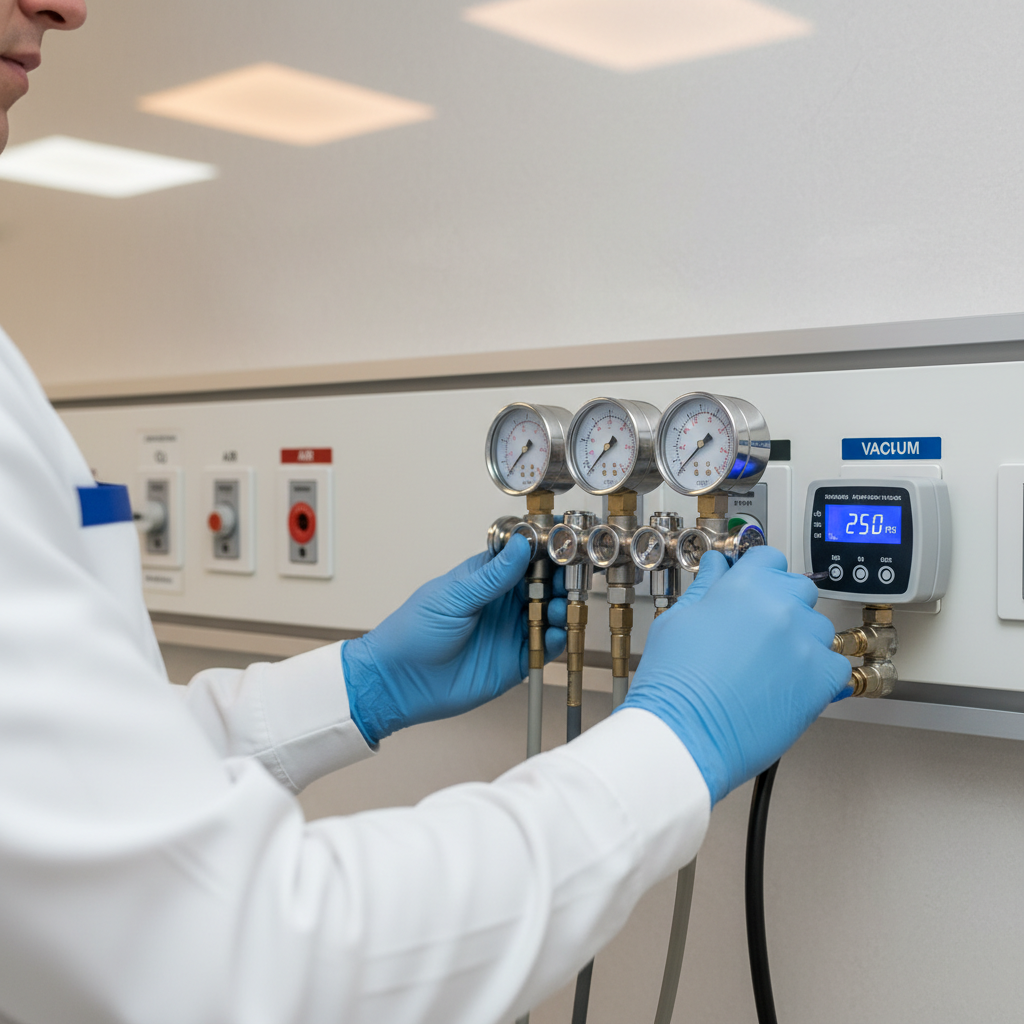
You are standing in an ICU corridor at 2:00 AM on a handoff night. The mechanical contractor just pulled their test gauges off a newly braze-joined medical air zone valve box. You connect your calibrated dew point analyzer and oxygen paramagnetic cell to the terminal unit in Bed 4, open the demand valve, and watch the analyzer peg at 450 parts per million of gaseous hydrocarbons. The piping was never properly purged with oil-free dry nitrogen during brazing, leaving charred flux and cupric oxide scaling across 200 linear feet of copper.
Catching that failure before life support ventilators connect to those wall outlets is the exact job of an ASSE 6030 verifier.
Stepping into this career requires specialized education, rigorous testing, and calibrated equipment. If you plan to sit for the credential, you must understand the true medical gas verifier certification cost. The headline exam fee from testing agencies like the National Inspection Testing Certification Corporation (NITC) is only one line item in a much larger budget. From candidate qualification prerequisites and mandatory 32-hour training seminars to outfitting your field van with analytical instruments, the total financial outlay ranges widely depending on your entry path.
The Financial Reality of the ASSE 6030 Credential
Budgeting for an ASSE 6030 credential means calculating two distinct categories: direct certification expenses and operational enablement. Direct costs cover the prerequisite training courses, agency application fees, written testing, and practical assessments. Operational enablement covers the calibrated multi-gas analyzers, aerosol photometers, particle counters, and specialty adapters required to perform pipeline verification under field conditions.
For an independent inspector or mechanical contractor expanding into compliance testing, initial certification generally tallens between $2,100 and $3,800 for training and exam fees alone. If you must purchase a dedicated analytical test rig, your equipment capital expenditure will easily add $15,000 to $30,000.
Facility managers often weigh these individual credentialing costs against hiring third-party verification firms. At Medical Testing Solutions, our credentialed specialists handle third-party testing directly through dedicated medical gas verification agreements, saving healthcare systems the steep capital investment required to train, certify, and equip in-house staff.
Itemized Breakdown: Direct ASSE 6030 Certification Expenses
The credentialing pathway demands compliance with ASSE Series 6000, Standard 6030. You cannot simply register for an exam; you must complete an approved curriculum delivered by an authorized instructor and demonstrate documented industry experience.
1. Mandatory 32-Hour Training Course
Before NITC or an equivalent third-party agency accepts your application, Standard 6030-3.2 requires completion of a minimum 32-hour training course covering NFPA 99, NFPA 55, and the CGA pamphlets. Tuition for this coursework runs between $1,500 and $2,600 per student. Online hybrid options sit near the lower end, while in-person training involving hands-on manifold, source, and alarm troubleshooting labs command the higher figure.
2. NITC Examination and Processing Fees
NITC charges a standard non-member examination fee between $310 and $445 for the ASSE 6030 computer-based test, depending on whether you take it at an authorized testing center or via live remote proctoring. If your employer belongs to a sponsoring trade association like the MCAA or PHCC, NITC offers a discounted candidate rate, typically saving between $50 and $100 on registration.
3. Standards and Study Materials
You must bring your own published material to prepare. A bound or softcover volume of NFPA 99 (Health Care Facilities Code) costs roughly $165 to $220, depending on format and delivery. You will also need access to the ASSE Series 6000 professional qualifications booklet and relevant Compressed Gas Association (CGA) standards, adding another $100 to $200.
4. Recertification and Renewal Overhead
Maintaining active status requires ongoing investment. Verifiers must recertify every three years under ASSE 6030 guidelines. Recertification requires proving a minimum number of completed verifications, taking an update course reflecting code revisions across current NFPA editions, and passing an open-book recertification test. Expect renewal coursework and processing to cost between $250 and $600 every three years.
Why this matters for compliance: Under NFPA 99 Section 5.1.12.3.1.2, verifiers must be certified to ASSE Standard 6030 by an accredited agency. Performing system verification without an active, verified credential invalidates the compliance package, preventing local authorities having jurisdiction (AHJs) and accreditation organizations from signing off on facility occupancy.
Hidden Equipment and Tooling Investments
Holding an ASSE 6030 certification card does not generate revenue without the field instrumentation to perform tests. NFPA 99 Section 5.1.12.3 dictates comprehensive verification protocols that cannot be run with standard HVAC or plumbing gauges.
If you plan to offer independent verification services, account for these critical equipment expenses:
- Paramagnetic and Electrochemical Gas Analyzers ($6,000 – $14,000): You must verify gas purity, measuring oxygen content across oxygen, medical air, and synthetic air outlets. Medical air systems require testing for carbon monoxide, carbon dioxide, dew point, and total hydrocarbons.
- Aerosol Photometers and Laser Particle Counters ($4,500 – $8,500): Required to conduct particulate testing on piped systems to guarantee zero cross-contamination and ensure micro-filtration targets are satisfied.
- NIST-Traceable Calibrated Test Gauges and Flowmeters ($2,000 – $4,000): Digital pressure transducers and certified flow meters to evaluate high-pressure cylinder headers, source cutovers, piping network pressure drops, and simultaneous use flow capacities.
- Annual Calibration Subscriptions ($1,500 – $3,500 annually): Every instrument used on an NFPA 99 pipeline must possess an unbroken chain of NIST calibration traceability. Sending gas chromatographs, dew point probes, and digital manometers out for factory calibration is an ongoing operational expense.
When piping installers partner with Medical Testing Solutions for medical gas installation projects, they avoid this secondary layer of capital investment by allowing our verified teams to supply all calibrated gear.
ASSE 6030 vs. ASSE 6010, 6020, and 6040
The ASSE 6000 standard establishes multiple credentials for individuals touching piped systems. The cost structure of the 6030 (Verifier) credential differs from other categories because of the sheer breadth of liability and testing required.
ASSE 6010 (Medical Gas Installer)
Plumbers and pipefitters who braze, assemble, and mount distribution systems earn the 6010 qualification. The training focuses heavily on dry nitrogen purges, copper tube preparation, joint clearance, and NFPA 99 underground installation practices. Training and exam costs run between $600 and $1,200.
ASSE 6020 (Medical Gas Inspector)
Targeted at municipal plumbing inspectors, third-party code review teams, and insurance loss adjusters. The 6020 training validates that the mechanical installation visually adheres to governing codes, but 6020 inspectors do not execute analytical gas testing or dynamic load pressure checks. Certifying as a 6020 costs roughly $800 to $1,400.
ASSE 6030 (Medical Gas Verifier)
The verifier credential carries significantly higher liability. Verifiers perform the official testing mandated under NFPA 99 Section 5.1.12.3 prior to patient use. A 6030 can act as a 6020 inspector, but a 6020 cannot perform verifications. This higher baseline of mechanical, chemical, and electrical comprehension makes the 6030 program more expensive and demanding.
ASSE 6040 (Maintenance Personnel)
Tailored to hospital plant engineers and healthcare facility technicians. The 6040 program concentrates on source machinery, such as scroll compressors, liquid ring pumps, and cylinder manifolds. Training focuses on preventative maintenance, component replacement, and testing alarms. If your internal team lacks this certification, our crews provide preventative service through medical gas maintenance services.
Prerequisite Experience and Candidate Qualifications
Before writing a check for an ASSE 6030 class, examine the entry qualifications. Testing agencies like NITC strictly filter candidates. Dropping $2,000 on training without meeting the prerequisites can lead to exam disqualification.
To earn authorization from NITC to sit for the ASSE 6030 examination, candidates must demonstrate:
- A minimum of two years of documented field experience in the installation, inspection, or maintenance of medical gas piping and source equipment.
- Direct working knowledge of NFPA 99, NFPA 55, and the ASSE Series 6000 standards.
- Completion of an authorized 32-hour ASSE 6030 training course delivered by an ASSE-recognized instructor.
- Passage of both a 100-question written examination and a practical hands-on simulation test.
If an applicant cannot document their two years of pipeline or mechanical system experience through employer verification letters or plumbing board licenses, agencies will not release credentials even after a passing score on the written exam.
For facilities without qualified in-house candidates, building that capacity internally takes years. Engaging an established partner like Medical Testing Solutions gives you immediate access to qualified technicians who hold active 6030 credentials alongside extensive field track records.
Third-Party Verifier Fees vs. Internal Employee Certification
Facility engineers and plumbing business owners frequently debate whether to send an employee through the ASSE 6030 qualification track or contract out verification projects. While adding in-house testing capability seems economical on paper, the true costs compound quickly.
The In-House Cost Burden
Training a single staff member requires paying tuition and exam fees, while covering lost revenue across 40 to 60 hours of training and testing time. After licensing, you must outfit them with analytical equipment, establish yearly calibration programs, and secure errors-and-omissions insurance covering medical gas liability.
If that individual leaves your organization, you lose the certification and the institutional memory, forcing you to begin the qualification process anew.
The Independent Provider Advantage
Hiring a third-party testing agency fulfills the non-bias guidelines embedded in NFPA 99. According to NFPA 99 Section 5.1.12.3.1.4, verifications must be performed by an independent third party who is neither the installing contractor nor an employee of the mechanical installation firm on that specific job.
Contractors working on healthcare pipelines can protect project profitability by pairing mechanical rough-in with independent verification providers. If your facility needs scheduled regulatory oversight, Medical Testing Solutions delivers annual testing via our annual medical gas inspections to satisfy Joint Commission, DNV, and local AHJ audits without in-house overhead.
What Does an ASSE 6030 Verifier Test Onsite?
Understanding why the ASSE 6030 certification costs what it does requires reviewing the field tasks these technicians perform. The curriculum teaches candidates how to validate complex source machinery, alarm pathways, zone boundaries, and pipeline cleanliness under strict acceptance criteria.
Initial Blowdown and Particulate Tests
Before connecting any secondary apparatus, verifiers purge every wall outlet, ceiling drop, and column assembly. They deliver high-velocity test gases through the distribution piping onto white target materials to catch copper fines, residual flux, and dirt before running analytical checks.
Cross-Connection Identification
One of the highest-consequence tests run by a 6030 verifier is the cross-connection audit. The verifier pressurizes one pipeline network with oil-free nitrogen while keeping adjacent gases depressurized and vented. They systematically check every room, outlet by outlet, ensuring no nitrogen escapes from an oxygen outlet, vacuum drop, or nitrous oxide station.
Purity and Contaminant Analysis
The verifier tests medical air compressors, manifolds, and vacuum sources to confirm clinical purity. Purity thresholds demand precise limits:
- Carbon Monoxide (CO): Maximum 10 ppm (NFPA 99 limits)
- Carbon Dioxide (CO2): Maximum 500 ppm
- Gaseous Hydrocarbons: Maximum 25 ppm
- Dew Point: Maximum 32°F at 50 psig system pressure
- Halogenated Hydrocarbons: Not detected
Alarm Integration and Source Cutover
The technician must verify that local master alarms and area alarm panels trigger accurately during real pressure drops. They confirm that visual indicators show correct LED colors, audible chimes hit minimum decibel thresholds, and emergency backup headers cut over smoothly without disrupting system line pressures.
Beyond general med-gas testing, specialized surgical environments frequently mandate testing isolated power supplies alongside gas services. Verifiers working in wet procedure rooms often inspect and evaluate line isolation monitors via specialized line isolation monitor testing to verify micro-amp leakage margins before opening patient suites.
How to Prepare and Pass the NITC ASSE 6030 Exam
The NITC ASSE 6030 examination features 100 multiple-choice questions with a mandatory minimum score of 74% to pass. The exam runs three hours, testing your ability to navigate the complex chapters of NFPA 99 without hesitation.
To prepare effectively and minimize the financial sting of re-test fees:
- Master NFPA 99 Chapter 5: Over 70% of the questions pull directly from Chapter 5 (Gas and Vacuum Systems). You must know the minimum clear spacing between manifolds, maximum pressure drop limits across valves, emergency low-pressure cutoffs, and exhaust terminus clearances from building intakes.
- Highlight and Index Your Code Book: High-speed reference navigation matters. Organize your NFPA 99 manual using durable tab indices. Tab out tables for pipeline sizing, vacuum sizing, compressor intake rules, and purity specifications.
- Review NFPA 55 Storage Standards: The examination tests storage thresholds for cryogenic liquid cylinders, outdoor enclosure construction, ventilation rates for manifold rooms, and seismic securing requirements.
- Understand CGA Pamphlets: Questions regularly target CGA G-4.1 (Cleaning Equipment for Oxygen Service) and CGA V-1 (Compressed Gas Cylinder Valve Outlet and Inlet Connections). Know standard Pin-Index Safety System (PISS) and Diameter-Index Safety System (DISS) layouts.
Taking targeted practice examinations under realistic time constraints dramatically cuts the likelihood of paying an extra $310 to $445 for a second testing attempt.
Choosing the Right Path for Your Organization
Investing in an ASSE 6030 verifier certification makes financial sense if your core business focuses on life-safety mechanical auditing, ongoing building commissioning, or specialized healthcare engineering. The direct cost of training, exam fees, and reference manuals lands between $2,100 and $3,800. Equipping a technician to work in the field lifts that figure toward the $30,000 threshold.
If your facility is managing a clinic expansion, installing new terminal units, or working to clear Joint Commission findings, buying full verification suites and certifying personnel is rarely the most practical approach. Working with a dedicated provider ensures that every drop, alarm, and source manifold receives independent, certified validation backed by NIST-traceable equipment.
Whether you need initial construction testing or recurring plant maintenance, Medical Testing Solutions brings the credentialed personnel, calibrated multi-gas analyzers, and NFPA 99 compliance documentation directly to your facility doors.
Call Medical Testing Solutions at (754) 315-1078 or request a quote to schedule an ASSE 6030 verifier for your next healthcare piping project.