Medical gas master alarm panels are the central nervous system of your facility's gas and vacuum systems. They provide critical, real-time information about the status and pressure of life-sustaining gases like oxygen, medical air, and nitrous oxide. When a panel alarms, it signals a potentially hazardous change that requires immediate attention. Ensuring these alarms function correctly isn't just a best practice, it's a requirement for patient safety and regulatory compliance. This guide explains the process and importance of master and area alarm panel testing, inspection, and replacement for healthcare facilities in Stuart, FL.
Medical Gas Service
Compliance & Standards
Master Alarm Panel Testing in Stuart, FL: A Complete Guide
Medical Testing SolutionsSeptember 26, 20266 min read
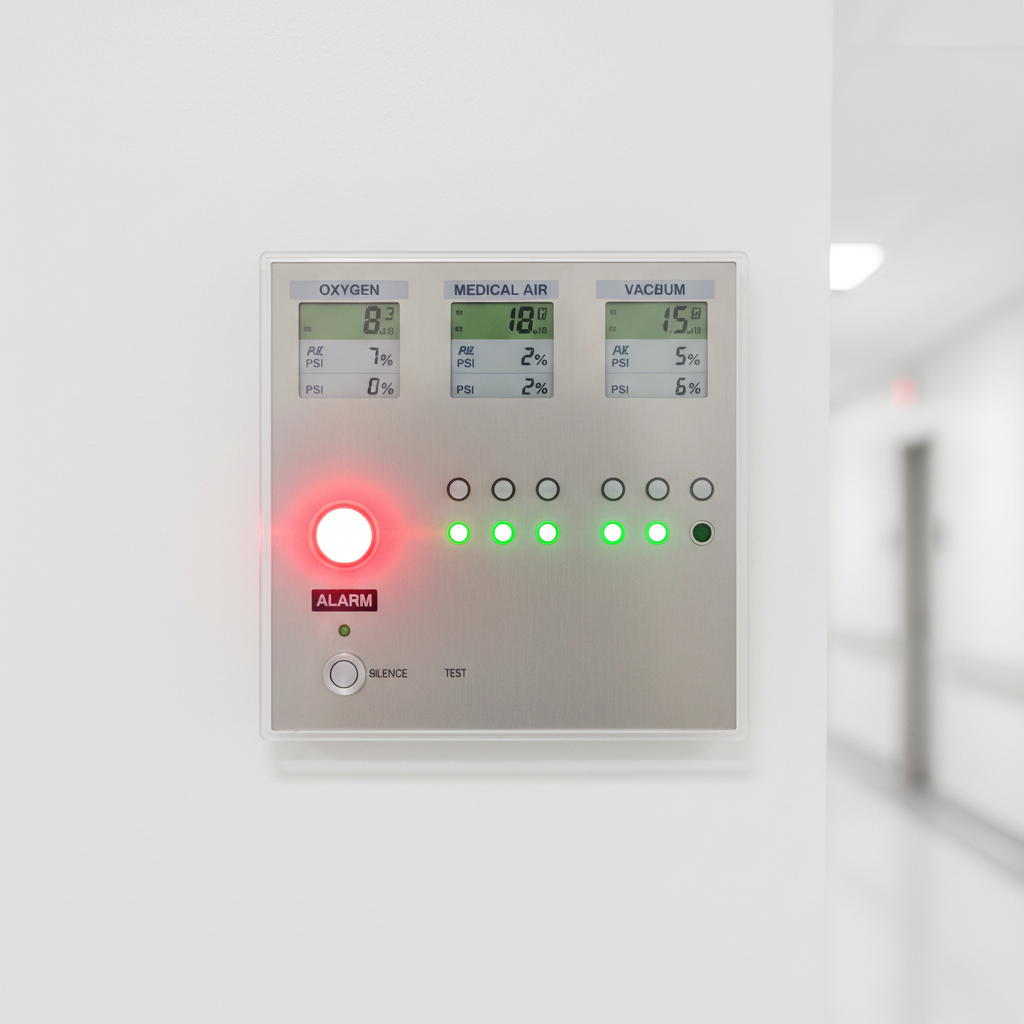
What is a Medical Gas Master Alarm Panel?
A master alarm panel, as defined by the National Fire Protection Association (NFPA), monitors the sources of all medical gas systems. This is the primary alarm system that provides the most comprehensive overview of your entire medical gas pipeline. It receives signals from pressure switches and sensors located at the source equipment (e.g., manifolds, air compressors, vacuum pumps) and along the main distribution lines.
In contrast, area alarm panels monitor conditions within specific zones or departments of a facility, such as an operating room, an ICU, or a patient wing. Master alarms are the first line of defense, providing global warnings, while area alarms offer localized alerts. Both are essential components of a compliant medical gas system.
Key Functions Monitored:
- High/Low pressure for all medical gases
- Reserve-in-use or changeover from primary to secondary supply
- Low levels in liquid oxygen (LOX) vessels
- Compressor or vacuum pump failures
Why This Matters for Compliance: NFPA 99 (2018 edition), Section 5.1.9, outlines the specific requirements for warning systems. A malfunctioning master alarm panel can lead to a finding of non-compliance during a Joint Commission or DNV survey, potentially jeopardizing accreditation.
NFPA 99 Testing Requirements for Alarm Panels
NFPA 99 is the foundational code governing medical gas systems in the United States. It mandates regular testing and maintenance to ensure the system is always ready for patient use. For alarm panels, the requirements are stringent and require a certified professional.
According to NFPA 99, all master and area alarm panels must be tested periodically to verify they are functioning as designed. This involves simulating alarm conditions to confirm:
- The visual (light) and audible (sound) indicators activate at the correct setpoints.
- The alarm signal is successfully transmitted from the sensor to the panel.
- The "Alarm Silence" button works correctly and resounds after a set period if the condition is not resolved.
- All labeling is accurate and legible.
An ASSE 6040 Certified Medical Gas Maintenance Person is qualified to perform these tests. For new installations or modifications, a full system verification by an ASSE 6030 Certified Medical Gas Verifier is required. Medical Testing Solutions provides certified verification services to ensure your system is compliant from day one.
Common Master Alarm Brands: Beacon, Amico, and Tri-Tech
While many manufacturers produce reliable alarm panels, three brands are commonly found in facilities throughout Florida: BeaconMedaes, Amico, and Tri-Tech Medical. Each has distinct features, but all are designed to comply with NFPA 99 standards.
| Feature | BeaconMedaes (TotalAlert Infinity) | Amico (Comet™ Series) | Tri-Tech Medical (Series M) |
|---|---|---|---|
| Display | Full-color touchscreen LCD | LED indicators, optional LCD | LED indicators, optional LCD |
| Networking | Ethernet (BACnet, web server) | Ethernet (BACnet, web server) | Ethernet connectivity |
| Customization | Highly programmable text, alarms | Field-programmable text | Field-programmable text |
| Installation | Designed for easy retrofitting | Simple wiring and installation | Surface or flush mounting |
Medical Testing Solutions has extensive experience testing, repairing, and replacing all major brands, including Beacon, Amico, and Tri-Tech. Our technicians are trained to service the specific technology each manufacturer uses.
The Master Alarm Panel Testing Process
Properly testing a master alarm panel is a systematic process that must be performed by a qualified technician. It is a crucial part of any annual medical gas inspection program.
Here are the typical steps involved:
- Notification: The technician notifies facility personnel (e.g., respiratory therapy, facilities director) before testing begins to prevent false alarms from causing undue panic.
- Visual Inspection: The panel is checked for physical damage, clear labeling, and proper power supply.
- Individual Signal Testing: Each alarm point is tested independently. For a pressure alarm, the technician will safely create a high or low-pressure condition at the source sensor and verify the master panel activates the corresponding visual and audible alarm.
- Setpoint Verification: The technician confirms that the alarm activates at the precise pressure setpoints mandated by NFPA 99.
- Signal Integrity: The test confirms that the signal from the source equipment (e.g., a manifold pressure switch) correctly triggers the designated alarm at the panel without fault.
- Documentation: All test results are meticulously documented. This report includes the date, technician name, ASSE credentials, and the pass/fail status of each tested alarm point. This documentation is critical for regulatory audits.
When to Repair or Replace Your Alarm Panel
Like any electronic equipment, alarm panels have a finite lifespan. You should consider repair or replacement if you encounter:
- Frequent False Alarms: This can indicate failing sensors or internal components.
- Failure to Alarm: The most dangerous scenario. If a test fails, the panel must be repaired or replaced immediately.
- Obsolete Parts: For older panels, finding replacement parts can become impossible. A planned upgrade is often more cost-effective than emergency replacement.
- System Upgrades: When adding a new gas source or expanding your facility, you may need an upgraded panel with more capacity. This often requires professional medical gas installation services.
Medical Testing Solutions offers comprehensive medical gas maintenance services, including troubleshooting, repair, and full replacement of outdated or malfunctioning master alarm panels.
Why Choose a Certified Professional in Stuart, FL
Using an uncertified individual for master alarm testing is a major risk. An ASSE 6040 certified technician has undergone rigorous training and passed a comprehensive exam covering all aspects of medical gas systems maintenance, including a deep understanding of NFPA 99.
Choosing a certified provider like Medical Testing Solutions ensures:
- Compliance: You can be confident that all work meets or exceeds code requirements.
- Safety: Technicians understand the hazards of working with high-pressure medical gases.
- Accuracy: Testing is performed correctly, providing a true assessment of your system's readiness.
- Peace of Mind: You receive detailed, compliant documentation that will satisfy any regulatory authority.
Secure Your Facility and Ensure Compliance Today
Don't wait for a system failure or a negative survey finding to address your medical gas alarm panels. Proactive, professional testing is the key to patient safety and uninterrupted operations. The ASSE-certified experts at Medical Testing Solutions provide comprehensive master alarm panel testing, repairs, and replacement services in Stuart, FL and across the state.
Contact us today to ensure your facility is safe and compliant. Call (754) 315-1078 or request a quote online for your next inspection.
Frequently Asked Questions
NFPA 99 requires that all medical gas warning systems be tested periodically. The exact frequency is determined by your facility's risk assessment, but an annual test is the widely accepted industry standard and best practice for ensuring safety and compliance.
Only if they are ASSE 6040 certified for medical gas maintenance. NFPA 99 requires that inspection and testing be performed by a qualified individual who can demonstrate technical competence. Using uncertified staff can lead to liability and non-compliance.
A master alarm monitors the source of the medical gas supply (e.g., the oxygen tank farm or manifold room). An area alarm monitors a specific zone within the hospital, like an operating room or patient floor, alerting staff to pressure issues in their immediate vicinity.
If an alarm fails, it must be immediately investigated and repaired by a qualified technician. The root cause, whether it's a faulty sensor, a wiring issue, or a problem with the panel itself, needs to be identified and corrected to ensure the system is safe for patient use. A record of the failure and corrective action must be documented.
Yes, Medical Testing Solutions sells and installs a wide range of medical gas equipment, including master and area alarm panels from leading manufacturers like Beacon, Amico, and Tri-Tech. You can browse some of our offerings in our products catalog.
Request a quote for your facility
Talk with Medical Testing Solutions about your next inspection, repair or equipment request.