Master Alarm Panel Testing in Plantation, FL: A Complete Guide
What Are Medical Gas Master Alarm Panels?
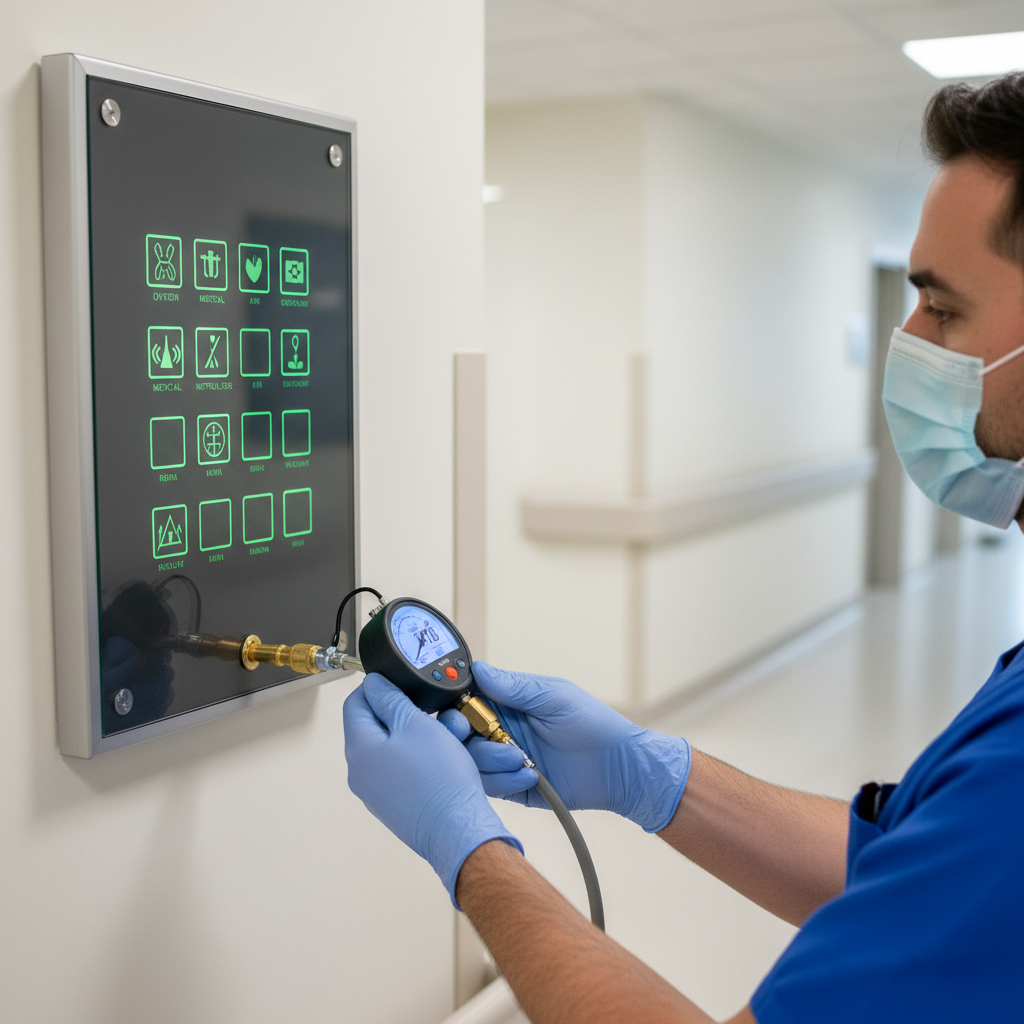
Medical gas alarm panels are the central nervous system of your facility's medical gas pipeline system. As mandated by the National Fire Protection Association (NFPA) 99, Health Care Facilities Code, these systems provide the critical, real-time warnings required to ensure patient safety and system integrity. A master alarm panel monitors the source of the medical gas supply, including the main lines, and provides immediate audible and visual alerts for any fluctuations or failures. Area alarm panels, in contrast, monitor the pressure and status of gas lines within specific zones or departments of the facility, such as an operating room, ICU, or patient wing.
Understanding the function and requirements of these alarms is the first step toward a compliant and safe medical environment. This guide will walk you through the specifics of master and area alarm panel testing, the importance of ASSE certification, common issues, and when to consider a replacement, focusing on facilities in the Plantation, FL area.
NFPA 99 Requirements for Alarm Panel Testing
The NFPA 99 code is the foundational standard for medical gas systems in the United States. It outlines explicit requirements for the testing and maintenance of alarm panels to ensure they function as intended during an emergency.
Specifically, NFPA 99, Chapter 5, requires that all master and area alarm systems be tested periodically to verify their operational integrity. These tests are not just a suggestion; they are a critical component of your facility's life safety program. During an inspection, this is one of the first systems an authority having jurisdiction (AHJ) will scrutinize.
Key testing requirements include:
- Regular Inspections: Alarms must be visually and functionally inspected as part of your facility's annual medical gas inspections.
- Signal Activation: Each alarm signal must be activated to confirm that the audible and visual alerts are functioning correctly at the master panel and, if applicable, at a secondary surveillance location.
- Pressure Verification: For pressure-monitoring alarms, the test involves simulating both high and low-pressure conditions to ensure the alarm triggers at the correct setpoints.
- Documentation: Every test, its results, and any corrective actions taken must be meticulously documented. This log is essential for demonstrating compliance during audits and surveys.
Why this matters for compliance: Failure to comply with NFPA 99 alarm testing protocols can result in citations, fines, and, most importantly, a significant risk to patient safety. A non-functional alarm fails to warn staff about a critical drop in oxygen pressure or a failing vacuum system, which can have catastrophic consequences.
The Role of ASSE 6030 Certified Technicians
Who performs these critical tests? According to NFPA 99, only qualified individuals are permitted to test and maintain medical gas systems. This is where ASSE 6000 Series certifications become paramount. An ASSE 6030 Medical Gas Verifier is a professional who has undergone extensive training and rigorous examination to prove their competence in verifying the safety and compliance of new or modified medical gas systems. For routine maintenance and testing, an ASSE 6040 Medical Gas Maintenance Person is qualified.
When you hire a company like Medical Testing Solutions, you are bringing in ASSE-certified experts who understand the nuances of the NFPA code. Our technicians are trained to perform comprehensive tests that go beyond just pushing a "test" button. They verify the entire signaling chain, from the sensor in the pipeline to the light and speaker on the panel itself, ensuring every component works as a cohesive system. This level of expertise is crucial for accurate medical gas certification.
Common Master Alarm Brands: Beacon, Amico, Tri-Tech
While many manufacturers produce reliable alarm panels, three brands are commonly found in facilities across South Florida: BeaconMedaes, Amico, and Tri-Tech Medical. Each has its own design and features, but all are built to comply with NFPA 99 standards.
Here’s a brief comparison:
| Feature | BeaconMedaes (TotalAlert Infinity) | Amico (Alert-4) | Tri-Tech Medical (Area & Master Alarms) |
|---|---|---|---|
| Display Type | Color LCD Touchscreen | Color LCD Touchscreen | LED indicators, some LCD models |
| Networking | Ethernet (IP-based), BACnet | Ethernet, BACnet | Ethernet, BACnet available |
| Customization | Highly customizable text, alarms | Customizable gas tiles and text | Generally pre-configured gas service labels |
| Maintenance | Self-diagnostics, modular components | Field-programmable, easy sensor access | Simple pushbutton testing, durable design |
Medical Testing Solutions has extensive experience testing, servicing, and replacing all three of these major brands. Our technicians are familiar with their specific testing sequences, common fault codes, and replacement procedures.
When to Test vs. When to Replace Your Alarm Panel
A common question from facility managers is whether to repair a faulty alarm or replace it entirely. The decision often comes down to age, reliability, and cost.
Consider testing and repair if:- The issue is minor, such as a burnt-out indicator bulb or a faulty sensor that can be easily replaced.
- The panel is relatively new and has had a reliable service history.
- The facility has not undergone major renovations that would require system-wide upgrades.
- The panel is obsolete and replacement parts are no longer available.
- The panel experiences frequent, recurring failures, leading to costly service calls.
- The facility is upgrading its medical gas system or renovating a department, making it a good time to install modern, networkable alarm technology.
- The existing panel is not capable of meeting current NFPA 99 reporting or networking requirements.
Upgrading to a new, modern alarm panel can offer significant benefits, including better diagnostics, Ethernet connectivity for remote monitoring, and a clearer interface for staff. For facilities planning renovations, integrating a new alarm panel is a key part of the medical gas installation process.
The Alarm Panel Testing Procedure
While the exact steps can vary based on the specific brand and model, a typical master alarm test performed by an ASSE 6030/6040 certified technician includes:
- Notification: Informing all relevant hospital staff (e.g., nursing stations, respiratory therapy) of the pending test to avoid panic.
- Initial System Check: A visual inspection of the panel for any obvious signs of damage or wear.
- Individual Signal Test: Activating each alarm point one by one. This is typically done at the source equipment or by using a specialized testing manifold.
* For gas pressure, the technician will use a calibrated gauge to bleed pressure down to the low-setpoint and then increase it to the high-setpoint, confirming the alarm activates and deactivates at the precise pressures required by NFPA 99.
* For source alarms (e.g., "Liquid Level Low," "Changeover"), the technician will manually trigger the switch at the source manifold or vessel.
- Confirming Annunciation: Verifying that for each triggered event, the correct visual and audible alarms activate at both the master alarm panel and any connected area or remote panels.
- Reset and Restore: Ensuring the alarm properly resets once the condition is corrected.
- Final Documentation: Recording every step, the pressure readings, and the pass/fail status for each alarm point in a detailed report for the facility's records.
Get a Quote for Master Alarm Testing in Plantation, FL
Ensuring your master and area alarm panels are functioning correctly isn't just a recommendation—it's a requirement for patient safety and regulatory compliance. At Medical Testing Solutions, our ASSE-certified technicians provide thorough, compliant alarm testing and replacement services for healthcare facilities throughout Plantation and across South Florida.
Don't wait for an inspector to find a problem. Be proactive about your facility's life safety systems. Contact Medical Testing Solutions today for a comprehensive evaluation of your medical gas alarm panels. Call us at (754) 315-1078 or request a quote online to schedule your inspection.
FAQs About Master Alarm Panel Testing
How often do my medical gas alarms need to be tested?According to NFPA 99, medical gas alarm systems must be tested at regular intervals defined by the healthcare facility's risk assessment, and always after any installation, modification, or repair. Most facilities incorporate this into their annual inspection schedule.
What does an "ASSE 6030 Verifier" do?An ASSE 6030 Medical Gas Systems Verifier is certified to perform final verifications on new or modified medical gas systems to ensure they are fully compliant with NFPA 99 and other standards before being placed into service. This includes a comprehensive test of the alarm systems.
Can I use the "test" button on the panel for my official inspection?No. The "test" button typically only verifies that the light bulb and buzzer on the panel itself are working. A true test, as required by NFPA 99, must verify the entire system by activating the initiating sensor or switch to ensure the signal travels from the source to the panel correctly.
My alarm is constantly beeping. What should I do?Immediately investigate the cause. A constant alarm indicates a potentially serious issue with your medical gas supply. Check the panel to identify the specific alarm condition. If the issue isn't immediately obvious or resolvable, you should contact a qualified medical gas maintenance provider like Medical Testing Solutions right away.
What's the difference between a master and an area alarm?A master alarm monitors the source of supply (e.g., the main oxygen tank, medical air compressors). An area alarm monitors the pressure in a specific zone or area of the hospital (e.g., the OR, ICU, a specific floor), alerting local staff to issues within their immediate care area.
This article is provided for educational purposes and reflects industry standards as of publication. Always verify against current NFPA 99, CGA, and AHJ requirements. Medical Testing Solutions is ASSE-certified and ready to help — contact us for facility-specific guidance.
Need Medical Gas Services?
Contact our certified team for inspections, verifications, installations, and more.
Get a Free Quote