Skip to content
    New: Medical Gas Outlet Retrofit & Rebuild Matrix — cross-reference legacy Chemetron, Ohio Diamond, Puritan-Bennett & more →
    ASSE Certified 24/7
    Medical Gas Service
    Compliance & Standards

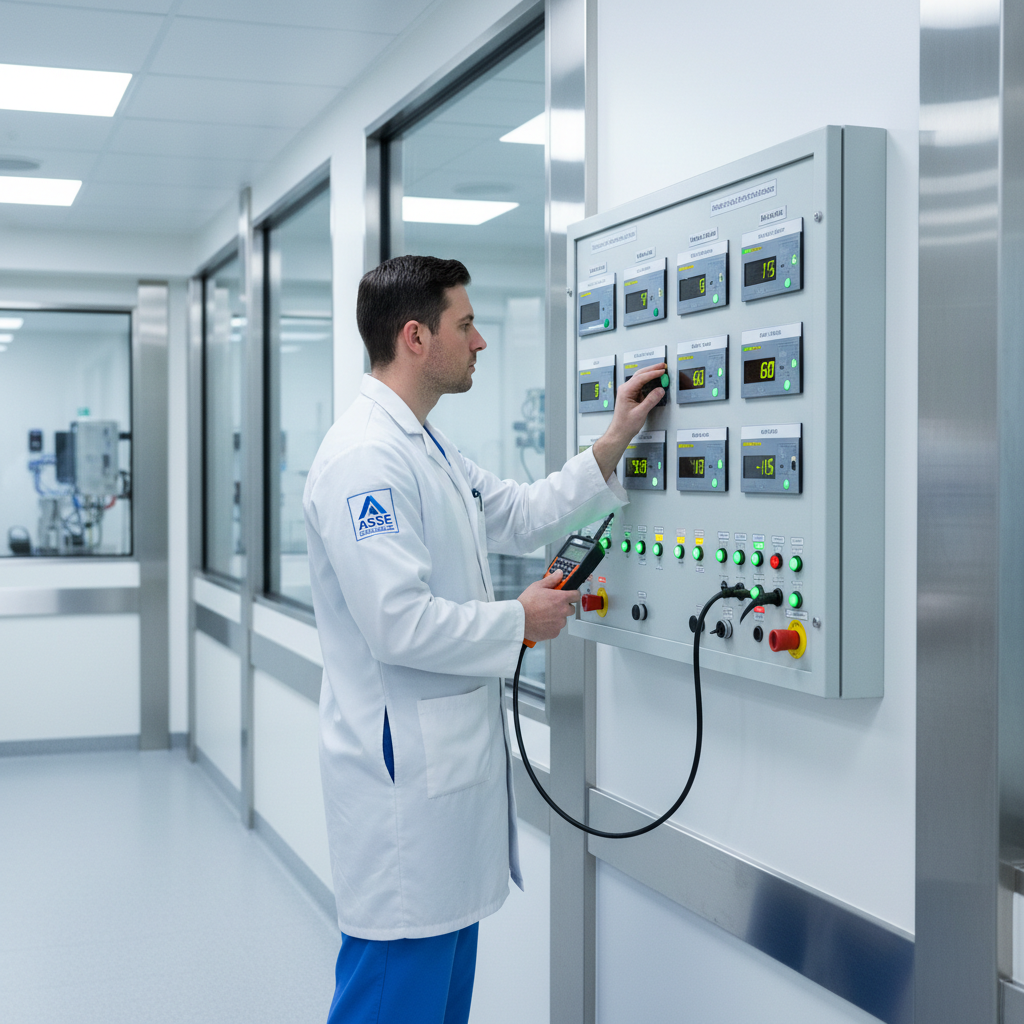
    Master Alarm Panel Testing Doral FL: NFPA 99 Compliance & Retrofits

    Medical Testing SolutionsNovember 2, 202614 min read
    Share
    Master Alarm Panel Testing Doral FL: NFPA 99 Compliance & Retrofits

    Master Alarm Panel Testing Doral FL: Compliance & Retrofits

    In healthcare facilities across South Florida, life safety depends on the invisible infrastructure delivering medical gases to operating rooms, patient suites, and intensive care units. At the center of this life-support monitoring network sit your master alarm panels. When pressure drops, source supplies switch over, or dew point spikes, master alarms provide the critical first warning to facility engineers and clinical teams.

    For clinical managers and facility directors in Doral, Florida, keeping these systems compliant is both a patient-safety mandate and an AHCA (Agency for Health Care Administration) requirement. Master alarm panel testing in Doral, FL demands strict adherence to NFPA 99 Health Care Facilities Code, ASSE Series 6000 professional qualifications, and Florida-specific administrative guidelines.

    This comprehensive guide covers everything facility managers need to know about medical gas master alarm panel testing, routine maintenance, operational troubleshooting, and system retrofits featuring premier equipment from BeaconMedaes, Amico Corporation, and Ohio Medical / Tri-Tech.


    The Critical Role of Master Alarm Panels in Healthcare Facilities

    Master alarm panels function as the central nervous system of a hospital or ambulatory surgery center's piped medical gas and vacuum systems (MGVS). Unlike area alarm panels, which monitor specific zones such as an operating room suite, procedural bay, or critical care pod, master alarm panels monitor source equipment and primary distribution lines throughout the entire building.

    According to NFPA 99 (2024 edition), Section 5.1.9.2, Category 1 piped medical gas systems must have two or more master alarm panels situated in at least two separate locations. Typically, facilities place one panel in the main engineering or maintenance office and the second in an area of continuous 24-hour observation, such as a security dispatch desk, central telephone switchboard, or an emergency department nurses' station.

    Monitored Conditions on a Category 1 Master Alarm

    A compliant master alarm panel monitors vital infrastructure conditions across bulk cryogenic systems, high-pressure cylinder manifolds, medical air compressors, medical vacuum pumps, and waste anesthetic gas disposal (WAGD) producers:

    • Bulk Liquid Cryogenic Oxygen: Liquid level low, reserve supply in-use, reserve liquid level low, and reserve pressure low.
    • High-Pressure Manifolds: Primary bank empty (changeover switch active), secondary bank in-use, and reserve cylinder pressure low.
    • Medical Air Compressors: High dew point (+35°F / +1.7°C at 50-55 psi), carbon monoxide (CO) levels exceeding 10 ppm, high discharge air temperature, and lag unit operation.
    • Medical Vacuum & WAGD: Vacuum pump lag operation, vacuum header pressure drop below 12 in-Hg.
    • Main Line Pressures: High or low line pressure variations (exceeding ±20% of standard operating pressures) for oxygen, medical air, nitrous oxide, carbon dioxide, nitrogen, and instrument air.

    Failure of any of these points without immediate alert can compromise patient ventilation, interrupt surgeries, or cause catastrophic system shutdowns.


    Regulatory Framework: NFPA 99, ASSE 6000, and Florida AHCA Standards

    Operating a healthcare facility in Doral, FL requires navigating overlapping municipal, state, and national compliance frameworks. Medical gas infrastructure cannot be treated as a generic mechanical system. | Diagram text | |, | | NFPA 99 (Health Care) | | Establishes baseline performance, alarm points, & | | annual physical test requirements | | ASSE Series 6000 | | Defines personnel qualifications: 6010 Installer, | | 6030 Verifier, 6035 / 6040 Maintenance Tech | | Florida AHCA / FBC | | Enforces state building codes, periodic inspections, | | and documentation for licensing & accreditation |

    1. NFPA 99 Standards (2012, 2015, 2018, 2021, and 2024 Editions)

    Florida adopts specific iterations of the Florida Building Code and NFPA codes through the State Fire Marshal and AHCA. Under NFPA 99:

    • Section 5.1.9.2.4: Master alarms must communicate via hardwired connections, supervised Ethernet, or proprietary building automation channels, ensuring that a single fault or severed wire triggers a trouble alarm.
    • Section 5.1.14.2.3: Master and area alarm panels require testing on an annual periodic schedule.
    • Section 5.1.14.4.4: Alarm sensors and switches must be physically exercised using actual pressure/vacuum variations or simulated operational inputs to verify both audio and visual indications.

    2. ASSE Standard 6040 and 6030 Qualifications

    The American Society of Sanitary Engineering (ASSE) Series 6000 sets the benchmark for medical gas personnel.

    • ASSE 6030 (Medical Gas Systems Verifiers): Mandated for any post-installation verification, major remodel, or initial sign-off.
    • ASSE 6040 (Medical Gas Maintenance Personnel): Required for facility staff performing periodic operational checks, sensor functional testing, and troubleshooting.

    At Medical Testing Solutions (MTS), our field technicians maintain active ASSE 6030 and ASSE 6035 credentials, ensuring that our annual medical gas inspections satisfy AHCA surveyors, Joint Commission (TJC) auditors, and CMS inspectors.

    Why this matters for compliance: AHCA physical plant surveyors in Miami-Dade County routinely cite facilities for "paper-only" inspections where a technician merely pressed the "Push to Test" lamp button. Under NFPA 99 Section 5.1.14.4.4, pressing the front-panel button only tests the LED bulbs and audible buzzer, it does not verify that the field pressure transducer, manifold limit switch, or high-dew-point sensor actually transmits a signal back to the panel.


    Detailed Step-by-Step Master Alarm Panel Testing Protocol

    Proper testing requires physical actuation of each source alarm contact. A comprehensive annual test executed by Medical Testing Solutions follows a rigorous diagnostic sequence.

    Phase 1: Pre-Testing Verification & Pre-Notification

    Before initiating testing on any live system in a Doral hospital or surgical center:

    1. Notify Clinical Staff: Inform surgical nursing leadership, respiratory therapy, and facilities engineering that medical gas alarm testing is underway to avoid false emergency alerts.
    2. Notify Central Monitoring: Place building automation systems (BAS) and continuous observation desks on test mode.
    3. Inspect Physical Condition: Confirm panel housing integrity, wiring harnesses, power supplies, and primary line voltage.

    Phase 2: Dual-Panel Synchronization Check

    Because Category 1 facilities require two master alarm panels, both panels must show identical conditions simultaneously:

    • A test signal triggered on the medical air compressor must illuminate the specific yellow or red indicator and sound the audible alarm on both Panel 1 (e.g., Engineering) and Panel 2 (e.g., Security Desk).
    • Muting the audible alarm on Master Panel 1 must not silence the audible buzzer on Master Panel 2 (NFPA 99 Section 5.1.9.2.3).

    Phase 3: Pressure Switch and Transducer Actuation

    Technicians must avoid simulated software overrides whenever physical switches exist:

    1. Main Pipeline High/Low Signals: Close the needle valve isolating the test pressure switch, bleed pressure using a precision needle valve, and document the exact PSI where the low-pressure alarm trips (typically -20% from normal, e.g., 40 psi on a 50 psi oxygen line).
    2. Repressurize & Test High Pressure: Introduce oil-free test gas to exceed +20% (e.g., 60 psi on a 50 psi line) and record the trip point.
    3. Vacuum Switch: Isolate the vacuum transducer and vent to atmosphere; confirm that the panel signals an alarm when vacuum drops below 12 in-Hg.

    Phase 4: Source Equipment Signal Validation

    • Bulk Oxygen: Mechanically verify the liquid level sensor threshold, economizer cycle signals, and reserve cylinder pressure switches.
    • Air Compressors: Test carbon monoxide monitor contacts by applying certified calibration gas (50 ppm CO) to verify trip at ≥10 ppm. For dew point sensors, verify that dew point levels exceeding +35°F trigger the master panel warning.
    • Pump & Compressor Run Alarms: Induce a mock lag condition by disengaging the primary lead pump/compressor disconnect to verify that the secondary unit automatically starts and illuminates the "Lag Unit Running" alarm.

    Phase 5: Power Supply and Wiring Integrity

    • Loss of Power Test: Disconnect primary 120V AC utility power to verify that the panel continues operating via emergency generator-backed circuits or uninterruptible power supplies (UPS).
    • Supervised Wiring Loop Fault: Disconnect one lead wire from a field pressure switch. The panel must immediately report an open-circuit trouble alarm, confirming that communication wiring has not been compromised.

    All findings are compiled into our formal medical gas certification report, which outlines instrument serial numbers, calibration dates, baseline operating pressures, and exact trip parameters.


    Master Alarm vs. Area Alarm Panels: Key Differences

    Facility teams frequently confuse master and area alarm functions when reviewing blueprints or preparing for audits. Both are required under NFPA 99, but their engineering parameters differ substantially.

    Feature / RequirementMaster Alarm Panels (NFPA 99 5.1.9.2)Area Alarm Panels (NFPA 99 5.1.9.3)
    Primary LocationEngineering, Central Plant, 24-hr Security/DispatchCritical care nurse stations, surgical corridor walls
    Number RequiredMinimum 2 separate panels per facility1 panel per zone/department/operating suite
    Monitoring TargetCentral supply sources, bulk tanks, plant headersLocal branch line pressure directly downstream of zone valves
    Trip TolerancesSystem-wide supply drops, reserve low, dew point, CO±20% variation from nominal branch pipeline pressure
    Audible SilencingLocal silence only; remote master panel stays audibleSilences audible buzzer locally; visual LED remains lit
    Wiring SupervisionSupervised closed-circuit, fail-safe alarm relaysSupervised closed-circuit, fail-safe alarm relays

    When upgrading clinical suites, facilities often require both medical gas verification for area alarms and integration testing back to the central master panels.


    Major Alarm Panel Manufacturers: BeaconMedaes, Amico, and Tri-Tech

    If your Doral facility is replacing legacy, obsolete annunciator panels or expanding surgical capacity, selecting the right equipment platform is vital. Medical Testing Solutions sells, installs, and services all major medical gas equipment brands. | Diagram text | |, | | PANEL PLATFORM COMPARISON | | Manufacturer Flagship Master System Key Architectural Strengths | | BeaconMedaes TotalAlert 3D / MedStar High-res LCD touchscreen, | | Series BACnet/IP native, embedded web | | Amico Master Master / Alert-2 Modular board layout, drop-in | | Series retrofit boxes, LED/LCD combo | | Ohio / Tri-Tech Diamond Care / Medi-Sys Robust industrial architecture, | | Series legacy-friendly wiring harnesses |

    1. BeaconMedaes (TotalAlert 3D Series)

    BeaconMedaes TotalAlert 3D master alarm systems provide some of the most advanced digital interfaces in healthcare.

    • Interface: Full-color touchscreen displays showing real-time pressure curves, historical event logs, and graphical floor diagrams.
    • Networking: Native BACnet/IP and Ethernet capability allows your engineering team to monitor alarms directly from building management systems without third-party protocol converters.
    • Ideal Use: Large acute-care hospital campuses with complex central plants and multi-building facilities.

    2. Amico Corporation (Alert-2 & Master Series)

    Amico remains an industry workhorse across Florida surgical centers and community hospitals due to its rugged modularity.

    • Modularity: Amico Alert-2 master panels utilize modular push-in terminal blocks and replaceable circuit boards, making component replacements straightforward without gutting the entire backbox.
    • Retrofit Kits: Amico produces tailored retrofit conversion kits that slip directly into competitor backboxes (including vintage Chemetron, Puritan Bennett, or Ohio Medical boxes), saving thousands on drywall demolition and painting.
    • Ideal Use: Fast-paced ambulatory surgery centers (ASCs) and facilities seeking durable, easily serviced modular infrastructure.

    3. Ohio Medical / Tri-Tech

    Known for extreme durability and backwards compatibility:

    • Reliability: Tri-Tech systems are built to withstand electrical surges and industrial plant environments, making them well-suited for energy plant locations where vibration and temperature fluctuations occur.
    • Straightforward Diagnostics: Clear, unambiguous LED annunciator displays with mechanical switches simplify testing and minimize training time for non-technical security guards monitoring Panel 2.

    At MTS, our technicians source genuine OEM parts from our extensive products catalog and coordinate turnkey medical gas installation services using certified ASSE 6010 mechanics.


    Troubleshooting Common Master Alarm Faults

    During routine master alarm panel testing in Doral, our ASSE-certified technicians regularly resolve specific field faults: | Diagram text | |, | | Master Alarm Signal Triggered | | Investigate Plant Inspect Wiring, | | Pressure / Equipment Transducer Calibration | | Manifold / Compressor or Module Hardware |

    1. Intermittent High Dew Point Alarms

    In South Florida’s hot, humid climate, desiccant or refrigerated medical air dryers work overtime. High dew point alarms (+35°F) are frequently caused by saturated desiccant beds, failed auto-drains on pre-filters, or drift in ceramic dew point hygrometers. MTS performs recalibration and sensor replacements on-site to restore accurate moisture monitoring.

    2. False "Open Circuit" Trouble Indications

    A steady flashing alarm accompanied by an audible beep often indicates that the panel has lost closed-circuit contact with a remote pressure switch. Causes include loose screw terminals inside a junction box, damaged conduit from a nearby facility renovation, or oxidized switch contacts. We isolate the line resistance using calibrated multimeters to locate broken conductors.

    3. Asynchronous Panel States

    If Master Panel 1 shows "Normal" while Master Panel 2 shows "Oxygen Low," the issue usually lies in a split relay contact, a blown fuse on one daughter card, or faulty dry-contact outputs from an electronic transducer. Routine dual-panel cross-testing reveals these discrepancies before AHCA inspections occur.

    If your facility is troubleshooting isolated power or wet procedural locations while servicing gas lines, remember that our teams also provide specialized line isolation monitor (LIM) testing to maintain full NFPA 99 electrical and mechanical compliance.


    When to Repair vs. Replace: Retrofit Solutions for Aging Panels

    Facility directors in Doral often face a dilemma: keep repairing legacy panels with discontinued parts or replace the system entirely.

    REPAIR / SERVICEFULL RETROFIT / UPGRADE
    • Minor sensor drift• Obsolete PCB / unavailable ICs
    • Burned out LED or lamp bulbVS• Water/corrosion damage to bus
    • Faulty 24V power supply module• Drywall replacement costs high
    • Loose terminal strip wiring• Need BACnet / digital logging

    When Retrofit Kits Make Economic Sense

    Demolishing an embedded wall box in an active hospital corridor or surgical suite creates dust, requires ICRA (Infection Control Risk Assessment) containment, and necessitates noisy drywall cutting. Modern retrofit packages from Amico, BeaconMedaes, and Tri-Tech fit within existing wall rough-ins:

    1. Zero Structural Wall Disruption: The original backbox stays inside the wall.
    2. Pre-Terminated Harnesses: New digital master modules mount to custom faceplates that bolt directly onto existing conduit knockouts.
    3. Minimal System Downtime: A complete master alarm upgrade can often be executed in a few hours without shutting down gas delivery to patients.

    Our team at Medical Testing Solutions oversees the entire conversion lifecycle, from field measuring and engineering submittals to turnkey installation and ASSE 6030 final verification. Routine servicing can be scheduled as part of our scheduled medical gas maintenance services.


    Why Doral Healthcare Facilities Choose Medical Testing Solutions

    Headquartered locally in South Florida (501 E Las Olas Blvd, Ste 300, Fort Lauderdale, FL 33301), Medical Testing Solutions serves healthcare centers across Doral, Medley, Sweetwater, and greater Miami-Dade County. We understand the specific demands of Florida building codes, AHCA surveys, and Joint Commission audits.

    The MTS Difference:

    • Dual Credentialing: Our field specialists carry ASSE 6030 (Verifier), ASSE 6035 (Inspector), and ASSE 6040 (Maintenance) credentials.
    • Comprehensive Equipment Portfolio: We are not just an inspection agency; we stock, supply, install, and service hardware from top manufacturers including BeaconMedaes, Amico, Tri-Tech, and Allied Healthcare.
    • Audit-Ready Digital Reports: Within 24 to 48 hours of inspection, you receive structured, cloud-accessible documentation containing clear PASS/FAIL data, sensor trip points, and equipment inventory logs ready for state surveyors.
    • Emergency Rapid Response: With local technicians based in South Florida, we respond swiftly to master alarm system failures, broken pressure transducers, or unexpected supply header emergencies.

    Whether you operate a multi-specialty surgery center in Downtown Doral or manage a critical-care hospital near the Palmetto Expressway, our team delivers complete lifecycle support for your medical gas pipeline infrastructure.


    Secure Your Facility's Medical Gas Compliance Today

    Never wait for an AHCA citation, an accreditation finding, or an unannounced source supply interruption to discover a failure in your master alarm network. Partner with South Florida’s trusted medical gas authority.

    Medical Testing Solutions (MTS)
    501 E Las Olas Blvd, Ste 300, Fort Lauderdale, FL 33301
    Phone: (754) 315-1078
    Online Inquiries: Contact Us Today or Request a Service Quote

    Schedule your master alarm panel testing, annual medical gas survey, or retrofit consultation with our certified ASSE engineering specialists today.


    Frequently Asked Questions

    Under NFPA 99 (Section 5.1.14.2.3 and 5.1.14.4.4), master alarm panels must undergo functional physical testing at least once every 12 months. Florida AHCA surveyors inspect facility logs to verify that each sensor point was physically tested and that visual and audible alarms were checked at both master alarm locations.

    No. The "Push-to-Test" or lamp test button on the front of an Amico or BeaconMedaes panel only verifies that the panel's internal LEDs and buzzer operate. NFPA 99 requires that alarm switches and pressure transducers be actuated via actual pressure changes or simulated physical inputs to prove end-to-end signal integrity.

    No. Area alarms monitor branch pipeline pressures serving specific patient care areas (such as an OR suite or ICU). Master alarms monitor central source equipment (bulk tanks, manifolds, air compressors, and vacuum pumps) and main supply pipelines. Category 1 facilities must have dedicated master alarm panels placed in two separate observation locations.

    A "Trouble" signal indicates that the supervised wiring loop between the master panel and a field switch has experienced an electrical fault, broken conductor, or power interruption. Check field junction boxes for damaged wires, verify 24V DC loop power, and contact an ASSE 6040 or 6030 specialist like Medical Testing Solutions to diagnose the circuit.

    Yes. Retrofit master alarm systems from reputable manufacturers like Amico and BeaconMedaes are fully approved, provided they are listed to UL standards and installed by ASSE 6010 qualified mechanics. A third-party ASSE 6030 verifier must perform functional verification testing before the retrofitted system is put into service.

    This article is provided for educational purposes and reflects industry standards as of publication. Always verify against current NFPA 99, CGA, and AHJ requirements. Medical Testing Solutions is ASSE-certified and ready to help — contact us for facility-specific guidance.

    Request a quote for your facility

    Talk with Medical Testing Solutions about your next inspection, repair or equipment request.

    Get a quote in 1 business day

    I agree to receive text messages from Medical Testing Solutions, L.L.C. at the phone number provided, including informational and marketing messages. Consent is not a condition of purchase. Message frequency varies. Message & data rates may apply. Reply STOP to opt out or HELP for help. See our Privacy Policy and Messaging Terms.

    Prefer to talk? Call (754) 315-1078

    Related articles