Medical gas master and area alarm panels are the central nervous system of your facility's life-support systems. They provide critical, real-time alerts about the status of your medical gas and vacuum systems, directly impacting patient safety and regulatory compliance. Ensuring these alarms are functional, accurate, and regularly tested by certified professionals is not just a best practice, it's a requirement. This guide explains the complete process for master alarm panel testing in Davie, Florida, covering everything from NFPA 99 code requirements and testing procedures to common system brands like Beacon, Amico, and Tri-Tech, so you can ensure your facility remains safe, compliant, and always ready.
Medical Gas Service
Compliance & Standards
Master Alarm Panel Testing in Davie, FL: A Complete Guide
Medical Testing SolutionsSeptember 17, 20267 min read
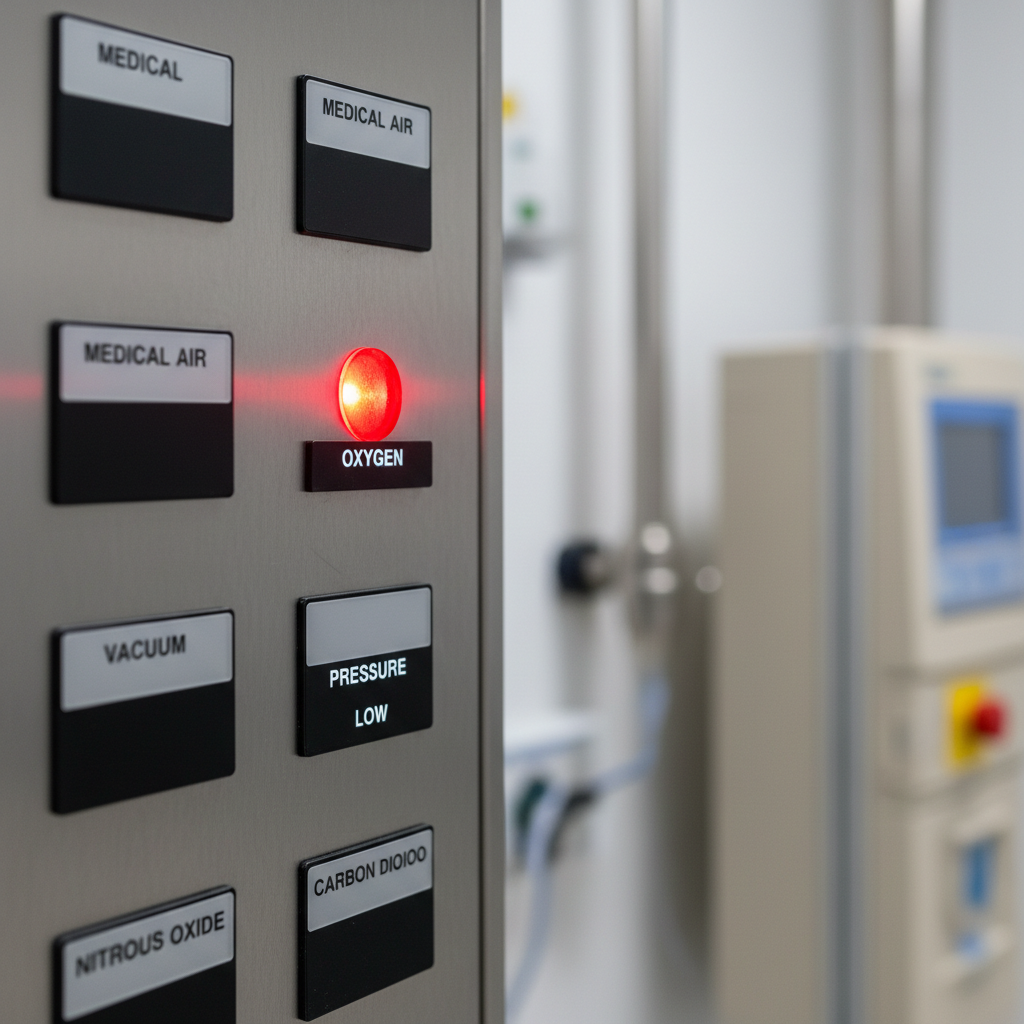
Understanding Master vs. Area Alarms
While often discussed together, master and area alarms serve distinct functions within a facility's medical gas system. Understanding the difference is key to managing your system effectively.
Master Alarm Panels
The master alarm system is the primary warning hub. As mandated by NFPA 99, it monitors the main source of each medical gas system, including bulk oxygen tanks, manifolds, and medical air compressors. Its job is to alert facility staff to system-wide failures or changes in pressure at the source. A master alarm will trigger for conditions like a low reserve supply in a liquid oxygen tank or the failure of a primary medical air compressor.
Key characteristics:
- Monitors the primary gas supply sources.
- Provides audible and visual alerts to a constantly attended location (e.g., the main engineering office or security desk).
- Indicates system-wide issues requiring immediate attention.
Area Alarm Panels
Area alarms, in contrast, are localized warning systems. They are installed downstream from the master alarm system and monitor the pressure and vacuum levels within specific zones or critical care areas of the facility, such as an operating room, an ICU, or a patient ward. If a valve is accidentally closed or a line pressure drops in that specific zone, the area alarm will activate, alerting nearby clinical staff without triggering a facility-wide master alarm.
Why this matters for compliance: NFPA 99 (2024 edition, Section 5.1.9) outlines the explicit requirements for the placement, function, and testing of both master and area alarm systems. Failure to maintain these alarms can result in citations during a Joint Commission survey and jeopardizes patient safety.
NFPA 99 Alarm Testing Requirements
Regular, documented testing of all medical gas alarm panels is a cornerstone of healthcare safety and compliance. The National Fire Protection Association (NFPA) provides clear directives in NFPA 99, Health Care Facilities Code.
Medical Testing Solutions provides annual medical gas inspections that include comprehensive alarm testing according to these rigorous standards. An ASSE 6040 Certified Medical Gas Maintenance technician must verify that each alarm signal, both visual and audible, activates when the system pressure or vacuum level fluctuates to the alarm set point. This involves simulating both normal and alarm conditions for every monitored gas in every single alarm panel.
Testing must verify:
- The alarm activates when pressure increases or decreases by 20% from the normal operating pressure.
- The alarm accurately indicates the specific gas and condition (e.g., "Medical Air High Pressure").
- The audible and visual signals are functional and meet the decibel and visibility requirements.
- The signals are relayed to all required locations.
Comparing Top Alarm Panel Brands: Beacon vs. Amico vs. Tri-Tech
While the function of all alarm panels is dictated by code, different manufacturers offer various features, interfaces, and technologies. Facilities in Davie, FL, commonly have systems from BeaconMedaes, Amico, or Tri-Tech. Medical Testing Solutions has extensive experience servicing all major brands.
| Feature | BeaconMedaes (Medipoint) | Amico (Alert-4) | Tri-Tech Medical (Area & Master) |
|---|---|---|---|
| Display Type | Color LCD Touchscreen | Color LCD Touchscreen | LED indicators & LCD screen |
| Networking | Ethernet (BMS integration) | Ethernet, BACnet, Modbus | Ethernet optional |
| Gas Sensors | Transducer-based | Transducer-based | Pressure switch or transducer |
| Customization | Programmable text, alarms | Highly programmable, custom audio | Pre-set or field-programmable |
| NFPA 99 Compliant | Yes | Yes | Yes |
| Serviceability | Field-serviceable components | Modular, easy-to-swap boards | Generally reliable, standard parts |
For facilities considering an upgrade or replacement, our medical gas installation team can help you select and install the right system for your needs and budget.
The Alarm Panel Testing & Calibration Process
The actual process of testing an alarm panel is methodical and must be performed by an ASSE 6040 certified technician. It is a critical part of a facility's broader medical gas maintenance services.
Here are the typical steps involved:
- Notification: The technician coordinates with clinical staff to ensure they are aware of the testing and to prevent any disruption to patient care.
- System Inspection: A visual inspection of the alarm panel and its components is performed to check for any visible damage or loose connections.
- Pressure Simulation: The technician connects a calibrated pressure/vacuum gauge and a controlled source of nitrogen to the DISS port for each gas on the alarm sensor. This isolates the test from the live patient system.
- Verifying Set Points: The pressure is slowly raised and lowered to pinpoint the exact pressure at which the alarm activates. This is checked against the NFPA 99 requirement (±20% of nominal pressure) and the manufacturer's specifications.
- Signal Confirmation: The technician confirms that both the audible and visual signals activate correctly and that the alarm description on the panel is accurate.
- Restoration: Once testing is complete for all gases, the testing equipment is disconnected, and the system is returned to its normal operating state.
- Documentation: Every step, reading, and result is meticulously documented in a detailed report for the facility's compliance records. This is a crucial step for passing Joint Commission and AHCA inspections.
Common Issues and When to Consider Replacement
Over time, alarm panels can fail or degrade. Common issues include:
- False Alarms: Alarms that trigger without a genuine pressure change, often due to failing sensors or electrical issues.
- Failed Sensors: Pressure transducers or switches can wear out, leading to inaccurate readings or a complete failure to alarm.
- Outdated Technology: Older panels may not offer the networking capabilities or detailed information that modern systems provide, making troubleshooting difficult.
- Component Unavailability: For very old systems, finding replacement parts can be impossible, making a full panel replacement the only option.
If your facility is experiencing frequent false alarms, or if your panels are over 15-20 years old, it's time to consider a replacement. Medical Testing Solutions offers a wide range of new alarm panels and provides full medical gas certification following any new installation or modification.
Why Choose ASSE-Certified Technicians in Davie?
Using an uncertified technician for medical gas work is a significant risk. The ASSE 6000 series of professional qualifications ensures that individuals have the knowledge and experience to work safely and competently on these life-support systems.
- ASSE 6040 (Maintenance Personnel): Certified to perform maintenance, repair, and testing of medical gas systems, including alarm verification.
- ASSE 6030 (Verifiers): Certified to perform the final verification of new or modified medical gas systems before they are placed into service.
- ASSE 6010 (Installers): Certified to install medical gas and vacuum systems.
Medical Testing Solutions employs a team of fully certified professionals, ensuring that all work performed in your Davie facility meets the highest standards of safety and compliance. When you need service, you can trust our expertise.
Get a Quote for Master Alarm Panel Testing in Davie, FL
Don't wait for an inspector to find a problem. Proactive, professional testing of your medical gas alarm systems is essential for patient safety and regulatory compliance. The ASSE-certified technicians at Medical Testing Solutions have the expertise to test, service, and replace master and area alarms from all major manufacturers.
Contact us today to ensure your facility is safe and compliant. Call us at (754) 315-1078 or request a quote online for master alarm panel testing and certification services in the Davie, FL area.
Frequently Asked Questions
According to NFPA 99, all master and area alarm systems must be tested periodically. The industry standard and best practice, followed by accrediting organizations, is to conduct and document this testing at least annually as part of a comprehensive maintenance program.
A master alarm typically activates due to a change in the primary source of a medical gas. Common causes include a main medical air compressor shutting down, a high or low pressure condition in a bulk oxygen tank, or a changeover to a secondary manifold.
NFPA 99 requires that individuals maintaining medical gas systems be qualified and credentialed, typically through the ASSE 6040 certification. Using unqualified staff can lead to improper testing, missed safety issues, and non-compliance with regulatory standards. It is strongly recommended to use a certified third-party vendor like MTS.
A master alarm monitors the main source of the gas (e.g., the bulk oxygen tank), alerting to system-wide issues. An area alarm monitors the pressure in a specific zone of the hospital (e.g., the OR or ICU) and alerts staff to localized problems.
The duration depends on the number of alarm panels in your facility. A small clinic might take a few hours, while a large hospital can take several days. We provide a time estimate with our quote.
Request a quote for your facility
Talk with Medical Testing Solutions about your next inspection, repair or equipment request.