Master Alarm Panel Installation in Fort Myers: A Low-Voltage Retrofit Guide
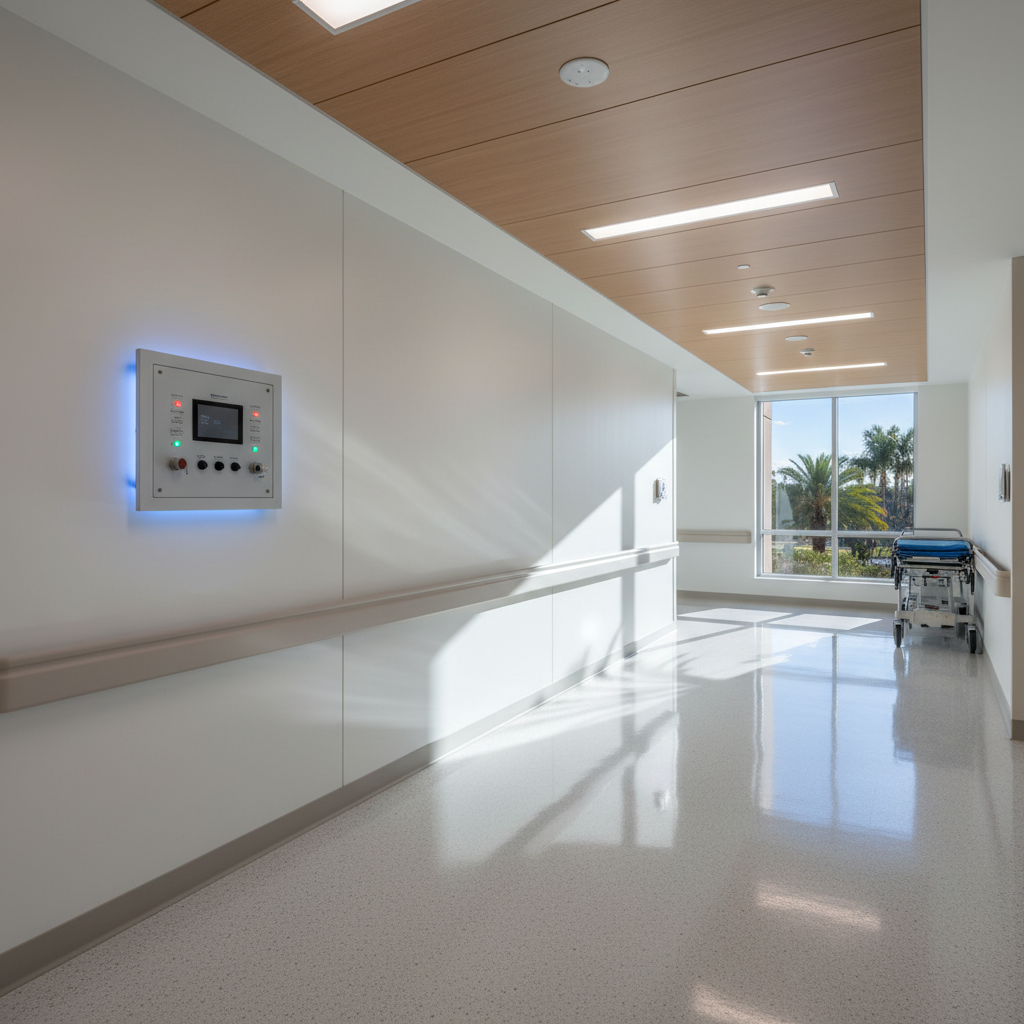
A compliant, fully-functional medical gas master alarm panel is the nerve center of your facility's life support systems. For hospital managers and facility directors in Fort Myers and across Lee County, ensuring these panels are up to code isn't just a matter of compliance—it's a matter of patient safety. This is especially true when dealing with older buildings that may have outdated, high-voltage alarm systems.
This pillar post is your definitive guide to master alarm panel installation in the Fort Myers area, with a specific focus on the advantages and process of retrofitting to a modern, low-voltage system. We will cover NFPA 99 requirements, Florida-specific compliance considerations, a step-by-step installation overview, and how to choose the right panel for your facility.
What is a Medical Gas Master Alarm Panel?
As defined by NFPA 99, a master alarm system is a centralized collection of audible and visual alarms designed to monitor the operation and condition of the source of supply, the reserve source (if any), and the pressure in the main lines of each medical gas and vacuum system. In simple terms, it's the "brain" of your med gas network. It provides immediate warnings to staff about critical changes that could impact patient care.
These panels monitor key conditions, including:
- Main line pressure (high/low)
- Medical air dew point (high)
- Carbon monoxide levels (high)
- Status of primary and secondary sources
- Backup and reserve system activation
When a parameter goes outside its normal operating range, the master alarm alerts staff in two locations: the principal working area of the person responsible for the facility's maintenance, and a second location that is continuously monitored, such as the security office or telephone switchboard.
NFPA 99 Master Alarm Requirements for Florida Facilities
The National Fire Protection Association's code, NFPA 99, Health Care Facilities Code, is the ultimate authority on medical gas systems. In Florida, adherence to this code is enforced by both The Joint Commission (TJC) for accreditation and the Agency for Health Care Administration (AHCA) for licensing.
According to NFPA 99, Section 5.1.9.2, master alarms must be installed to monitor all medical gas and vacuum systems. The key requirements stipulate:
- Monitored Functions: The panel must indicate if the pressure in the main lines increases or decreases by 20% from the normal operating pressure. For vacuum systems, it must signal when the vacuum level drops below a predetermined level.
- Visual & Audible Signals: Alarms must be both visible and audible and must clearly identify the specific condition being reported. The audible alarm must be cancellable, but the visual alarm must remain until the issue is resolved.
- Location: At least two master alarm panels must be installed in separate locations. One is typically in the facility engineering office, while the other is in a 24/7 monitored location like the PBX operator's desk or security office.
Why this matters for compliance: Failure to meet these specific NFPA 99 requirements can result in citations during a Joint Commission survey or an AHCA inspection. For Florida hospitals, all verification reports, including those for a new alarm installation, must satisfy AHCA engineering form 3110 and Chapter 59A of the Florida Administrative Code. A properly documented medical gas verification by an ASSE 6030 verifier is non-negotiable.
The Low-Voltage Advantage: Why Retrofit Your Master Alarm?
Many older hospitals in the Fort Myers area still use legacy master alarm systems that operate on high-voltage (120V) wiring. While functional, these systems are becoming obsolete. Modern master alarms are low-voltage, typically operating on 24V DC and utilizing Ethernet (IP-based) communication. Retrofitting to a low-voltage system offers significant advantages:
- Safety and Simplicity: Low-voltage wiring is inherently safer to work with and significantly simpler to install, reducing labor time and complexity.
- Reliability: IP-based systems offer superior monitoring, with the ability to integrate into the building management system (BMS) for enhanced data logging, remote monitoring, and preventative maintenance alerts.
- Cost-Effectiveness: While there is an upfront cost, the reduced labor for installation and lower long-term maintenance needs make retrofitting a financially sound decision. Cabling with CAT5/6 Ethernet is far cheaper than running new high-voltage conduit.
- Scalability: Low-voltage systems are easily expandable. Adding new zones or monitoring points is a simple matter of programming, not extensive and expensive rewiring.
Step-by-Step Retrofit Guide for Master Alarm Panel Installation
Retrofitting a master alarm panel is a precise process that requires certified expertise. An ASSE 6010 certified installer must perform the work, followed by an ASSE 6030 verifier to test the system. Here is a general overview of the process:
- Initial Assessment & Planning: Our team evaluates your existing system, maps all sensor locations, and determines the best low-voltage replacement panel for your needs and budget.
- De-energize and Disconnect: The old high-voltage panel is safely de-energized, disconnected, and removed. The existing wiring is made safe or removed.
- Mounting the New Panel: The new low-voltage master alarm panel is mounted, typically in the same location as the old one to maintain staff familiarity.
- Connecting Signal & Power Wiring: New low-voltage (often CAT6) cables are run from the source equipment and pressure sensors back to the new panel. Source equipment modules are installed to translate signals to the new IP-based protocol.
- System Programming and Configuration: The panel is programmed to your facility’s specific operational parameters, alarm set-points, and notification protocols.
- Full ASSE 6030 Verification: A certified verifier from Medical Testing Solutions performs a comprehensive test of every alarm function to ensure it complies with NFPA 99, reporting the results on AHCA-compliant forms. This step is critical for hospital accreditation and patient safety.
Choosing the Right Alarm Panel: A Comparison
Several reputable manufacturers produce high-quality master alarm panels. The best choice depends on your facility's size, number of gas systems, and budget. Medical Testing Solutions can source and perform medical gas installation for panels from all major brands.
| Feature | Tri-Tech Medical (Area-i) | BeaconMedaes (TotalAlert Infinity) | Amico (Alert-4) |
|---|---|---|---|
| Communication | Ethernet (IP-Based) | Ethernet (IP-Based) | Ethernet, BACnet, Modbus |
| Display | Full-Color Touchscreen | Full-Color Touchscreen | Full-Color Touchscreen |
| Max Gas Inputs | Up to 60 (expandable) | Up to 128 (expandable) | Up to 132 (expandable) |
| Remote Monitoring | Yes, via Web Server | Yes, via Web Server/BMS | Yes, via Web Server/BMS |
| Key Advantage | User-friendly interface | Highly customizable/scalable | Broad protocol support for BMS |
Florida-Specific Compliance: AHCA, TJC & Hurricane Season
Operating in Florida presents unique challenges and regulatory requirements. For hospitals in Fort Myers, from BayCare systems to AdventHealth facilities, compliance is key.
- AHCA & TJC: As mentioned, both AHCA and The Joint Commission mandate strict adherence to NFPA 99. All system modifications, including an alarm retrofit, must be fully documented and verified to avoid costly findings.
- Hurricane Re-verification: South Florida is no stranger to hurricanes. NFPA 99, Section 5.1.12, requires that medical gas systems be re-verified by an ASSE 6030 credentialed verifier if they are breached or compromised, such as after storm damage or a loss of source pressure. Having a local Florida team is crucial for rapid response.
The MTS Advantage for Fort Myers Hospitals
When it comes to medical gas services in Florida, choosing a local, certified provider makes all the difference. Medical Testing Solutions is headquartered at 501 East Las Olas Blvd, Ste 300, Fort Lauderdale, FL 33301. Our local presence provides a significant advantage.
Because our ASSE-certified technicians are based right here in Florida, we charge NO travel fees, NO lodging costs, and NO per-diem for any project, anywhere in the state. For facilities in Fort Myers, Naples, and West Palm Beach, this translates to an immediate savings of 10-25% compared to out-of-state competitors. Whether you need a full alarm retrofit, an annual medical gas inspection, or emergency service, our Fort Lauderdale office can provide same-day dispatch to much of South Florida.
Frequently Asked Questions (FAQs)
Q: What is the main function of a master alarm panel?A: It centrally monitors the entire medical gas system for pressure/vacuum deviations and changes in source status, providing audible and visual alerts as required by NFPA 99.
Q: How often do master alarms need to be tested?A: They must be tested annually as part of your Joint Commission (TJC) and NFPA 99 compliance program. Medical Testing Solutions offers comprehensive annual inspections.
Q: Can MTS install any brand of master alarm panel?A: Yes, our ASSE 6010 certified technicians are experienced with all major brands, including Tri-Tech, BeaconMedaes, Amico, and more. We can help you select the best fit for your facility's needs and budget.
Q: What are the benefits of a low-voltage retrofit?A: Low-voltage (Ethernet/IP-based) systems are more reliable, easier to install and maintain, offer superior monitoring and data logging capabilities, and are more cost-effective over the long term compared to older, high-voltage legacy systems.
Q: Does MTS serve hospitals outside of Fort Lauderdale?A: Absolutely. While our headquarters is in Fort Lauderdale, we serve the entire state of Florida with NO travel fees. Clients in Fort Myers, Miami, and West Palm Beach save significantly.
Get Your Fort Myers Alarm Installation Quote Today
Don't wait for a compliance issue to arise. A modern, low-voltage master alarm system is a critical investment in patient safety and operational efficiency. The expert team at Medical Testing Solutions has the ASSE-certified credentials and local Florida presence to make your next installation or retrofit a seamless success.
Call our Fort Lauderdale office today at +1 (754) 315-1078 or contact us online to request a free, no-obligation quote for your Fort Myers facility.
'''
This article is provided for educational purposes and reflects industry standards as of publication. Always verify against current NFPA 99, CGA, and AHJ requirements. Medical Testing Solutions is ASSE-certified and ready to help — contact us for facility-specific guidance.
Need Medical Gas Services?
Contact our certified team for inspections, verifications, installations, and more.
Get a Free Quote