Hospital Line Isolation Monitor Inspection in Jacksonville, FL
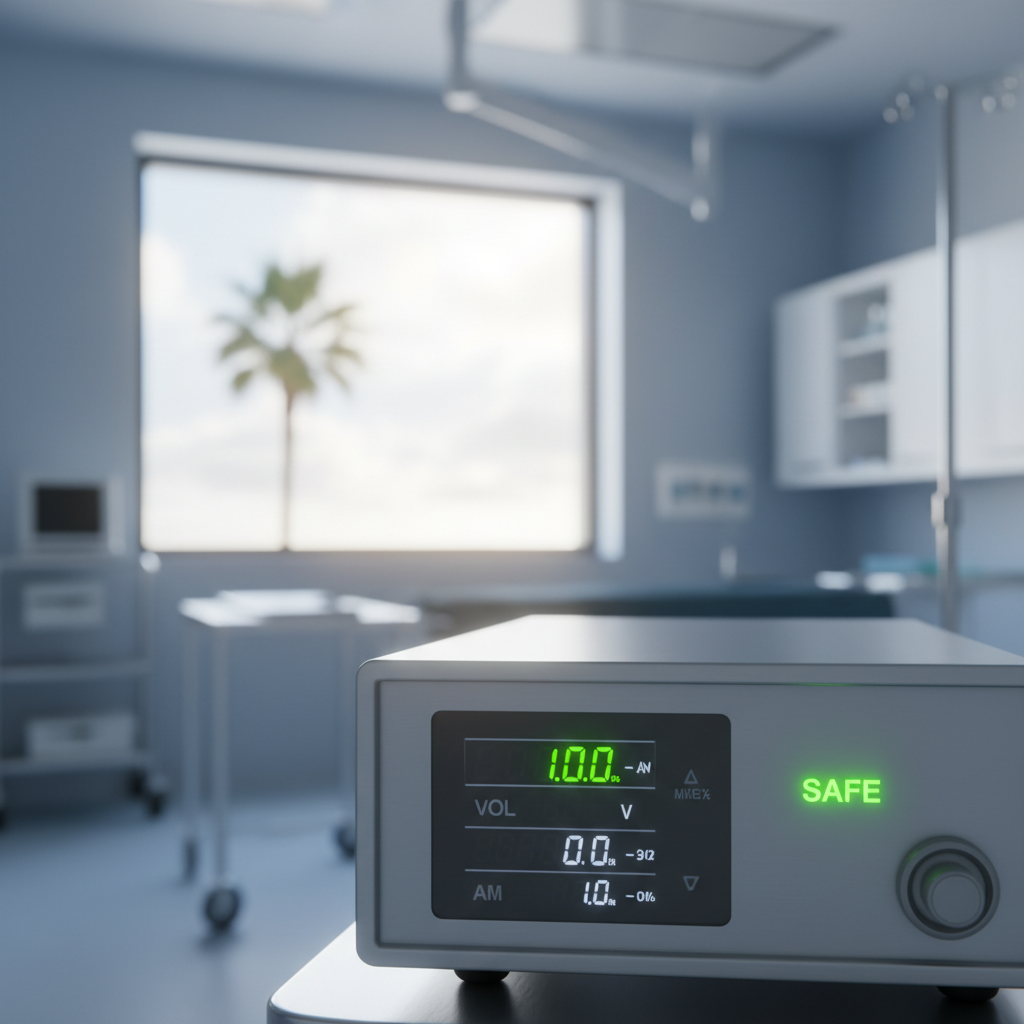
For any hospital facility manager or biomedical engineer in Jacksonville, ensuring the electrical safety of operating rooms, ICUs, and other wet procedure locations is a top priority. At the heart of this safety protocol is the Line Isolation Monitor (LIM), a critical device that protects patients and staff from electric shock. But simply having a LIM installed isn't enough; it must be regularly tested and maintained to meet stringent NFPA 99 standards. This guide provides a definitive overview of line isolation monitor (LIM) testing, compliance requirements for Florida hospitals, and how to choose a qualified service provider in the Jacksonville area.
We will cover the essential NFPA 99 testing criteria, the step-by-step inspection process performed by an ASSE 6030 certified technician, and the significant cost and logistical benefits of using a Florida-based company like Medical Testing Solutions for your facility's needs.
What is a Line Isolation Monitor (LIM)?
A Line Isolation Monitor is a safety device required in all "wet procedure locations" within a healthcare facility, as defined by NFPA 99, Health Care Facilities Code. These are areas like operating rooms, cardiac cath labs, and intensive care units where the presence of liquids increases the risk of electrical shock.
Isolated Power Systems vs. Standard Grounded Systems
Standard electrical systems in your home or office are "grounded," meaning there's a direct connection to earth. If a fault occurs and you touch a live component, your body can complete the circuit to the ground, resulting in a dangerous shock.
In contrast, operating rooms use "Isolated Power Systems." These systems, which include an isolation transformer, LIM, and special wiring, do not have a direct connection to ground. This means a person touching a single live conductor will not receive a shock. The LIM continuously monitors the integrity of this isolated system, looking for the very first fault to ground. If a fault is detected, the LIM triggers an alarm, but it does not interrupt power, allowing critical procedures to continue safely while the issue is identified.
The Role of LIMs in Patient Safety
The primary function of a LIM is to provide an early warning of a potential electrical hazard without disrupting power to life-support equipment. It measures the "Total Hazard Current" (THC), which is the cumulative leakage current from all connected equipment. If the THC exceeds a pre-determined threshold (typically 5.0 mA for operating rooms), the LIM will activate both a visual and audible alarm, alerting staff to the unsafe condition.
NFPA 99 Line Isolation Monitor Testing Requirements
Compliance with NFPA 99 is not optional—it is the standard mandated by authorities having jurisdiction (AHJs), including The Joint Commission (TJC) and the Florida Agency for Health Care Administration (AHCA).
According to NFPA 99, Chapter 6, "Electrical Systems," Line Isolation Monitors must be tested and documented at regular intervals:
- After Installation: A complete medical gas verification of the isolated power system, including the LIM, is required before patient use.
- Annually: All line isolation monitors must be tested at least every 12 months.
- After System Modifications: Any repair or renovation to the isolated power system necessitates re-testing.
Why This Matters for Compliance: The Joint Commission (TJC) and the Florida Agency for Health Care Administration (AHCA) survey for compliance with NFPA 99. In Florida, all verification reports must satisfy AHCA OPS Form 3110 and Chapter 59A of the Florida Administrative Code. Failure to perform and document annual LIM testing can result in findings, citations, and potential delays in accreditation for Jacksonville hospitals.
Furthermore, Florida's unique climate presents other challenges. NFPA 99 5.1.12 requires system re-verification after events like hurricanes that may cause a loss of source pressure or damage to infrastructure. A Florida-based team can mobilize quickly post-storm to ensure facilities like UF Health Jacksonville or Baptist Health remain compliant and safe.
The LIM Inspection & Testing Procedure
Only a qualified technician, such as an ASSE 6030 Medical Gas Systems Verifier, should perform LIM testing. The process is systematic and designed to verify the monitor's functionality and accuracy.
- Visual and Physical Inspection: The technician checks for physical damage, secure mounting, and that the green "SAFE" light is on.
- Verify Internal Self-Test: The technician presses the LIM’s "TEST" or "PUSH-TO-TEST" button. This should immediately trigger the audible and visual alarms, confirming the internal circuits work.
- Simulate Live Fault Condition: Using specialized test equipment, the technician introduces a calibrated resistive fault from each isolated conductor to ground. This verifies that the LIM alarms at the correct milliamp (mA) threshold required by NFPA 99, ensuring its sensitivity and accuracy.
- Documentation: All test results, including the alarm threshold, are recorded in a detailed report for the hospital's compliance records.
Common LIM Failures and Interpretation
Understanding what LIM alarms mean is crucial for facility staff. While a certified technician provides the formal diagnosis, recognizing the basics can improve safety.
| Alarm Condition | Hazard Index (mA) | Possible Cause | Urgency & Action |
|---|---|---|---|
| LIM in Alarm | > 5.0 mA | A significant fault on a single piece of connected equipment or the wiring itself. | Immediate: Safely isolate and remove equipment from the system one by one until the alarm clears to identify the faulty device. |
| Nuisance Alarms | ~2.0 - 5.0 mA | Cumulative leakage from multiple pieces of older or non-compliant equipment connected at once. | Moderate: While not an immediate single-fault danger, it indicates the system's safety margin is low. Investigate and identify leaky devices. |
| LIM Test Failure | N/A | The LIM's internal circuitry has malfunctioned and it cannot be trusted to monitor the system. | High: The LIM itself needs to be replaced. The isolated power system is compromised until a new, tested LIM is installed. |
The Advantage of a Florida-Based Verifier for Jacksonville Hospitals
Choosing a service provider for annual medical gas inspections has significant operational and financial implications. While many companies offer nationwide service, partnering with a Florida-based firm offers distinct advantages.
Medical Testing Solutions is headquartered at 501 East Las Olas Blvd, Ste 300, Fort Lauderdale, FL 33301. Our deep roots in the state mean we can provide unparalleled service to facilities across Florida, from Jacksonville to Miami. The number one benefit is cost. For all clients in our Florida service area, including those in Jacksonville, MTS charges absolutely NO travel fees, NO lodging costs, and NO per-diem. Compared to out-of-state verifiers who must pass on these expenses, most of our Florida clients save between 10–25% on their annual inspection and certification costs. Our Fort Lauderdale medical gas services team and other regional technicians are always within reach.This local presence also means faster response times, especially for emergency testing or post-hurricane re-verification as required by NFPA 99.
Get Compliant: Schedule Your Jacksonville LIM Inspection Today
Ensuring your hospital's wet procedure locations are safe and compliant is a critical, year-round responsibility. Medical Testing Solutions provides the expertise, documentation, and value that Jacksonville-area healthcare facilities need.
Our ASSE 6030 certified technicians ensure every inspection adheres to the strictest NFPA 99, AHCA, and TJC standards. Don't risk non-compliance or patient safety. Contact a local expert dedicated to the Florida healthcare community.
Call our Fort Lauderdale office today at +1 (754) 315-1078 or request a free quote online to schedule your line isolation monitor inspections.Frequently Asked Questions (FAQs)
Q: How often do line isolation monitors need to be inspected in Florida?A: Per NFPA 99 and AHCA requirements, line isolation monitors must be tested at least annually (every 12 months). They also require testing after installation or any modification to the isolated power system.
Q: Who is qualified to test a Line Isolation Monitor?A: Only a properly trained and credentialed technician, such as an ASSE 6030 Medical Gas Systems Verifier, is qualified to perform and certify line isolation monitor testing according to NFPA 99 standards.
Q: What does it mean when a LIM is in alarm?A: An active LIM alarm indicates that the total hazard current (leakage current) in the isolated power system has exceeded the safe limit, which is typically 5.0 mA. This suggests a potential electrical fault in a connected piece of equipment or the wiring itself, increasing the risk of electric shock.
Q: Why are there no travel fees for LIM inspection in Jacksonville from your company?A: Medical Testing Solutions is headquartered in Fort Lauderdale, Florida. Our statewide presence allows us to dispatch regional technicians to Jacksonville and other Florida cities without incurring travel, lodging, or per-diem costs that out-of-state companies would charge.
Q: Can a LIM prevent a power outage in an OR?A: A LIM does not prevent power outages, but it is a key part of a system designed to prevent the need to shut off power. By alarming at the first sign of a ground fault without tripping a breaker, it allows a procedure to continue while staff identify the source of the fault.
'''
This article is provided for educational purposes and reflects industry standards as of publication. Always verify against current NFPA 99, CGA, and AHJ requirements. Medical Testing Solutions is ASSE-certified and ready to help — contact us for facility-specific guidance.
Need Medical Gas Services?
Contact our certified team for inspections, verifications, installations, and more.
Get a Free Quote