Joint Commission EC.02.05.09 Medical Gas Tagging & Valve Signage Guide
Medical Testing SolutionsNovember 13, 20269 min read
Share
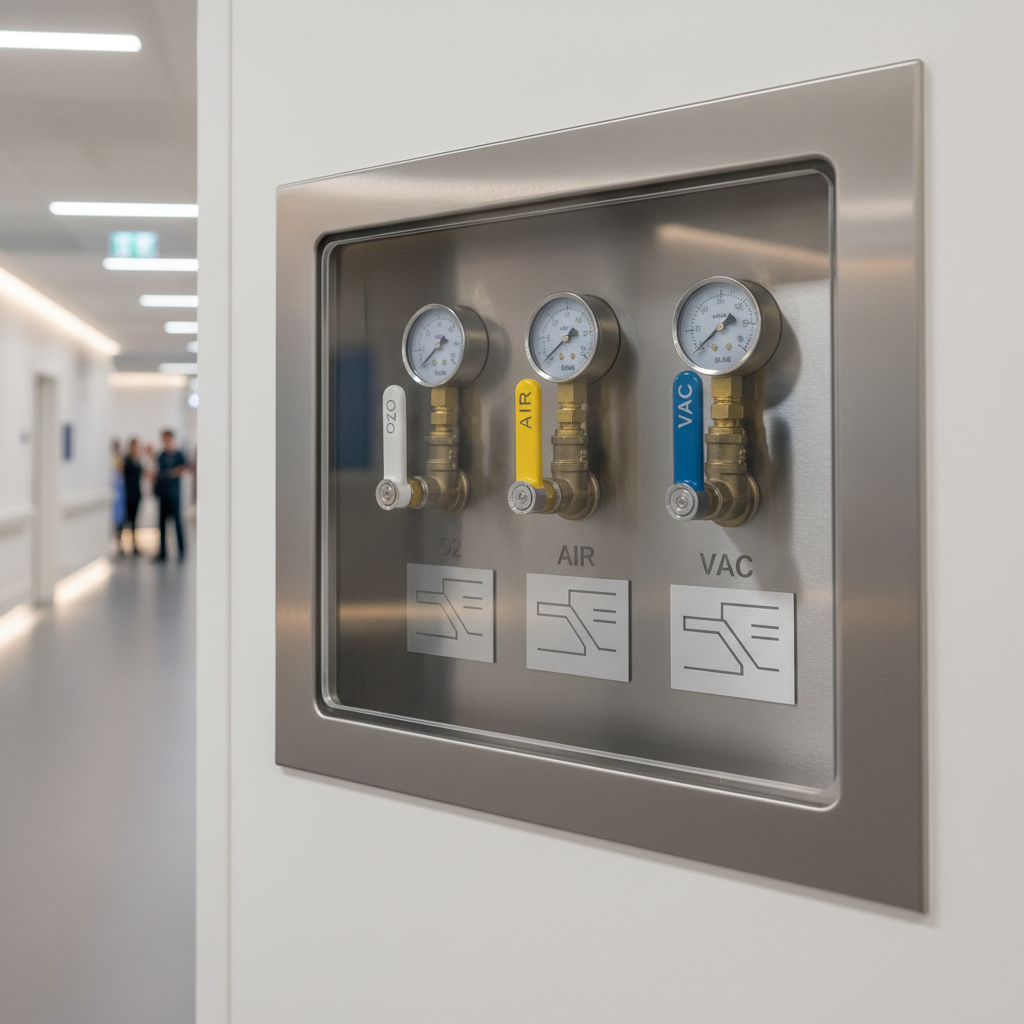
Last month in a 400-bed acute care hospital, a surveyor walked up to a third-floor ICU zone valve box and asked the charge nurse a simple question: "If a fire breaks out in Bed 4, does pulling this oxygen handle shut off Bed 8 too?" The placard inside the window read "3rd Floor West ICU," a room name the facility had retired during a 2018 renovation. Neither the nurse nor the accompanying facility engineer could verify the exact beds controlled by that valve without popping ceiling tiles to trace the 3/4-inch Type K copper tubing. That ten-second hesitation triggered an immediate Condition-level finding under Joint Commission EC.02.05.09 medical gas tagging requirements.
When hospitals fail medical gas surveys, the culprit is rarely a catastrophic manifold rupture. Surveyors cite facilities because the physical labels on zone valve boxes, riser valves, and above-ceiling shutoffs no longer match the current floor plan. Resolving these citations requires more than a label maker; it demands physical line tracing and strict adherence to NFPA 99 signage rules.
How TJC EC.02.05.09 Enforces NFPA 99 Signage Rules
The Joint Commission (TJC) evaluates medical gas and vacuum systems under Standard EC.02.05.09. While each Element of Performance (EP) targets a distinct lifecycle phase, surveyors lean heavily on EP 1 and EP 2 during physical environment tours. These elements require hospitals to inspect, test, and maintain critical utility system components, and to keep accurate, accessible documentation of every emergency shutoff control.
Because TJC incorporates NFPA 99 (Health Care Facilities Code) by reference, any violation of NFPA 99 Chapter 5 labeling rules automatically becomes an EC.02.05.09 citation on your SAFER matrix. Under NFPA 99 Section 5.1.11, every medical gas valve and pipeline must carry clear, permanent identification. If a staff member cannot walk up to a zone valve box and immediately read the specific rooms, areas, or equipment that valve serves, the system fails the standard.
Why this matters for compliance: A single mislabeled zone valve in a high-acuity area like an OR or ICU often registers as a high-likelihood, high-harm finding on the Joint Commission SAFER matrix. When clinical staff cannot identify which patients lose oxygen during an emergency shutoff, a localized fire response can quickly turn into a multi-room patient safety crisis.
The Four Valve Types Surveyors Check Above and Below the Ceiling
Surveyors do not stop at the acrylic window in the nurse station corridor. During the building tour, the life safety engineer will ask your team to pop ceiling tiles in mechanical corridors and clinical suites to inspect hidden shutoffs. NFPA 99 Section 5.1.4 and Section 5.1.11.2 govern how these valves must be tagged, and each valve type has distinct labeling requirements.
Valve Type
NFPA 99 Reference
Required Location
Mandatory Tag / Label Text
Source Valve
5.1.4.2 / 5.1.11.2.2
Immediate vicinity of source equipment
"SOURCE VALVE FOR THE [SOURCE NAME]"
Main Supply Valve
5.1.4.3 / 5.1.11.2.3
Downstream of source, inside building
"MAIN [GAS/VACUUM] SUPPLY VALVE FOR [BUILDING/AREA]"
Riser Valve
5.1.4.4 / 5.1.11.2.4
Base of each vertical riser
"[GAS/VACUUM] RISER VALVE FOR [AREA/FLOOR SERVED]"
Service Valve
5.1.4.5 / 5.1.11.2.5
Branch line off riser, upstream of zone valves
"[GAS/VACUUM] SERVICE VALVE FOR [AREA/ROOMS SERVED]"
Zone Valve
5.1.4.6 / 5.1.11.2.1
Readily accessible on the floor served
Gas name, standard color code, and exact rooms or outlets served
While source and main valves sit in locked mechanical rooms, service valves and in-line shutoffs live above the ceiling grid. Over years of tenant improvements and IT cable pulls, paper hang-tags tear off and handwritten Sharpie notes fade. When a surveyor looks above a corridor tile and sees an unlabeled quarter-turn ball valve on a yellow-labeled medical air line, you get cited under EC.02.05.09.
If your facility has unmarked ceiling valves or outdated corridor placards, schedule a comprehensive annual medical gas inspection with Medical Testing Solutions to audit and re-tag your distribution network before your next survey window opens.
Why Renovations Break Your Zone Valve Directory
Hospital floors are living environments. A ten-bed post-anesthesia care unit (PACU) gets subdivided into isolation rooms, or two semi-private med-surg rooms get combined into a bariatric suite. During construction, the architectural room numbers on the doorframes change, and the IT department updates the nurse call registry. Yet the paper insert inside the corridor zone valve box stays frozen in time.
We routinely find three specific failure modes during pre-survey mock audits:
Architectural renumbering: The corridor doorway reads "Room 412," while the zone valve directory still lists "Rooms 408–410."
Partial zone splits: A remodel adds two new headwall outlets fed from an adjacent zone, resulting in a single patient room controlled by two separate zone valve boxes down different hallways.
Obstructed access: Clinical staff park crash carts, linen hampers, or mobile workstations directly in front of the zone valve assembly, violating NFPA 99 Section 5.1.4.6.2.
Missing gauge identification: Pressure and vacuum indicators lack permanent labels connecting the gauge to the specific gas pipeline it monitors.
Under NFPA 99 Section 5.1.4.6.1, a zone valve must only control outlets located on that exact same story. If a creative contractor tapped a second-floor ceiling main to feed a first-floor clinic exam room during a remodel, no amount of tagging will make that valve compliant. That scenario requires physical piping remediation by an ASSE 6010 installer.
Pipe Labeling vs. Valve Tagging Under NFPA 99 Section 5.1.11
Engineers frequently confuse pipeline tape with valve tagging, but surveyors grade them as two separate requirements. NFPA 99 Section 5.1.11.1 covers the copper tubing itself, while Section 5.1.11.2 covers the shutoff valves. Getting one right does not excuse missing the other.
Pipeline markers must appear every 20 feet on straight runs, at every change of direction, on both sides of every wall or floor penetration, and at least once in every room or story traversed. The markers must use CGA C-9 standard color coding, green with white lettering for oxygen, yellow with black lettering for medical air, and white with black lettering for medical surgical vacuum. Letters must be at least 1/2-inch high, include directional flow arrows, and state the operating pressure if the line runs outside the standard 50–55 psi gauge range (such as 160–185 psi nitrogen for surgical tools).
Valve tags, on the other hand, must identify the function and the exact clinical footprint controlled by that specific handle. A service valve above a ceiling tile needs a durable brass, aluminum, or laminated phenolic tag secured to the valve body or adjacent hanger. It cannot rely on the green "OXYGEN" tape wrapped around the pipe six inches away.
How to Audit and Re-Tag Unmarked Shutoffs Safely
When your facility receives a Requirement for Improvement (RFI) under EC.02.05.09 for inaccurate zone valve labeling, you must submit Evidence of Standards Compliance (ESC) within 60 days. Guessing which rooms a valve feeds is never acceptable, and shutting down an active ICU zone valve at 2:00 PM on a Tuesday to see which low-pressure alarms ring is dangerous.
To resolve tagging findings safely, facility teams coordinate with ASSE-certified specialists to execute a systematic verification and mapping protocol. At Medical Testing Solutions, our ASSE 6030 verifiers and ASSE 6040 maintenance personnel use two distinct methods depending on the unit's clinical schedule.
Method 1: Above-Ceiling Physical Line Tracing
In 24/7 critical care units where you cannot interrupt gas flow, technicians must physically trace the copper branches from the zone valve box to the terminal outlets. We open the ceiling cavity at the valve assembly, identify the downstream Type K or Type L copper run, and follow the piping through fire barriers and smoke partitions into each patient room. Once confirmed, we tag the above-ceiling service valves and install permanent, engraved or printed placards inside the zone valve window matching the current architectural door plaques.
Method 2: Controlled Pressure-Drop Mapping
In outpatient surgery centers, endoscopy suites, or hospital wings that can be scheduled for after-hours downtime, technicians perform a controlled pressure-drop test. After confirming with clinical leadership that zero patients are connected to the wall outlets, the technician closes the zone valve and opens a single downstream test outlet using a calibrated gauge assembly. By checking which outlets lose pressure across the suite, the team confirms 100% accuracy of the zone boundaries and verifies that no cross-zone tie-ins exist.
Building Survey-Ready Documentation for EP 1 and EP 2
Physical tags in the ceiling and corridor only solve half of an EC.02.05.09 audit. Before the surveyor ever puts on a hard hat, they review your utility management binder during the document review session. If your physical valves are spotless but your paperwork is missing, you will still take a citation under EP 1.
Your medical gas compliance binder must contain four core records to pass scrutiny:
A Master Valve Inventory: A spreadsheet or CAD-linked schedule listing every source, main, riser, service, and zone valve by unique asset ID, floor, frame location, gas type, and exact rooms served.
Updated As-Built Drawings: Single-line riser diagrams and floor plans showing valve locations that reflect the current building layout, not the original 1995 construction prints.
Annual Inspection Reports: Detailed logs proving that every valve, alarm panel, manifold, and outlet was tested by qualified personnel holding medical gas system certification credentials (specifically ASSE 6030 or ASSE 6040).
Staff Competency Records: Documentation showing that nursing leadership and security personnel know who holds authority to shut off a zone valve during an emergency and how to read the valve labels.
Whether you need to clear an active Joint Commission RFI within a 60-day window or want to audit your valve directory before surveyors walk through the front door, Medical Testing Solutions can help. Call our Fort Lauderdale headquarters at (754) 315-1078 or request a quote online to schedule an ASSE-certified medical gas tagging and compliance assessment.
Frequently Asked Questions
Under NFPA 99 Section 5.1.11.2.1, a zone valve label must stay visible from outside the box assembly and clearly identify the specific gas or vacuum system, its standard color code, and the exact rooms, areas, or equipment controlled by that valve. Using outdated room numbers or vague area names like "North Wing" will trigger an EC.02.05.09 finding.
No. NFPA 99 Section 5.1.11.1.4 requires medical gas pipelines to be labeled at intervals of no more than 20 feet, at least once in or above every room, on both sides of every wall or floor penetration, and at every change of direction. Service valves located above the ceiling grid also require permanent tags under Section 5.1.11.2.5.
While trained in-house facility engineers can update paper room directories once the piping layout is known, verifying unknown zone boundaries or performing pressure-drop mapping should be executed by ASSE 6030 Medical Gas Verifiers or ASSE 6040 Maintenance Personnel. Having credentialed documentation satisfies Joint Commission EC.02.05.09 qualification standards.
When a surveyor cites missing or inaccurate valve tags under EC.02.05.09, the finding lands on the hospital's SAFER matrix and generates a Requirement for Improvement (RFI). The hospital typically has 60 days to trace the lines, install compliant permanent signage, update its master valve inventory, and submit Evidence of Standards Compliance (ESC).
Under NFPA 99 Section 5.1.4.6, zone valves must remain readily accessible at all times and cannot be installed in closed rooms, behind locked doors, or in areas where furniture, crash carts, or doors block access. Furthermore, a zone valve cannot be located in the same room as the station outlets it controls.
Request a quote for your facility
Talk with Medical Testing Solutions about your next inspection, repair or equipment request.