Understanding Hospital Oxygen System Components
A compliant hospital oxygen system is more than just a tank. It's a complex network of components regulated by strict codes to ensure patient safety. For a facility in Winston-Salem, or anywhere in North Carolina, a typical bulk oxygen installation involves a primary supply, a secondary reserve, and a robust distribution network.
Primary Supply: The Bulk Tank
The heart of the system is the bulk cryogenic oxygen tank, usually located outdoors on a concrete pad. These tanks store liquid oxygen (LOX) at approximately -297°F (-183°C).
- Vaporizers: Ambient or heated vaporizers convert the LOX into gaseous oxygen for distribution.
- Pressure Control: A series of regulators steps down the high pressure from the tank to a standard line pressure, typically 50-55 psi, as required by NFPA 99.
Secondary Supply & Manifolds
NFPA 99 mandates a secondary, or reserve, supply in case the primary source fails. This is usually a high-pressure cylinder manifold.
- Manifold Design: The manifold automatically switches over from the primary to the secondary supply with no interruption in service. It must have enough cylinders to provide an average day's supply of oxygen.
- Changeover Alarms: A local alarm and a master alarm panel must signal when the system has switched to the secondary supply, alerting facility staff to the issue.
The Piped Distribution System
From the source, the oxygen is piped throughout the hospital.
- Piping Material: Per NFPA 99, all medical gas piping must be Type K or L seamless copper tubing, cleaned for oxygen service.
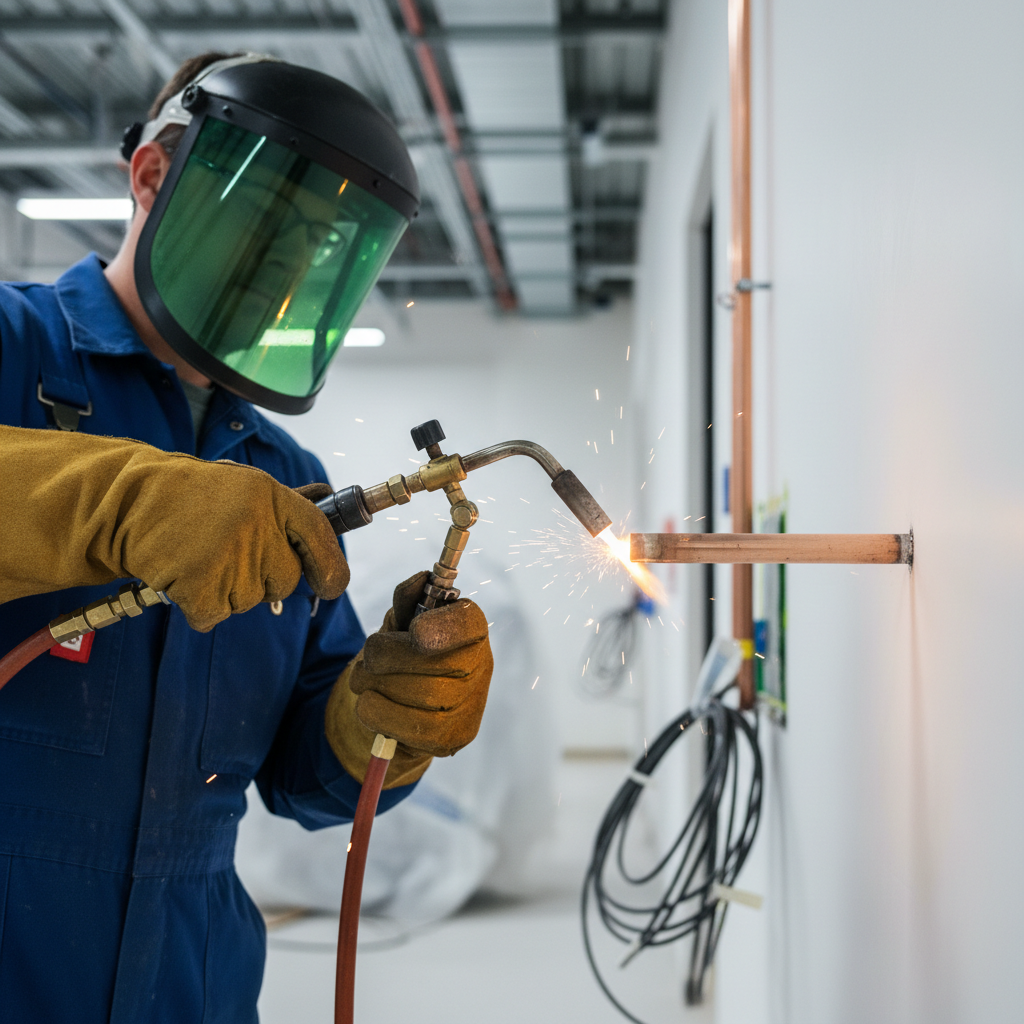
- Brazing: All joints must be brazed by an ASSE 6010 certified installer. Brazing uses a filler metal with a melting temperature above 840°F, creating a much stronger and more reliable joint than soldering. This is a critical step in a compliant medical gas installation.
- Zone Valves: The piping system is segmented using zone valve boxes. These allow specific areas of the hospital to be isolated for maintenance or in an emergency without shutting down the entire facility.
Why This Matters for Compliance: NFPA 99 (Health Care Facilities Code) is not a suggestion; it's the law in most jurisdictions, including North Carolina. Failure to adhere to its stringent requirements for materials, design, and installation practices can result in failed inspections, project delays, and unacceptable risks to patient safety.
The ASSE 6010 Installation Process: From Design to Flow
A successful hospital oxygen system installation in Winston-Salem requires meticulous planning and execution by certified professionals. The process is governed by the ASSE 6000 series of standards.
Step 1: Design and Engineering
Before any pipe is cut, a detailed design is created. This involves calculating the facility's peak oxygen demand, sizing the bulk tank and reserve manifold accordingly, and mapping the entire piping route. The design must be reviewed and approved by the facility and relevant authorities.
Step 2: Site Preparation and Source Equipment Placement
The concrete pad for the bulk tank is poured, and the tank itself is carefully craned into place. The main supply line, emergency shut-off valves (EOSVs), and any associated vaporizer equipment are installed.
Step 3: Piping Installation and ASSE 6010 Brazing
This is the most labor-intensive phase. ASSE 6010 certified installers run the copper piping from the source equipment to every patient room, operating theater, and treatment area.
- Nitrogen Purge: During brazing, a continuous flow of oil-free, dry nitrogen is passed through the pipes. This displaces oxygen, preventing the formation of copper oxides on the interior surface of the pipe. These oxides can flake off and contaminate the gas stream or pose a fire hazard in an oxygen-rich environment.
- Joint Integrity: Each brazed joint is a potential point of failure. A qualified brazer ensures complete filler metal penetration, creating a leak-proof seal that will last for the life of the building.
Step 4: Installation of Zone Valves, Alarms, and Outlets
Zone valve boxes, area alarm panels, and station outlets (the familiar DISS or quick-connect ports in patient rooms) are installed and connected to the piping network. All components must be new and cleaned for oxygen service from the manufacturer. Medical Testing Solutions can supply all necessary equipment from leading brands.
Comparison of Key NFPA 99 & ASSE 6000 Series Standards
Understanding the relevant codes and standards is crucial for hospital facility managers. Here’s a brief comparison:
| Standard | Title | Scope & Purpose |
|---|---|---|
| NFPA 99 | Health Care Facilities Code | The master code governing all aspects of the medical gas system, including performance criteria, design, installation, testing, and maintenance. |
| ASSE 6010 | Medical Gas Systems Installers | Certification standard for the individuals performing the installation. Ensures they have the knowledge and skill to install systems safely, including the critical brazing process. |
| ASSE 6030 | Medical Gas Systems Verifiers | Certification standard for third-party verifiers. Ensures they are qualified to conduct the series of tests required to confirm the system is safe and ready for patient use. |
| ASSE 6040 | Medical Gas Systems Maintenance Personnel | Certification for facility staff who perform routine maintenance on the medical gas systems. |