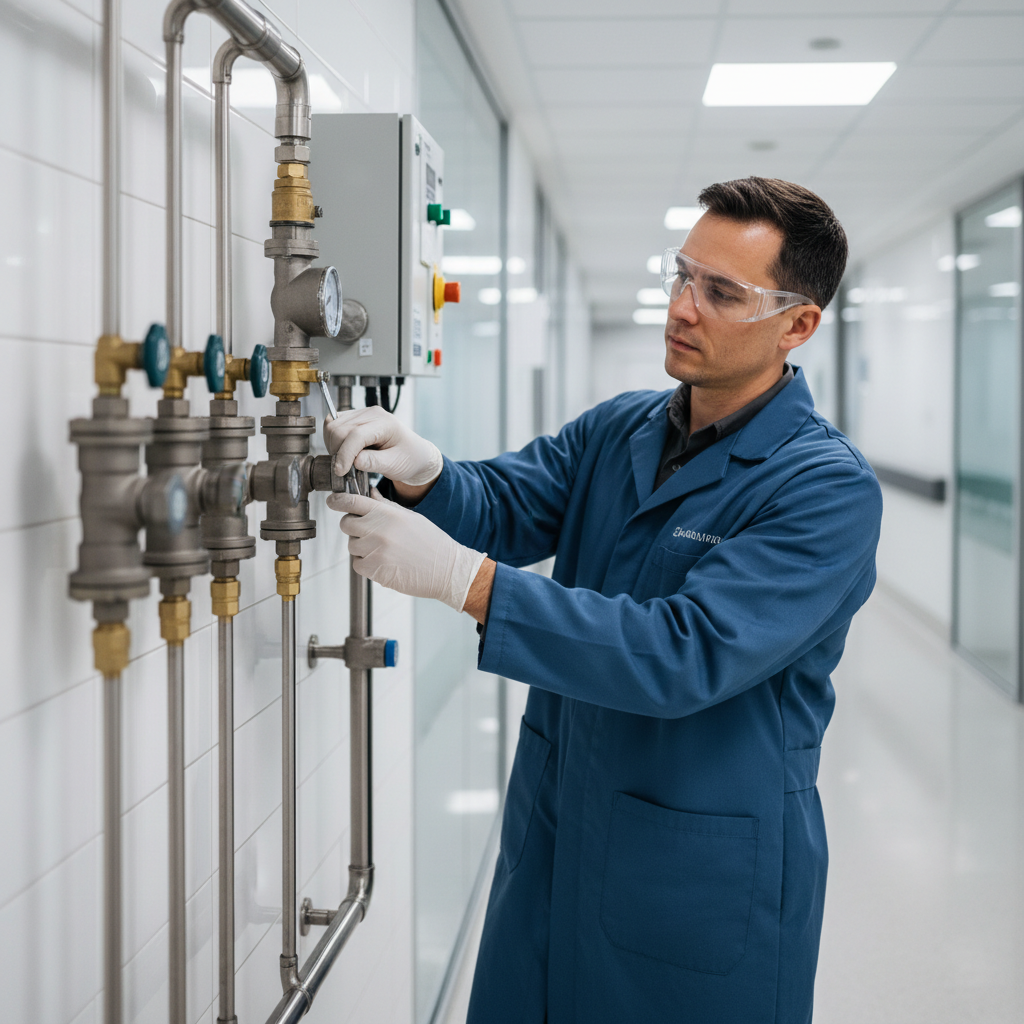
Hospital Oxygen System Installation in Wilmington, NC: A Comprehensive Guide for Healthcare Facilities
Installing a medical oxygen system in a hospital is one of the most critical infrastructure projects a healthcare facility can undertake. Unlike standard plumbing or electrical work, these life-sustaining systems are governed by a stringent set of codes and standards, primarily NFPA 99 (Health Care Facilities Code), and require specialized expertise credentialed by the American Society of Sanitary Engineering (ASSE). A flawless installation ensures patient safety, prevents catastrophic failures, and guarantees regulatory compliance.
This guide provides a definitive overview of the hospital oxygen system installation process for facility managers and healthcare administrators in Wilmington, NC. You will learn about the essential components, the step-by-step installation and brazing process, and the rigorous testing and verification required to bring a system online. From the bulk oxygen tank to the final patient outlet, we'll cover the critical details you need to know.
Core Components of a Hospital Oxygen System
A hospital's medical oxygen system is a complex network. While patients interact with the wall-mounted outlet, a vast infrastructure feeds that connection. Key components include:
- Bulk Oxygen Storage: For most hospitals, this is a large, outdoor cryogenic tank holding liquid oxygen (LOX). It's the primary supply.
- Vaporizer: Converts the liquid oxygen back into a gaseous state for distribution.
- Reserve Manifold: A secondary, high-pressure cylinder bank that automatically takes over if the primary bulk supply fails or is under maintenance. This is a critical redundancy for patient safety.
- Main Alarm and Control Panel: The system's nerve center, monitoring pressure, and supply status 24/7. It alerts staff to any irregularities, as mandated by NFPA 99.
- Piping Distribution Network: The network of copper pipes that carries the oxygen from the source throughout the facility.
- Zone Valve Boxes: Sectional shut-off valves that allow maintenance or emergency isolation of specific areas (e.g., an operating room, an entire floor) without disrupting the entire hospital.
- Area Alarms: Local alarms in critical care areas (ICUs, ORs) that alert staff to pressure drops or other issues within their specific zone.
- Station Outlets: The final point of delivery, where medical devices connect to the oxygen supply.
The Installation Process: From Design to Verification
A successful installation is meticulous and phased. Rushing any step can lead to contamination, leaks, or system failure. As a leading provider of medical gas installation, Medical Testing Solutions (MTS) follows a process rooted in ASSE 6010 standards.
Step 1: System Design and Planning
Before a single pipe is laid, a detailed plan is developed. This involves calculating flow rates, sizing pipes for different zones based on the number of outlets, and mapping the entire distribution network. The design must account for the facility's current needs and future expansion plans.
Step 2: Material and Equipment Staging
All materials, especially the copper piping, must be medical-grade and prepared for oxygen service. This means they are delivered clean, capped, and protected from contamination. All components must be handled with care to prevent the introduction of dust, oils, or other hydrocarbons.
Why this matters for compliance: NFPA 99 Chapter 5 is explicit about the materials permitted for medical gas systems. Using incorrect materials or failing to protect them from contamination can create a severe fire hazard in an oxygen-rich environment.
Step 3: The Art of Brazing (ASSE 6010)
The core of the installation is joining the copper pipes. This isn't plumbing; it's a specialized process called brazing, performed only by technicians with an ASSE 6010 Medical Gas Systems Installer certification.
- Nitrogen Purge: During brazing, a continuous flow of oil-free, dry nitrogen is passed through the pipes. This displaces oxygen, preventing the formation of copper oxides on the interior pipe wall.
- Brazing Technique: Using a specific brazing alloy (typically a copper-phosphorus or silver-based alloy), the technician heats the joint to a precise temperature to create a strong, leak-proof seal.
- No Flux: Flux, a chemical cleaning agent used in soldering, is strictly forbidden as it can introduce contaminants.
Any particulate matter created during brazing can travel downstream and compromise patient-care equipment or, worse, be delivered to the patient.
Step 4: Zone Valve Box and Alarm Integration
As the piping network expands, zone valve boxes and alarm panels are installed. Electricians wire the alarm sensors to the central control panel, ensuring that any pressure deviation will trigger an immediate alert. This is a crucial part of the medical gas certification process.
NFPA 99 vs. ASSE 6000: Understanding the Standards
It's easy to confuse these two, but they serve different roles. This table clarifies their purpose:
| Standard | Purpose | Who It's For | Key Function |
|---|---|---|---|
| NFPA 99 | The "What" - The code that defines the safety requirements for all aspects of the health care facility, including medical gas systems. | Facility Managers, Engineers, AHJs (Authorities Having Jurisdiction) | Sets minimum safety standards for design, installation, performance, and maintenance. |
| ASSE 6000 Series | The "Who" & "How" - A series of personnel certifications that qualify individuals to build, test, and maintain the systems defined in NFPA 99. | Technicians, Installers, Verifiers, Instructors | Ensures that the people working on the system are competent and follow standardized procedures (e.g., ASSE 6010 for Installers, ASSE 6030 for Verifiers). |
The Final Step: ASSE 6030 Verification and System Certification
Once the installation is physically complete, it cannot be used until it has been rigorously tested and verified by an independent third-party, such as Medical Testing Solutions. This process is performed by an ASSE 6030 Medical Gas Verifier.
Third-party medical gas verification is non-negotiable and includes:
- Initial Blowdown: High-volume nitrogen is flushed through the system to remove any particulate matter left from installation.
- Pressure Testing: The system is pressurized (typically to 150% of its working pressure) and monitored for any drop, which would indicate a leak.
- Cross-Connection Testing: Each gas outlet is checked to ensure the correct gas is flowing. An oxygen outlet delivering nitrogen, for example, would be fatal.
- Purity and Particulate Testing: Gas samples are taken from the outlets to ensure the oxygen meets USP standards for purity and is free of contaminants.
- Alarm Testing: Every alarm, main, area, and local, is intentionally triggered to confirm it functions correctly.
Only after passing every test in the ASSE 6030 protocol can the system be certified and put into service for patient use. Regular annual medical gas inspections are then required to maintain compliance.