Hospital Oxygen System Installation in Washington DC: A Comprehensive Guide for Healthcare Facilities
Installing a hospital oxygen system is one of the most critical infrastructure projects a healthcare facility in Washington D.C. can undertake. These systems are life-sustaining, and their design, installation, and verification are governed by stringent codes to ensure patient safety. A compliant installation, from the bulk oxygen tank to the patient room outlet, depends on meticulous planning and execution by certified professionals. This guide will walk you through the essential phases of a hospital oxygen system installation, covering key components, regulatory standards like NFPA 99, and the ASSE 6000 series personnel qualifications required for a safe and successful project.
The Core Components of a Hospital Oxygen System
A hospital's medical oxygen system is more than just pipes in the walls. It's a complex network comprising several key subsystems, each with a specific function. Understanding these components is the first step in planning a successful installation.
1. Oxygen Source: Bulk Tanks and Manifolds
- Bulk Cryogenic Oxygen Tanks: For most hospitals, the primary oxygen source is a large, outdoor bulk cryogenic liquid oxygen tank. These tanks hold vast quantities of oxygen in its liquid state at extremely low temperatures (around -297°F or -183°C). A vaporizer system converts the liquid to a gas before it enters the hospital's main supply line.
- Manifold Systems: All facilities must have a secondary, backup oxygen supply. This is typically a high-pressure cylinder manifold. It consists of two banks of cylinders. When the primary bank is depleted, the system automatically switches to the secondary bank, ensuring an uninterrupted supply. Manifolds are also the primary source for smaller facilities that don't require a bulk tank.
2. Piping Distribution Network
- Main and Riser Lines: From the source, the oxygen is transported through large-diameter copper pipes known as the main lines. These lines run into the facility and branch into vertical pipes called risers, which distribute the gas to different floors or zones.
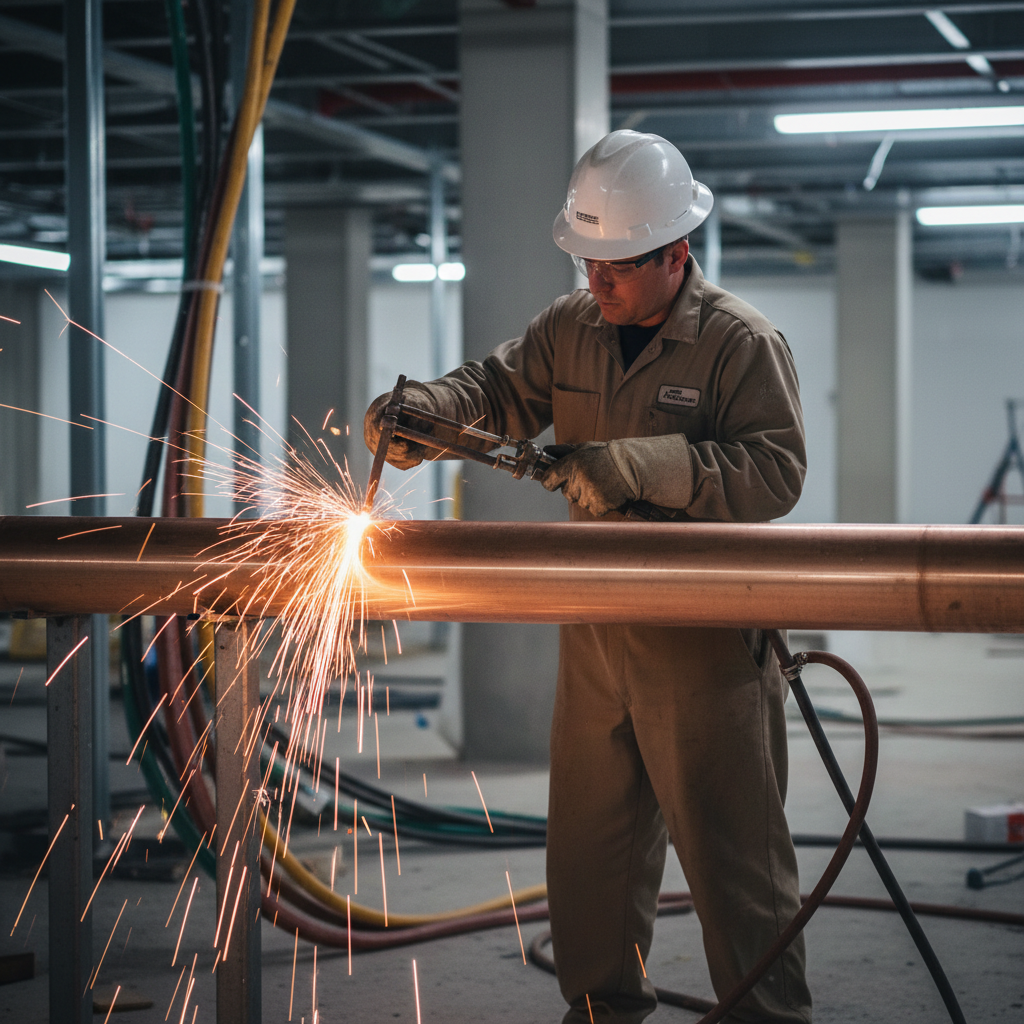
- Brazing and Tubing: The integrity of this piping is paramount. Per NFPA 99, all medical gas piping must be Type K or L seamless copper tubing, cleaned for oxygen service. Joints must be made using a brazing process with a specific silver alloy. This work requires a certified ASSE 6010 Medical Gas Systems Installer who can ensure every joint is leak-free and clean.
Why this matters for compliance: NFPA 99 (2021 Edition, Section 5.1.10.4) mandates specific procedures for brazing medical gas piping. Failure to use the correct materials or have ASSE 6010 certified personnel perform the work can lead to system contamination, leaks, and immediate risk to patients, resulting in costly project delays and failure to achieve certification.
3. Control and Monitoring: Zone Valves and Alarms
- Zone Valve Boxes: To control the flow of oxygen to specific areas ("zones") of the hospital, zone valve boxes are installed. These allow maintenance or emergency isolation of a particular wing, floor, or department without shutting down the entire facility.
- Area and Master Alarms: A system of alarms is crucial for monitoring the oxygen supply's status. Master alarms are located where they can be continuously monitored (e.g., the engineering office) and provide alerts on the main source equipment. Area alarms are located within specific care areas (like an ICU or OR) and monitor the pressure in the local zone.
The Installation Process: From Design to Verification
A compliant hospital oxygen system installation follows a phased approach, managed by a team of certified experts. Medical Testing Solutions provides a turnkey service, from initial consultation to final verification.
- Initial Design and Planning: Our team works with your facility managers, architects, and engineers to design a system that meets your specific clinical needs while strictly adhering to NFPA 99, ASSE 6000, and local Washington D.C. codes.
- Piping Rough-In and Brazing: ASSE 6010 certified installers run the copper piping network. This is the most labor-intensive phase, requiring meticulous attention to the brazing process to prevent leaks or internal contamination.
- Initial Piping Tests: Before the walls are closed, the piping system undergoes initial pressure tests (NFPA 99, 5.1.12.2) to ensure the integrity of every joint.
- Component Installation: The source equipment (bulk tank, manifold), zone valve boxes, alarm panels, and terminal outlets are installed and connected to the piping network.
- Final System Verification: This is the most critical step before the system can be used for patient care. An independent, third-party ASSE 6030 Medical Gas Verifier must perform a series of comprehensive tests.
ASSE 6030 Verification: The Final Step to Compliance
Before a new or modified medical oxygen system can be put into service, it must pass a battery of tests performed by an ASSE 6030 Verifier. This is not optional; it is mandated by code. The verifier must be from a company independent of the installer. Medical Testing Solutions has a dedicated team of ASSE 6030 verifiers to perform this essential service.
The verification process, detailed in NFPA 99 (Section 5.1.12.3), includes:
- Standing Pressure Test: Verifying the system holds pressure over time.
- Cross-Connection Test: Ensuring that only oxygen is flowing from the oxygen outlets.
- Particulate Testing: Checking for any contaminants within the piping.
- Purity Testing: Verifying the oxygen concentration meets USP standards.
- Valve and Alarm Tests: Confirming that all zone valves and alarm systems function as intended.
Only after passing every test in the medical gas verification process can the system be certified as safe for patient use.
Comparing Key Standards for Oxygen System Installation
| Standard | Focus Area | Key Requirement for Installation |
|---|---|---|
| NFPA 99, Ch. 5 | Gas and Vacuum Systems | Defines overall system requirements, including source equipment, piping materials, pressure levels, and mandatory testing protocols. |
| ASSE 6010 | Medical Gas Installer | Personnel credential. Requires installers to pass a rigorous written and practical exam on brazing and system assembly. |
| ASSE 6030 | Medical Gas Verifier | Personnel credential. Requires verifiers to be experts in the testing procedures that ensure a system is safe and ready for patient use. |
| CGA M-1 | Bulk Liquid Oxygen Systems | Provides detailed standards for the safe installation and operation of bulk cryogenic oxygen tanks at consumer sites. |