Skip to content
    New: Medical Gas Outlet Retrofit & Rebuild Matrix — cross-reference legacy Chemetron, Ohio Diamond, Puritan-Bennett & more →
    ASSE Certified 24/7
    Medical Gas Service
    Compliance & Standards

    Hospital Oxygen System Installation Rock Hill SC: Complete Code Guide

    Medical Testing SolutionsNovember 5, 202614 min read
    Share
    Hospital Oxygen System Installation Rock Hill SC: Complete Code Guide

    Hospital Oxygen System Installation Rock Hill SC: Complete Guide

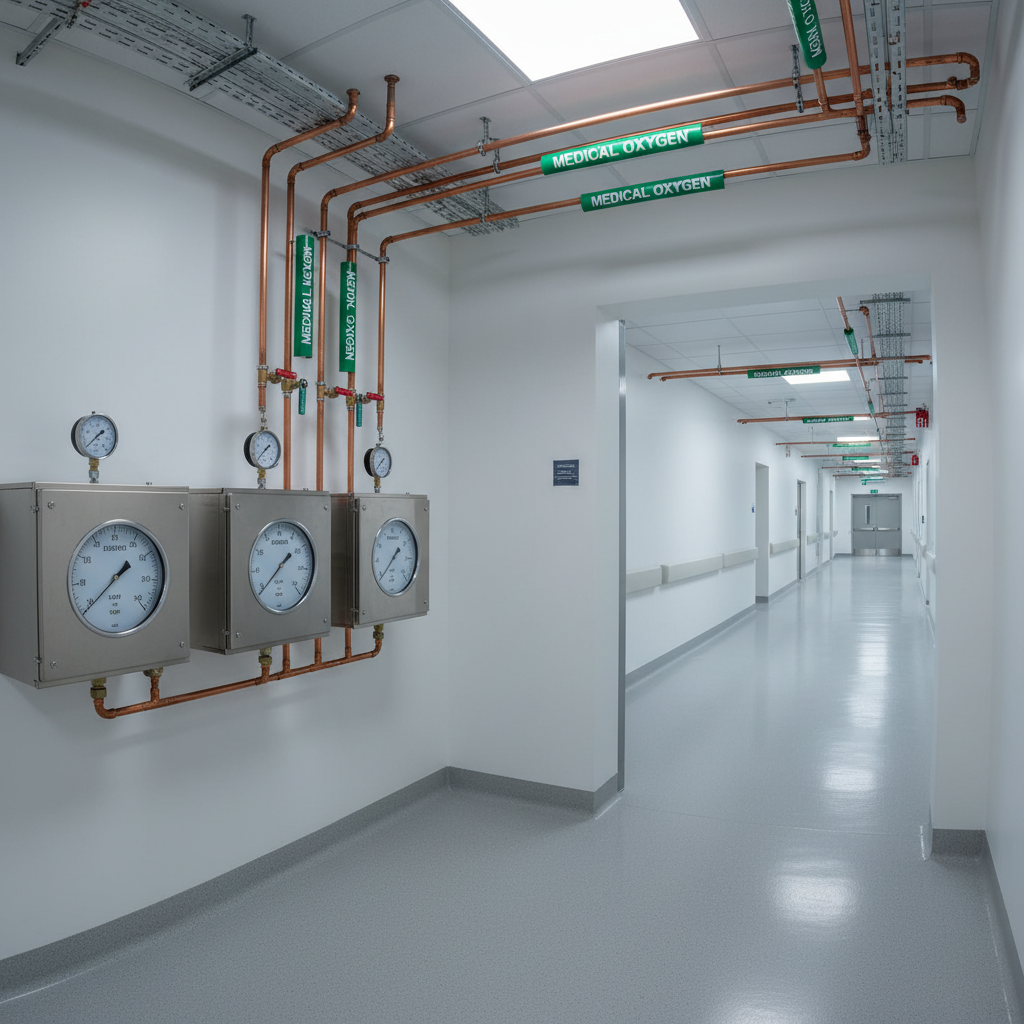
    Hospital oxygen system installation in Rock Hill, SC requires strict alignment between clinical engineering, mechanical contracting, and governing life-safety codes. Whether expanding a regional trauma facility, outfitting a surgical specialty center, or retrofitting an acute care pavilion near Piedmont Medical Center, piping bulk medical oxygen directly to critical care headwalls demands specialized technical execution. Installing life-support infrastructure is not standard commercial plumbing.

    Every foot of pipeline, cryogenic liquid container interface, high-pressure manifold, and zone valve box must satisfy NFPA 99 (Health Care Facilities Code), CGA (Compressed Gas Association) standards, and ASSE Series 6000 qualifications. In this guide, you will learn the complete engineering, brazing, and commissioning pathway for healthcare oxygen delivery systems in York County, South Carolina. We detail bulk liquid oxygen (VIE) configurations, reserve manifold requirements, ASSE 6010 brazing protocols, zone valve placement, and the non-negotiable role of third-party ASSE 6030 verification before admitting your first patient.


    Healthcare Facilities & Medical Gas Regulations in York County, SC

    Healthcare infrastructure projects in Rock Hill operate under multi-jurisdictional compliance frameworks. The South Carolina Department of Health and Environmental Control (DHEC), specifically Regulation 61-16 (Standards for Licensing Hospitals), enforces stringent life-safety benchmarks that adopt NFPA 99 and NFPA 101 (Life Safety Code). Additionally, local building code officials in Rock Hill and York County enforce the International Building Code (IBC) and International Plumbing Code (IPC), which directly defer medical gas piping systems to NFPA 99.

    Regulatory Authority Matrix for Rock Hill Healthcare Systems

    • NFPA 99 (2012 / 2018 / 2021 editions): Mandates design, installation, performance, testing, and maintenance criteria based on patient risk categories (Category 1 through Category 4). Acute care hospital oxygen systems default to Category 1, where equipment failure can cause major injury or death.
    • NFPA 55: Governs compressed gases and cryogenic fluids code, setting structural, distance, and safety boundaries for outdoor bulk cryogenic storage tanks.
    • CGA Guidelines: CGA G-4.1 (Cleaning Equipment for Oxygen Service) and CGA M-1 (Guide for Medical Gas Installations at Consumer Sites) dictate how piping and systems are decontaminated and operated.
    • ASSE Series 6000 Standards: Mandates personnel qualifications across all touchpoints, specifically ASSE 6010 for mechanical installers and ASSE 6030 for independent, third-party verifiers.

    When planning a capital project in Rock Hill, healthcare facilities cannot cut corners on installer credentials. Engaging certified personnel for professional medical gas installation ensures your facility clears DHEC architectural reviews and South Carolina State Fire Marshal inspections without costly remediation delays.


    Clinical Category 1 Oxygen Infrastructure: System Architecture

    A complete hospital oxygen distribution system comprises three core segments: the primary and secondary supply sources, the distribution pipeline network, and point-of-use terminal units. | Diagram text | |, | | [ Cryogenic Liquid Reserve (Secondary) ] |

    1. Bulk Cryogenic Liquid Oxygen Systems (VIE)

    Bulk Vacuum Insulated Evaporator (VIE) systems serve as the primary supply for medium to large acute care facilities. Bulk storage holds liquid oxygen at approximately -297°F (-183°C). Ambient air vaporizers heat the liquid, converting it to a gaseous state regulated to an operating pipeline pressure of 50 to 55 psig.

    NFPA 99 Section 5.1.3.5.4 requires all Category 1 medical gas systems to incorporate a secondary source and an emergency reserve. For bulk oxygen, this reserve typically consists of an auxiliary liquid tank or a high-pressure cylinder manifold capable of sustaining the facility's average daily demand for at least 24 hours (or longer, depending on regional logistics and disaster response plans).

    2. High-Pressure Oxygen Manifolds

    In satellite clinics, surgery centers, or smaller community hospitals throughout Rock Hill, high-pressure header manifolds often serve as the central source. These systems feature two banks of high-pressure cylinders (typically Grade N or USP medical oxygen) with an automatic switchover mechanism. When the operating bank reaches a predetermined depletion pressure, the system switches to the reserve bank without pressure interruption to the line, signaling an alert via the source alarm panel.

    3. Emergency Oxygen Supply Connection (EOSC)

    NFPA 99 5.1.3.5.13 mandates that any facility relying on a bulk liquid oxygen supply must install an Emergency Oxygen Supply Connection (EOSC) located outside the building. The EOSC provides a secure, physical connection port with check valves and relief valves that allows a temporary mobile liquid tanker to feed the hospital's interior distribution grid if the permanent bulk tank fails or requires maintenance.

    Why this matters for compliance: NFPA 99 5.1.3.5.13 explicitly requires the EOSC to be connected downstream of the main shutoff valve and upstream of any interior distribution branches. Failing to locate this connection in an accessible, physically protected exterior location accessible to mobile tankers will fail DHEC state inspections.


    Technical Specifications: Bulk Tanks vs. Manifolds vs. Reserves

    Designing an oxygen delivery network requires careful sizing based on calculated peak flow rates, dynamic head loss across line runs, and required reserve margins.

    Component / ParameterBulk Cryogenic Tank (VIE)Automatic Switchover ManifoldEmergency Oxygen Supply Connection (EOSC)
    Typical Capacity1,500 – 11,000+ Gallons Liquid4 to 30+ High-Pressure CylindersSized for Mobile Tanker Connection
    Operating PressureRegulated 50–55 psig (source side 150+ psig)Regulated 50–55 psig (tank side 2,000–2,600 psig)Regulated to facility demand (50–55 psig)
    NFPA 99 RequirementCat 1 large hospitals with continuous loadCat 1 ambulatory & smaller hospitalsMandatory for all bulk supply installations
    Setback / Clearance10–50 ft from structures, property lines, asphaltInterior ventilated room or secure exterior cageAccessible exterior location with tanker clearance
    Primary CodesNFPA 55, NFPA 99 Ch. 5, CGA M-1NFPA 99 Sec. 5.1.3.5.11, CGA V-1NFPA 99 Sec. 5.1.3.5.13
    Alarm IntegrationLiquid level, line pressure, reserve switchBank depletion, changeover, reserve lowConnected status, line pressure monitoring

    To explore certified source valves, switchovers, and terminal components, evaluate our verified medical gas products designed to integrate directly with regional hospital plans.


    ASSE 6010 Brazing Protocols: Copper, Purging, and Metallurgy

    Medical gas installation is fundamentally defined by cleanliness and metallurgical integrity. Ordinary plumbing or HVAC brazing procedures are completely unacceptable for life-support oxygen pipelines because residual oils, carbonization, or particulates inside the tube will cause catastrophic internal contamination, or explosive flash ignition when exposed to pure oxygen under pressure.

    Copper Tube Standards: ASTM B819

    Only seamless copper tube meeting ASTM B819 specifications (Standard Specification for Seamless Copper Water Tube for Medical Gas Systems) may be used. ASTM B819 pipe is factory de-greased, cleaned, plugged, and stamped with either "Type K" or "Type L" in green (K) or blue (L) markings. | Diagram text | |, |

    The Nitrogen Purge Requirement (NFPA 99 Section 5.1.10.5.5)

    The most critical procedural step executed by an ASSE 6010 certified installer is the continuous internal nitrogen purge. When copper is heated to brazing temperatures (above 1,000°F / 538°C) in the presence of air, copper oxide scale immediately forms on the interior wall. When high-pressure oxygen flows through the pipe, this scale detaches as particulate debris, clogging sensitive downstream equipment, ventilator proportional valves, and patient terminal units.

    • Purge Gas: Only oil-free, dry Nitrogen NF can be used.
    • Flow Rate Control: Installers utilize a dual-stage regulator and flowmeter to sweep atmospheric air completely out of the pipe prior to heating. Purging must continue at a reduced velocity during the brazing cycle to avoid cooling the joint or blowing through the molten filler.
    • Oxygen Depletion Monitoring: Leading installers monitor exhaust points using a trace oxygen analyzer to ensure interior oxygen concentrations fall below 1% before igniting the torch.

    Brazing Alloys and Flux Prohibition

    • Copper-to-Copper Joints: Must be brazed using BCuP-series filler metal (typically BCuP-5 with 15% silver or BCuP-4). Flux is strictly forbidden on copper-to-copper joints under NFPA 99 Section 5.1.10.5.3 because chemical flux residues cannot be washed out post-assembly and pose toxicological and ignition hazards in oxygen networks.
    • Copper-to-Brass/Bronze Joints: When joining copper tube to cast or forged brass valves, BAg-series (silver-brazing) alloys are required. In this specific scenario, NFPA-approved flux is permitted, but it must be applied sparingly to the male fitting only, leaving the first two threads or edge bare to prevent flux from entering the fluid stream.

    Zone Valve Boxes and Alarm Integration in Clinical Layouts

    Hospital oxygen piping is segmented systematically throughout the physical plant. In a hospital, zone valve boxes (ZVBs) and medical gas alarm systems represent the frontline safety barriers for both patients and healthcare providers.

    Zone Valve Box (ZVB) Rules (NFPA 99 Section 5.1.4.4)

    Zone valves serve a critical safety purpose: isolating specific patient care areas during fires, renovations, or line ruptures without shutting off life support to the rest of the facility.

    1. Placement: ZVBs must be located on the same floor as the terminal units they control. They must remain accessible at all times, never placed inside locked offices, secure storage closets, or behind heavy doors.
    2. Egress Paths: They are typically installed along primary egress corridors immediately outside the patient units they protect (such as an ICU, NICU, or surgical suite).
    3. Labeling: Every zone valve box must have clear, non-removable labeling indicating the specific gas (OXYGEN), the gas color code (Green in the United States), and the exact rooms, surgical suites, or beds controlled by that specific valve.
    4. Operating Direction: The valve handle must be visible through a transparent, breakable or removable window, arranged so that pulling the window provides immediate access to close the quarter-turn ball valve.

    Master and Area Alarm Placement

    Medical gas alarms fall into two categories:

    • Master Alarm Panels (NFPA 99 5.1.9.2): Must be installed in at least two separate monitored locations. One panel typically resides in the hospital engineer's control office or maintenance headquarters, while the second must be in an area subject to 24/7 continuous human observation (such as an emergency department communications desk or security control room). The master alarm monitors main supply pressures, liquid tank levels, reserve bank switchovers, and pipeline pressure drops.
    • Area Alarm Panels (NFPA 99 5.1.9.3): Area alarms monitor pressures in specific clinical units, such as operating rooms, post-anesthesia care units (PACU), and intensive care units. They must be installed within the clinical station they govern, wired upstream of the zone valves, and programmed to trigger visual and audible alarms whenever oxygen pressure fluctuates ±20% from the normal 50 psig baseline (i.e., below 40 psig or above 60 psig).

    For acute care facilities integrating wet-procedure locations or isolated power architectures alongside gas drops, our specialists also conduct certified line isolation monitor testing to confirm electrical life safety concurrently with gas verification.


    Step-by-Step Installation & Commissioning Process

    Every successful hospital oxygen system installation in Rock Hill follows an uninterrupted sequence of engineering and ASSE 6000 compliance stages. | Diagram text | |, |

    Phase 1: Engineering Review, Sizing & Submittals

    Mechanical designs, piping isometric drawings, load calculations, and equipment submittals are reviewed for compliance with NFPA 99 and local Rock Hill building codes. Material deliveries are received and cataloged; all ASTM B819 copper tubing is inspected to verify that factory end-caps remain sealed.

    Phase 2: Structural Routing and ASSE 6010 Brazing

    Installers run copper distribution lines through designated seismic-rated pipe hangers and trapeze assemblies. Brazing proceeds under continuous, monitored Nitrogen NF purge. Branch takeoffs are pulled with copper tee fittings or mechanical extrusions (approved tee-drill systems) executed strictly per manufacturer specifications and code rules.

    Phase 3: Installer Standing Pressure Test

    Before closing walls or applying pipe insulation, the mechanical contractor conducts an initial standing pressure test. NFPA 99 5.1.10.7 requires piping to be pressurized with dry Nitrogen NF to 1.5 times the working pressure (a minimum of 150 psig for oxygen distribution lines) for 24 hours. The line must hold pressure without drop, adjusted for ambient temperature fluctuations.

    Phase 4: Pre-Verification Pipe Blowdown & Cleaning

    Lines are blown clean using high-velocity oil-free nitrogen to remove any unattached internal particulate matter before terminal outlets, alarm transducers, or zone valves are installed. Each terminal unit is assembled using clean oxygen-compatible seals.

    Phase 5: Independent ASSE 6030 Verification

    An independent, certified third-party testing agency performs full system commissioning. The verifier cannot be the installer or an employee of the mechanical contractor. Medical Testing Solutions provides turnkey, comprehensive medical gas verification to ensure absolute code adherence.

    Phase 6: Final Documentation, DHEC Inspection & Turnover

    The verifier issues a formal certification packet documenting line integrity, gas concentrations, alarm response times, and valve tagging schedules. This binder must be submitted during state licensing reviews and archived for Joint Commission compliance audits.


    Independent ASSE 6030 Verification Requirements

    The separation of installation and verification is a core life-safety mandate of NFPA 99. An installer cannot verify their own work. A third-party verifier certified to ASSE 6030 must complete an exhaustive array of systematic tests before introducing medical-grade oxygen into the pipelines. | Diagram text | |, | | ASSE 6030 Verification Suite | | 1. Pressure Relief Valve Certification | | 2. 24-Hour Final Standing Pressure Test | | 3. Severe Cross-Connection Testing | | 4. Valve & Label Verification (Line Tracing) | | 5. Master and Area Alarm Operational Calibration | | 6. Particulate, Dew Point, and Halogen Purity Checks | | 7. Gas Identification & High-Purity Concentration Testing |

    The Verification Battery

    1. System Cross-Connection Test: The verifier disconnects all other medical gas pipelines (medical air, nitrous oxide, nitrogen, carbon dioxide, vacuum) and charges only the oxygen line to positive pressure. Every single terminal outlet and service drop across the entire hospital is physically tested to prove that gas discharges only from designated oxygen drops and nowhere else. This test is repeated across every medical gas system in the building.
    2. Valve and Labeling Verification: Verifiers trace the piping layout from the central bulk tank through risers and zone valves to verify that closing a given zone valve isolates the exact rooms marked on its schedule card.
    3. Alarm Testing: Sensors and pressure switches are adjusted to confirm that area alarms activate precisely within the ±20% operating envelope, and master alarm modules accurately broadcast failure signals across both redundant monitoring hubs.
    4. Piping Purge and Particulate Test: Outlets are tested with high-velocity flows onto pure white filter membranes to prove zero particulate residue inside the line runs.
    5. Purity and Concentration Testing: Once the lines pass all structural tests, the system is evacuated, purged, and charged with USP Grade Medical Oxygen. The verifier samples every terminal drop using a calibrated paramagnetic or galvanic oxygen analyzer to verify that oxygen concentration exceeds 99.0% at every outlet and that trace volatile organic compounds (VOCs), halogenated solvents, moisture (dew point), and carbon monoxide are below allowable thresholds.

    Facilities requiring formal documentation for upcoming state or Joint Commission surveys can arrange complete medical gas certification through our experienced field team.


    Ongoing NFPA 99 Compliance & Maintenance Lifecycle

    Commissioning an oxygen system is not the end of your regulatory obligations. NFPA 99 Chapter 5 requires healthcare facilities to maintain a living maintenance log and execute periodic testing intervals throughout the life of the physical plant. | Diagram text | |, |

    Recommended Maintenance Schedule for Rock Hill Facilities

    • Daily/Weekly Checks: Visually verify bulk liquid oxygen levels, line distribution pressure, and telemetry link signals back to the medical gas supplier.
    • Semi-Annual Inspections: Test automatic switchover valves on high-pressure manifolds; inspect high-pressure pigtails for leaks or physical wear.
    • Annual Verification Inspections: Under NFPA 99, facilities must conduct structured annual medical gas inspections to test alarm trip points, terminal outlet retention forces, internal valve leakage, and zone valve accessibility.
    • Preventative Upkeep: Establish structured medical gas maintenance services to overhaul regulators, lubricate seals, and calibrate transducers before mechanical components degrade in service.

    Secure ASSE-Certified Installation and Verification in Rock Hill

    Medical gas piping is the most critical life-support delivery system inside your healthcare facility. Medical Testing Solutions provides turnkey medical gas infrastructure support throughout Rock Hill, York County, and the broader Carolinas. From selling top-tier, compliant medical gas equipment to deploying certified ASSE 6010 installers and independent ASSE 6030 third-party verifiers, MTS ensures your facility achieves flawless code compliance and uncompromised patient safety.

    Contact our engineering and field compliance specialists today to review your project blueprints, schedule an initial consultation, or request an installation or verification quote.


    Frequently Asked Questions

    Under NFPA 99 and local South Carolina building regulations, mechanical personnel brazing medical gas systems must hold an active ASSE 6010 Medical Gas Systems Installer certification. Installers must have documented performance qualifications for brazing procedures conforming to ASME Section IX or AWS B2.2, with specific validation in continuous nitrogen purging techniques.

    NFPA 99 explicitly prohibits installing contractors from performing final verification testing on their own piping installations. An unbiased, independent third-party certified to ASSE 6030 must evaluate the system to eliminate conflicts of interest, ensure rigorous cross-connection testing, confirm line purity, and certify that life-support systems strictly meet the requirements of DHEC, the state fire marshal, and The Joint Commission.

    While both are seamless copper water tubes, standard ASTM B88 copper contains residual drawing oils and hydrocarbons from the manufacturing process that pose catastrophic combustion risks in high-pressure medical oxygen environments. ASTM B819 tubing is specifically washed, degreased, decontaminated, and capped at the factory to meet CGA G-4.1 oxygen cleaning standards, and is manufactured to stricter metallurgical tolerances.

    An EOSC is a dedicated piping manifold mounted on the exterior of a healthcare facility downstream of the bulk liquid supply's main shutoff valve. If the permanent bulk tank or vaporizers suffer a catastrophic failure or require major structural overhaul, an emergency tanker truck connects directly to the EOSC to backfeed medical-grade oxygen directly into the building's main distribution line, ensuring continuous clinical supply.

    NFPA 99 Chapter 5 requires documented annual testing of all medical gas alarm panels, including area alarms and master monitoring panels. Area alarms must have their audible and visual warning triggers calibrated against physical line pressure changes annually. Zone valves must be visually inspected and cycled according to the facility's periodic maintenance management program to ensure unobstructed accessibility and complete seal integrity.

    This article is provided for educational purposes and reflects industry standards as of publication. Always verify against current NFPA 99, CGA, and AHJ requirements. Medical Testing Solutions is ASSE-certified and ready to help — contact us for facility-specific guidance.

    Request a quote for your facility

    Talk with Medical Testing Solutions about your next inspection, repair or equipment request.

    Get a quote in 1 business day

    I agree to receive text messages from Medical Testing Solutions, L.L.C. at the phone number provided, including informational and marketing messages. Consent is not a condition of purchase. Message frequency varies. Message & data rates may apply. Reply STOP to opt out or HELP for help. See our Privacy Policy and Messaging Terms.

    Prefer to talk? Call (754) 315-1078

    Related articles