Hospital Oxygen System Installation in Raleigh, NC: A Comprehensive Guide
A compliant hospital oxygen system is the lifeblood of any healthcare facility. From the bulk oxygen storage tank to the patient terminal, every component must be installed with precision to ensure safety, reliability, and adherence to strict regulatory standards. For facility managers and construction partners in Raleigh, NC, understanding the complexities of a medical gas installation is crucial. This guide provides a definitive overview of the process, from initial design and equipment selection to final verification, ensuring your project meets all NFPA 99 and ASSE 6000 series requirements.
This article will walk you through the critical steps of a hospital oxygen system installation, covering bulk storage, manifold configurations, pipeline distribution, and the essential ASSE 6010 and ASSE 6030 credentials required for the job. We will explore key components, code requirements, and the verification process that guarantees a safe system for patient care.
Understanding the Core Components of a Hospital Oxygen System
A hospital's medical oxygen system is more than just pipes in a wall. It is a complex network regulated by the National Fire Protection Association (NFPA) 99, Health Care Facilities Code. A typical system comprises three main parts: a central supply source, a distribution network, and patient-use terminal units.
1. Central Supply: Bulk Tanks and Manifolds
The heart of the system is the central oxygen supply. For most hospitals, this involves a primary bulk cryogenic oxygen tank and a secondary reserve supply.
- Bulk Cryogenic Oxygen Tank: This is the primary source, a large, insulated vessel that stores liquid oxygen (LOX) at very low temperatures. It provides a continuous, reliable supply to the entire facility.
- Reserve Manifold: NFPA 99 mandates a secondary, fully functional supply that can kick in automatically if the primary source fails. This is typically a high-pressure cylinder manifold. The size of this reserve depends on the hospital's daily usage and must provide at least a 24-hour supply.
Medical Testing Solutions provides and installs both bulk tanks and automatic switchover manifolds, ensuring your facility has an uninterrupted oxygen supply compliant with NFPA 99 Chapter 5.
2. The Distribution Network: Piping and Zone Valves
From the central source, medical-grade, copper tubing transports the oxygen throughout the facility. This network is carefully planned and installed.
- Main and Riser Pipes: Large-diameter pipes carry the gas from the source to different floors or wings of the hospital.
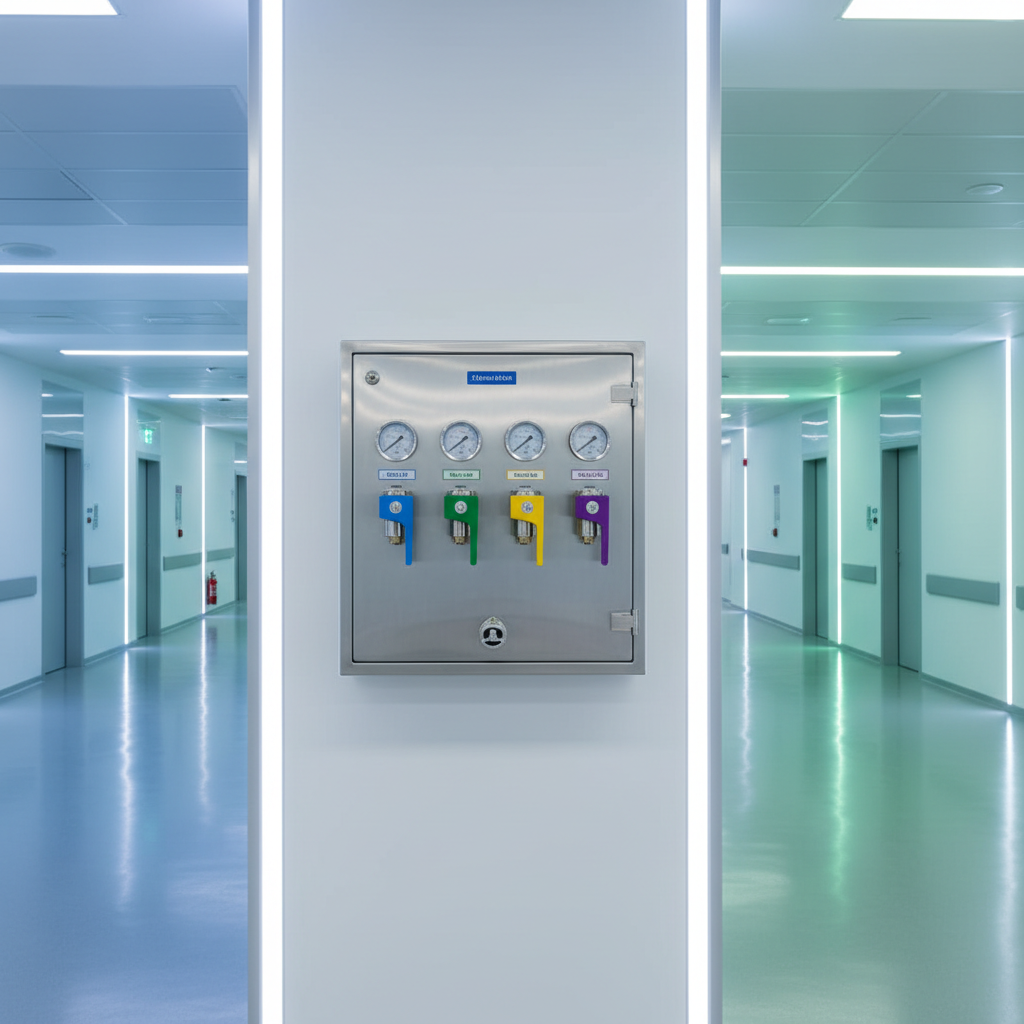
- Zone Valves: The network is segmented into zones, each controlled by a zone valve box. These valves allow staff to shut off oxygen to a specific area (e.g., an operating room, an entire wing) for maintenance or in an emergency without affecting the rest of the facility. These are critical safety features.
3. Patient Terminals and Alarms
The final delivery point is the wall-mounted terminal outlet in a patient room, operating suite, or ICU. These outlets are gas-specific to prevent accidental cross-connection. The system is also monitored by a series of master and area alarm panels that alert staff to pressure drops or other critical issues.
The Installation Process: ASSE 6010 Certified Brazing
Installing medical gas piping is a specialized skill that requires an ASSE 6010 Certified Medical Gas Systems Installer. This certification is not just a recommendation; it's a requirement under NFPA 99.
The installation process follows a strict protocol:
- Preparation: All copper tubing and fittings must be medical grade (Type K or L, ACR), cleaned for oxygen service, and delivered capped and sealed.
- Brazing: An ASSE 6010 installer uses a specific brazing technique with a nitrogen purge. This involves flowing nitrogen through the pipes during brazing to displace oxygen and prevent the formation of copper oxides on the interior surface. These black, flaky oxides can contaminate the gas stream and pose a serious risk to patients.
- Labeling: All piping must be meticulously labeled with the gas name and direction of flow at specific intervals and at every valve and wall penetration.
Why this matters for compliance: Failure to use a nitrogen purge during brazing is a common but critical mistake that can lead to system contamination and costly remediation. NFPA 99 (5.1.10.11.11) explicitly requires this procedure. Using an ASSE 6010 certified installer like the team at Medical Testing Solutions is your first line of defense against non-compliant installations.