Hospital Oxygen System Installation in Lynchburg VA: A Comprehensive Guide for Healthcare Facilities
Installing or upgrading a hospital oxygen system is a mission-critical undertaking that directly impacts patient safety and facility operations. For hospitals and healthcare facilities in Lynchburg, VA, ensuring this complex process adheres to strict regulatory standards like NFPA 99 is not just a best practice, it's a legal requirement. A compliant installation involves much more than connecting pipes; it requires certified expertise in bulk oxygen storage, manifold configuration, pipeline brazing, and final system verification. This guide provides a detailed overview of the hospital oxygen system installation process, from initial design and equipment selection to the final ASSE 6030 verification, ensuring your facility provides safe and reliable medical oxygen.
Understanding the Core Components of a Hospital Oxygen System
A hospital's medical oxygen system is a complex network. It begins at a central source and travels through a pressurized pipeline to patient rooms, operating theaters, and critical care units. Understanding these components is key to a successful installation.
Bulk Oxygen Storage: The Heart of the System
Most hospitals rely on a bulk liquid oxygen (LOX) tank as their primary supply. These large, cryogenic vessels store oxygen at -297°F (-183°C).
- Primary Supply: The bulk tank is the main source, providing a continuous, reliable flow.
- Reserve Supply: A secondary reserve tank or a high-pressure cylinder manifold is required by NFPA 99 to ensure an uninterrupted supply during primary source failure or maintenance.
- Vaporizers: Ambient or heated vaporizers convert the liquid oxygen back into a gaseous state before it enters the hospital's pipeline.
Manifolds: Ensuring Uninterrupted Flow
Manifolds are critical for redundancy. They consist of multiple high-pressure cylinders connected to the pipeline, ready to take over if the primary bulk supply is depleted. Per NFPA 99 (Chapter 5), the reserve supply must be capable of providing one average day's supply of oxygen.
The Pipeline Distribution Network
The pipeline itself is the circulatory system for medical oxygen.
- Main Lines: Larger diameter pipes that transport oxygen from the source to different zones of the facility.
- Risers: Vertical pipes that carry oxygen between floors.
- Branch Lines: Smaller pipes that branch off the main lines to supply individual rooms or areas.
Why this matters for compliance: NFPA 99 mandates specific materials for oxygen pipelines, typically Type K or L seamless copper tubing. The entire network must be meticulously cleaned and purged to be "oxygen-clean," preventing fires and ensuring patient safety. Contamination with hydrocarbons can lead to catastrophic events in an oxygen-rich environment.
The ASSE 6010 Installation Process: Brazing and Beyond
Proper installation by certified professionals is non-negotiable. The American Society of Sanitary Engineering (ASSE) 6010 certification is the gold standard for medical gas systems installers.
Step 1: Pre-Installation and Brazing Preparation
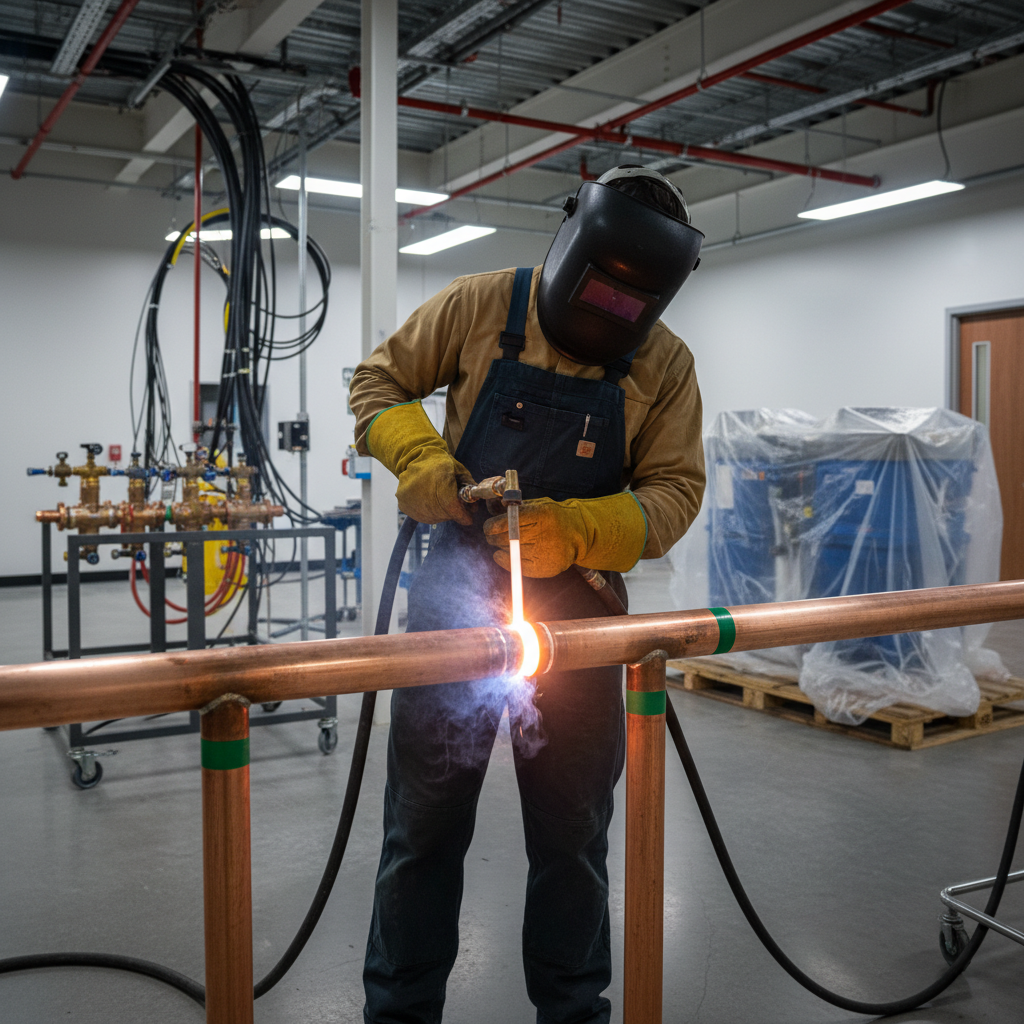
Before any brazing occurs, the copper tubing must be prepared. This involves cutting, deburring, and cleaning the pipe ends and fittings. All surfaces must be free of oils, grease, and other contaminants.
Step 2: The Art of NFPA 99 Brazing
This is the most critical phase of the medical gas installation.
- Nitrogen Purge: During brazing, a continuous, low-pressure flow of oil-free, dry nitrogen is passed through the tubing. This displaces oxygen, preventing the formation of copper oxides on the interior pipe surface. These oxides can flake off, contaminating the gas stream and posing a fire hazard.
- Brazing Alloy: The filler metal used must have a melting point above 1,000°F (538°C) as per NFPA 99. The most common is a copper-phosphorus alloy (BCuP series).
- Certified Technicians: Only an ASSE 6010 certified installer has the training to perform this procedure correctly. Medical Testing Solutions ensures all installations are performed by technicians holding this crucial credential.
Step 3: Zone Valve and Alarm Installation
Zone valve boxes are installed to isolate specific areas of the hospital for maintenance or in an emergency without shutting down the entire system. These valves must be connected to the hospital's master alarm system, which provides audible and visual alerts for pressure changes or system failures, as required by NFPA 99.