Installing a hospital oxygen system is one of the most critical infrastructure projects a healthcare facility in Louisville, KY, can undertake. These life-sustaining systems are complex, highly regulated, and demand absolute precision in planning, installation, and verification. From the bulk oxygen tank to the patient bedside, every component must function flawlessly to ensure patient safety and facility compliance. This guide will walk you through the core components of a hospital oxygen system, the critical installation processes like ASSE 6010-certified brazing, the essential ASSE 6030 verification steps, and how to partner with certified experts to ensure a successful project from start to finish.
Medical Gas Service
Medical Gas Products
Compliance & Standards
Hospital Oxygen System Installation in Louisville, KY: A Guide
Medical Testing SolutionsOctober 10, 20266 min read
Understanding the Core Components of a Hospital Oxygen System
A hospital's medical oxygen system is a network of components working in concert to deliver pressurized oxygen reliably to various points of use. A typical system, compliant with the National Fire Protection Association (NFPA) 99 Health Care Facilities Code, consists of a central supply, a distribution network, and terminal units.
1. Central Supply System: Source and Manifolds
The heart of the system is the central supply. For most hospitals, this means a large, outdoor cryogenic bulk oxygen tank (a Category 1 source). This tank stores liquid oxygen (LOX) at very low temperatures, which is then vaporized into a gas for distribution.
- Primary Supply: The bulk tank.
- Secondary Supply: A smaller, backup liquid container.
- Reserve Supply: A high-pressure cylinder manifold that automatically activates if both the primary and secondary supplies fail. This triple-redundancy is a cornerstone of NFPA 99's safety requirements.
The manifold itself is a critical assembly of pipes, valves, and regulators that controls the flow and pressure of gas from the cylinders. A properly installed manifold, like those provided and installed by Medical Testing Solutions, ensures a seamless and automatic switchover between gas sources in an emergency.
2. Piping Distribution Network
From the central supply, a network of specially prepared copper piping transports the oxygen throughout the facility. This isn't standard plumbing; medical gas piping must be meticulously cleaned, degreased, and joined to prevent contamination and ensure system integrity.
Why this matters for compliance: NFPA 99 (Chapter 5) specifies that all medical gas piping must be Type K or L, hard-drawn seamless copper, and cleaned for oxygen service by the manufacturer. Using incorrect materials or improperly cleaned pipes can lead to catastrophic failures and immediate compliance violations.
3. Zone Valves and Alarm Panels
To control oxygen flow to different areas of the hospital, the distribution network is divided into "zones." Each zone is controlled by a zone valve box, allowing maintenance or emergency shut-offs for specific floors, departments, or rooms without disrupting the entire hospital. These valves are connected to local and master alarm panels that monitor pressure and flow, alerting staff to any deviations from the norm.
The ASSE 6010 Installation Process: Brazing and Beyond
Proper installation is a non-negotiable requirement for safety and compliance. The American Society of Sanitary Engineering (ASSE) 6000 series provides the definitive standards for medical gas system personnel. For installation, the key certification is ASSE 6010 Medical Gas Systems Installer.
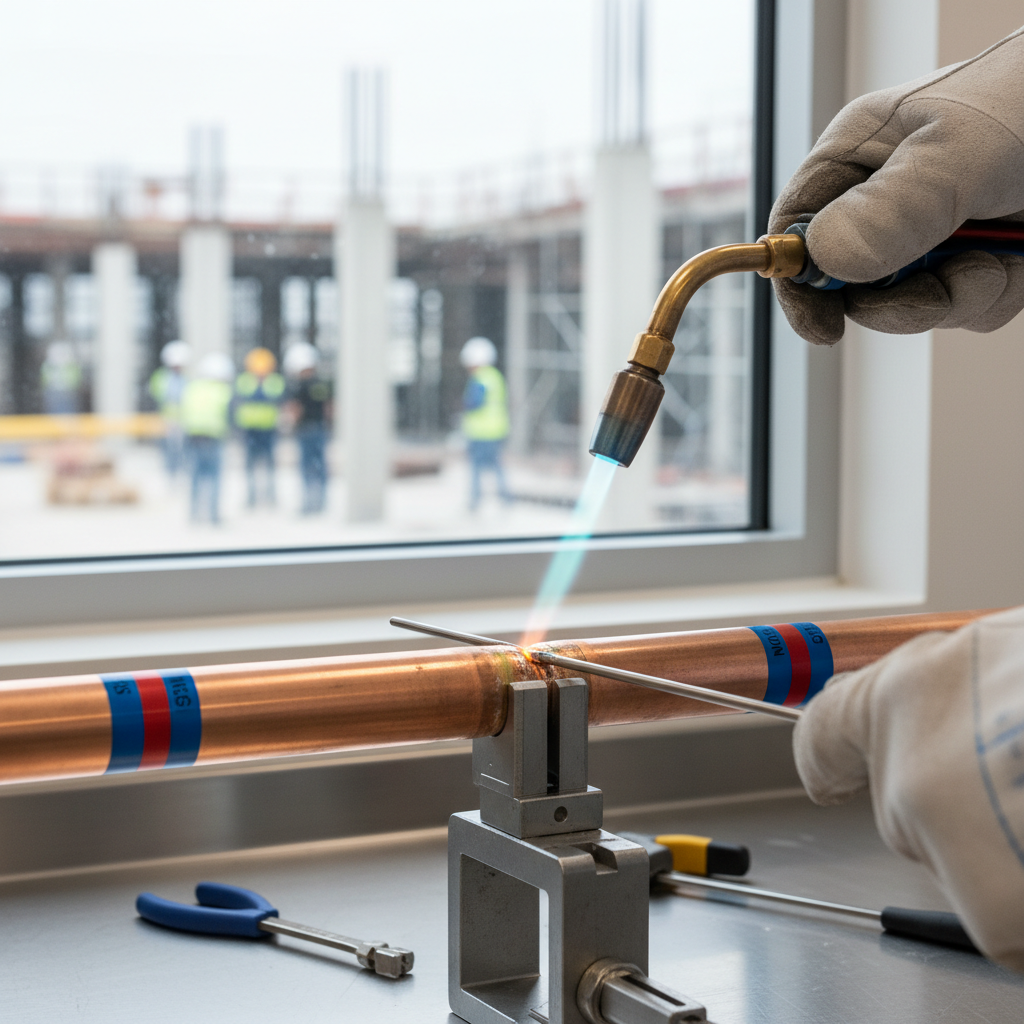
Our team at Medical Testing Solutions holds ASSE 6010 certification, ensuring every installation meets the highest standards. The most critical part of the physical installation is the joining of copper pipes, which must be done via brazing.
- Brazing vs. Soldering: Brazing uses a filler metal with a melting point above 840°F, creating a much stronger bond than soldering.
- Nitrogen Purge: During brazing, a continuous flow of oil-free, dry nitrogen (NF) must be maintained within the pipe. This "purge" displaces oxygen, preventing the formation of copper oxides on the interior pipe surface. These black, flaky oxides can dislodge and contaminate the entire system, posing a severe risk to patients.
- Filler Material: Only specific brazing alloys, like a copper-phosphorus or copper-phosphorus-silver alloy (BCuP series), are permitted.
A compliant medical gas installation performed by certified technicians is the first step toward a reliable oxygen system.
Comparing Key Medical Gas Piping Standards
| Standard | Focus Area | Key Requirement for Oxygen Systems |
|---|---|---|
| NFPA 99 | Overall design, installation, performance, and maintenance of medical gas systems. | Defines source equipment requirements, pipe materials, pressure levels, and alarm system integration. |
| ASSE 6010 | Installer Certification - For individuals installing the systems. | Requires practical brazing test with a nitrogen purge and a written exam on NFPA 99 and other codes. |
| ASSE 6030 | Verifier Certification - For individuals testing and verifying the systems. | Mandates a series of specific tests to confirm system integrity, purity, and proper component function. |
| CGA P-8.1 | Safe Handling of Cryogenic Liquids - Bulk tank and supply chain. | Provides guidelines for the design, operation, and maintenance of bulk liquid oxygen storage systems. |
ASSE 6030 Verification: Ensuring a Safe and Compliant System
After the physical installation is complete, the system cannot be used until it has been rigorously tested and verified by an independent, ASSE 6030 Certified Medical Gas Verifier. This process, known as medical gas verification, ensures the system is safe for patient use.
Medical Testing Solutions provides comprehensive, unbiased third-party verification services. An ASSE 6030 verifier is responsible for conducting a series of critical tests:
- Initial Piping Purge: A high-volume purge with nitrogen to remove any particulate debris left over from construction.
- Standing Pressure Test: The system is pressurized to 150% of the normal operating pressure and held for 24 hours to check for leaks.
- Cross-Connection Test: This crucial test ensures that the oxygen outlets are actually connected to the oxygen source, and not another gas like medical air or nitrous oxide.
- Purity and Particulate Tests: Samples are taken from each outlet to verify the oxygen concentration (≥99% for oxygen systems) and to ensure no particulate contamination is present.
- Alarm and Valve Tests: Every alarm panel, from the source to the local zone, is tested to ensure it activates at the correct pressure setpoints. All zone valves are checked for proper operation and labeling.
Only after every test is passed and documented can the system be certified and put into service.
Partnering with Certified Experts in Louisville
For a project as critical as a hospital oxygen system installation, you cannot afford to cut corners. Partnering with a single, qualified company for both equipment and services simplifies the process and ensures accountability. Medical Testing Solutions offers a full suite of services for facilities in the Louisville, KY area, from initial design consultation and equipment sales to ASSE 6010 installation and ASSE 6030 verification.
Our deep understanding of NFPA 99 and the ASSE 6000 series standards ensures your project is done right the first time, on schedule, and in full compliance with all regulatory bodies. We also provide ongoing support, including annual medical gas inspections and preventative maintenance to keep your system running safely for years to come.
Get Your Louisville Hospital Oxygen System Installed Right
Your patients' lives depend on a flawless medical gas system. Don't leave your hospital oxygen system installation to chance. Trust the ASSE-certified experts at Medical Testing Solutions to deliver a safe, compliant, and reliable system for your Louisville healthcare facility. Contact us today to discuss your project requirements.
Call us at (754) 315-1078 or request a quote online to get started.
Frequently Asked Questions
The timeline varies significantly based on the project's scale—whether it's a new build, a major renovation, or a departmental addition. A full hospital installation can take several months, from planning to final verification. Smaller projects may take a few weeks.
ASSE 6010 is for the installer—the person physically building the system and brazing the pipes. ASSE 6030 is for the verifier—the independent third-party inspector who tests and certifies that the system was installed correctly and is safe for patient use.
Brazing copper pipe heats it to over 1000°F. At this temperature, the oxygen inside the pipe rapidly oxidizes the copper, creating a layer of black scale (cupric oxide). This scale can flake off and be carried into the patient's lungs. Purging with nitrogen displaces the oxygen, preventing this oxidation and keeping the pipe interior clean.
Unless your in-house staff holds current ASSE 6010 Medical Gas Installer certifications, they are not permitted by NFPA 99 to perform brazing on a medical gas system. Furthermore, any new or modified system requires a full inspection and verification by a certified ASSE 6030 verifier before being put into service.
NFPA 99 requires hard-drawn, seamless copper tubing of Type K or L, which must be cleaned for oxygen service by the manufacturer and delivered capped and sealed. This ensures no oils or contaminants are present from the manufacturing process.
Request a quote for your facility
Talk with Medical Testing Solutions about your next inspection, repair or equipment request.