Hospital Oxygen System Installation in Lexington, KY: A Comprehensive Guide for Healthcare Facilities
Proper medical gas infrastructure is the lifeblood of any modern hospital. Nowhere is this more critical than with the bulk oxygen system. A correctly installed and verified oxygen system ensures patient safety, procedural efficacy, and regulatory compliance. For facility managers in Lexington, Kentucky, understanding the complexities of a hospital oxygen system installation is paramount. This guide provides a detailed overview of the process, from the bulk storage tank to the patient room, covering critical standards like NFPA 99, ASSE 6010 for brazing, and ASSE 6030 for verification.
What is a Hospital Oxygen System?
A hospital oxygen system is a complex, integrated network designed to deliver life-sustaining medical-grade oxygen from a central supply source to various points of use throughout a healthcare facility. It's not just a tank and some pipes; it's a system comprising several key components, each with specific functions and regulatory requirements.
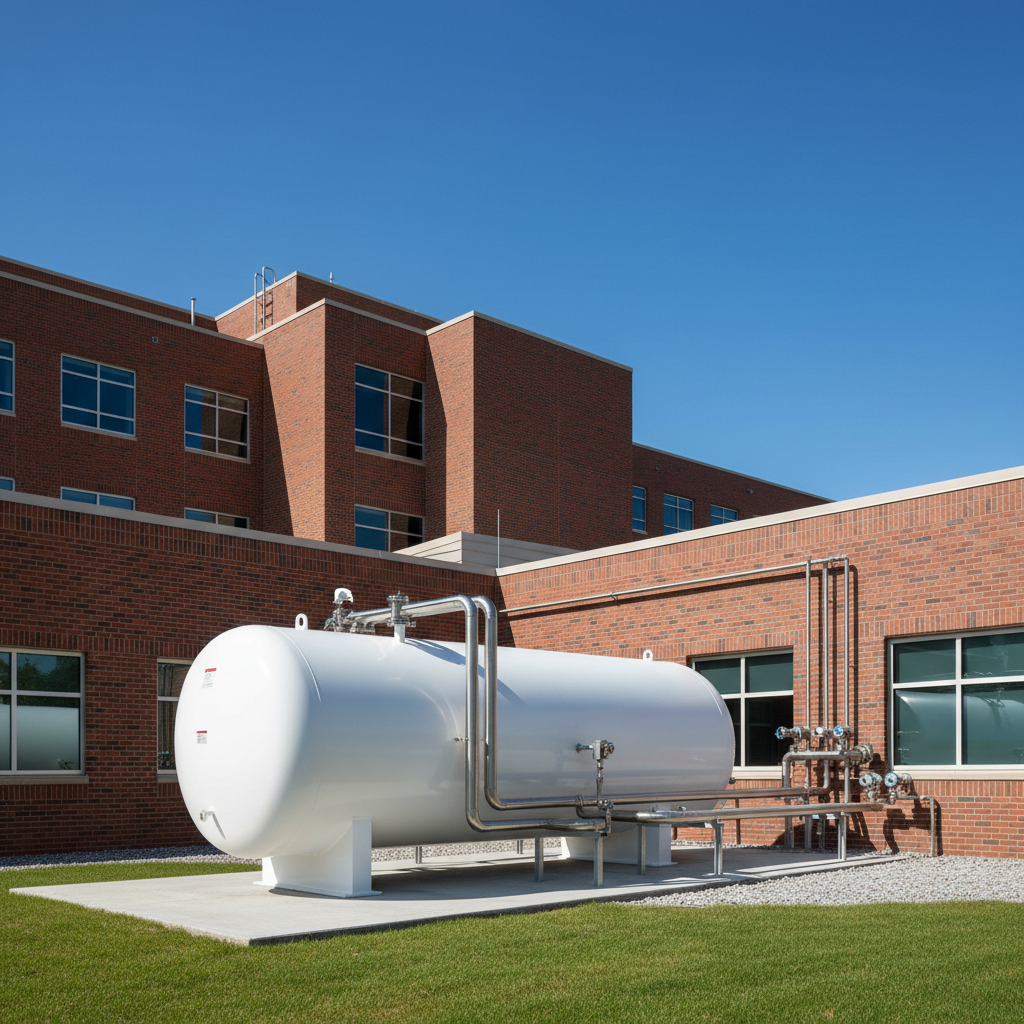
- Source Equipment: Typically a large, outdoor cryogenic bulk oxygen tank (a vacuum-insulated evaporator or VIE) that stores liquid oxygen (LOX) at -297°F. It includes vaporizers to convert the liquid to gas.
- Manifolds: A secondary or backup supply, often consisting of high-pressure cylinders. The manifold automatically takes over if the primary bulk supply is depleted or fails.
- Piping Distribution Network: A dedicated network of copper piping that transports the gaseous oxygen from the source to different areas of the hospital.
- Control and Monitoring: Alarm panels, pressure switches, and sensors that monitor the system's status and alert staff to any issues, as required by NFPA 99.
- Zone Valves: Ball valves located in valve boxes that can isolate specific zones, floors, or departments (e.g., an operating room wing, an ICU) for maintenance or in an emergency without shutting down the entire hospital.
- Terminal Units: The final connection point in the patient room or operating theater, where equipment like flowmeters or ventilators is connected.
The Installation Process: From Bulk Tank to Patient Room
A compliant oxygen system installation is a multi-stage process performed by certified professionals. At Medical Testing Solutions, our technicians are ASSE 6010 certified, ensuring every step meets the stringent requirements of the National Fire Protection Association (NFPA).
Stage 1: Planning and Design
Before a single pipe is installed, a thorough design and planning phase is crucial. This involves:
- Sizing the System: Calculating the hospital's peak and average oxygen demand based on the number of beds, operating rooms, and specialty services.
- Source Location: Identifying a safe, accessible location for the bulk oxygen tank that complies with NFPA 99 setback distances from buildings, public thoroughfares, and ignition sources.
- Piping Layout: Designing the most efficient pipe routing to maintain pressure and flow throughout the facility, while coordinating with other trades like electrical and HVAC.
Stage 2: Source Equipment and Manifold Installation
This is where the core components are set in place. A concrete pad is poured for the bulk tank, which is then carefully craned into position. The primary and secondary manifolds are installed, along with automatic switchover panels. This work must be done in coordination with the gas supplier and requires specialized rigging and expertise.
Stage 3: The Art and Science of ASSE 6010 Brazing
The integrity of the entire oxygen distribution system depends on the quality of the connections in the copper piping. NFPA 99 mandates that brazing on medical gas lines must be performed by individuals certified to the ASSE 6010 Medical Gas Systems Installer standard. This isn't regular plumbing.
- Nitrogen Purge: During brazing, the interior of the copper pipe is continuously purged with oil-free, dry nitrogen (NF). This displaces oxygen, preventing the formation of toxic copper oxides on the interior pipe surface. These oxides can flake off, contaminating the gas stream and posing a significant fire risk in an oxygen-rich environment.
- Brazing Alloy: The process must use a specific brazing alloy (typically a copper-phosphorus or silver-based alloy) that melts at a high temperature, creating a joint that is stronger than the pipe itself.
- Certified Technicians: Only an ASSE 6010 certified installer has the training to perform this critical task correctly. They are professionals who have demonstrated their ability to braze safely and effectively, ensuring a clean, leak-free system. This is a core service offered by the certified installation team at Medical Testing Solutions.
Why this matters for compliance: NFPA 99 (2021 edition, Chapter 5.1.10.11) explicitly requires that installers meet the qualifications of ASSE 6010. Failure to use certified personnel can result in failed inspections, costly rework, and potential decertification of your facility.
Comparison of Key Medical Gas Standards
Understanding the different standards is crucial for facility managers. Here’s a quick comparison of the most relevant ASSE 6000 series credentials.
| Credential | Title | Scope of Work |
|---|---|---|
| ASSE 6010 | Medical Gas Systems Installer | Handles the physical assembly, brazing, and installation of medical gas and vacuum systems. |
| ASSE 6020 | Medical Gas Systems Inspector | Inspects installations for compliance with plans, specs, and codes. Works for an authority or agency. |
| ASSE 6030 | Medical Gas Systems Verifier | A third-party verifier who performs the final, rigorous tests to confirm system integrity, purity, and function before it can be used for patient care. |
| ASSE 6040 | Medical Gas Systems Maintenance Personnel | Performs maintenance, repairs, and service on existing, verified medical gas systems. |