Hospital Oxygen System Installation in High Point, NC: A Definitive Guide
Installing or upgrading a hospital oxygen system is one of the most critical infrastructure projects a healthcare facility can undertake. A properly designed and installed system is the lifeblood of patient care, directly impacting respiratory therapy, surgical procedures, and emergency services. For facilities in High Point, North Carolina, a successful installation hinges on meticulous planning, adherence to strict regulatory codes, and expert execution. This guide details the process for a compliant hospital oxygen system installation, from the bulk oxygen source to the patient room, focusing on ASSE 6010 brazing, ASSE 6030 verification, and NFPA 99 requirements.
Understanding the Components of a Hospital Oxygen System
A hospital's medical oxygen system is more than just pipes in the walls. It's a complex network comprising several key subsystems, each with a specific function ensuring the safe and reliable delivery of medical-grade oxygen.
1. Bulk Oxygen Source
Most hospitals rely on a bulk liquid oxygen (LOX) tank, known as a cryogenic vessel, as their primary supply. These large, vacuum-insulated tanks store oxygen at extremely low temperatures (-297°F / -183°C). Key considerations include:
- Sizing and Capacity: The tank must be sized to meet the hospital's peak demand, plus a reserve, as determined by NFPA 99 (Chapter 5).
- Location: The bulk tank must be installed outdoors on a concrete pad, away from vehicle traffic and potential sources of ignition, meeting strict separation distance requirements.
- Vaporizers: Ambient air vaporizers convert the liquid oxygen back into a gaseous state before it enters the hospital's main supply line.
2. Main Supply Line & Manifolds
A secondary or reserve supply is mandatory. This is typically a high-pressure cylinder manifold that automatically activates if the primary bulk tank fails or requires service. The manifold consists of two banks of cylinders (e.g., Bank A and Bank B), with a control panel that switches from one bank to the other when pressure drops.
Why this matters for compliance: NFPA 99 mandates a fully functional secondary supply (Category 1 systems) to ensure an uninterrupted flow of oxygen. A failure here could be catastrophic. Medical Testing Solutions can help design and install a compliant manifold system tailored to your facility's needs.
3. Piping Distribution Network
The "arteries" of the system are a network of specially prepared copper pipes that transport the oxygen from the source to various points of use. All piping must be medical-grade, cleaned for oxygen service to prevent ignition hazards.
4. Alarms and Monitoring
Master alarm panels, area alarms, and local alarms are required by NFPA 99 (5.1.9) to monitor system pressure and alert staff to any irregularities. These systems provide immediate notification of high/low pressure conditions or a changeover to the secondary supply. Medical Testing Solutions offers comprehensive medical gas testing and service to ensure these alarms are always functional.
5. Zone Valves and Area Valve Box Assemblies
To isolate specific areas of the hospital for maintenance, emergency, or new construction without shutting down the entire system, zone valves are installed. These are typically housed in locked boxes ("valve box assemblies") in corridors, ICUs, and surgical suites.
The ASSE 6010 Installation Process: Brazing and Beyond
Proper installation is governed by the American Society of Sanitary Engineering (ASSE) Series 6000 standards. The installation itself falls under ASSE 6010, Medical Gas Systems Installer certification.
- Preparation: All copper tubing and fittings must be meticulously cleaned for oxygen service (degreased) and stored in capped, clean containers.
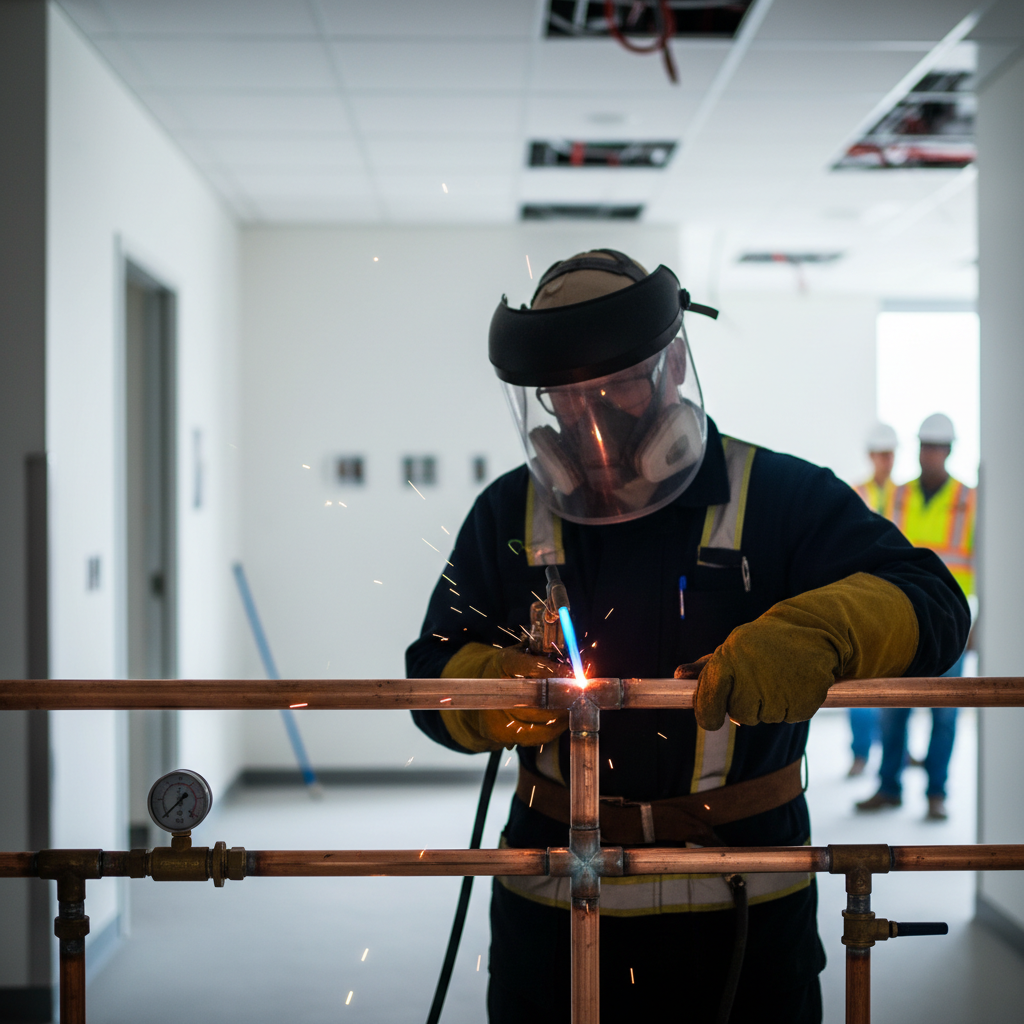
- Brazing (Not Soldering): This is the most critical step. Joints in copper medical gas piping must be brazed, not soldered. Brazing uses a much higher temperature to create a stronger, more reliable joint.
- During the brazing process, a continuous flow of dry nitrogen must be purged through the pipe. This prevents the formation of copper oxides on the interior surface, which can become contaminants in the gas stream.
- Component Installation: The installer mounts the source equipment, runs the piping network, and installs alarm panels, valve boxes, and terminal outlets (e.g., DISS, Chemetron) in patient rooms and operating theaters.
For any new construction or modification, trust only certified professionals. Our team at Medical Testing Solutions holds the necessary ASSE 6010 credentials for compliant medical gas installation.