Hospital Oxygen System Installation in Frankfort KY: An ASSE-Certified Guide
A compliant medical gas system is the lifeblood of any modern hospital. For facilities in Frankfort, Kentucky, ensuring that a new hospital oxygen system installation meets stringent safety and regulatory standards is not just a best practice, it's a legal requirement. A properly installed system, from the bulk oxygen tank to the patient room outlet, guarantees the uninterrupted flow of this critical gas, protecting patient lives and ensuring your facility avoids costly penalties. This guide details the essential phases of a hospital oxygen system installation, covering bulk storage, manifold configurations, pipe brazing, and the final verification process, all in accordance with NFPA 99 and ASSE 6000 series standards.
The Core Components of a Hospital Oxygen System
A hospital's medical oxygen supply is a complex assembly of components, each governed by specific codes. Understanding these parts is the first step in a successful installation project.
Bulk Oxygen Storage: The Primary Source
Most hospitals rely on a bulk liquid oxygen tank as their primary supply. This is typically a large, cryogenic vessel located outdoors on a concrete pad. Key considerations include:
- Sizing: The tank must be sized to meet the hospital's peak demand, with enough reserve to handle supply interruptions. Calculations are based on bed count, ventilator usage, and other high-flow applications.
- Location: NFPA 99 dictates strict placement rules regarding distance from buildings, combustible materials, and public thoroughfares to mitigate risks.
- Vaporizers: These units convert the liquid oxygen back into a gaseous state before it enters the main pipeline. The vaporizer system must be able to handle the facility's maximum flow rate.
Manifold Systems: Redundancy and Secondary Supply
Per NFPA 99, a secondary and often a tertiary gas supply is required for redundancy. This is where manifolds come in.
- High-Pressure Cylinder Manifold: This system consists of multiple high-pressure gas cylinders connected to a header. An automatic changeover manifold will switch from the primary bank to the secondary bank once pressure drops to a set level, ensuring an uninterrupted supply.
- Purpose: It serves as the immediate backup if the bulk tank fails or during maintenance. In smaller facilities, a manifold may even serve as the primary supply.
The Piping Network: From Source to Patient
This is the circulatory system of your oxygen supply. The installation of this network is one of the most critical phases, governed by the ASSE 6010 standard.
- Material: All medical gas piping must be seamless Type K or L copper, cleaned for oxygen service and delivered capped and plugged.
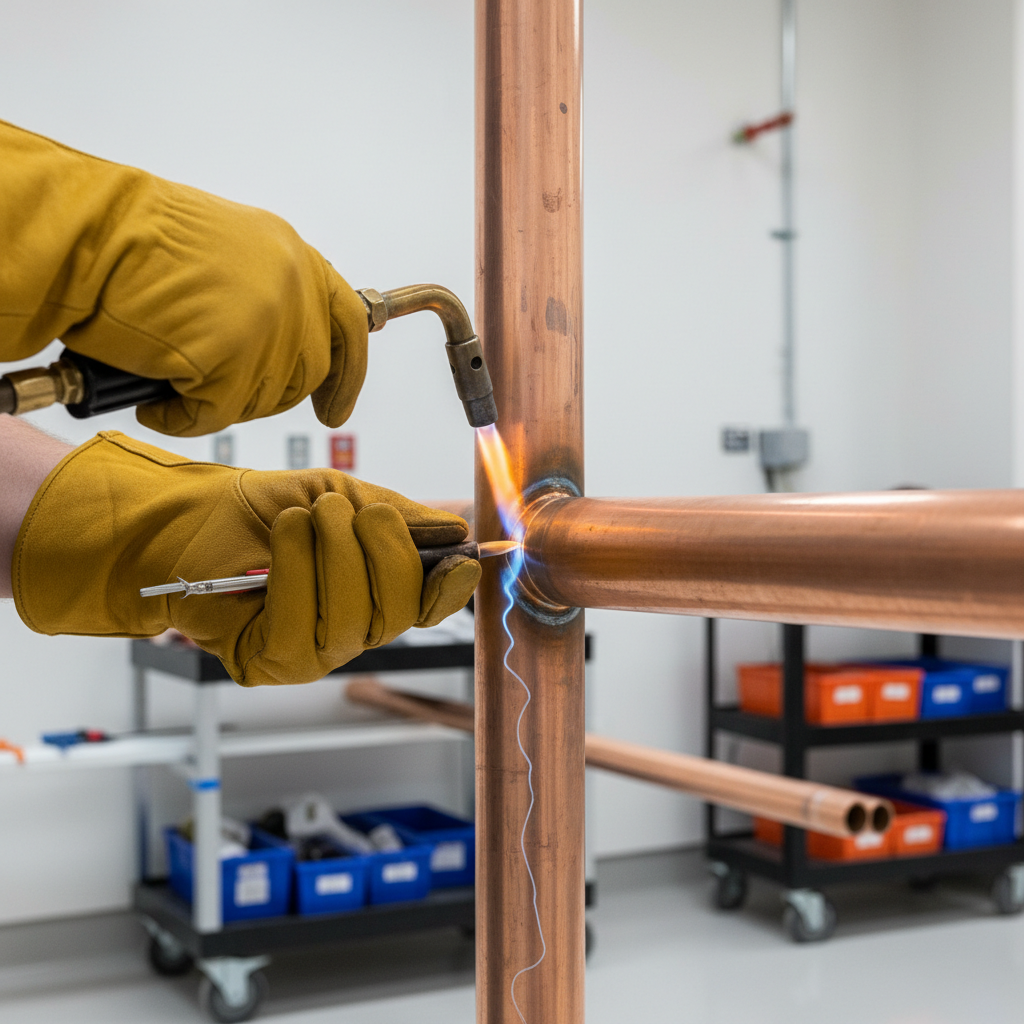
- Brazing: The process of joining copper pipes and fittings must be performed by an ASSE 6010 certified installer. This involves using a specific brazing alloy (BCuP series, with no flux) and purging the interior of the pipe with oil-free, dry nitrogen to prevent oxidation during the brazing process.
Why this matters for compliance: The internal scale (cupric oxide) formed during improper brazing can flake off, creating a fire hazard in an oxygen-rich environment or, worse, being delivered to a patient's lungs. Nitrogen purging is a non-negotiable step required by NFPA 99.
The ASSE 6010 Installation Process: A Step-by-Step Overview
A compliant medical gas installation requires meticulous planning and execution by certified professionals. Medical Testing Solutions provides ASSE 6010 certified technicians to ensure every step meets code.
- Initial Design & Sizing: We work with your facility’s engineers and architects to ensure the system is designed to meet both current and future needs, correctly sizing pipes and components for your specific peak demands.
- Material Handling: All piping and components are received, inspected, and stored in a clean, dedicated environment to prevent contamination before installation.
- Pipe Routing & Assembly: Our technicians route the copper piping from the source equipment, through the facility, to designated areas.
- Nitrogen-Purged Brazing: Every joint is brazed by an ASSE 6010 certified installer while a continuous flow of nitrogen gas is maintained. This critical step prevents internal oxidation and ensures a clean, safe pipeline.
- Installation of Zone Valves: Zone valve boxes are installed to isolate specific areas (e.g., an operating room, an entire wing) of the hospital. This allows for maintenance or emergency shut-offs without affecting the entire facility.
- Terminal Unit Installation: Medical gas outlets (e.g., DISS, Ohmeda) are installed in patient rooms, operating theaters, and other treatment areas.