Skip to content
    New: Medical Gas Outlet Retrofit & Rebuild Matrix — cross-reference legacy Chemetron, Ohio Diamond, Puritan-Bennett & more →
    ASSE Certified 24/7
    Medical Gas Service
    Compliance & Standards

    Hospital Oxygen System Installation in Fayetteville NC: A Guide

    Medical Testing SolutionsOctober 6, 20266 min read
    Share
    Hospital Oxygen System Installation in Fayetteville NC: A Guide

    Hospital Oxygen System Installation in Fayetteville, NC: A Comprehensive Guide for Healthcare Facilities

    A compliant medical oxygen system is the lifeblood of any hospital. From the emergency room to the operating theater, a steady, reliable supply of USP-grade oxygen is not just a utility, it's a critical component of patient care. For facility managers and construction partners in Fayetteville, North Carolina, understanding the intricacies of a hospital oxygen system installation is paramount. This guide provides a detailed overview of the process, from bulk storage and manifolds to the final verification, ensuring your system is safe, efficient, and compliant with all relevant codes, including NFPA 99 and the ASSE 6000 series.

    This article will walk you through the essential phases of a medical oxygen pipeline installation. You will learn about the core components, the critical importance of certified brazing and verification, and the standards that govern every joint and valve. Whether you are planning a new build or upgrading an existing facility, this information will equip you to partner effectively with certified medical gas specialists like Medical Testing Solutions.

    Core Components of a Hospital Oxygen System

    A hospital oxygen system is a complex network. It begins at a central source and branches out to every point of use. Key components include:

    • Primary Oxygen Source: Typically a bulk cryogenic liquid oxygen tank (a "bulk tank").
    • Secondary Source (Reserve): A smaller liquid oxygen vessel or a high-pressure cylinder manifold, which automatically takes over if the primary source fails.
    • Main Pipeline: The large-diameter piping that transports gas from the source.
    • Risers: Vertical pipes that distribute oxygen to different floors.
    • Zone Valve Boxes: Assemblies that control oxygen flow to specific areas ("zones") of the hospital. These are crucial for emergency shut-offs and maintenance.
    • Area and Local Alarms: Systems that monitor pressure and flow, alerting staff to any deviations from the norm.
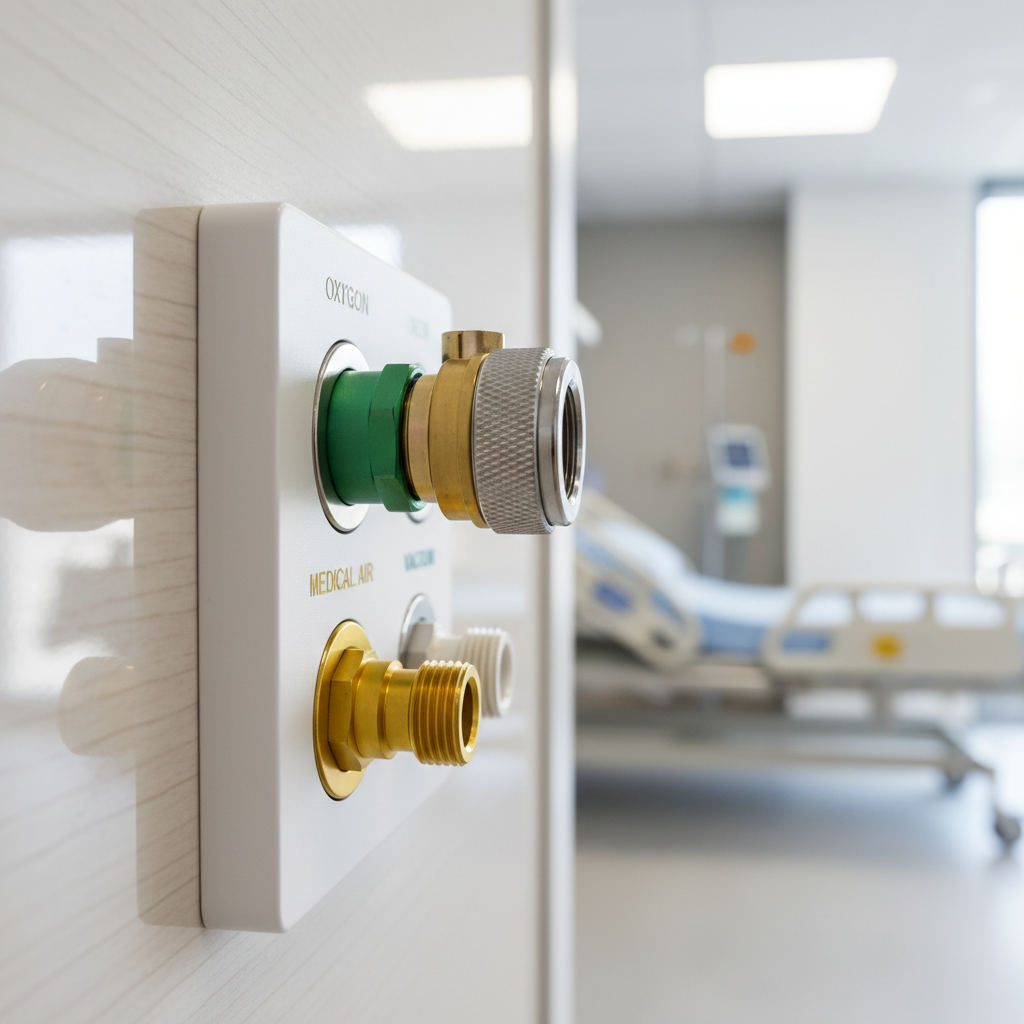
    • Station Outlets: The final connection point in the patient room (e.g., DISS, Ohmeda, Chemetron).

    Properly designing and installing these components is the foundation of a safe system. The entire network must be meticulously planned to ensure adequate pressure and flow to all outlets, even during peak demand.

    The Installation Process: From Source to Outlet

    An ASSE 6010 certified installation is a multi-stage process that demands precision and adherence to strict protocols. Here’s what a typical project in Fayetteville involves.

    Phase 1: Planning and System Design

    Before the first piece of pipe is laid, a detailed design is required. This phase involves calculating the hospital's peak oxygen demand, sizing the piping network accordingly, and creating blueprints that map out the entire system. This is where partnering with an experienced firm like Medical Testing Solutions is critical to ensure the design meets both clinical needs and regulatory requirements.

    Phase 2: The Art and Science of ASSE 6010 Brazing

    Brazing is the process of joining copper pipes using a filler metal at high temperatures. In medical gas systems, this is not a task for a standard plumber. All brazing must be performed by an ASSE 6010 Certified Medical Gas Systems Installer.

    • Nitrogen Purge: During brazing, the inside of the pipe is continuously purged with oil-free, dry nitrogen (NFPA 99, 5.1.10.11.11). This prevents oxidation and the formation of carbonaceous scale inside the pipe, which could otherwise be blown into the system and harm patients.
    • Proper Filler Metal: The brazing alloy must not contain cadmium or other toxic materials.
    • Joint Integrity: Each joint must be perfectly fused to prevent leaks for the life of the system.

    Why this matters for compliance: The NFPA 99 code is explicit about the requirement for certified personnel. Using uncertified installers is a major compliance violation and can introduce significant patient risk and legal liability. A botched braze joint can lead to catastrophic leaks or particulate contamination.

    Phase 3: Component Installation (Manifolds, Alarms, Valves)

    Once the core piping is run, key components are installed:

    • Manifolds: High-pressure cylinder manifolds are installed as the reserve source. These must have automatic switchover capabilities.
    • Zone Valve Boxes: These are strategically placed in walls to allow maintenance or emergency isolation of specific hospital wings or departments. Each valve must be clearly labeled with the area it serves.
    • Alarm Panels: Master, area, and local alarms are wired to pressure sensors within the pipeline. These provide the audible and visual alerts required by NFPA 99 (5.1.9).

    Comparing System Components and Code Requirements

    ComponentNFPA 99 RequirementCommon BrandsKey Installation Note
    Bulk Oxygen TankSiting per NFPA 55; pressure relief valves.Chart, CryofabMust be on a concrete pad with secure fencing and proper ventilation.
    ManifoldAutomatic switchover; pressure regulators.Amico, BeaconMedaes, GentecMust be secured to a wall and accessible for cylinder changes.
    Zone Valve BoxMust be accessible and clearly labeled; gauge required.Amico, Tri-Tech MedicalValve must be placed on the patient/area side of the riser.
    Station OutletGas-specific keyed index (DISS); proper labeling.Ohmeda, Chemetron, DISSMust be installed at the correct height and orientation.

    The Critical Final Step: ASSE 6030 Medical Gas Verification

    An oxygen system is not ready for patient use after the final braze. It must undergo a rigorous, multi-point inspection by an independent ASSE 6030 Certified Medical Gas Verifier. This is a non-negotiable step to ensure patient safety and is a core service offered by our team at Medical Testing Solutions.

    The verification process includes:

    1. Initial Blowdown: The entire pipeline is cleaned by blowing high-volume, oil-free nitrogen through it to remove any debris.
    2. Pressure Testing: The system is pressurized (typically to 150 psi) for a set period to test for leaks in the piping.
    3. Cross-Connection Test: Each gas system is tested to ensure it is not connected to any other gas system.
    4. Purity and Particulate Test: A sample of oxygen is taken from each outlet to test for purity (must be ≥99% O2), dew point, and contaminants.
    5. Valve and Alarm Tests: Every zone valve is tested to confirm it isolates the correct area, and every alarm is tested to ensure it functions at the correct pressure setpoints.

    Only after passing every test in the verification process can the system be certified and put into service.

    Partnering with Certified Experts in Fayetteville, NC

    For a project as critical as a hospital oxygen system installation, expertise is everything. From initial design to final certification, every step must be handled by qualified professionals. Medical Testing Solutions provides ASSE 6010 installers and ASSE 6030 verifiers to ensure your Fayetteville facility's medical gas system is built for safety, reliability, and full NFPA 99 compliance.

    Our deep experience in the field ensures that your project avoids common pitfalls, meets all regulatory standards, and is completed on schedule. We handle everything from bulk tank installations to complex manifold and alarm system integrations.

    Conclusion: Your Partner for Compliant Oxygen System Installation

    Installing a hospital oxygen system in Fayetteville, NC, is a high-stakes project that leaves no room for error. Adherence to NFPA 99, use of ASSE 6010 certified installers for brazing, and a final, independent ASSE 6030 verification are the pillars of a safe and compliant system. By prioritizing these requirements, you protect your patients, your staff, and your facility.

    Ready to start your project? Contact the certified experts at Medical Testing Solutions for a comprehensive consultation and quote. Our team is ready to ensure your installation is done right, from the ground up.

    Request a Quote Today or call us at (754) 315-1078 to discuss your hospital oxygen system needs.


    Frequently Asked Questions

    Only ASSE 6010 Certified Medical Gas Systems Installers are qualified. This certification ensures the individual has passed a rigorous training program and exam covering all aspects of medical gas installation, including the critical brazing process per NFPA 99.

    Installation is the physical construction of the pipeline, performed by an ASSE 6010 installer. Verification is the final testing and inspection of the completed system to ensure it is safe and correct, performed by a third-party ASSE 6030 verifier who was not involved in the installation.

    After the initial verification, existing medical gas systems require regular inspection and maintenance. We recommend scheduling annual medical gas inspections to ensure ongoing compliance and patient safety.

    Using uncertified personnel violates NFPA 99, can void your facility's insurance, and poses a significant risk to patient safety. If an incident were to occur, the legal and financial liability would be substantial.

    This article is provided for educational purposes and reflects industry standards as of publication. Always verify against current NFPA 99, CGA, and AHJ requirements. Medical Testing Solutions is ASSE-certified and ready to help — contact us for facility-specific guidance.

    Request a quote for your facility

    Talk with Medical Testing Solutions about your next inspection, repair or equipment request.

    Get a quote in 1 business day

    I agree to receive text messages from Medical Testing Solutions, L.L.C. at the phone number provided, including informational and marketing messages. Consent is not a condition of purchase. Message frequency varies. Message & data rates may apply. Reply STOP to opt out or HELP for help. See our Privacy Policy and Messaging Terms.

    Prefer to talk? Call (754) 315-1078

    Related articles