Hospital Oxygen System Installation in Durham, NC: A Comprehensive Guide for Healthcare Facilities
Installing or upgrading a hospital oxygen system is a critical infrastructure project that directly impacts patient safety and facility compliance. For healthcare facilities in Durham, NC, ensuring that your oxygen system is meticulously planned, installed by certified professionals, and rigorously verified is not just a best practice, it's a requirement. This guide provides a definitive overview of the process, from bulk oxygen sources and manifold design to the specifics of ASSE 6010 brazing and ASSE 6030 verification, giving you the knowledge to ensure your project meets the stringent demands of NFPA 99.
Understanding the Core Components of a Hospital Oxygen System
A hospital's medical gas system is a complex network. The oxygen system, its most critical component, begins at the source and extends to the patient bedside. Key components include the bulk oxygen supply, master alarm panels, main line, risers, and zone valve boxes that control flow to individual areas.
Bulk Oxygen Source
This is the primary supply, typically a large cryogenic liquid oxygen tank located outdoors. Its size is calculated based on the hospital's peak demand and required emergency reserves. The design and installation must adhere to NFPA 99, Chapter 5, which covers Gas and Vacuum Systems.
Manifolds
Manifolds serve as the secondary or backup supply, automatically engaging if the primary bulk system fails. They consist of high-pressure cylinders linked together. A properly configured manifold is essential for uninterrupted oxygen delivery.
Zone Valve Boxes
These are the control points within the hospital. Zone valve boxes allow specific areas or "zones" (like an operating room wing or a patient floor) to be isolated for maintenance or in an emergency without disrupting oxygen flow to the entire facility. Their placement and labeling are critical for rapid response.
The Installation Process: From Blueprint to Patient Use
Successful hospital oxygen system installation is a multi-phased process demanding precision and deep regulatory knowledge. It requires seamless coordination between facility managers, medical gas specialists, and construction teams.
Phase 1: Design and Engineering
Before a single pipe is fitted, a detailed design is engineered. This phase involves:
- Calculating Demand: Determining the peak and average oxygen flow rates for all areas.
- Pipe Sizing: Using NFPA 99 guidelines to size the piping network correctly, ensuring adequate pressure and flow at the furthest outlets.
- Component Selection: Choosing appropriate, certified equipment, from the bulk tank to the alarm panels and outlets.
- Blueprint Creation: Developing detailed schematics for the entire system.
Phase 2: ASSE 6010 Certified Installation & Brazing
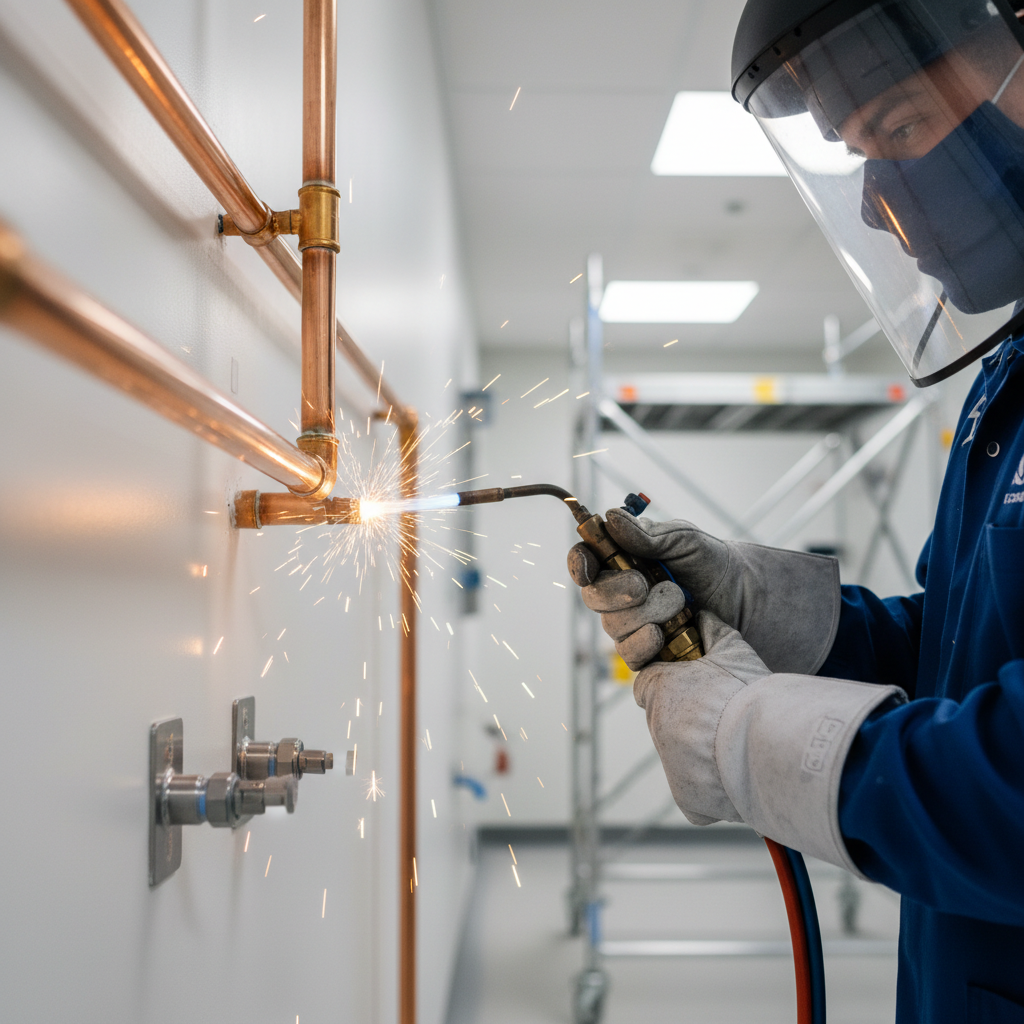
This is where the physical installation occurs. All piping must be medical-grade, cleaned for oxygen service. The crucial step is the joining of copper pipes, which must be performed by an ASSE 6010 Certified Medical Gas Systems Installer.
- Brazing, Not Soldering: Brazing creates a much stronger, more reliable joint capable of withstanding the high pressures of a medical gas system. During brazing, an inert gas like nitrogen is purged through the pipe to prevent oxidation and internal scaling, which could otherwise introduce contaminants into the system. Learn more about our certified medical gas installation services.
- Component Placement: Careful installation of manifolds, zone valves, and alarm panels according to the engineered design.
Why this matters for compliance: NFPA 99-2021, Section 5.1.10.11.10, mandates that brazing procedures and brazer performance for medical gas and vacuum systems shall be qualified in accordance with either the American Welding Society (AWS) B2.2, Standard for Brazing Procedure and Performance Qualification, or Section IX of the ASME Boiler and Pressure Vessel Code. Hiring an ASSE 6010 certified installer like Medical Testing Solutions ensures this requirement is met.
Phase 3: ASSE 6030 Third-Party Verification
Once the installation is complete, the system cannot be used until it is verified by an independent third party. This critical step is performed by an ASSE 6030 Certified Medical Gas Verifier. The verification process is exhaustive and includes:
- Pressure Testing: Ensuring the system can hold pressure without any leaks.
- Purity Testing: Verifying that the gas delivered is 99% or higher pure oxygen and free of contaminants.
- Cross-Connection Testing: Confirming that no other gas lines have been mistakenly connected to the oxygen system.
- Alarm and Valve Functionality: Testing every alarm, valve, and outlet to ensure they function as intended.
At Medical Testing Solutions, our team includes ASSE 6030 verifiers who can provide the unbiased, third-party medical gas verification required to certify your new system for patient use.