Skip to content
    New: Medical Gas Outlet Retrofit & Rebuild Matrix — cross-reference legacy Chemetron, Ohio Diamond, Puritan-Bennett & more →
    ASSE Certified 24/7
    Medical Gas Service
    Medical Gas Products
    Compliance & Standards

    Hospital Oxygen System Installation in Columbia, SC: A Guide

    Medical Testing SolutionsOctober 7, 20266 min read
    Share
    Hospital Oxygen System Installation in Columbia, SC: A Guide

    Hospital Oxygen System Installation in Columbia, SC: A Comprehensive Guide

    Installing or upgrading a hospital oxygen system is one of the most critical infrastructure projects a healthcare facility can undertake. Patient lives depend on a continuous, reliable supply of medical-grade oxygen delivered at precise pressures. For facilities in Columbia, SC, a successful installation hinges on meticulous planning, adherence to strict regulatory codes, and expert execution by certified professionals. This guide provides a definitive overview of the process, from source equipment to the final verification, ensuring your system is safe, compliant, and ready for patient care.

    You will learn the key components of a compliant hospital oxygen system, the step-by-step installation process according to NFPA 99 and ASSE 6000 standards, and the critical role of ASSE 6010 certified installers and ASSE 6030 verifiers in ensuring system integrity and patient safety.

    Understanding the Core Components of a Hospital Oxygen System

    A hospital's medical oxygen system is more than just pipes in a wall. It is a complex assembly of source equipment, distribution networks, and patient-facing terminals. Each component must meet stringent standards to ensure uninterrupted delivery and patient safety.

    Primary Oxygen Source: Bulk Cryogenic Tanks

    The heart of a modern hospital's oxygen supply is typically a bulk cryogenic oxygen tank. These large, vacuum-insulated vessels store liquid oxygen (LOX) at temperatures around -297°F (-183°C).

    • Capacity: Sized based on the hospital's peak demand, number of beds, and required emergency reserve.
    • Vaporizers: Ambient or heated vaporizers convert the liquid oxygen into a gaseous state for distribution.
    • Telemetry: Remote monitoring systems continuously track liquid levels and system pressure, alerting suppliers like Medical Testing Solutions when a refill is needed.

    Secondary & Emergency Oxygen Supplies: Manifolds

    Per NFPA 99, all facilities must have a secondary and often a tertiary emergency supply. This is typically accomplished with a high-pressure cylinder manifold.

    • Automatic Changeover: The manifold automatically switches from the primary "in-use" bank of cylinders to the secondary "reserve" bank when pressure drops, ensuring an uninterrupted supply.
    • NFPA 99 Requirements: The reserve supply must be equal to one average day's supply of the facility. The system must trigger a local and master alarm when it switches over.

    The Distribution Network: Piping, Zone Valves, and Alarms

    From the source, medical-grade oxygen is transported throughout the facility via a dedicated network of pipes.

    • Piping: All medical gas piping must be seamless, cleaned for oxygen service (Type K or L copper), and installed by certified professionals.
    • Zone Valves: These are critical shut-off valves placed in locked boxes that allow specific areas (zones) of the hospital, such as an operating room wing or an entire floor, to be isolated for maintenance or in an emergency without disrupting oxygen flow to the rest of the facility.
    • Area and Master Alarms: These systems provide audible and visual warnings for pressure fluctuations (high or low) or changes in supply status, as mandated by NFPA 99. Master alarms are monitored by a central location 24/7, while area alarms notify staff within a specific care area.

    The ASSE 6010 Installation Process: From Blueprint to Brazing

    Proper medical gas installation is a highly specialized trade governed by the ASSE 6000 series of standards. Only ASSE 6010 certified installers are qualified to perform this work.

    Step 1: System Design and Sizing

    Before any pipe is cut, the system must be meticulously designed. This involves calculating peak flow rates, sizing pipes to maintain pressure across the entire facility, and determining the appropriate size for the bulk tank and reserve manifold.

    Step 2: Material Handling and Preparation

    All piping and components must be certified as "cleaned for oxygen service" and remain capped until the moment of installation to prevent contamination. Any particulate matter, oils, or grease can cause catastrophic combustion in an oxygen-rich environment.

    Step 3: The Art of Brazing

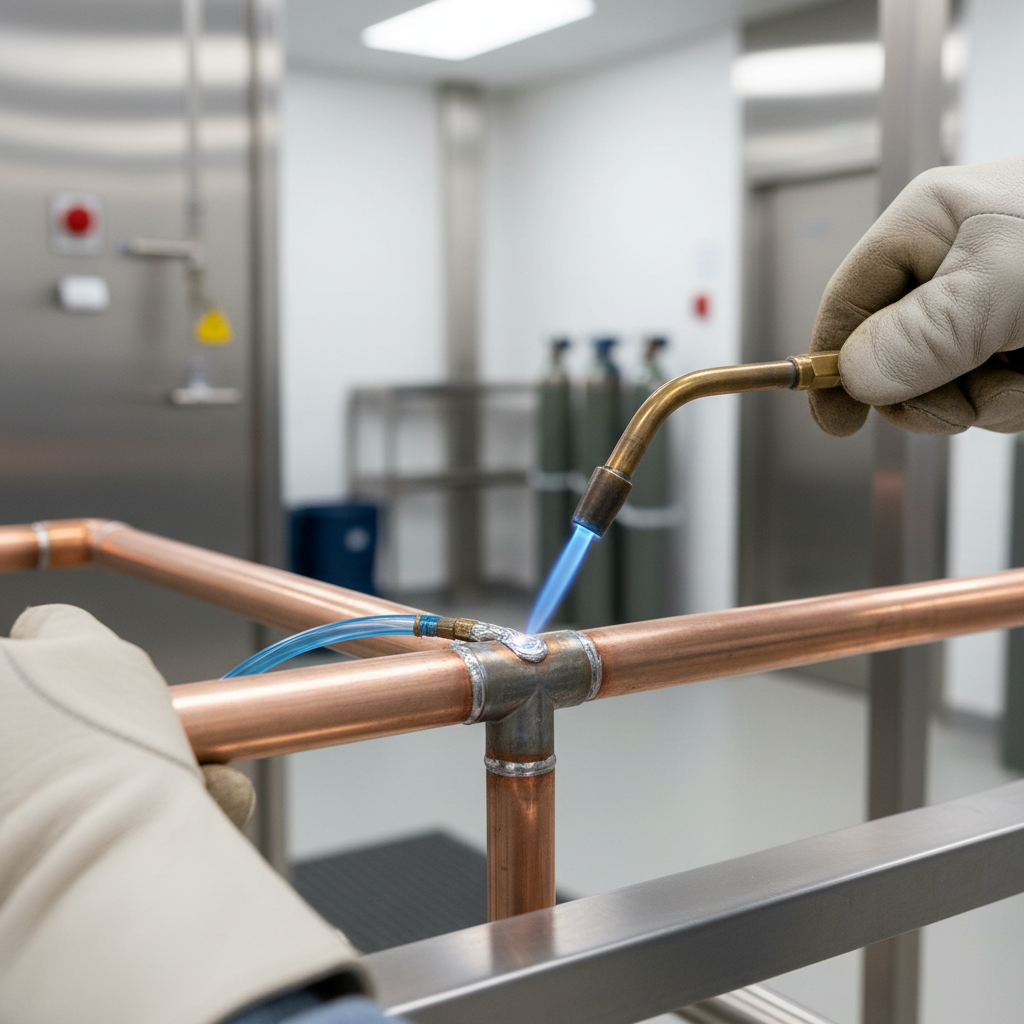
    Joining copper pipes for a medical gas system requires a specific technique called brazing.

    • Nitrogen Purge: During brazing, a continuous low-pressure stream of oil-free, dry nitrogen must be purged through the pipe. This displaces oxygen, preventing the formation of copper oxides on the interior surface of the joint. These black, flaky oxides can dislodge and pose a severe risk to patients and equipment.
    • Brazing Alloy: Only specific brazing alloys with a melting point above 1000°F are permitted.
    • ASSE 6010 Certification: This certification ensures the installer has been trained and tested on this specific, critical procedure. At Medical Testing Solutions, our technicians carry this certification for all installation projects.

    Comparing System Types and Requirements

    FeatureBulk Liquid Oxygen SystemHigh-Pressure Manifold System
    Primary UsePrimary supply for medium to large hospitalsPrimary for small clinics, secondary/emergency for hospitals
    Storage FormLiquid Oxygen (LOX) at -297°FGaseous Oxygen in high-pressure cylinders (H/K type)
    FootprintLarge outdoor concrete padSmaller indoor/outdoor footprint
    Operating PressureLower, typically 50-55 psi distributionHigh cylinder pressure (2200+ psi) regulated down to 50 psi
    NFPA 99 Ref.Chapter 5: Gas and Vacuum SystemsChapter 5: Gas and Vacuum Systems

    Why this matters for compliance: NFPA 99 (Health Care Facilities Code) is not a suggestion; it's the law in most jurisdictions, including South Carolina. Failure to adhere to its strict requirements for design, installation, and testing can result in project delays, failed inspections, and significant liability for the facility.

    The Final Step: ASSE 6030 Medical Gas Verification

    Once the mechanical installation is complete, the system cannot be used until it has been thoroughly tested and verified by a separate, unbiased third-party agency. This process is governed by the ASSE 6030 standard.

    Medical gas verification is a comprehensive battery of tests designed to ensure the system is safe and performing to specification. An ASSE 6030 Certified Verifier, like the experts at Medical Testing Solutions, will perform checks including:

    • Initial Blow-Down: Cleaning the pipes of any construction debris with high-pressure nitrogen.
    • Pressure Testing: Ensuring the system can hold pressure without any leaks.
    • Cross-Connection Testing: Verifying that gases have not been mixed up (e.g., oxygen connected to a medical air outlet). This is a life-or-death test.
    • Gas Purity and Quality Analysis: Confirming the oxygen delivered is of medical grade (USP 99%) and free of contaminants.
    • Alarm Testing: Ensuring all master and area alarms function correctly.

    Only after every test is passed can the verifier provide the written certification required to place the system into service.

    Partnering with Certified Experts in Columbia, SC

    For a project as critical as a hospital oxygen system installation, there is no substitute for certified expertise. From initial design consultation and equipment sales to ASSE 6010 installation and final ASSE 6030 verification, a qualified partner is essential. Medical Testing Solutions provides a full suite of services to healthcare facilities across Columbia, SC, and the Southeast. Our deep understanding of NFPA and ASSE standards ensures your project is completed correctly, on time, and with patient safety as the top priority. We also offer annual medical gas inspections to ensure long-term compliance and reliability.

    Frequently Asked Questions

    The timeline varies significantly based on the project's scale—a single-floor renovation versus a new hospital wing. A typical installation can take several weeks to a few months, factoring in design, installation, and the mandatory verification phase.

    An ASSE 6010 certification is for the installer who physically builds the system—running pipes and brazing joints. An ASSE 6030 certification is for the verifier, an independent inspector who performs the final safety and quality testing before the system can be used for patients.

    A nitrogen purge prevents oxidation inside the copper piping as it's heated. These black oxide flakes can contaminate the gas stream, posing a significant risk to patient respiratory systems and sensitive medical equipment like ventilators.

    Unless they hold a current ASSE 6010 Medical Gas Installer certification and are working under a valid permit, they cannot. This work is legally restricted to certified professionals to ensure safety and code compliance.

    NFPA 99 requires regular inspections and maintenance. This includes annual checks of manifolds, alarms, and zone valves. Our medical gas maintenance services can help you stay compliant.

    You can contact a qualified medical gas service provider. The process typically involves a site visit, a review of your facility's needs and blueprints, and a detailed proposal outlining the scope of work and costs.

    This article is provided for educational purposes and reflects industry standards as of publication. Always verify against current NFPA 99, CGA, and AHJ requirements. Medical Testing Solutions is ASSE-certified and ready to help — contact us for facility-specific guidance.

    Request a quote for your facility

    Talk with Medical Testing Solutions about your next inspection, repair or equipment request.

    Get a quote in 1 business day

    I agree to receive text messages from Medical Testing Solutions, L.L.C. at the phone number provided, including informational and marketing messages. Consent is not a condition of purchase. Message frequency varies. Message & data rates may apply. Reply STOP to opt out or HELP for help. See our Privacy Policy and Messaging Terms.

    Prefer to talk? Call (754) 315-1078

    Related articles