What is a Hospital Oxygen System?
A hospital oxygen system is a life-sustaining utility, a complex network of components designed to deliver medical-grade oxygen from a central supply source to patient bedsides, operating rooms, and other critical care areas. Unlike portable cylinders, these centralized systems provide a continuous, reliable flow of oxygen essential for patient care. A complete system, installed to NFPA 99 standards, includes the bulk oxygen source, supply manifolds, main and area alarm panels, zone valves, and the network of copper piping that terminates at the wall outlets.
This guide will walk you through the critical phases of a compliant hospital oxygen system installation in Charlottesville, VA. We will cover the components, the importance of ASSE-certified procedures like brazing, and the final verification process that ensures patient safety.
The Core Components of a Medical Oxygen System
A compliant oxygen system is more than just pipes. It's an integrated system where each part plays a critical role in safety and reliability. Here’s a breakdown of the primary components.
Bulk Oxygen Storage
Most hospitals rely on a bulk liquid oxygen tank, often a large, white vessel located outside the facility. This cryogenic tank stores oxygen in its liquid state at extremely low temperatures (-297°F / -183°C). A vaporizer system converts the liquid oxygen into a gas before it enters the hospital's main pipeline.
- Primary Supply: The bulk tank serves as the hospital's main oxygen source.
- Reserve Supply: A secondary bank of high-pressure cylinders, known as the reserve manifold, acts as a backup, automatically engaging if the primary bulk supply is depleted or fails.
Manifolds and Pressure Regulation
A manifold is a critical control point that manages the gas supply from cylinder banks. Even facilities with a bulk tank have a reserve manifold. It ensures an uninterrupted supply by automatically switching from one bank of cylinders to another as they are depleted.
- High-Pressure Cylinders: These are the backup to the bulk tank.
- Pressure Regulators: These devices reduce the high pressure from the cylinders (over 2000 psi) down to the standard pipeline working pressure of 50-55 psi, as mandated by NFPA 99.
The Piping Network: The System's Veins
The backbone of the system is the network of specially prepared copper tubing. All piping used for medical gas must be cleaned for oxygen service, capped, and delivered sealed from the manufacturer to prevent contamination.
Why this matters for compliance: NFPA 99 (Health Care Facilities Code) strictly dictates the type of materials and installation procedures for medical gas piping. Using incorrect materials or methods can lead to catastrophic failures, contamination, and immediate jeopardy for patients. Medical Testing Solutions uses only medical-grade, cleaned, and capped copper tubing for all our medical gas installation projects.
Zone Valves and Alarm Panels
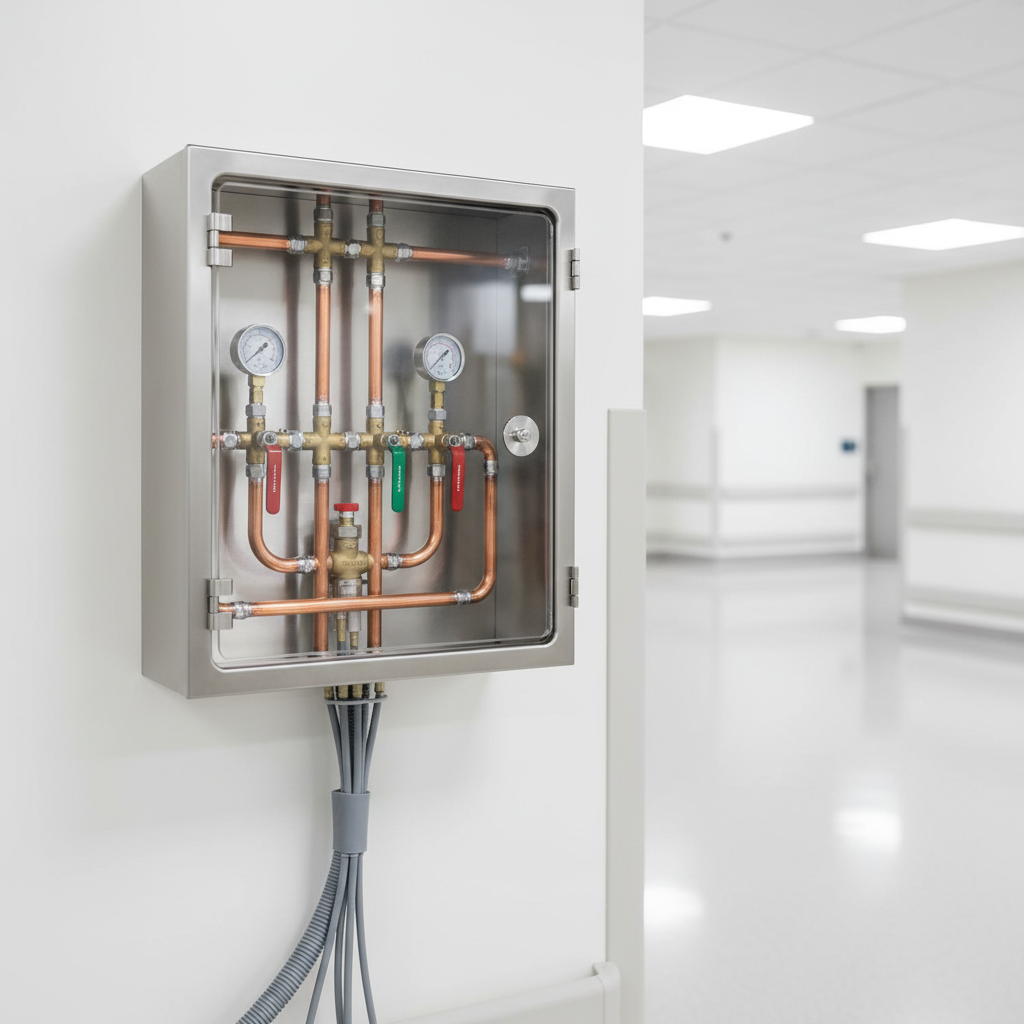
- Zone Valves: These are shut-off valves placed in boxes throughout the hospital. They allow maintenance or emergency personnel to isolate specific sections (or "zones") of the hospital, like a single operating room or an entire wing, without shutting down the oxygen supply to the entire facility.
- Master & Area Alarms: Alarm panels are the system's nervous system. The master alarm, typically in the facility manager's office, monitors the entire system's status. Area alarms are located in critical areas like nurse's stations and monitor the status of the zones they serve, alerting staff to pressure drops or other issues.
The Installation Process: An ASSE 6010 Certified Procedure
Installing a medical oxygen system is a precise, code-driven process that leaves no room for error. The entire installation must be performed by personnel certified to the ASSE 6010 Medical Gas Systems Installer standard.
- Project Planning & Design: The first step is a detailed review of the facility’s blueprints and clinical needs to design a system that meets patient demand and complies with all relevant codes.
- Material Handling: All copper tubing and components must be handled carefully to prevent contamination. They remain capped until the moment of installation.
- Brazing the Joints (ASSE 6010): This is the most critical step. An inert gas, typically nitrogen, is purged through the copper tubing during brazing. This process, known as nitrogen purging, displaces oxygen from inside the pipe, preventing the formation of copper oxides on the interior surface. These black, flaky oxides can become dislodged, contaminate the gas stream, and harm patients or damage equipment.
- Valve and Component Placement: Zone valves, alarm sensors, and outlets are installed according to the design plans.
- Initial Pressure Test: Once the piping is complete, it is subjected to a high-pressure test (1.5 times the working pressure) to check for leaks.
NFPA 99 Code Comparison for Brazing
| NFPA 99 Section (2024 Ed.) | Requirement | Why It's Critical | Associated ASSE Standard |
|---|---|---|---|
| 5.1.10.4.3.1 | Brazing procedures must be performed by individuals qualified under ASSE 6010. | Ensures the brazer has proven competence in the specific task of brazing med gas lines. | ASSE 6010 |
| 5.1.10.4.4.1 | During brazing, the interior of the pipe shall be purged with oil-free, dry nitrogen. | Prevents the formation of toxic and damaging copper oxides inside the pipeline. | ASSE 6010 |
| 5.1.3.3.1 | Tubing shall be hard-drawn seamless medical gas tube, Type K or L (ASTM B819). | Guarantees the material is cleaned for oxygen service and has the correct wall thickness. | N/A |