Hospital Oxygen System Installation in Charlotte, NC: A Comprehensive Guide
Installing or upgrading a hospital's oxygen system is a critical undertaking that directly impacts patient safety and facility operations. A properly installed medical gas system, from the bulk oxygen source to the patient-care room, is not a suggestion, it's a mandate governed by stringent codes and standards. This guide provides a definitive overview of the process for a hospital oxygen system installation in Charlotte, NC, detailing everything from system design and component selection to the crucial steps of ASSE 6010-certified brazing and ASSE 6030 verification.
Understanding the Core Components of a Hospital Oxygen System
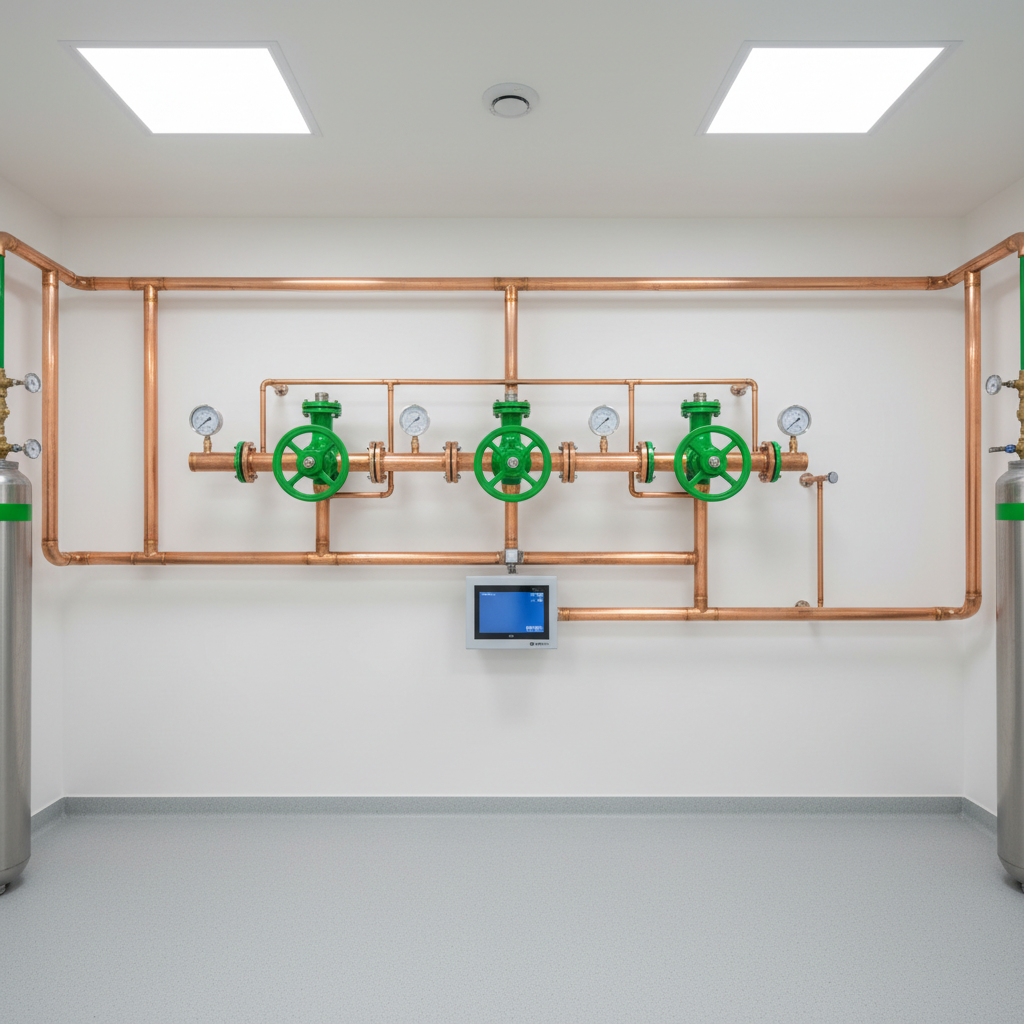
A hospital's medical oxygen system is more than just pipes in a wall. It is a complex network of components regulated under NFPA 99, the Health Care Facilities Code. Key components include:
- Source Equipment: This is typically a large, cryogenic bulk oxygen tank located outside the facility. For smaller facilities or as a secondary supply, high-pressure cylinder manifolds are used.
- Main Supply Line: The piping that transports oxygen from the source into the building.
- Manifolds: A manifold is a bank of high-pressure cylinders that can be used as a primary or secondary supply. They ensure an uninterrupted oxygen flow if the primary source is depleted or fails.
- Alarms: Master, area, and local alarms are required to provide surveillance of the system's pressure and supply status.
- Zone Valves: These valves are installed in boxes and allow specific areas or "zones" of the hospital to be isolated for maintenance, repair, or in case of an emergency without shutting down the entire facility.
- Outlets/Terminals: These are the final connection points in patient rooms, operating rooms, and other care areas where medical equipment is connected.
The Installation Process: An ASSE 6010 Certified Approach
NFPA 99 requires that medical gas systems be installed by qualified individuals. The industry standard for this qualification is the ASSE 6010 Medical Gas Systems Installer certification. This ensures the technician has the proven knowledge and skill to work with these life-support systems.
- System Design & Planning: The process begins with a detailed assessment of the facility's needs, including peak demand, number of outlets, and future expansion plans. The system is designed to meet these needs while strictly adhering to NFPA 99 guidelines.
- Piping Installation & Brazing: This is one of the most critical phases. All piping must be medical-grade, cleaned for oxygen service. Joints are created using a brazing process, where a filler metal is melted at high temperatures to create a permanent, leak-proof seal. The key here is the use of nitrogen purging during brazing. This inert gas is flowed through the pipe to displace oxygen, preventing the formation of toxic copper oxides on the interior pipe surface.
- Component Installation: Manifolds, alarm panels, and zone valve boxes are installed and connected to the piping network.
Why This Matters for Compliance: Failure to use proper brazing techniques, especially nitrogen purging, can introduce contaminants into the system. These particulates can pose a serious fire risk in an oxygen-enriched environment and cause harm to patients. This is a primary focus during the medical gas verification process.
Comparing Oxygen Supply Sources: Bulk Tank vs. Manifold
Choosing the right primary oxygen source depends on a facility's size, consumption rate, and budget. Here’s a comparison:
| Feature | Cryogenic Bulk Tank | Cylinder Manifold |
|---|---|---|
| Capacity | Very High (thousands of gallons) | Low to Medium (based on cylinder count) |
| Footprint | Large outdoor concrete pad | Smaller, typically against an exterior wall |
| Best For | Large hospitals with high, continuous demand | Smaller clinics, surgery centers, or as a secondary supply |
| Maintenance | Requires regular fill-ups from a gas supplier | Requires frequent cylinder changes |
| Cost | Higher initial investment, lower long-term cost per unit of gas | Lower initial investment, higher gas cost |
The Final Step: ASSE 6030 Verification
Once the physical medical gas installation is complete, the system cannot be used until it has been thoroughly tested and verified by a separate, unbiased third party. This process is governed by the ASSE 6030 Medical Gas Verifier standard.
The verifier, like the certified team at Medical Testing Solutions, performs a battery of tests to ensure the system is safe, pure, and functions as designed. These tests include:
- Purity & Quality Testing: Verifying the gas is medical-grade oxygen and free from contaminants.
- Pressure & Flow Tests: Ensuring the system can deliver the required pressure and flow rates to all outlets.
- Cross-Connection Testing: A critical test to confirm that only oxygen is flowing from oxygen-labeled outlets.
- Alarm Testing: Verifying that all master and area alarms function correctly.
- Valve & Manifold Testing: Ensuring all control equipment operates as intended.
Only after passing every test in the verification process can the system be certified and put into service for patient use.
Maintaining Your Hospital Oxygen System
Installation is just the beginning. NFPA 99 mandates ongoing maintenance and testing to ensure the system remains compliant and safe. This includes annual medical gas inspections that check for leaks, verify pressures, and test alarms. Regular maintenance prevents emergencies and extends the life of your equipment. Medical Testing Solutions provides comprehensive medical gas maintenance services to keep Charlotte, NC facilities in a constant state of readiness.
Why Choose a Certified Partner for Your Charlotte, NC Installation?
Choosing an experienced, ASSE-certified partner like Medical Testing Solutions is non-negotiable. Our team brings decades of combined experience to every project. We are not just equipment vendors; we are a full-service medical gas company. We provide ASSE 6010 installation, ASSE 6030 verification, and ongoing maintenance, ensuring a single, accountable partner for the life of your system. Our deep understanding of NFPA 99 and the specific requirements for healthcare facilities in North Carolina ensures your project is done right, on time, and on budget.