Skip to content
    New: Medical Gas Outlet Retrofit & Rebuild Matrix — cross-reference legacy Chemetron, Ohio Diamond, Puritan-Bennett & more →
    ASSE Certified 24/7
    Medical Gas Service
    Medical Gas Products
    Compliance & Standards

    Hospital Oxygen System Installation in Bowling Green KY: A Guide

    Medical Testing SolutionsOctober 10, 20267 min read
    Share
    Hospital Oxygen System Installation in Bowling Green KY: A Guide

    Hospital Oxygen System Installation in Bowling Green KY: A Comprehensive Guide for Healthcare Facilities

    A compliant medical gas pipeline system is the lifeblood of any modern hospital. For facilities in Bowling Green, Kentucky, ensuring that a new hospital oxygen system installation meets stringent safety and regulatory standards is not just a best practice, it's a legal and ethical mandate. A properly installed system, from the bulk oxygen source to the patient-care outlets, guarantees the uninterrupted delivery of this critical medical gas, safeguarding patient lives and ensuring facility compliance.

    This guide provides a definitive overview of the hospital oxygen system installation process. We will detail the critical components, regulatory codes, and specialized procedures involved, from initial design and sourcing to the final verification and certification. You will learn the key requirements of NFPA 99, the role of ASSE 6000 series personnel, and the technical specifics of brazing, testing, and commissioning a new oxygen pipeline. Our goal is to equip hospital administrators, facility managers, and construction partners in the Bowling Green area with the knowledge to oversee a successful and compliant installation.

    Understanding the Core Components of a Hospital Oxygen System

    A hospital oxygen system is a complex network of components designed to store, regulate, and deliver medical-grade oxygen safely and reliably. Understanding these parts is the first step in planning a successful installation.

    1. The Source: Bulk Oxygen Systems

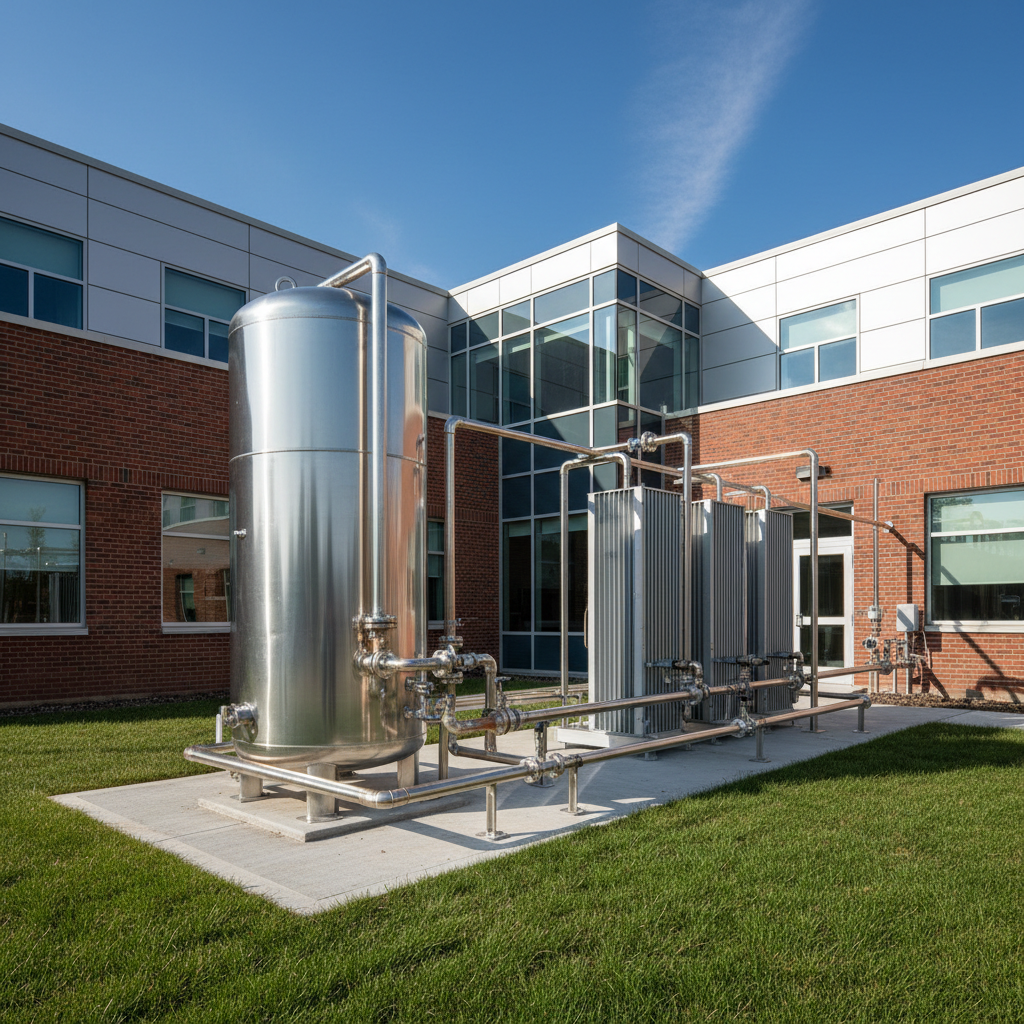
    Most hospitals rely on a bulk liquid oxygen tank, or "cryogenic vessel," as their primary supply. These tanks store oxygen in its liquid state at extremely low temperatures (around -297°F or -183°C). A vaporizer system converts the liquid oxygen into a gas before it enters the hospital's pipeline. Per NFPA 99, the bulk source must be located outdoors in a secure, well-ventilated area, away from combustible materials and potential ignition sources. A secondary, or reserve, supply (typically a high-pressure cylinder manifold) is required to ensure continuity of care if the primary source fails.

    2. The Heart of the System: Manifolds and Source Valves

    Manifolds are critical for managing the gas supply. They connect the primary and secondary sources to the main pipeline.

    • Primary Manifold: Regulates the pressure from the bulk tank vaporizer.
    • Reserve Manifold: Automatically activates if the primary source pressure drops, ensuring an uninterrupted oxygen supply. It typically consists of high-pressure cylinders.

    Source valves allow for the isolation of the entire system for maintenance or emergencies, a key requirement under NFPA 99.

    3. The Arteries: Piping and Distribution

    Medical gas pipelines are the arteries of the system, transporting oxygen from the source to various points of use.

    • Risers: Vertical pipes that distribute gas between floors.
    • Branch Lines: Horizontal pipes that run from the risers to specific areas or rooms.

    All piping must be medical-grade, typically Type K or L seamless copper tubing, cleaned and prepared specifically for oxygen service to prevent contamination. The precise sizing of this network is critical to maintain adequate pressure and flow to all outlets, especially those furthest from the source.

    4. Control and Safety: Zone Valves and Alarm Panels

    • Zone Valves: Placed in valve boxes, these are strategically located to isolate specific areas ("zones") of the hospital, such as an entire floor, an operating room suite, or an ICU wing. This allows for targeted shutdowns during maintenance, modifications, or emergencies without affecting the entire facility.
    • Alarm Panels: NFPA 99 mandates a system of local, area, and master alarms that continuously monitor gas pressure. They provide immediate visual and audible alerts if the pressure deviates from the normal operating range, signaling a potential leak, source depletion, or other critical failure.

    The Installation Process: An ASSE-Certified Approach

    Installing a medical oxygen system is a specialized trade that can only be performed by certified professionals. The American Society of Sanitary Engineering (ASSE) 6000 series provides the definitive standards for personnel involved in this work.

    • Step 1: Design and Pre-Planning: The process begins with detailed system design and load calculation to ensure adequate flow and pressure for the facility's needs. This involves architects, engineers, and a certified medical gas consultant like Medical Testing Solutions.
    • Step 2: Brazing by ASSE 6010 Certified Installers: All joints in the copper pipeline must be brazed, not soldered. This process requires a specific brazing alloy and a continuous nitrogen purge within the pipe. The nitrogen purge displaces oxygen, preventing the formation of copper oxides on the interior surface, which could otherwise flake off and pose a significant fire hazard or patient risk. Only an ASSE 6010 Certified Medical Gas Systems Installer is qualified to perform this critical task.
    • Step 3: Initial Piping Pressure Tests: After installation, the system undergoes a series of pressure tests to ensure its integrity. This includes an initial test to check for leaks before the walls and ceilings are closed up.
    • Step 4: Cross-Connection Prevention: It is absolutely critical to ensure that the oxygen line has not been inadvertently connected to any other medical gas line (e.g., medical air, nitrous oxide). This is a primary focus of the final verification process.

    NFPA 99: The Governing Code for Medical Gas Systems

    NFPA 99, Health Care Facilities Code, is the cornerstone of medical gas safety. Compliance is mandatory, not optional. For a hospital oxygen system installation, several key chapters are paramount.

    NFPA 99 Chapter/SectionRequirement Summary
    Chapter 5 (Gas Systems)Outlines requirements for system design, component sourcing, installation procedures, and testing.
    Section 5.1.3.3Details requirements for the location and security of central supply systems (bulk tanks).
    Section 5.1.10Specifies the requirements for warning and alarm systems (master, area, and local alarms).
    Section 5.1.12Lays out the detailed procedures for testing, inspection, and verification before placing a system into service.

    Why this matters for compliance: Adherence to NFPA 99 is not just about passing an inspection. It's about creating a system that is fundamentally safe for patients and staff. A failure to comply can result in catastrophic accidents, loss of facility accreditation, and significant legal liability. Working with a company like Medical Testing Solutions, which specializes in ASSE-certified services, ensures that your installation is compliant from day one.

    Final Verification: The ASSE 6030 Standard

    Before a new oxygen system can be used for patient care, it must undergo a rigorous, independent, third-party inspection and verification. This process is governed by the ASSE 6030 standard and must be performed by an ASSE 6030 Certified Medical Gas Verifier.

    The verifier is an unbiased party, separate from the installer, who confirms the system was installed correctly and is safe to use. The medical gas verification process includes:

    • System Inspection: Confirming that all components (pipes, valves, alarms, outlets) are the correct type and are installed per NFPA 99 and the design documents.
    • Pressure and Leak Testing: Performing standing pressure tests to ensure the system is leak-free.
    • Cross-Connection Testing: Verifying that each gas-specific outlet delivers only the correct gas.
    • Gas Purity and Quality Analysis: Testing the oxygen at the outlets to ensure it meets USP (United States Pharmacopeia) standards for medical-grade oxygen.
    • Alarm System Testing: Functionally testing every master, area, and local alarm to confirm they activate at the correct pressure setpoints.

    Only after a system has passed all verification tests can it be certified and put into service.

    Choosing an Installation and Verification Partner in Bowling Green

    For a project as critical as a hospital oxygen system installation, selecting the right partner is paramount. You need a team with proven expertise, the correct certifications, and a deep understanding of the regulatory landscape in Kentucky.

    Medical Testing Solutions provides comprehensive medical gas installation and verification services. Our technicians are ASSE 6010 certified for installation and our verifiers hold ASSE 6030 credentials, ensuring a seamless and compliant process from start to finish. We handle everything from the initial brazing and component setup to the final, independent verification report.

    Beyond installation, we offer a full suite of services to maintain the long-term health of your system, including annual medical gas inspections and ongoing maintenance services to keep your Bowling Green facility safe and compliant for years to come.

    Conclusion: Your Partner for Compliant Oxygen System Installation

    Installing a hospital oxygen system is a high-stakes project that demands precision, expertise, and strict adherence to code. From sourcing the bulk tank to the final ASSE 6030 verification, every step must be executed flawlessly to ensure patient safety and facility compliance. By partnering with a certified and experienced team, you can ensure your Bowling Green hospital is equipped with a reliable, safe, and efficient medical oxygen system.

    If you are planning a new construction, renovation, or system upgrade, contact the experts at Medical Testing Solutions. We provide end-to-end solutions for hospital oxygen system installation, testing, and certification.

    Ready to start your project? Request a quote online or call us at (754) 315-1078 to discuss your facility's needs.

    Frequently Asked Questions

    Only individuals holding an ASSE 6010 Medical Gas Systems Installer certification are qualified. This certification ensures they have been trained and tested in the specific procedures for installing medical gas pipelines, including the critical brazing process with a nitrogen purge.

    Installation (per ASSE 6010) is the physical construction of the pipeline system. Verification (per ASSE 6030) is the independent, third-party testing and inspection process that confirms the system was installed correctly, is safe, and meets all NFPA 99 requirements before it is used for patient care.

    After the initial installation and verification, all medical gas systems, including oxygen, must be inspected annually by a certified professional to ensure continued safety and compliance. Medical Testing Solutions provides these annual inspection services.

    When copper is heated during brazing, it reacts with oxygen in the air to form a black, flaky residue (copper oxide) on the inside of the pipe. This debris can later travel downstream, posing a fire risk in an oxygen-rich environment or harming a patient. A continuous flow of nitrogen during brazing displaces the oxygen, preventing this oxidation and keeping the pipe interior clean.

    Unless your in-house staff holds current ASSE 6010 certifications and has the specialized equipment for brazing, purging, and testing, they are not qualified to install medical gas piping. Using uncertified personnel violates NFPA 99 code and puts patients at extreme risk.

    If a system fails any part of the ASSE 6030 verification, the verifier will issue a report detailing the deficiencies. The original installer must then correct all issues. The system must then be re-tested by the verifier until it passes all requirements. The system cannot be put into service until it is fully certified.

    This article is provided for educational purposes and reflects industry standards as of publication. Always verify against current NFPA 99, CGA, and AHJ requirements. Medical Testing Solutions is ASSE-certified and ready to help — contact us for facility-specific guidance.

    Request a quote for your facility

    Talk with Medical Testing Solutions about your next inspection, repair or equipment request.

    Get a quote in 1 business day

    I agree to receive text messages from Medical Testing Solutions, L.L.C. at the phone number provided, including informational and marketing messages. Consent is not a condition of purchase. Message frequency varies. Message & data rates may apply. Reply STOP to opt out or HELP for help. See our Privacy Policy and Messaging Terms.

    Prefer to talk? Call (754) 315-1078

    Related articles