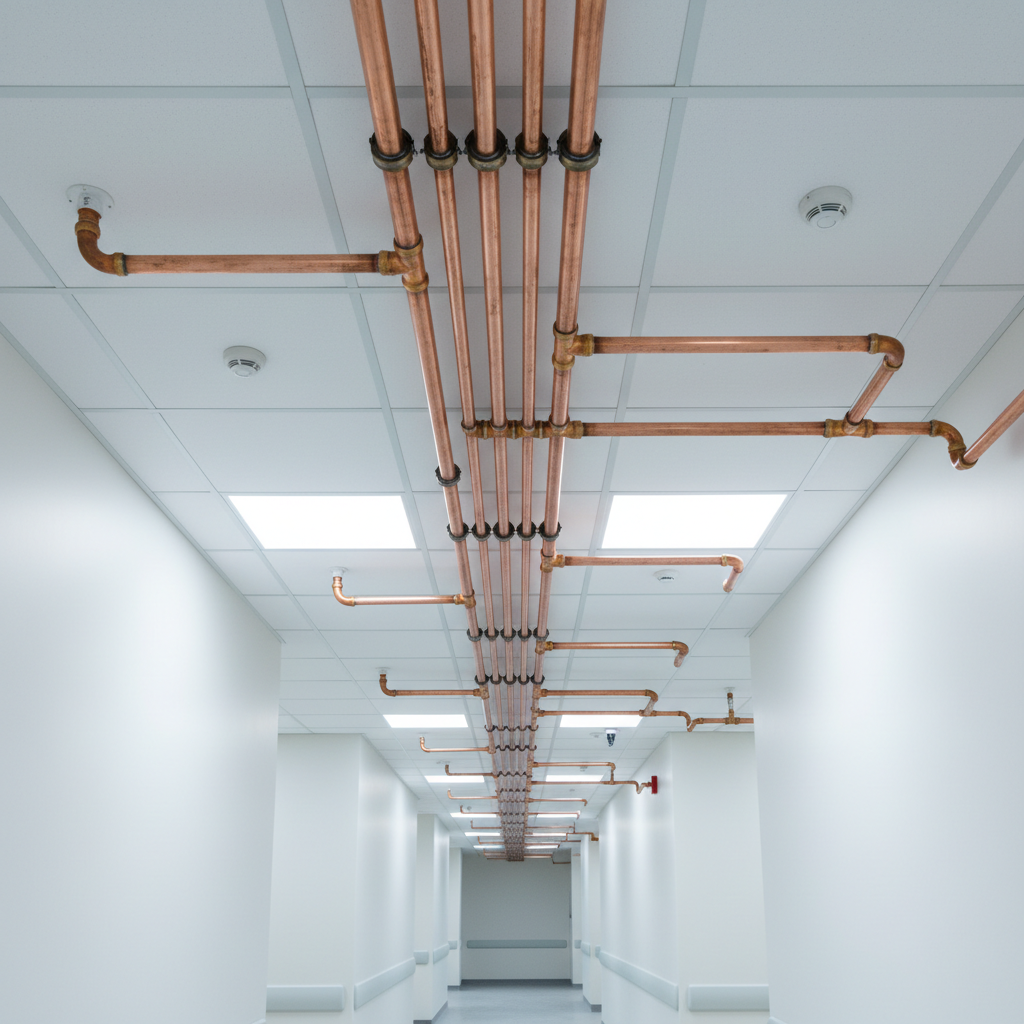
Hospital Oxygen System Installation in Asheville, NC
Medical Testing SolutionsOctober 6, 20267 min read
Share
Hospital Oxygen System Installation in Asheville, NC: A Guide for Healthcare Facilities
Installing a medical oxygen system in a hospital is one of the most critical infrastructure projects a healthcare facility can undertake. Unlike standard plumbing or electrical work, medical gas systems directly support patient life. Any error in design, installation, or verification can have catastrophic consequences. For facilities in Asheville, North Carolina, ensuring a new or upgraded oxygen system meets stringent codes, like those from the National Fire Protection Association (NFPA), requires a team of certified and experienced professionals.
This guide provides a definitive overview of the hospital oxygen system installation process. You will learn the key components of a compliant system, the importance of ASSE 6000 series certifications, the step-by-step installation process from bulk tank to patient room, and the final verification required before the system can be used for patient care. We will cover bulk oxygen sources, manifold configurations, pipeline brazing, and the essential role of an ASSE 6030 verifier.
Core Components of an NFPA 99-Compliant Oxygen System
A hospital's medical oxygen system is a complex network regulated by NFPA 99, the Health Care Facilities Code. Its primary purpose is to deliver an uninterrupted supply of medical-grade oxygen (USP 93%) at a precise pressure (typically 50-55 psig) to various points of use. The system is designed with multiple redundancies to ensure patient safety. Key components include:
Primary Oxygen Supply: Usually a large, cryogenic bulk oxygen tank located outside the facility.
Secondary (Reserve) Supply: A smaller, secondary cryogenic tank or a high-pressure cylinder manifold that automatically activates if the primary supply fails.
Source Manifolds: Banks of high-pressure cylinders used as a primary supply for smaller facilities or as the required reserve for a bulk system.
Main Alarm Panel: The master brain that monitors the entire system's status, pressure, and supply levels, providing audible and visual alerts per NFPA 99 requirements.
Main Shut-off Valve: Allows for the isolation of the entire oxygen system from the source.
Risers and Main Lines: Large-diameter copper pipes that transport oxygen vertically (risers) and horizontally (mains) throughout the building.
Zone Valve Boxes: Sectional valves that allow specific areas or floors (e.g., "ICU," "OR Wing") to be isolated for maintenance or in an emergency without shutting down the entire facility.
Area Alarm Panels: Local alarms that monitor pressure in a specific zone, alerting staff to issues within their immediate area.
Outlets: The final delivery point in patient rooms, operating suites, and procedure areas, with a gas-specific connection to prevent cross-connection.
Why this matters for compliance: NFPA 99 (Chapter 5) mandates the specific design, components, and redundancy levels for medical gas systems. Failure to install a compliant system can result in project delays, costly rework, and denial of accreditation from bodies like The Joint Commission.
The Critical Role of ASSE 6000 Series Certification
You cannot have just any plumber or mechanical contractor install a medical oxygen system. The American Society of Sanitary Engineering (ASSE) 6000 series provides nationally recognized personnel certifications for everyone involved in the process. For an oxygen system installation, the following are non-negotiable:
ASSE 6010 Medical Gas Systems Installer: The credential for the technician performing the physical installation. They are trained in proper brazing techniques, component handling, and the specific requirements of NFPA 99.
ASSE 6030 Medical Gas Systems Verifier: A third-party credential for the technician responsible for the final testing and verification of the system. They ensure the system is safe, pure, and functions as designed before it is used for patient care. Learn more about the medical gas verification process.
ASSE 6020 Medical Gas Systems Inspector: The credential for the inspector of record (e.g., a municipal inspector) who inspects the work.
At Medical Testing Solutions, our technicians hold these advanced certifications, ensuring every medical gas installation project in the Asheville area meets the highest standards of safety and quality.
Step-by-Step: The Hospital Oxygen Installation Process
While every project is unique, a typical hospital oxygen system installation follows a rigorous, multi-phase process.
Phase 1: Design, Engineering, and Sizing
Sizing the System: Engineers calculate the hospital's peak and average oxygen demand based on the number of beds, operating rooms, and specialty procedure areas.
Source Equipment Selection: The appropriately sized bulk tank and reserve manifold are selected.
Piping Layout: A full set of drawings is created, mapping the piping routes from the source to every outlet to ensure proper flow and pressure is maintained.
Phase 2: Installation & Brazing (The ASSE 6010 Scope)
This is the core construction phase, performed by ASSE 6010 certified installers.
Source Equipment Placement: The bulk tank is installed on its concrete pad, and the reserve manifold is secured in a dedicated, compliant room.
Pipe Installation: Medical-grade, Type K or L (ACR) copper piping is run throughout the facility according to the engineered drawings.
Brazing: This is the most critical step. Unlike soldering, brazing creates a much stronger, leak-proof bond. Per NFPA 99, all brazing must be done with a continuous nitrogen purge flowing through the pipe. This prevents the formation of cupric oxide (soot) on the interior pipe surface, which could otherwise be blown into the patient's lungs.
Component Installation: Zone valve boxes, area alarms, and in-wall outlet rough-ins are installed.
Brazing Parameter
NFPA 99 Requirement
Why It's Critical
Technique
Brazing (not soldering)
Creates a stronger joint suitable for higher pressures.
Filler Material
BCuP series (copper-phosphorus)
Melts at a high temperature, ensuring a robust bond.
Nitrogen Purge
Required continuously during brazing
Prevents internal oxidation (soot) that contaminates the gas.
Installer
ASSE 6010 Certified
Ensures the technician is trained and tested on these specific procedures.
Phase 3: System Verification (The ASSE 6030 Scope)
After the installers have completed their work, an independent ASSE 6030 verifier like Medical Testing Solutions must conduct a series of tests before the system is placed into service. This is a third-party check to ensure the system is safe and compliant.
Initial Blowdown: The system is purged with high-pressure nitrogen to blow out any construction debris.
Piping Purge: Each outlet is purged to ensure it is clean.
Standing Pressure Test: The entire system is pressurized to 150% of the working pressure (typically ~75 psig for oxygen) for 24 hours to test for leaks.
Cross-Connection Test: Each outlet is checked to ensure it is connected to the correct gas system.
Particulate Test: A sample of gas is passed through a filter to ensure there is no particulate matter in the system.
Purity Test: The oxygen is tested for purity (must be >99% for source) and contaminants.
Alarm Testing: Every alarm panel (main and area) is tested to ensure it functions correctly.
Only after every one of these tests is passed can the verifier provide the written certification required to put the system into service.
Choosing a Partner for Oxygen System Installation in Asheville, NC
When selecting a company for your oxygen system installation, expertise is paramount. You need a partner who understands the nuances of NFPA 99 and has a proven track record of successful hospital installations. Medical Testing Solutions provides a single point of contact for both ASSE 6010 installation and ASSE 6030 verification services across North Carolina.
Our team works directly with your facility managers, engineers, and general contractors to ensure a seamless, compliant, and safe installation from start to finish. We handle new construction, renovations, and system upgrades for hospitals, surgery centers, and other healthcare facilities. We also offer comprehensive annual medical gas inspections and preventative maintenance services to keep your systems running safely for years to come.
Get a Quote for Your Asheville, NC Project
Ensuring your hospital's oxygen system is installed correctly is a non-negotiable requirement for patient safety and regulatory compliance. If your Asheville-area facility is planning a renovation, expansion, or new construction project, trust the certified experts at Medical Testing Solutions.
Contact us today to discuss your project requirements. Our team of ASSE 6010 installers and 6030 verifiers is ready to provide a detailed, competitive quote for a fully compliant medical oxygen system. Call us at (754) 315-1078 or contact us online to get started.
Frequently Asked Questions
The timeline varies greatly depending on the project's scale—a small clinic expansion may take weeks, while a new hospital wing can take many months. The verification phase alone can take several days to a week for a large project.
An ASSE 6030 certified verifier provides the final certification document (the "verifier's report") that confirms the system was installed and tested per NFPA 99 standards. This report is required by the authority having jurisdiction (AHJ) and accrediting organizations.
No, unless they hold a current ASSE 6010 Medical Gas Installer certification. NFPA 99 explicitly requires that installers be certified for this specialized work to ensure safety and compliance.
Installation is the physical construction and assembly of the system components, performed by an ASSE 6010 installer. Verification is the final testing and documentation of the completed system to ensure its safety, purity, and proper function, performed by an independent ASSE 6030 verifier.
Costs can range from tens of thousands to millions of dollars based on the facility's size, the number of outlets, the type of source equipment, and whether it's a new build or a complex renovation. The best way to determine cost is to request a quote with your project specifications.
Request a quote for your facility
Talk with Medical Testing Solutions about your next inspection, repair or equipment request.