Understanding Surgical Nitrogen (NF) Systems in Hospitals
Surgical nitrogen, designated as Nitrogen, NF (National Formulary), is a critical medical gas used in healthcare facilities. Unlike the nitrogen that makes up 78% of the air we breathe, medical-grade nitrogen is supplied at extremely high purity (99.0% or higher) and is used to power a variety of surgical tools and pneumatic devices. These include surgical saws, drills, and other instruments that require a clean, dry, and inert power source. The pressure and purity of this nitrogen are paramount for both equipment function and patient safety. Any contamination with particulates, moisture, or other gases can lead to equipment malfunction during a procedure or introduce non-sterile substances into the surgical field. Therefore, rigorous testing and verification are not just best practices, they are mandated by code.
Why is Purity So Important?
- Equipment Function: Surgical tools are designed to operate with a specific purity and pressure of nitrogen. Contaminants can damage sensitive internal components.
- Patient Safety: Oil, particulates, or moisture introduced into the gas stream can be expelled into the operating room, compromising the sterile environment.
- Regulatory Compliance: Standards from NFPA, CGA, and ASSE dictate the minimum purity and testing requirements for medical gases, including nitrogen.
Why this matters for compliance: NFPA 99 (2021 Edition, Section 5.1.3.1) explicitly states that medical gas systems shall be designed and installed in accordance with specific purity and quality standards. Failure to verify and document these standards can result in non-compliance during a Joint Commission survey.
The NFPA 99 Standard for Nitrogen System Verification
The National Fire Protection Association's NFPA 99, Health Care Facilities Code, is the cornerstone of medical gas safety. It outlines the complete lifecycle requirements for medical gas systems, from installation to ongoing maintenance and testing. For nitrogen systems, the verification process is a critical step to ensure a new or modified system is safe for patient use. This process is performed by an ASSE 6030 Certified Verifier.
An ASSE 6030 verifier from a qualified provider like Medical Testing Solutions will conduct a battery of tests to confirm the system was installed correctly and meets all safety and purity standards before it is placed into service. This is not just a formality; it is a legal and ethical requirement to protect patients and staff.
Key Tests in Hospital Nitrogen System Verification
When a hospital in Vero Beach installs a new nitrogen system or modifies an existing one, a series of tests must be performed by a credentialed verifier. These tests ensure the system is safe, pure, and ready for patient use.
- Initial Piping Tests: Before components are installed, the piping must be pressure tested to ensure it is leak-free.
- Cross-Connection Testing: The verifier must confirm that the nitrogen system is not connected to any other gas system. This is a critical patient safety test.
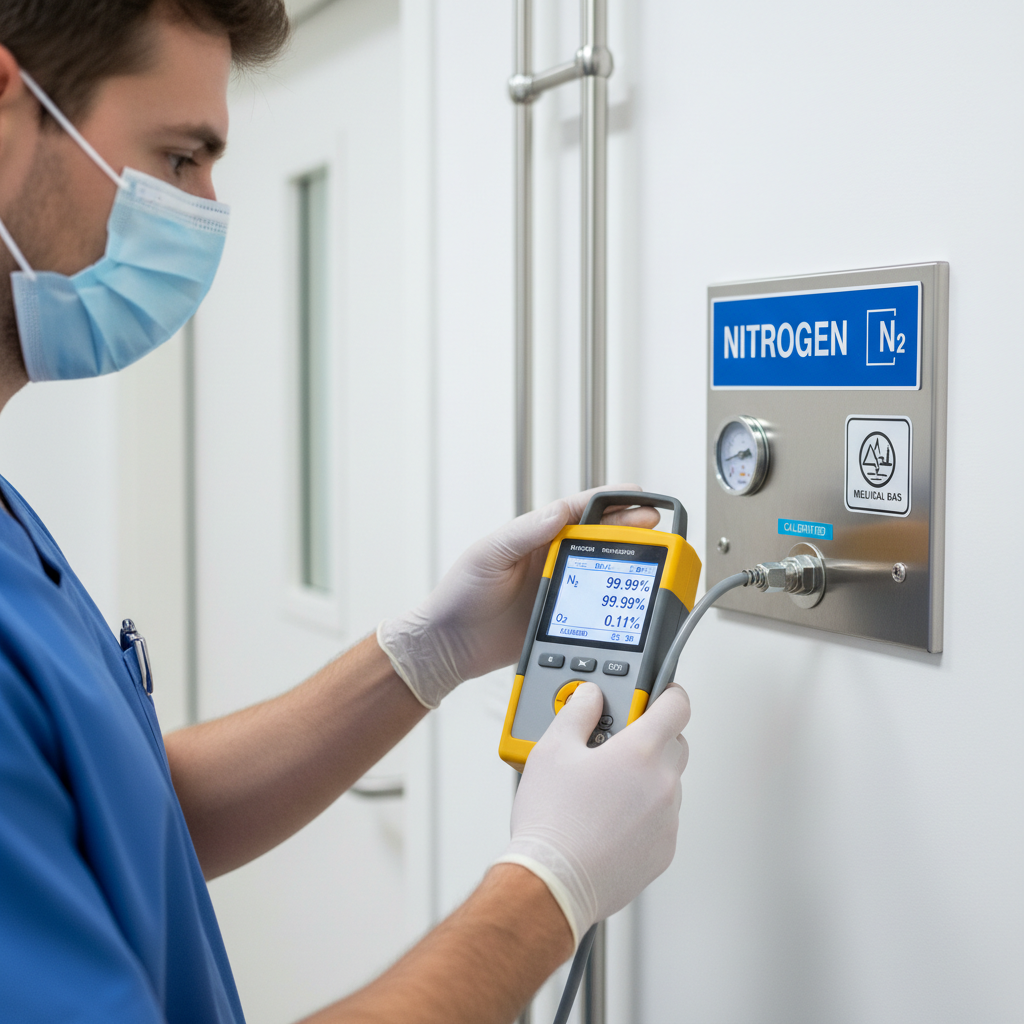
- Purity Testing (Nitrogen 99.0%): A gas analyzer is used to confirm the nitrogen concentration meets the NF minimum of 99.0%.
- Particulate Testing: A test is performed at each outlet to ensure no solid contaminants are present in the gas stream.
- Piping Purge: The system is thoroughly purged with source gas to remove any contaminants from the installation process.
- Final System Verification: Once all tests are passed, the verifier provides detailed documentation certifying the system's compliance.
For comprehensive system checks, facilities should also consider annual medical gas inspections to ensure ongoing safety and performance.