Hospital Nitrogen System Testing in Sunrise, FL: A Comprehensive Guide for Healthcare Facilities
Surgical nitrogen (NF) is a critical component in any modern hospital, powering essential surgical tools and other medical devices. Ensuring the purity, pressure, and integrity of these nitrogen systems is not just a matter of operational efficiency, it's a fundamental requirement for patient safety and regulatory compliance. For healthcare facilities in Sunrise, Florida, understanding the intricacies of hospital nitrogen system testing is paramount. This guide provides a definitive overview of the verification process, applicable standards like NFPA 99, and the role of ASSE-certified technicians in maintaining these life-support systems.
This article will walk you through the what, why, and how of surgical nitrogen system testing. You will learn about the specific tests required for new installations and routine inspections, the importance of purity analysis, and how to partner with a qualified agency like Medical Testing Solutions to ensure your facility remains compliant and prepared.
What is a Hospital Nitrogen (NF) System?
A hospital's medical gas system is a complex network, and the nitrogen (NF) portion is dedicated to distributing oil-free, dry nitrogen gas at specific pressures. Unlike medical air or oxygen, nitrogen's primary role is to drive pneumatic surgical equipment. Think drills, saws, and staplers used in orthopedic, thoracic, and other surgeries. Because these tools are used in direct patient care, the gas powering them must be clean, dry, and free of contaminants.
These systems typically consist of:
- Source Equipment: Often a manifold of high-pressure cylinders or a dedicated nitrogen generator.
- Piping Network: A dedicated pipeline, typically made of cleaned and brazed copper, running from the source to various points of use.
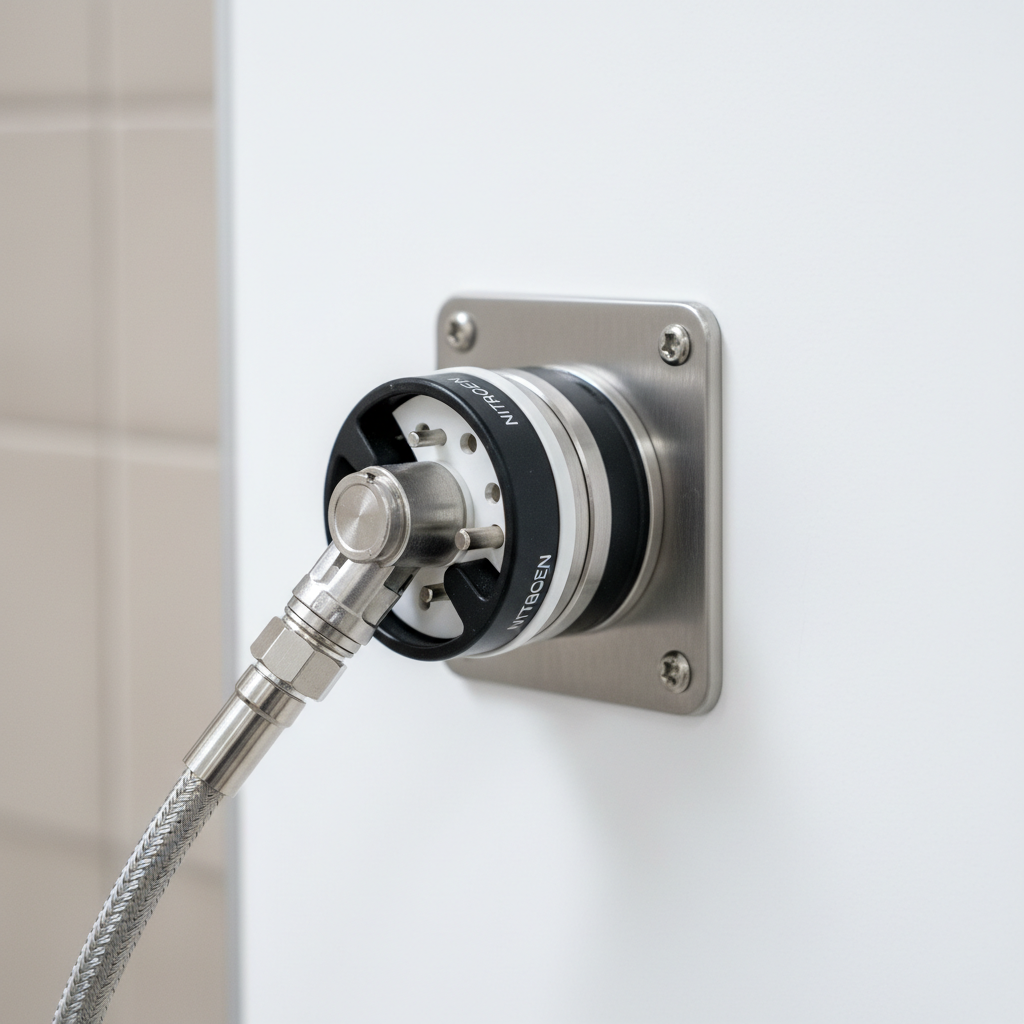
- Outlets/Terminals: Specially keyed D.I.S.S. (Diameter Index Safety System) connectors in operating rooms, procedure rooms, and other patient care areas that prevent accidental connection to the wrong gas.
- Alarms and Monitoring: Master and area alarm panels that signal changes in pressure or system status, as mandated by NFPA 99.
Nitrogen (NF) vs. Instrument Air
While both are used to power equipment, Nitrogen (NF - National Formulary) and Instrument Air serve different functions and have different requirements. Instrument Air may be used for laboratory equipment or to calibrate medical devices, but it is not intended for use with pneumatic surgical tools that come into contact with the patient. Nitrogen (NF) is the designated gas for this purpose due to its inert and dry properties.
Why This Matters for Compliance: NFPA 99, the Health Care Facilities Code, strictly defines the requirements for medical gas systems. Using the wrong gas or failing to maintain system integrity can result in immediate patient safety risks and significant compliance violations. Section 5.1.3.6 specifically outlines requirements for Nitrogen systems used to power surgical tools.
The Crucial Role of ASSE 6030 Verification
Any time a new medical nitrogen system is installed or an existing one is modified, it must undergo a thorough inspection and verification process before being placed into service. This process is governed by the American Society of Sanitary Engineering (ASSE) 6000 series standards. Specifically, ASSE 6030 Medical Gas Verifiers are certified to perform these critical tests.
Medical Gas Verification is a comprehensive process that confirms the system is safe, installed correctly, and ready for patient use. A certified technician from a company like Medical Testing Solutions will conduct a battery of tests to validate every component of the system, from the source to the outlet.
Key Tests Performed During Verification:
- Initial Piping Purge: Flushing the newly installed pipes with high-velocity, oil-free nitrogen to remove any construction debris.
- Standing Pressure Test: Pressurizing the system to 150% of the standard operating pressure and holding it for 24 hours to ensure there are no leaks in the piping network.
- Purity & Contaminant Testing: This is one of the most critical steps. A sample of the gas is taken from the outlets and analyzed for:
- Nitrogen Concentration: Must be ≥ 99.0%.
- Oxygen Concentration: Must be ≤ 1.0%.
- Dew Point: A measure of moisture, which must be low enough to prevent water from condensing in the system.
- Gaseous Hydrocarbons & Halogenated Hydrocarbons: Testing for contaminants that could have been introduced during installation.
- Outlet & Valve Functionality: Confirming that all zone valves work correctly and that each outlet provides the correct gas at the proper pressure.