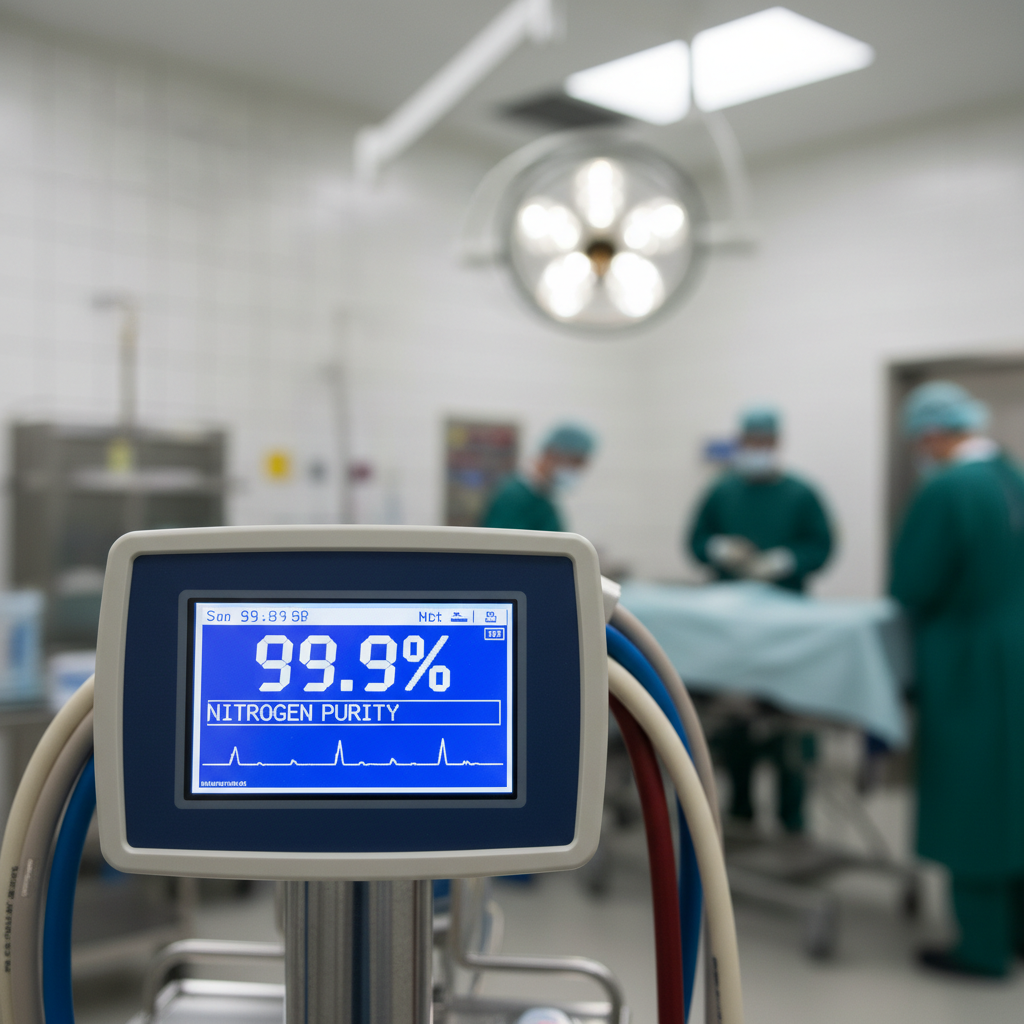
Understanding Surgical Nitrogen (NF) Systems in Healthcare
Surgical Nitrogen (NF) is a critical medical gas, indispensable in a variety of clinical applications. Primarily, it powers pneumatic surgical tools such as saws, drills, and reamers, providing a reliable and sterile source of mechanical power. Unlike compressed air, nitrogen is dry and inert, which prevents the introduction of moisture or oil into sterile surgical fields and sensitive equipment. This guide provides a definitive overview of the requirements for hospital nitrogen system testing in Stuart, FL, ensuring your facility meets rigorous safety and compliance standards.
Readers will learn the specific testing protocols mandated by NFPA 99, the importance of ASSE 6000 series certifications for technicians, and the step-by-step process of a comprehensive system verification. We will cover purity analysis, particulate testing, and final documentation requirements for a fully compliant medical gas system.
The Critical Role of NFPA 99 in Nitrogen System Verification
The National Fire Protection Association (NFPA) 99, "Health Care Facilities Code," is the foundational document governing medical gas systems. For nitrogen systems, several key chapters outline the requirements for safe installation, testing, and maintenance.
Initial System Verification (ASSE 6030)
Before any new or modified nitrogen system is placed into service, it must undergo a thorough verification by an ASSE 6030 certified verifier. This is not a simple check; it's a detailed, multi-step process to ensure the system is safe for patient use. The verification confirms that the gas is what it purports to be, at the correct pressure, and free from contaminants.
Key steps in the verification process include:
- Purity and Identity Testing: Confirming the gas is Nitrogen NF with a minimum purity of 99.0%.
- Particulate Testing: Ensuring the gas stream is free of solid contaminants.
- Pressure and Flow Verification: Checking that the system delivers nitrogen at the specified pressures at the terminal outlets.
- Labeling and Component Checks: Verifying that all piping, valves, and outlets are correctly labeled for nitrogen.
Why this matters for compliance: NFPA 99 (Chapter 5) mandates this verification process. Failure to have a system properly verified by a certified professional can result in non-compliance, jeopardizing hospital accreditation and, more importantly, patient safety. Medical Testing Solutions provides expert medical gas verification services to ensure your facility meets these stringent requirements.
Annual Inspections and Maintenance
Beyond the initial verification, ongoing maintenance is crucial. Annual inspections ensure the continued integrity of the nitrogen system. These inspections, performed by ASSE 6040 certified technicians, check for leaks, gauge accuracy, alarm function, and overall system health. Regular maintenance prevents unexpected failures that could disrupt surgical procedures.
Comparing Nitrogen System Testing Requirements
Different stages of a system's life cycle require different types of testing, performed by personnel with specific certifications. Understanding these distinctions is key to maintaining a compliant facility.
| Testing Phase | NFPA 99 Chapter | Required ASSE Certification | Key Activities |
|---|---|---|---|
| Installation | Chapter 5 | ASSE 6010 Installer | Brazing piping, component assembly, initial pressure tests. |
| Verification | Chapter 5 | ASSE 6030 Verifier | Cross-connection tests, purity analysis, particulate testing, final tie-in. |
| Annual Inspection | Chapter 5 | ASSE 6040 Maintenance Pro | Leak checks, alarm testing, pressure monitoring, component function. |
| Bulk System | Chapter 5.1.3.4 | N/A | Source equipment checks, cryogenic vessel monitoring. |