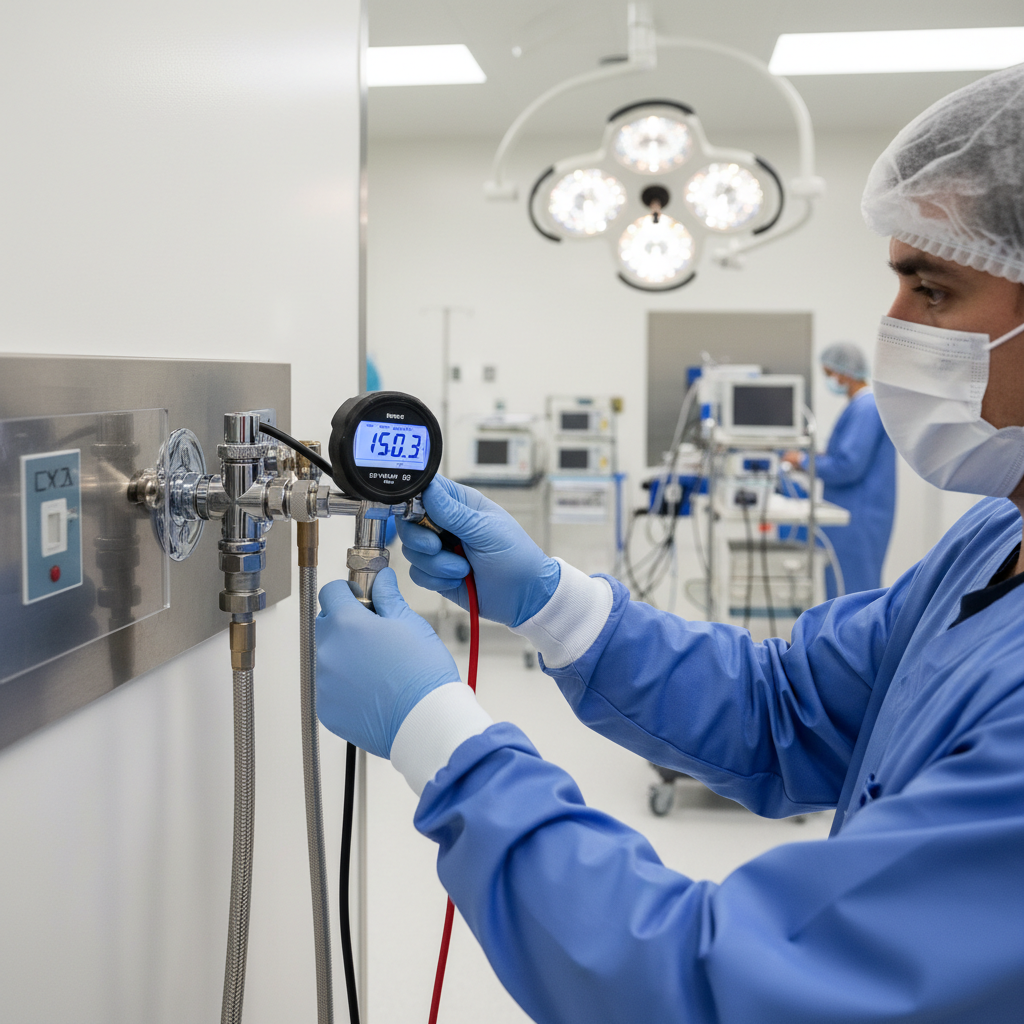
Hospital Nitrogen System Testing in Port St Lucie, FL: A Guide
Medical Testing SolutionsOctober 13, 20267 min read
Share
What is Hospital Nitrogen System Testing and Why is it Critical?
Surgical nitrogen, also known as Nitrogen NF (National Formulary), is a critical medical gas used in hospitals and ambulatory surgery centers. It powers pneumatic surgical tools, including saws, drills, and reamers, making it indispensable in operating rooms. Unlike other medical gases, nitrogen supports procedures that require high-pressure, high-torque instrumentation. Ensuring the purity, pressure, and integrity of this system is not just a matter of operational efficiency; it's a fundamental requirement for patient safety and regulatory compliance. This post details the essential procedures for hospital nitrogen system testing in Port St. Lucie, FL, covering everything from initial verification to annual inspections and emergency maintenance, ensuring your facility meets or exceeds all relevant standards like NFPA 99 and ASSE 6000 series.
The Role of Nitrogen NF in Surgical Settings
Nitrogen NF is the workhorse of the operating room, distinct from medical air, which is used for patient respiration. Its primary function is to drive a wide array of pneumatic surgical equipment. Imagine an orthopedic surgeon performing a knee replacement; the precision and power required to cut and shape bone come directly from a steady, reliable supply of high-pressure nitrogen. Any fluctuation in pressure or the presence of contaminants could lead to tool malfunction, jeopardizing the procedure and patient safety.
Key applications include:
Orthopedic Surgery: Powering saws, drills, and reamers for bone and joint procedures.
Neurosurgery: Driving high-speed drills for cranial and spinal operations.
General Surgery: Operating various pneumatic instruments that require more force than can be delivered by electric or battery-powered equivalents.
Why this matters for compliance: The FDA classifies Nitrogen NF as a drug. Therefore, its storage, distribution, and use are subject to stringent regulations. A failure in the system isn't just an equipment issue, it's a critical failure in drug delivery that can have severe consequences for patients and facility liability.
Initial System Verification: ASSE 6030 Certification
Before a new or modified hospital nitrogen system can be used for patient care, it must undergo a comprehensive inspection and verification process. This is performed by an ASSE 6030 certified verifier. This is not a task for a general plumber or contractor; it requires specialized knowledge of medical gas systems and their governing codes. Medical Testing Solutions provides expert medical gas verification services to ensure your Port St. Lucie facility is fully compliant from day one.
The ASSE 6030 verification process is a point-in-time assessment that confirms the system was installed correctly and is ready for service. Key steps include:
Component Verification: Ensuring all pipes, valves, alarms, and outlets match the original design specifications.
Pressure Testing: The system is pressurized (typically with oil-free nitrogen) to check for leaks. The pressure must hold steady for a specified period as outlined in NFPA 99.
Cross-Connection Testing: This critical test ensures that nitrogen is only delivered to nitrogen-specific outlets and cannot be accidentally connected to another gas system, like oxygen or medical air.
Purity & Particulate Testing: A sample of the gas is taken from an outlet to confirm it meets USP (United States Pharmacopeia) standards for Nitrogen NF. This involves testing for dew point, concentration (≥99.0% Nitrogen), and the absence of particulate matter.
Labeling and Documentation: Verifying that all pipelines, outlets, and source equipment are correctly labeled according to NFPA 99 standards.
Ongoing Maintenance and Annual Inspections
Once a system is operational, its safety and integrity must be maintained through a regular inspection schedule. NFPA 99 mandates annual inspections of all medical gas systems, including Nitrogen NF. These inspections are less exhaustive than the initial verification but are crucial for identifying potential issues before they become critical failures.
An annual inspection program, like the one offered by Medical Testing Solutions, typically includes:
Source Equipment Check: Inspecting the nitrogen manifold or bulk storage tank, regulators, and pressure relief valves for proper function.
Alarm Testing: Functionally testing all master and area alarm panels to ensure they activate at the correct high/low pressure set-points.
Outlet and Inlet Checks: Physically inspecting a representative sample of terminal outlets for leaks, proper function, and durability.
Pressure Checks: Recording system and delivery pressures to ensure they are within the specified operational range.
Consistent annual medical gas inspections are the best way for a Port St. Lucie healthcare facility to ensure uninterrupted service and maintain its compliance posture.
NFPA 99 vs. ASSE 6000 Series: Understanding the Standards
A common point of confusion is the relationship between NFPA 99 (Health Care Facilities Code) and the ASSE 6000 series standards. Here’s a simple breakdown:
NFPA 99: This is the what. It's the comprehensive code that defines the safety requirements for all aspects of a healthcare facility, including medical gas systems. It tells you what tests are required, what pressure levels are acceptable, and what alarm conditions must be monitored.
ASSE 6000 Series: This is the who and how. These standards define the qualifications and procedures for the personnel who install, verify, and maintain medical gas systems. For example, ASSE 6010 certifies installers, while ASSE 6030 certifies verifiers. It provides the framework for how to perform the tests required by NFPA 99 correctly.
Defines safety rules and testing requirements for the entire facility, including medical gas systems.
ASSE 6010
Professional Qualifications Standard for Medical Gas Systems Installers
Plumbers, pipefitters, installers
Certifies that an individual has the expertise to install medical gas systems correctly.
ASSE 6030
Professional Qualifications Standard for Medical Gas Systems Verifiers
Third-party testing agents
Certifies that an individual has the expertise to test and verify that a system meets NFPA 99 standards.
ASSE 6040
Professional Qualifications Standard for Medical Gas Systems Maintenance Personnel
In-house hospital maintenance staff
Certifies that an individual has the expertise to maintain medical gas systems.
Nitrogen Purity Testing: What’s in Your Lines?
Purity testing is arguably the most critical part of nitrogen system verification. Contaminants in the pipeline can have disastrous effects. The primary standard for purity is USP, which specifies that Nitrogen NF must be at least 99.0% pure nitrogen by volume.
Testing confirms the absence of:
Particulates: Dust, debris, or metal shavings left over from installation.
Moisture (Dew Point): Excess moisture can cause corrosion within the pipeline and potentially freeze at regulator valves, causing a system failure.
Other Gases: Cross-connections could introduce other gases, which would be catastrophic.
The test is performed using a specialized gas analyzer that provides a detailed report on the gas composition. This is a mandatory step in the ASSE 6030 verification process and should be repeated if the system is ever breached for maintenance or repair.
Common Issues Found During Nitrogen System Testing
Even in well-managed facilities, our ASSE-certified technicians often uncover issues during testing. In Port St. Lucie and across Florida, some of the most common problems include:
Minor Leaks: Small leaks at threaded fittings or valve packings that may not trigger a low-pressure alarm but can waste a significant amount of gas over time.
Incorrect Labeling: Pipelines or outlets that are mislabeled or have faded, unreadable labels, a direct violation of NFPA 99.
Alarm Drift: Master or area alarm set-points that have drifted over time and no longer activate at the correct pressures.
Worn Outlet Components: The internal seals and locking mechanisms in nitrogen outlets can wear out, leading to leaks or difficulty in connecting surgical tools.
Identifying and correcting these issues is central to a robust medical gas maintenance program and is essential for ensuring patient safety.
Your Partner for Compliance in Port St. Lucie, FL
Medical Testing Solutions is your local, ASSE-certified partner for ensuring your hospital nitrogen system is safe, reliable, and fully compliant. Our team of ASSE 6030 verifiers and 6040 maintenance personnel provides a full spectrum of services, from initial system verification to annual inspections and emergency repairs.
Don't leave patient safety and compliance to chance. Contact our team today for a comprehensive evaluation of your Port St. Lucie facility's medical gas systems.
Ready to ensure your facility is compliant? Request a quote online or call us directly at (754) 315-1078 to schedule your hospital nitrogen system testing.
Frequently Asked Questions
A full ASSE 6030 verification is required for any new system, or whenever an existing system is modified, extended, or breached for maintenance. Additionally, NFPA 99 requires all medical gas systems, including nitrogen, to be inspected annually by a qualified individual.
Only an ASSE 6030 Certified Medical Gas Verifier is qualified to perform the full battery of tests required for system certification. Annual inspections and maintenance can be performed by an ASSE 6040 Certified Maintenance individual.
Medical air is used for patient respiration and must meet specific purity standards for breathable air. Nitrogen NF is an inert gas used to power pneumatic surgical tools and is not intended for breathing. It is supplied at much higher pressures than medical air.
While in-house staff with ASSE 6040 certification can perform routine maintenance and inspections, the initial verification of a new or modified system must be conducted by an independent, third-party ASSE 6030 verifier to avoid conflicts of interest and ensure unbiased results.
Request a quote for your facility
Talk with Medical Testing Solutions about your next inspection, repair or equipment request.