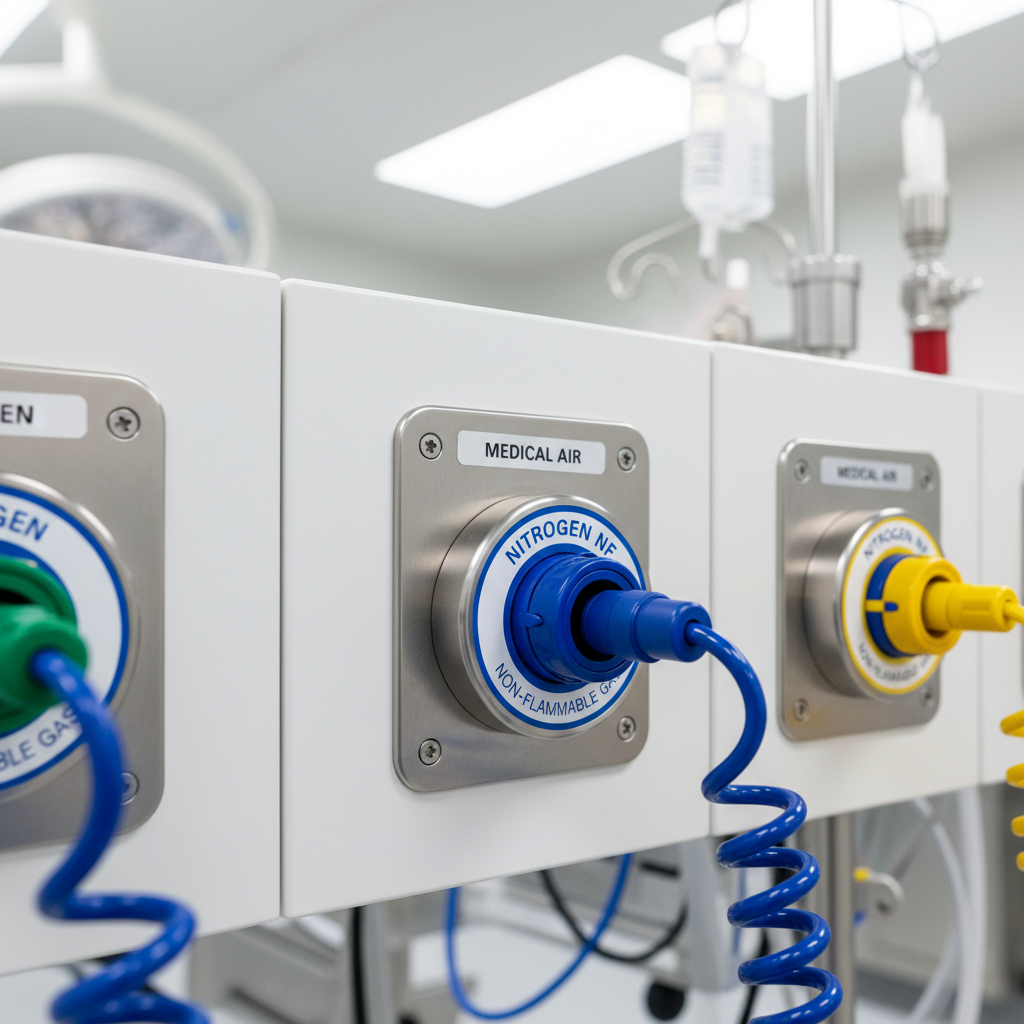
What is Surgical Nitrogen (NF) System Testing?
Surgical Nitrogen, or Nitrogen NF ("National Formulary"), is a critical medical gas used in hospitals and surgical centers. It powers pneumatic surgical tools, including drills, saws, and reamers, providing a reliable and sterile source of mechanical force for orthopedic and other procedures. Unlike industrial nitrogen, Nitrogen NF must meet stringent purity standards defined by the United States Pharmacopeia (USP) to ensure it is free from contaminants that could harm a patient or compromise surgical equipment.
Hospital nitrogen system testing is the formal process of verifying that the entire gas system, from the source (cylinders or bulk tanks) to the outlets in the operating room, is functioning correctly, delivering pure gas at the specified pressure, and is free from leaks or cross-connections. This verification, performed by an ASSE 6030 certified technician, is not just a best practice; it is a mandatory requirement under NFPA 99, the Health Care Facilities Code, which sets the safety standards for all medical gas systems. This post explains the complete process for testing and verifying a new or modified hospital nitrogen system in Davie, FL, ensuring you meet all regulatory requirements for patient safety.
Why Regular Nitrogen System Verification is Crucial for Patient Safety
The integrity of a medical gas system is paramount. A failure in the nitrogen system can have immediate and severe consequences:
- Contamination: Impurities, such as particulates or moisture, can damage sensitive surgical tools or, in a worst-case scenario, be introduced into the surgical site.
- Incorrect Pressure: Tools powered by nitrogen are calibrated for a specific pressure range. If the pressure is too low, the tool will underperform, potentially delaying a procedure. If it's too high, it can damage the tool or even cause injury.
- Cross-Connection: A cross-connection with another gas line is one of the most dangerous failures. If a nitrogen line were inadvertently connected to a medical air or oxygen line, it could lead to the delivery of 100% nitrogen to a patient, resulting in asphyxiation and death.
Why this matters for compliance: NFPA 99 (2021 edition, Section 5.1.12) mandates that all new, modified, or repaired medical gas systems be verified by a qualified third-party agency, such as Medical Testing Solutions, before being placed into service. This isn't optional; it's a fundamental requirement for hospital accreditation and patient safety.
The Nitrogen System Verification Process (ASSE 6030)
An ASSE 6030 Certified Medical Gas Verifier follows a strict, multi-step process. While every project is unique, the core procedure for verifying a nitrogen system in a Davie-area hospital involves the following H2 and H3 sections.
1. Initial System Inspection
Before any pressure tests, the verifier conducts a thorough visual inspection of the entire installation. This initial step, guided by the requirements of ASSE 6010 (Medical Gas Systems Installers), confirms that the system was installed correctly.
- Piping & Components: The verifier ensures all pipes are properly sized, made of the correct material (Type K or L copper), and that all joints are brazed correctly using a nitrogen purge to prevent internal oxidation.
- Labeling: All pipes must be clearly labeled "Nitrogen NF" with the direction of gas flow indicated, per CGA C-9 standards.
- Component Checks: The verifier checks that the source equipment (manifolds, alarms), zone valve boxes, and terminal outlets are the correct type for nitrogen service and are installed according to manufacturer specifications and NFPA 99 code.
2. Pressure Testing for Leaks
Once the visual inspection is complete, the system's integrity is tested under pressure. This is a two-part process.
Initial Low-Pressure Test
First, a low-pressure test is conducted to check for major leaks without over-stressing the system. The entire piping network is pressurized with oil-free, dry nitrogen to 150 psi. The pressure is monitored for 24 hours. Any drop in pressure indicates a leak that must be located and repaired by the ASSE 6010 installer.
Standing High-Pressure Test
After a successful low-pressure test, the system undergoes a high-pressure test. The pressure is increased to 20% above the normal system operating pressure. This ensures the system can withstand pressure fluctuations and remains leak-free under load. For a typical nitrogen system operating at 200 psi, the test pressure would be 240 psi.
3. Cross-Connection Testing
This is one of the most critical safety tests. The verifier ensures that the gas delivered at the nitrogen outlets is, in fact, nitrogen and not another gas from a different system. Each medical gas system is pressurized independently, and every outlet in the facility is checked to confirm that pressure is present only at the outlets belonging to the pressurized system. This meticulous process prevents potentially fatal gas mix-ups.
4. Particulate and Purity Analysis
After confirming the system is leak-free and correctly connected, the focus shifts to the quality of the gas itself.
- Particulate Test: The verifier flows nitrogen through the system at a high rate and uses a special filter to capture any particulates. Per NFPA 99 (5.1.12.3.8), the system must be clean enough that it does not yield more than 1 mg of debris from any outlet tested.
- Purity Test: A sample of the gas is taken from the outlet and analyzed for purity and concentration of various potential contaminants. The verifier uses calibrated equipment to measure:
- Nitrogen Concentration (must be ≥ 99.0%)
- Oxygen
- Carbon Monoxide
- Carbon Dioxide
- Gaseous Hydrocarbons
- Moisture (Dew Point)
These tests ensure the gas meets the stringent requirements of the USP for medical-grade Nitrogen NF.
| Parameter | NFPA 99 / USP Limit | Why It Matters |
|---|---|---|
| Purity (Nitrogen NF) | ≥ 99.0% | Ensures the gas is not diluted with other substances. |
| Moisture (Dew Point) | ≤ -63°C or 3 ppm | Prevents water from corroding pipes or freezing in regulators. |
| Particulates | < 1 mg per outlet | Protects surgical tools from damage and prevents debris from entering the surgical field. |
| Cross-Connection | 0% tolerance | Prevents the delivery of the wrong gas to a patient. |
5. Alarm System Verification
Every medical gas system is monitored by a series of master and area alarm panels. Medical Testing Solutions verifies that these alarms function exactly as specified by NFPA 99. For the nitrogen system, the verifier will simulate various failure conditions to test the alarms:
- High/Low Pressure: The verifier will adjust the pressure to trigger the high and low-pressure alarms at the master panel.
- Changeover: For systems with a primary and secondary cylinder bank, the "changeover" alarm is tested to ensure it activates when the system switches to the reserve supply.
- Area Alarms: Zone valve box alarms are tested to confirm they correctly indicate pressure changes in the specific zone they monitor.
Proper alarm function is critical for alerting hospital staff to a problem before it becomes a crisis.