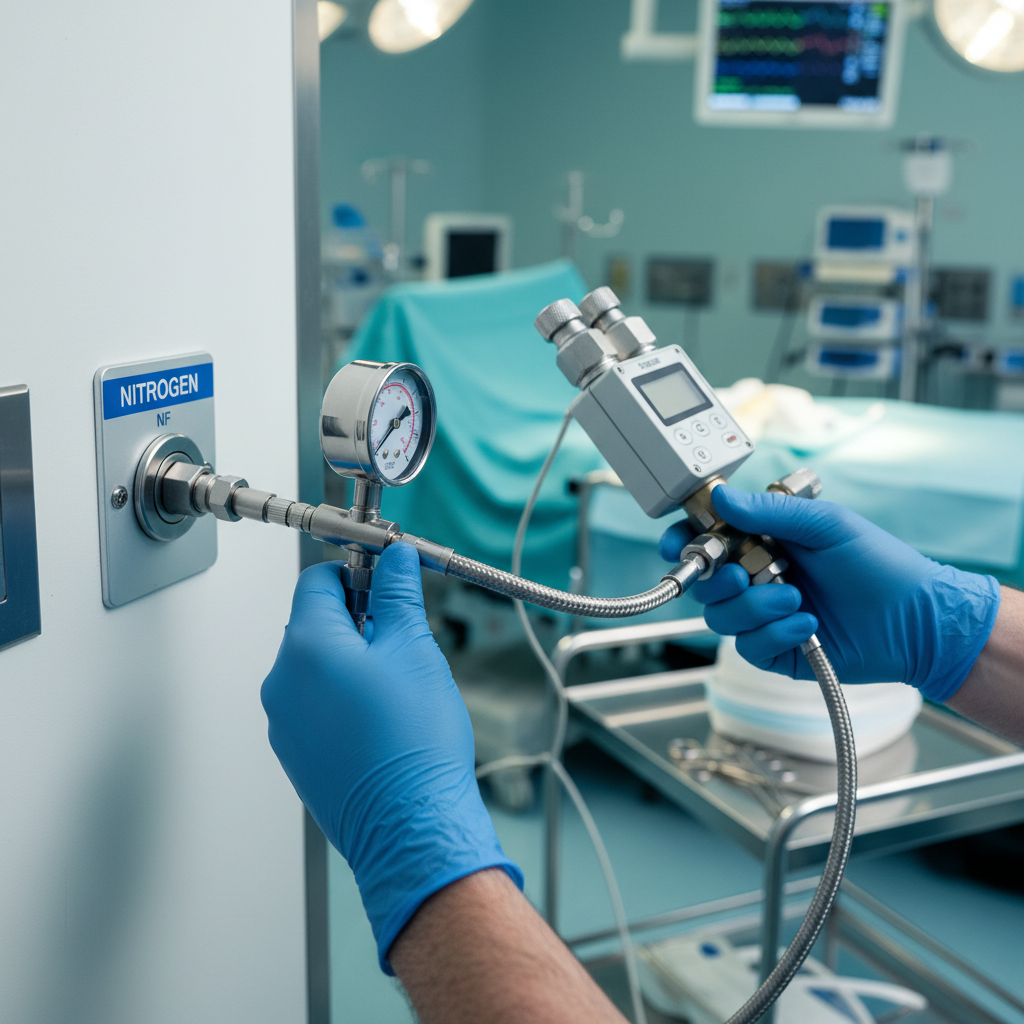
The Critical Role of Nitrogen in Boynton Beach Hospitals
Nitrogen, in its medical-grade form (NF - National Formulary), is a cornerstone of modern surgical practice. Unlike medical air or oxygen, its primary role is not respiratory. Instead, surgical nitrogen is an instrumental gas used to power a wide range of pneumatic surgical tools, including saws, drills, reamers, and dermatomes. Its dry, inert nature makes it the ideal propellant, providing consistent pressure and torque for orthopedic, dental, and other critical procedures. For any healthcare facility in Boynton Beach, from outpatient surgery centers to large hospitals, a reliable and pure nitrogen supply is non-negotiable for patient safety and procedural efficacy. This guide will walk you through the essential requirements for hospital nitrogen system testing, ensuring your facility meets all regulatory standards.
Understanding Nitrogen System Testing: What is Verification?
When we talk about "testing," it's crucial to differentiate between ongoing maintenance and the formal process of system verification. Medical gas verification, as defined by the ASSE 6030 standard, is a comprehensive series of tests performed on new installations, modifications, or when a system breach is suspected. It is performed by an ASSE 6030 certified verifier, like the credentialed technicians at Medical Testing Solutions.
This isn't just a quick check. Verification is a meticulous process that confirms the system is safe for patient use. It involves ensuring the correct gas is flowing, that it meets purity standards, and that the system can maintain adequate pressure and flow to the terminal use points.
New Installations vs. Existing Systems
- New Construction/Renovation: Any new hospital wing or facility in Boynton Beach with a nitrogen system must undergo a complete verification before a single patient is exposed. This is a prerequisite for occupancy permits and CMS accreditation.
- System Modifications: If you add a new operating room, relocate a nitrogen outlet, or replace a significant component like a manifold, that part of the system (and potentially the entire zone) must be re-verified.
- Annual Inspections: This is a separate process from verification. Annual medical gas inspections are a key part of ongoing maintenance to ensure the system continues to operate as intended. These inspections check for leaks, pressure gauge accuracy, alarm function, and general system integrity.
NFPA 99 Requirements for Nitrogen (NF) Systems
The National Fire Protection Association's NFPA 99, Health Care Facilities Code, is the primary standard governing medical gas systems in the United States. It outlines the minimum requirements for the design, installation, and testing of these critical systems.
Key NFPA 99 Testing Mandates
For a Category 1 medical gas system like surgical nitrogen, NFPA 99 (2021 Edition) mandates a series of specific tests during the verification process. These include:
- Purity Testing: The concentration of Nitrogen (NF) must be greater than 99.0% by volume. This ensures no cross-contamination has occurred.
- Contaminant Testing: The system is tested for specific impurities. For nitrogen, the code sets limits for contaminants like total hydrocarbons and dew point to ensure the gas is dry and free from oils.
- Pressure Testing: Initial pressure tests are performed to ensure the piping is robust and leak-free. This often involves pressurizing the system with oil-free, dry nitrogen to 150 psi.
- Standing Pressure Test: The system must hold pressure for a set period (e.g., 24 hours) without a significant drop, proving the integrity of the joints and connections.
- Cross-Connection Test: This is arguably the most critical test. Every single gas outlet in the facility is checked to ensure that only nitrogen flows from the nitrogen outlets. This prevents a catastrophic gas mix-up.
- Flow and Pressure Test: The verifier confirms that each nitrogen outlet can deliver the required pressure (typically 160-185 psi for nitrogen) and flow rate to power surgical tools effectively.
- Alarm Testing: All master and area alarms are tested to ensure they activate at the correct high and low pressure set-points.
Why this matters for compliance: Failure to adhere to NFPA 99 testing protocols can result in significant consequences, including loss of accreditation from organizations like The Joint Commission (TJC) or DNV, potential legal liability, and, most importantly, severe patient harm. A thorough verification by a certified professional is your primary evidence of compliance.
The ASSE 6000 Series: Certifying the Professionals
While NFPA 99 tells you what to test, the ASSE/IAPMO/ANSI 6000 Series of standards tells you who is qualified to do the work. These credentials are vital for ensuring competence and accountability.
- ASSE 6010 Certified Installer: The professionals who perform the initial medical gas installation, including brazing the copper lines, must hold this credential.
- ASSE 6030 Certified Verifier: This is the credential required to perform the official verification testing on a new or modified system. Medical Testing Solutions employs a team of ASSE 6030 verifiers to serve Boynton Beach and all of South Florida.
- ASSE 6040 Certified Maintenance Personnel: This certification is for individuals who perform ongoing medical gas maintenance services, such as repairing outlets or replacing components on existing, verified systems.
When hiring a company for nitrogen system testing, always insist on seeing their ASSE 6030 credentials. This is your assurance that the technician has the training, knowledge, and experience to correctly interpret NFPA 99 and execute the tests properly.