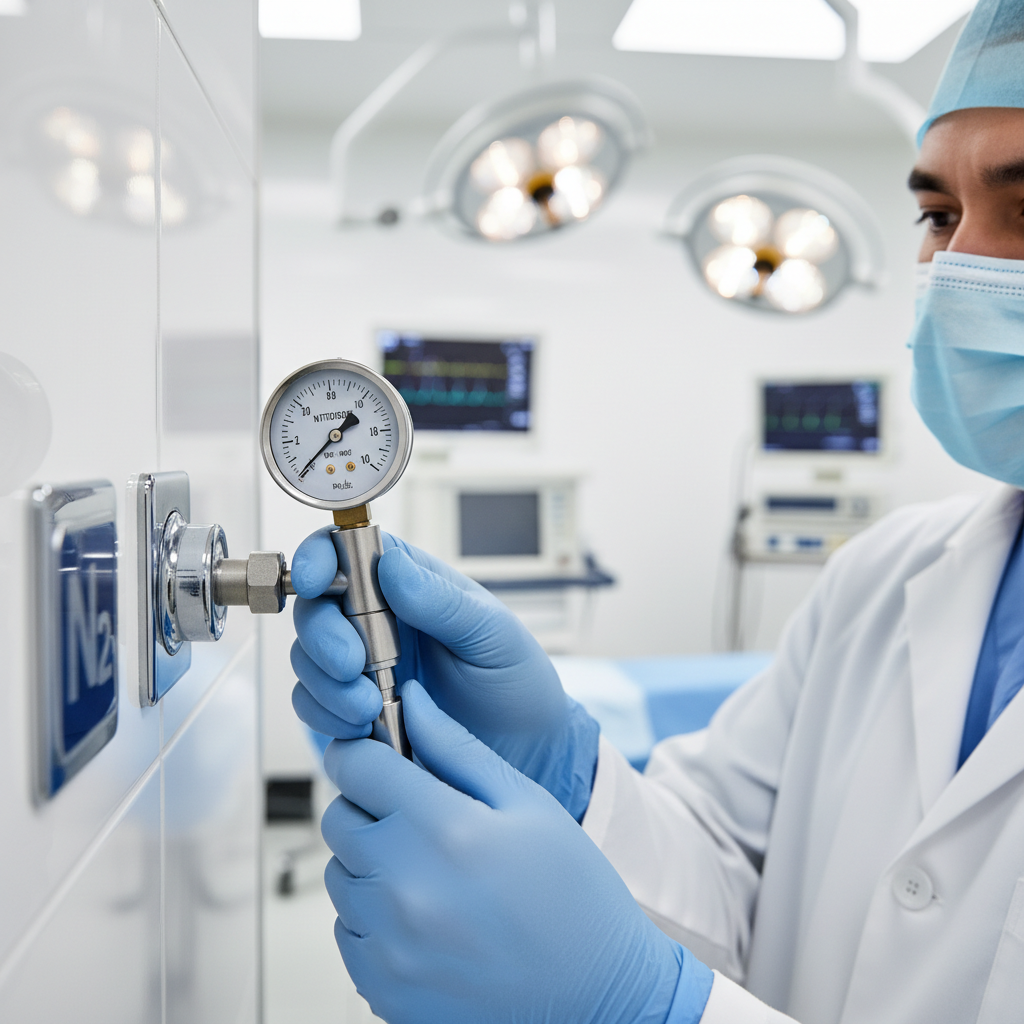
Hospital Nitrogen System Testing in Aventura, FL: A Complete Guide for Healthcare Facilities
Surgical nitrogen (NF) is a critical utility in Aventura operating rooms, powering everything from pneumatic surgical tools to dermatological cryotherapy devices. But this utility comes with significant responsibility. Ensuring the purity, pressure, and integrity of your hospital's nitrogen system is not just a matter of operational reliability, it's a fundamental requirement for patient safety and regulatory compliance. This comprehensive guide explains the essential procedures for hospital nitrogen system testing, detailing the verification process, purity standards, and documentation required to meet NFPA 99 and ASSE 6000 series standards. You will learn the key testing checkpoints, why certified technicians are non-negotiable, and how to maintain a compliant medical gas system.
Understanding Nitrogen Systems in Hospitals: NF vs. Instrument Air
Nitrogen in a hospital setting serves two primary functions, and it's crucial to distinguish between them: Nitrogen (NF) and Instrument Air. While both are pressurized gases, their applications, and regulatory requirements differ significantly.
- Nitrogen (NF - Nitrogen, Medical Grade): This is the focus of our discussion. It is classified as a medical gas by the FDA. Its primary use is as a pneumatic power source for surgical tools like saws, drills, and staplers. It must meet the United States Pharmacopeia (USP) purity standard of 99.0% nitrogen. Verification and testing are stringent, following the protocols outlined in the ASSE 6000 series.
- Instrument Air: This is a compressed air source used to power laboratory equipment or other non-patient-contact devices. While it requires filtration and drying to prevent equipment damage, it is not a medical gas and does not fall under the same strict purity and verification requirements as Nitrogen NF.
Confusing the two can lead to severe patient safety risks and compliance failures. Using instrument air to power a surgical tool, for instance, could introduce contaminants into a patient.
The Core of Compliance: NFPA 99 and ASSE 6030 Verification
The National Fire Protection Association (NFPA) 99, Health Care Facilities Code, is the bedrock of medical gas safety. It outlines the mandatory requirements for the installation, performance, and maintenance of medical gas and vacuum systems. For nitrogen systems, Chapter 5 (Gas and Vacuum Systems) is particularly relevant.
When a new nitrogen system is installed or an existing one is modified, it must undergo a thorough inspection and verification process before being placed into service. This process is governed by the ASSE 6030, Medical Gas Systems Verifier standard. An ASSE 6030 certified verifier is a credentialed professional qualified to perform the comprehensive tests required by NFPA 99.
Why this matters for compliance: Using an uncertified individual or an internal maintenance team member without the ASSE 6030 credential for system verification is a direct violation of NFPA 99 (Section 5.1.12.3.1.1). A proper medical gas verification by a certified third-party like Medical Testing Solutions is the only way to ensure your system is legally and safely commissioned.
Key Stages of Hospital Nitrogen System Testing
A full system verification involves a battery of tests on both the source equipment (manifolds or generators) and the distribution pipeline network. These tests are performed to confirm system integrity, purity, and operational function.
1. Initial Pipeline Pressure & Leak Testing
Before any medical gas is introduced, the pipeline must be proven to be leak-free. Per NFPA 99, this involves a two-part pressure test:
- Initial Pressure Test: The system is pressurized with oil-free, dry nitrogen to 1.5 times the system working pressure (but not less than 150 psig) for 24 hours. The pressure must not drop during this period.
- Standing Pressure Test: After the initial test, the pressure is reduced to the normal system operating pressure (typically around 160-180 psig for nitrogen). This test confirms that the system can hold its working pressure without loss.
2. Cross-Connection Testing
This is one of the most critical safety tests. The verifier ensures that the nitrogen system is not connected to any other medical gas pipeline (e.g., oxygen, medical air). Each gas system is pressurized individually, and all other outlets are checked to confirm no gas is flowing. A cross-connection could deliver the wrong gas to a patient, with catastrophic results.
3. Particulate & Purity Analysis
Once the pipeline's physical integrity is confirmed, the quality of the gas itself is tested. This involves two key analyses at each outlet:
- Particulate Test: A test is performed by flowing nitrogen through a filter at a specific rate. The filter is then examined under magnification to ensure there is no particulate contamination in the pipeline, which could harm a patient or damage surgical tools.
- Purity & Contaminant Test: The verifier uses specialized analytical equipment to measure the concentration of gases. The test confirms that the gas is at least 99.0% nitrogen (NF) and checks for contaminants like carbon monoxide, carbon dioxide, and total hydrocarbons. The results are compared against the stringent limits set by NFPA 99.
4. Source Equipment & Alarm Verification
The final stage of testing focuses on the nitrogen source equipment and the associated warning systems.
- Manifold Testing: If the source is a high-pressure cylinder manifold, the verifier tests the changeover function. They simulate a pressure drop in the primary cylinder bank to ensure the system automatically switches to the secondary bank and triggers the appropriate "secondary in use" alarm at the master alarm panel.
- Alarm Panel Testing: Every alarm condition outlined in NFPA 99 is simulated. This includes testing the high/low pressure alarms for the main nitrogen line and ensuring the signals are accurately received at all master and area alarm panels throughout the Aventura facility.