The Definitive Guide to Hospital Medical Gas Systems
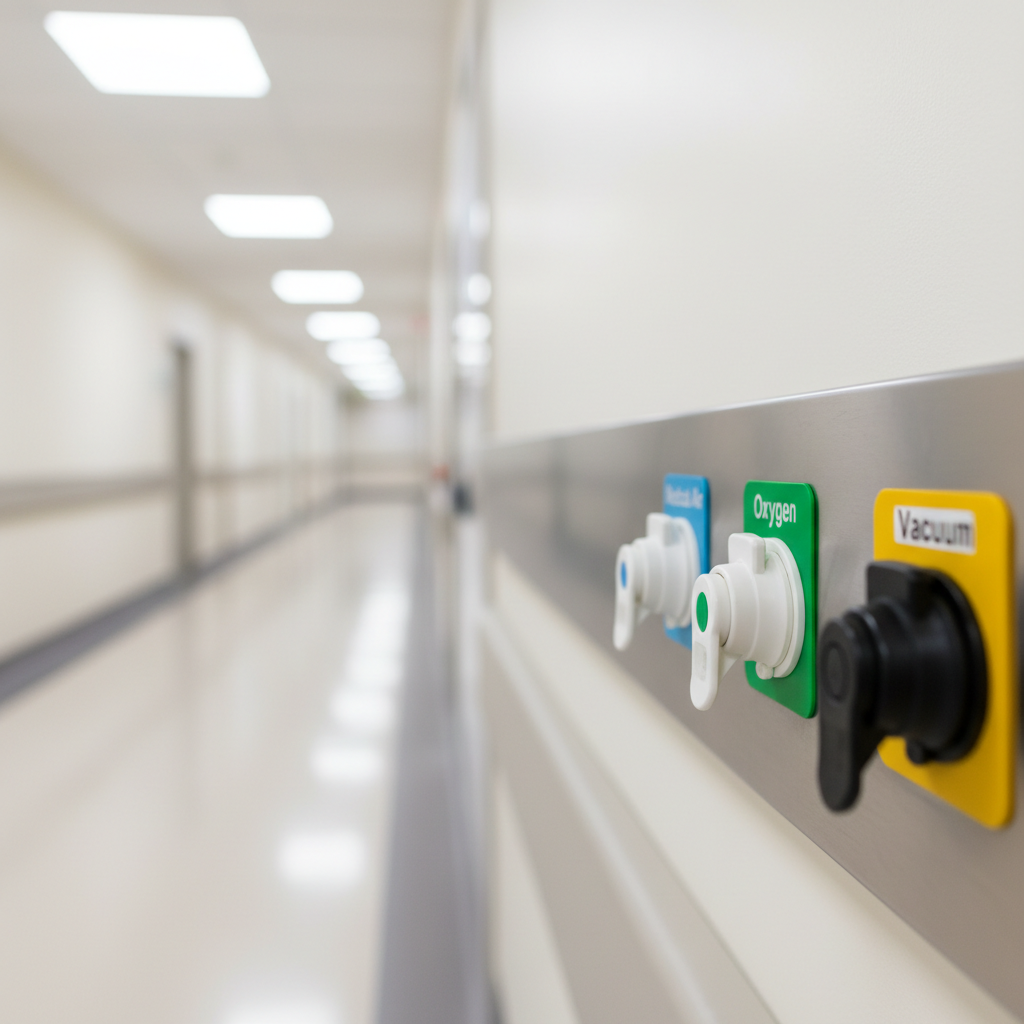
A hospital medical gas system is the lifeblood of a healthcare facility, a critical infrastructure as essential as electricity and water. This complex network of equipment, pipes, and outlets delivers life-sustaining medical gases and vacuums safely to patient care areas. Understanding how these systems function is crucial not only for clinical staff but for facility managers, engineers, and compliance officers responsible for patient safety. This guide provides an authoritative, in-depth look at the components, design, and regulatory requirements governing these vital systems, ensuring you understand what it takes to maintain a safe and compliant environment.
In this post, you will learn:
- The journey of medical gas from the source equipment to the patient.
- The different types of source equipment and their functions.
- How the gas is distributed throughout the facility.
- The role of alarms and monitoring systems.
- The key NFPA 99 and ASSE 6000 series standards that ensure safety and compliance.
Understanding the Core Components of a Medical Gas System
A hospital medical gas system is an intricate assembly designed for one purpose: to provide specific, pure medical gases and vacuum on demand. According to NFPA 99, Health Care Facilities Code, these are designated as Level 1, 2, or 3 systems based on the risk to patients if the system fails. Hospitals almost exclusively utilize Level 1 systems, where failure is likely to cause major injury or death. The system can be broken down into four main parts: source equipment, distribution network, terminal units (outlets/inlets), and monitoring alarms.
The Source Equipment: Where It All Begins
The journey of medical gas starts at the central supply source. This is typically a dedicated, secure room or outdoor enclosure housing large-scale equipment designed to generate or store the gases before they enter the building's pipeline.
Medical Gas Manifolds
For gases like Oxygen, Nitrous Oxide, and Carbon Dioxide, the primary source is often high-pressure cylinders or bulk liquid tanks. A manifold is the equipment that manages this supply.
- Primary Supply: The main bank of cylinders currently in use.
- Secondary Supply (Reserve): An identical bank of cylinders that automatically engages when the primary supply is depleted.
- Reserve Supply: A third, emergency reserve is often required by code to ensure continuity of care during a catastrophic failure or delivery issue.
The manifold control panel switches from the primary to the secondary supply automatically and triggers a "low supply" alarm to notify facility staff that it's time to replace the empty cylinders.
Medical Air and Vacuum Systems
Unlike other gases which are delivered, medical air and surgical vacuum are generated on-site.
- Medical Air Compressors: These are not standard air compressors. They must be specifically designed for medical use (often oil-free or oil-less) to produce clean, dry air that meets the stringent purity standards of USP.
>Why this matters for compliance: NFPA 99 (Chapter 5.1.3.5) outlines the strict requirements for medical air sources, mandating duplex compressors so one can operate while the other is in reserve or being serviced. Contamination of the medical air stream with oil, moisture, or particulate can cause severe patient harm. - Vacuum Pump Systems: Similarly, multiple vacuum pumps (a "multiplex" system) are used to create the suction needed for surgical and patient care procedures. These pumps create a negative pressure within the dedicated vacuum pipeline.
The Distribution Network: A Highway of Pipes
Once the gas leaves the source equipment, it travels through a network of specialized pipes to reach every corner of the hospital. This is the distribution system.
Piping Material and Installation
Per NFPA 99, all medical gas piping must be seamless Type K or L copper tubing, cleaned for oxygen service. The installation process is highly specialized and must be performed by certified technicians. Every joint must be brazed (a high-temperature form of soldering) with a continuous nitrogen purge flowing through the pipe. This prevents oxidation inside the pipe, which could otherwise introduce contaminants into the system.
Proper medical gas installation performed by an ASSE 6010 certified technician is the first and most critical step in ensuring system integrity.
Key Distribution Components
- Risers: Vertical pipes that carry gases between floors.
- Main Lines: Horizontal pipes that branch off the risers to serve a specific floor or zone.
- Zone Valves: Placed in sealed boxes (valve boxes) in corridors, these valves allow staff to shut off the gas supply to a specific section or "zone" of the hospital in case of a fire or for maintenance, without affecting other areas. Each valve is clearly labeled with the gas it controls and the areas it serves.
- Future Connections: The system often includes capped T-fittings for future expansion, allowing the facility to add new rooms or capabilities without a complete system shutdown.
Patient-Facing Components: Outlets, Inlets, and Terminal Units
Terminal units are the points where clinical staff connect equipment to the medical gas system. These are the familiar outlets on the wall or on overhead booms and headwalls.
Gas-Specific Connectors
To prevent catastrophic mix-ups, each gas has a unique, non-interchangeable connector. The most common types include:
- DISS (Diameter Index Safety System): Uses a series of concentric circles of different diameters that must match perfectly.
- Chemetron (Quick-Connect): Uses a latching mechanism specific to the gas type.
- Ohmeda (Quick-Connect): Similar to Chemetron but with a different proprietary shape.
Oxygen (green), Medical Air (yellow), Vacuum (white), WAGD (purple), and Nitrous Oxide (blue) each have their own dedicated outlet. These colors are standardized in the US to provide an immediate visual cue.
Monitoring and Alarms: The System's Brain
A medical gas system cannot operate safely without a robust alarm and monitoring system. NFPA 99 mandates a three-tiered alarm structure:
- Master Alarms: Located in two strategic locations (e.g., the engineering office and the main security desk), these panels monitor the entire system. They provide warnings for critical events like a changeover to a secondary supply, a high or low pressure in the main line, or a failure of a source equipment component.
- Area Alarms: These panels monitor a specific zone or department (e.g., the ICU, Operating Rooms, or an entire patient floor). They alert the clinical staff in that area to pressure/vacuum level issues that could affect patients under their direct care.
- Local Alarms: These are present at the source equipment itself, alerting maintenance staff to issues like high temperature or a component malfunction before it affects the main pipeline.
Regular testing and maintenance of these alarm panels is a critical compliance activity.
Key Codes and Standards: NFPA 99 and ASSE 6000 Series
Compliance is non-negotiable for medical gas systems. The two most important sets of standards are from the National Fire Protection Association (NFPA) and the American Society of Sanitary Engineering (ASSE).
NFPA 99 is the foundational code. Chapter 5, "Piped Medical Gas and Vacuum Systems," is the authoritative text on the design, installation, testing, and maintenance of these systems. It specifies everything from pipe material and alarm requirements to the credentials required for technicians. The ASSE/IAPMO/ANSI 6000 Series is a set of professional qualifications standards that certify personnel to work on medical gas systems. Having work performed by ASSE-certified individuals is a core requirement of NFPA 99.Here is a breakdown of the most common certifications:
| Certification | Title | Role and Responsibility |
|---|---|---|
| ASSE 6010 | Medical Gas Systems Installer | Certified to install new medical gas systems, including brazing copper piping. |
| ASSE 6020 | Medical Gas Systems Inspector | Certified to inspect the installation of new systems for compliance with codes. |
| ASSE 6030 | Medical Gas Systems Verifier | Certified to perform the final verification of a new or modified system before it is put into patient use. This is a comprehensive process involving multiple tests for purity, pressure, flow, and cross-connection. |
| ASSE 6040 | Medical Gas Systems Maintenance Personnel | Certified to maintain and repair existing medical gas systems, including work on source equipment and pipelines. |
Working with a company like Medical Testing Solutions, which employs a team of ASSE 6030 and 6040 certified technicians, is the best way to ensure your facility's systems are safe and compliant. We provide expert medical gas verification and certification services.
System Testing, Verification, and Maintenance
Building a compliant system is only half the battle; maintaining it is an ongoing responsibility.
Initial Verification (ASSE 6030): Before a new or modified pipeline is used for patient care, it must* be verified by a certified third-party agency. This process confirms there are no cross-connections, the pressures are correct, and the gases are pure.- Annual Inspections: Every hospital must have its medical gas system evaluated annually. This includes testing outlets, alarms, and source equipment to ensure they continue to perform as designed. You can learn more about our annual medical gas inspections to see what's involved.
- Preventive Maintenance: Source equipment requires regular preventive maintenance to prevent unexpected failures. This could include changing oil, replacing filters, and calibrating sensors.
Frequently Asked Questions (FAQs) about Hospital Medical Gas Systems
Q: What gases are typically found in a hospital medical gas system?A: The most common piped gases are Oxygen (O2), Medical Air (MA), and Vacuum/Suction (VAC). Many hospitals also have Nitrous Oxide (N2O), Nitrogen (N2), Carbon Dioxide (CO2), and Waste Anesthetic Gas Disposal (WAGD).Q: Who is qualified to work on medical gas systems?
A: Only individuals holding current ASSE 6000 series certifications are qualified. For example, an ASSE 6010 certification is required for installers, and an ASSE 6030 certification is needed for verifiers. Maintenance personnel should be certified to the ASSE 6040 standard.Q: Why are medical air compressors special?
A: Medical air is classified as a drug by the FDA. Therefore, the compressors used to generate it must be oil-free or have sophisticated filtering and monitoring to ensure the air is free of contaminants like oil, water, and debris, meeting USP purity standards.Q: What is the purpose of a zone valve box?
A: A zone valve allows a specific section of the hospital (like an operating room suite or a patient wing) to be isolated from the rest of the medical gas system. This is critical for emergencies, such as a fire, or for performing maintenance in that zone without shutting down the entire hospital.Q: How often does a medical gas system need to be tested?
A: A complete system verification is required for any new, added, or modified piping. Additionally, NFPA 99 requires a comprehensive inspection and testing of the entire system annually, with more frequent checks and maintenance for specific components like alarms and source equipment.
Your Partner in Medical Gas System Compliance
A hospital medical gas system is a critical asset that demands precision, expertise, and a deep understanding of complex codes. From the initial installation and verification to ongoing maintenance and annual inspections, every step is crucial for patient safety. Medical Testing Solutions provides end-to-end support for healthcare facilities, leveraging our team of ASSE-certified technicians to ensure your system is compliant, reliable, and safe.
Don't leave patient safety to chance. Contact our experts today to discuss your system's needs or to get a quote for our services. Call us at +1 (754) 315-1078 or request a quote online to ensure your facility meets the highest standards of safety and compliance.
'''
This article is provided for educational purposes and reflects industry standards as of publication. Always verify against current NFPA 99, CGA, and AHJ requirements. Medical Testing Solutions is ASSE-certified and ready to help — contact us for facility-specific guidance.
Need Medical Gas Services?
Contact our certified team for inspections, verifications, installations, and more.
Get a Free Quote