In the high-stakes environment of a hospital operating room, patient safety is paramount. While visible hazards are meticulously managed, a silent and invisible electrical threat lurks: microshock. For anesthetized patients, who are often connected to multiple electronic devices, a tiny amount of electrical current can be fatal. This is where a critical piece of equipment, the Line Isolation Monitor (LIM), plays a life-saving role. A LIM is the central nervous system of an isolated power system, designed specifically to protect patients from electrical shock in "wet procedure locations." This comprehensive guide will explain the principles of hospital electrical safety, the unique danger of microshock, how LIMs work to prevent it, and the essential NFPA 99 standards that govern their use and testing.
Hospital Electrical Safety: A Deep Dive into the Line Isolation Monitor
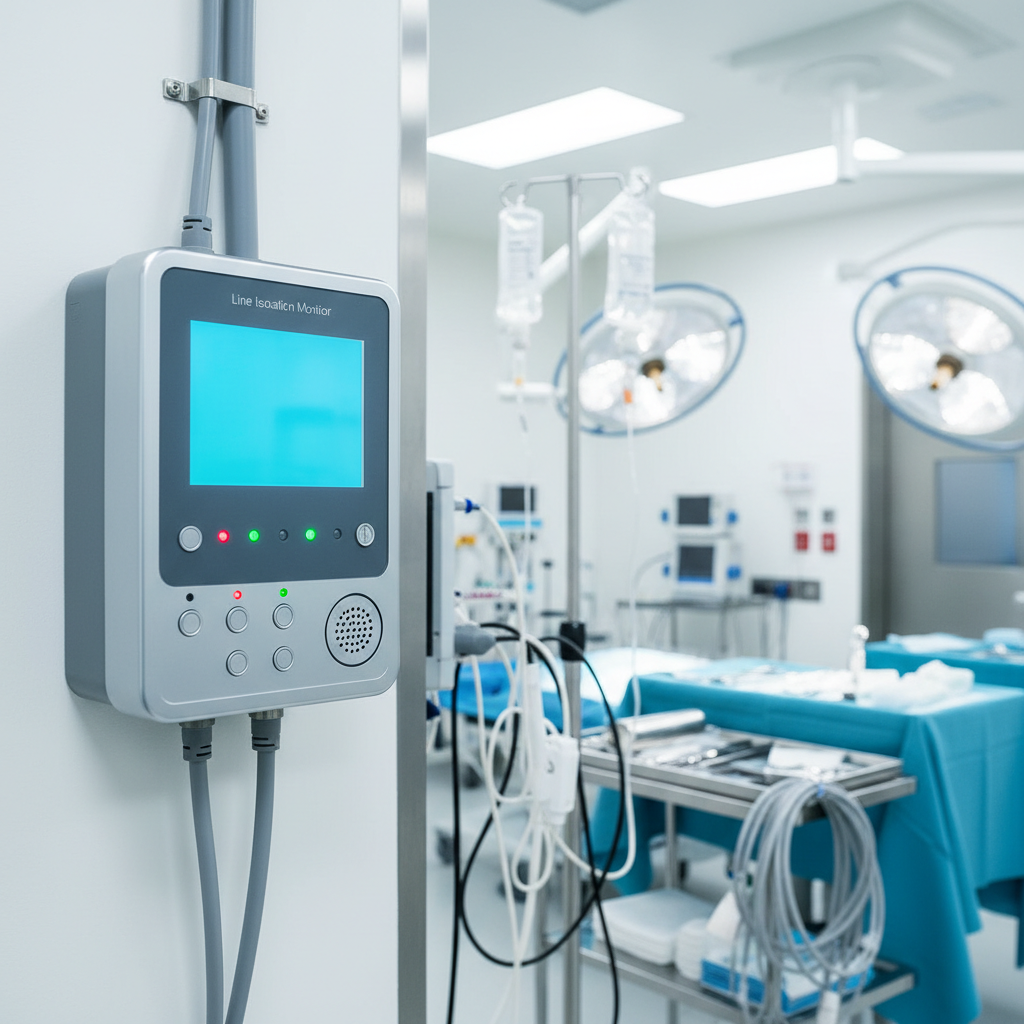
What is a Line Isolation Monitor (LIM) and Why is it Critical?
A Line Isolation Monitor is a device that continuously monitors the integrity of an "isolated" or "ungrounded" electrical system in a hospital. Its sole purpose is to detect the very first electrical fault from a line conductor to ground and provide an immediate warning to medical staff, long before any danger to the patient or staff exists.
The Dangers of "Wet Procedure Locations"
NFPA 99, the Health Care Facilities Code, defines a "wet procedure location" as an area where procedures are performed that are normally subject to wet conditions while patients are present. This includes drenching with saline, blood, or other conductive fluids. Operating rooms, cardiac catheterization labs, and dialysis centers are classic examples. In these environments, the risk of electrical shock is significantly higher because fluids can create unintended conductive paths from electrical equipment to the patient and staff.
Isolated Power Systems vs. Standard Grounded Systems
In a typical home or office, the electrical system is "grounded," meaning there's a direct connection to earth. If you touch a "hot" wire while also in contact with a grounded surface, your body completes the circuit, resulting in a severe shock.
Isolated power systems, required in wet procedure locations, are different. They use an isolation transformer to create an ungrounded electrical supply. In this setup, a single accidental contact between a live wire and a grounded object (like the metal casing of a monitor) does not create a shock. The circuit is not complete. The LIM, however, detects this first fault, alarms, and indicates that the system is now effectively a standard grounded system, primed for a potential shock if a second fault occurs.
The Hidden Danger: Understanding Macroshock vs. Microshock
The reason isolated power and LIMs are so critical comes down to the unique vulnerability of anesthetized patients to microshock.
Macroshock: The "Normal" Electrical Shock
Macroshock is what most people think of as an electrical shock, a large current passing across the intact skin and through the body. It takes a significant amount of current (typically above 5 milliamperes) to cause harm. While dangerous, the body's high skin resistance provides some protection.
Microshock: A Lethal Threat to Anesthetized Patients
Microshock is a far more insidious threat. Anesthetized patients often have catheters, pacing wires, or probes placed directly into their bodies, bypassing the skin's natural electrical resistance. These devices create a direct, low-resistance path to the heart muscle. In this state, a current as low as 20 microamperes (µA), thousands of times smaller than what’s required for macroshock, can induce ventricular fibrillation and death. This "leakage current" can come from any piece of line-powered equipment connected to the patient.
How Isolated Power Systems and LIMs Prevent Microshock
The LIM is the watchdog of the isolated power system. It continuously measures the "Total Hazard Current" (THC), which is the sum of all leakage currents from all connected equipment.
- Safe State: In a properly functioning isolated system, leakage currents are present but have no path to ground, so they are harmless.
- First Fault: A piece of equipment has an internal failure, creating a connection between a live wire and its metal casing. The LIM immediately detects this fault and triggers audible and visual alarms once the THC exceeds the alarm threshold (typically 5 mA per NFPA 99).
- Warning Period: Critically, no shock occurs at this stage. The alarm simply alerts staff that the system is compromised. Personnel can then identify and replace the faulty device without interrupting the medical procedure.
Why this matters for compliance: Failure to comply with NFPA 99 can result in significant fines, loss of accreditation from bodies like The Joint Commission, and most importantly, patient harm. Regular Line Isolation Monitor testing by an ASSE-certified technician is not just a best practice; it's a requirement for ensuring patient safety and facility compliance.
NFPA 99 and ASSE 6000: The Codes Governing LIMs
Compliance is dictated by a strict set of codes and standards, primarily NFPA 99.
- NFPA 99, Chapter 6 (Electrical Systems): This chapter mandates that all wet procedure locations be served by an isolated power system complete with a Line Isolation Monitor.
- Alarm Threshold: The code specifies that the LIM must alarm when the total hazard current reaches a threshold of 5 mA. This provides a safety margin before dangerous levels are reached.
- Testing Requirements: LIM test buttons must be actuated monthly to verify the alarm is functional. Furthermore, a detailed, quantitative inspection must be performed by a qualified technician, such as an ASSE 6030 certified verifier, on a regular schedule, typically annually. This is a key part of any annual medical gas and electrical inspection program.
As a leader in medical gas and facility safety, Medical Testing Solutions provides comprehensive medical gas verification and LIM testing services performed by ASSE 6000 certified professionals to ensure you meet these exacting standards.
Comparison of Modern Line Isolation Monitors
While all compliant LIMs perform the same basic function, different manufacturers offer various features. When considering an upgrade or new medical gas installation, it's helpful to compare models.
| Feature | Bender LIM2010 | PG Life-Gard | Schneider Electric (Square D) |
|---|---|---|---|
| Alarm Threshold | 5 mA (programmable) | 5 mA (standard) | 5 mA (standard) |
| Display Type | LCD Digital | LED Bargraph | LCD Digital |
| Self-Test | Automatic & Manual | Manual/Automatic | Automatic & Manual |
| Network-Capable | Yes (BMS integration) | Limited/Optional | Yes (Integrated ecosystem) |
| Key Benefit | Advanced diagnostics & history | Simplicity and reliability | Full integration with Schneider panels |
Medical Testing Solutions has extensive experience with all major brands of isolated power panels and LIMs, offering expert medical gas maintenance services to keep your systems running flawlessly.
Your Partner in Hospital Electrical Safety
Ensuring the proper function of your facility's Line Isolation Monitors is not just a compliance task, it is a fundamental patient safety imperative. The complex interplay between isolated power systems, leakage currents, and microshock risk demands expertise and vigilance. At Medical Testing Solutions, we provide the ASSE-certified knowledge and technical services to guarantee your systems are safe, reliable, and fully compliant with NFPA 99.
Don't leave patient safety to chance. Request a quote or contact our team of experts today at +1 (754) 315-1078 to schedule a comprehensive LIM testing and certification service for your facility. '''
Frequently Asked Questions
Request a quote for your facility
Talk with Medical Testing Solutions about your next inspection, repair or equipment request.