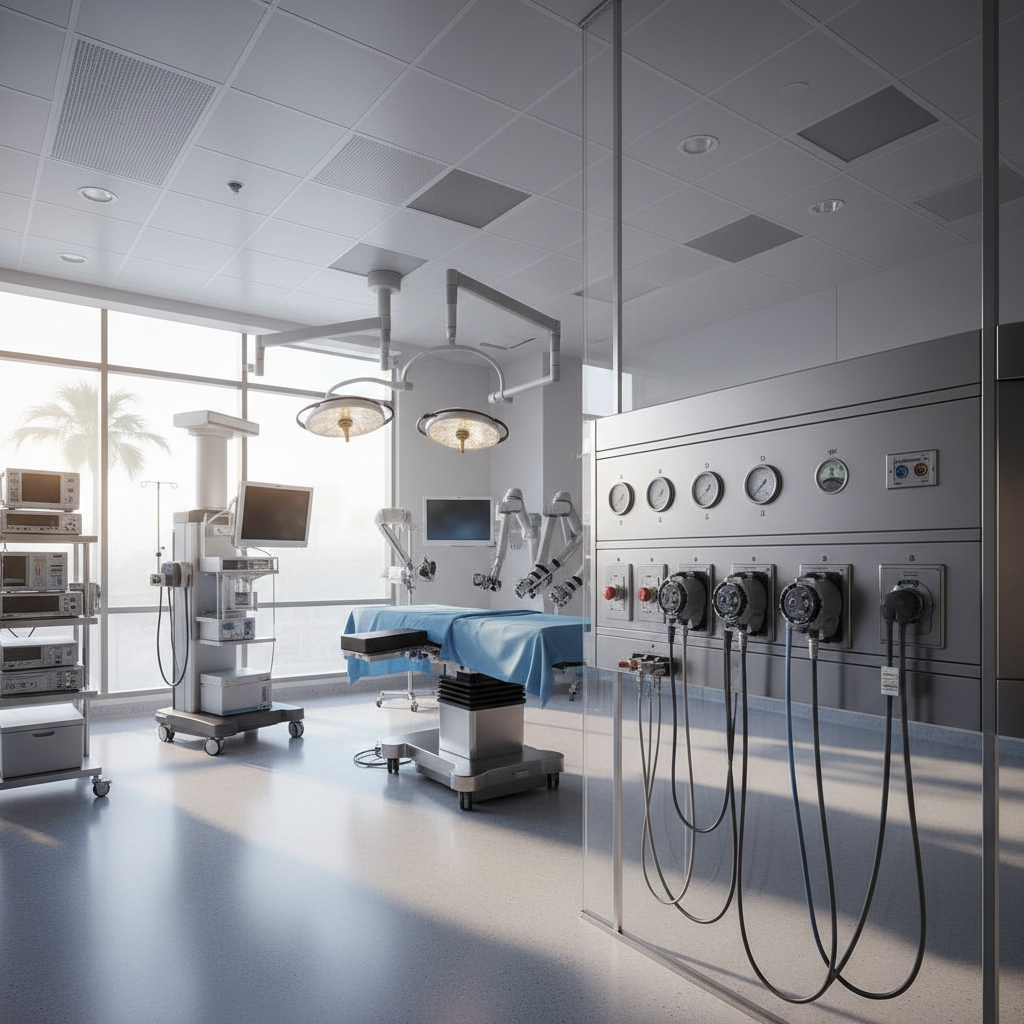
Florida Ambulatory Surgery Center Medical Gas: A Guide to Verification & Annual Inspections
Medical Testing SolutionsMay 28, 20267 min read
Share
For any Ambulatory Surgery Center (ASC) in Florida, a compliant medical gas system isn't just a utility, it's the lifeblood of the facility. From oxygen and medical air to vacuum systems, these pipelines are critical for patient safety and successful surgical outcomes. However, navigating the specific requirements set by the Florida Agency for Health Care Administration (AHCA) and The Joint Commission (TJC), on top of NFPA 99 standards, presents a unique challenge for facility managers. This guide provides a comprehensive overview of medical gas verification, annual testing, and maintenance for Florida ASCs, explaining how to ensure compliance, patient safety, and significant cost savings.
As a company headquartered right here in Fort Lauderdale, Medical Testing Solutions (MTS) understands the local regulatory landscape intimately. We'll walk you through the entire process, from initial construction verification to annual inspections and post-hurricane re-testing, ensuring your facility remains safe, compliant, and operational.
The Unique Landscape of Medical Gas in Florida ASCs
Florida's healthcare market is booming, with ASCs providing critical services that complement major hospital systems like Baptist Health, Cleveland Clinic Florida, and AdventHealth. These outpatient facilities rely on flawless medical gas delivery for procedures ranging from simple sedation to complex surgeries. The proper functioning of oxygen, nitrous oxide, medical air, and surgical vacuum systems is non-negotiable.
Florida's environment adds another layer of complexity. High humidity can introduce moisture into compressed air systems if not properly filtered and maintained, and the constant threat of hurricanes means facilities must have robust plans for system integrity and re-verification after storms, a specific requirement under NFPA 99.
AHCA and Joint Commission: Florida's Regulatory Framework
For a Florida ASC, two primary bodies dictate medical gas compliance: the state-level AHCA and the national accrediting body, The Joint Commission. While their goals overlap, their requirements differ in scope and timing.
Florida Agency for Health Care Administration (AHCA): AHCA is responsible for the licensure and regulation of all healthcare facilities in the state. For new ASCs or those undergoing major renovation, AHCA's plan review process is critical. Medical gas systems must be verified by a certified third party, and the report must be submitted to AHCA to satisfy Chapter 59A of the Florida Administrative Code and AHCA OPS Form 3110.
The Joint Commission (TJC): TJC provides accreditation to healthcare organizations. TJC surveyors focus on ongoing compliance and safety, referencing NFPA 99, Health Care Facilities Code, for their standards. For medical gas systems, this means documented evidence of annual inspections, maintenance, and staff training.
Why this matters for compliance: Failure to meet AHCA or TJC standards can result in delayed facility openings, hefty fines, or a complete loss of accreditation. This not only halts revenue but can damage a facility's reputation and ability to care for patients. Partnering with a knowledgeable compliance partner is essential.
ASSE 6030 Verification: The Cornerstone of New ASC Construction
Before a new or renovated ASC can welcome its first patient, its medical gas systems must be proven safe. This is the job of an ASSE 6030 Medical Gas Verifier. This rigorous, one-time process ensures that the entire system, from the source equipment to the patient outlets, has been installed correctly and is delivering the correct, uncontaminated gas.
A certified ASSE 6030 Verifier is required to perform a series of tests, including:
Purity and Identity: Ensuring the gas delivered at each outlet is the correct gas and free of contaminants.
Pressure and Flow: Confirming that all system pressures and flows meet the design specifications.
Cross-Connection Testing: A critical test to guarantee that no gas lines have been improperly connected.
Alarm Testing: Verifying that all warning systems for high/low pressure, changeover, and other critical parameters are functioning correctly.
Labeling and Component Checks: Ensuring all pipes, valves, and outlets are labeled according to NFPA 99 standards.
The final verification report is a legal document required by AHCA for licensure. It certifies that the system is 100% safe for patient use.
Annual Medical Gas Inspections: Your Yearly Compliance Checkpoint
While verification is a one-time event for a new system, compliance is a year-round responsibility. NFPA 99 mandates that all medical gas systems undergo a thorough inspection at least annually. These annual medical gas inspections are less exhaustive than a full verification but are critical for maintaining safety and TJC accreditation.
Here’s how the two processes compare:
Feature
ASSE 6030 Verification
Annual NFPA 99 Inspection
When It's Done
New construction, major renovations, or system modifications
Annually for all operational facilities
Governing Standard
NFPA 99, ASSE Standard 6030
NFPA 99, Chapter 5 / TJC Standards
Performed By
ASSE 6030 Certified Verifier
ASSE 6040 Certified Maintenance Personnel
Scope
Comprehensive testing of every component, purity testing, cross-connection checks, etc.
Functional tests of alarms, outlets, zone valves, source equipment, and review of maintenance logs
Report
Detailed report for AHCA submission (Form 3110)
Maintenance and inspection report for TJC/AHCA surveyors and internal records
Annual inspections by an ASSE 6040 certified technician typically involve checking outlet and inlet flows/pressures, testing alarm functionality, and ensuring that all components are in good working order.
The Florida Advantage: Why Local Verification Saves You Money
As a premier provider of medical gas services in /florida/, we've seen firsthand how much ASCs overpay by hiring out-of-state verifiers. Medical Testing Solutions is proudly headquartered at 501 East Las Olas Blvd, Fort Lauderdale, FL 33301. Our local presence provides a decisive advantage.
The Cost Advantage: We charge NO travel fees, NO lodging, and NO per-diem for any job, anywhere in Florida. Most of our Florida partners, from Miami to Jacksonville, save 10–25% on medical gas certification costs compared to using out-of-state firms. Those savings can be reinvested into an ASC's equipment or staff.
The Speed Advantage: Our Fort Lauderdale team is minutes from major health corridors in South Florida. With technicians staged across the state, we can provide rapid dispatch from /florida/miami-medical-gas-services/ to [/florida/west-palm-beach-medical-gas-services/](West Palm Beach) and beyond, minimizing downtime and accelerating project timelines.
The reality of operating in Florida is preparing for hurricanes. A severe storm can compromise a facility's medical gas source equipment or piping. NFPA 99, Section 5.1.12, explicitly requires that if a system is breached or loses pressure for any reason (including storm damage), it must be re-verified before being placed back into service.
Waiting for an out-of-state verifier to travel to a storm-ravaged area can take days, if not weeks. MTS's local Florida crews can be on-site quickly after a storm has passed to perform the necessary tests, ensuring facilities like those in the hard-hit areas served by Broward Health or Jackson Memorial can get back to serving patients safely and swiftly. Our same-day dispatch in South Florida is critical in these moments.
Common Issues in Florida ASC Medical Gas Systems
Through thousands of inspections, our technicians have identified common issues that, if unaddressed, can lead to compliance failures or safety risks:
Moisture in Medical Air Lines: Florida's humidity puts extra strain on air dryers. If they fail, moisture can corrode pipes and contaminate patient air.
Faulty Alarm Panels: Alarms are the first line of defense. We often find miscalibrated sensors or disconnected panels that provide a false sense of security.
Worn Outlet Seals: Over time, the seals in medical gas outlets wear out, leading to leaks that waste gas and can reduce system pressure.
Improper Labeling: During renovations, pipes are sometimes moved or mislabeled, creating a dangerous cross-connection risk.
Ensuring your Ambulatory Surgery Center's medical gas system is safe and compliant doesn't have to be a complex or expensive burden. By partnering with a local, certified expert, you can guarantee compliance with all AHCA and TJC requirements while saving significant money on service costs.
Medical Testing Solutions is Florida's trusted provider for not only verification and annual inspections but also for turn-key medical gas installation and equipment sales. We are your one-stop shop for medical gas integrity.
Ready to ensure your Florida ASC is compliant and safe? Contact our Fort Lauderdale office today for a free, no-obligation quote. Our ASSE-certified technicians are ready for same-day dispatch in South Florida. Call our Fort Lauderdale office at +1 (754) 315-1078 or request a quote online to get started.
'''
Frequently Asked Questions
Verification is the technical, hands-on testing process performed by an ASSE 6030 Verifier to ensure a new or modified system meets NFPA 99 standards. [Medical gas certification](/medical-gas-certification) is the broader term for the overall approval process, which culminates in the acceptance of the verification report by the relevant authorities like AHCA.
Per NFPA 99 and The Joint Commission, all medical gas systems must undergo a thorough [annual inspection](/medical-gas-testing-and-service/annual-medical-gas-inspections) by an ASSE 6040 Certified technician. More rigorous ASSE 6030 verification is required only for new construction or when systems are modified.
Yes. The Florida Agency for Health Care Administration (AHCA) requires the completion of their 'Verification of Piped Medical Gas Systems' form, often referred to as OPS Form 3110, as part of their plan review and inspection process for new healthcare facilities.
Yes, provided they hold the correct ASSE 6030 certification. However, using a local Florida-based company like Medical Testing Solutions eliminates expensive travel, lodging, and per-diem fees, often saving ASCs 10-25%. Our headquarters in Fort Lauderdale allows for rapid, cost-effective service anywhere in the state.
If an inspection reveals deficiencies, you will receive a detailed report outlining the issues. These must be corrected, and the system re-tested, before it can be used for patient care. Failing an annual inspection can lead to citations from accrediting bodies like The Joint Commission. MTS provides both inspection and [medical gas maintenance services](/medical-gas-testing-and-service/medical-gas-maintenance-services) to correct any issues found.
Request a quote for your facility
Talk with Medical Testing Solutions about your next inspection, repair or equipment request.