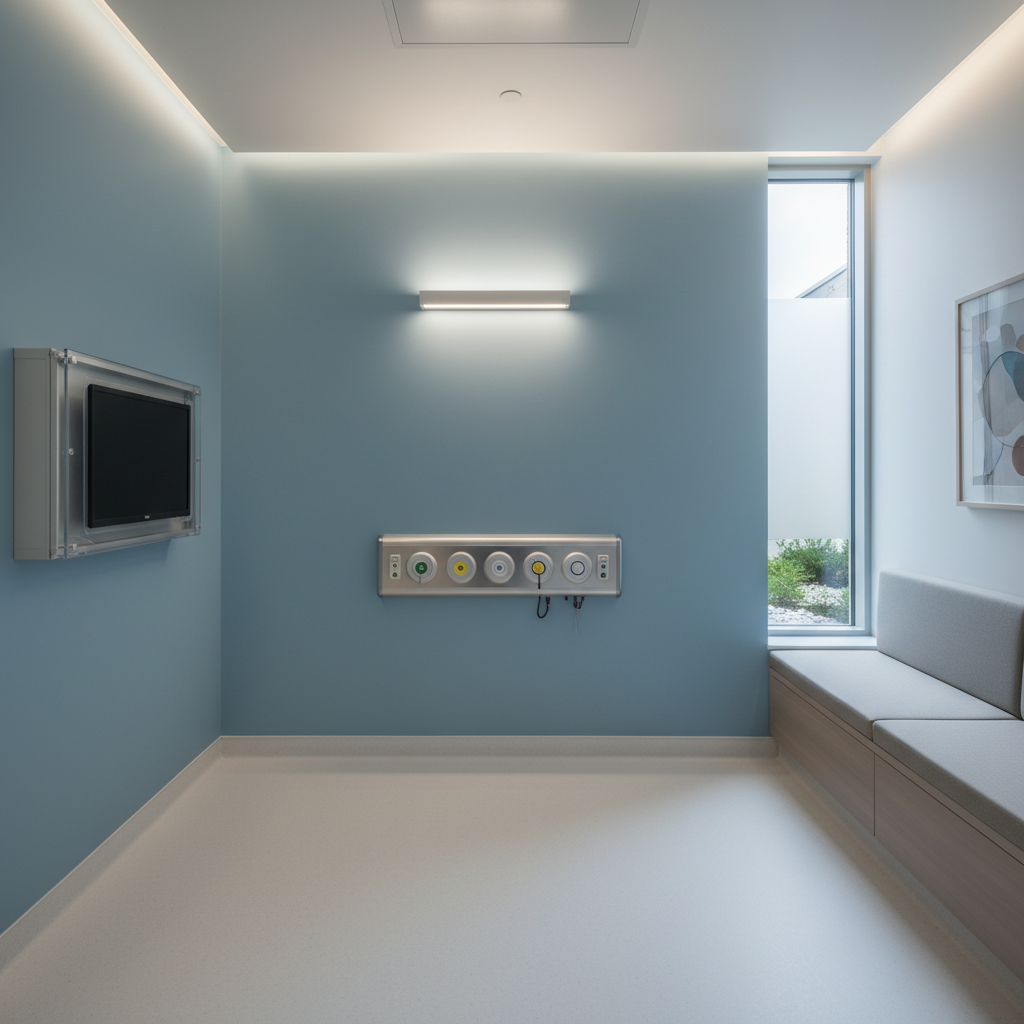
ECT Suite Oxygen and Suction Outlet Requirements Under NFPA 99
Medical Testing SolutionsAugust 5, 20267 min read
Share
Designing or renovating a space for Electroconvulsive Therapy (ECT) within a behavioral health facility presents a unique set of challenges that go beyond standard hospital room construction. The medical gas systems, specifically oxygen and medical suction, must be planned with meticulous attention to both immediate medical needs and the overarching priority of patient safety. A failure to correctly interpret and apply the codes can lead to failed inspections, costly rework, and compromised patient care. As an ASSE-certified authority in medical gas systems, Medical Testing Solutions has seen firsthand where facilities go wrong.
This comprehensive guide provides a definitive overview of the requirements for oxygen and suction outlets in ECT suites, guided by NFPA 99, Health Care Facilities Code. We will explore how to determine the correct risk category for these spaces, detail the minimum number of outlets required for both procedure and recovery rooms, and dive deep into the critical considerations for ligature-resistant design that are paramount in behavioral and mental health environments.
The "Why": Patient Safety and Dual Risks in ECT
Electroconvulsive Therapy is a medical procedure that involves brief, controlled electrical stimulation of the brain. It is performed under general anesthesia, meaning the patient is unconscious and their vital functions are closely monitored and supported. During and immediately following the procedure, the patient may require respiratory support (oxygen) or intervention to clear their airway (suction). The availability of these medical gases is non-negotiable for life support.
However, the very nature of a behavioral health and ECT environment introduces a second, equally critical risk: the potential for patient self-harm. Standard medical equipment, including protruding gas outlets, can present dangerous ligature points. Therefore, the design of an ECT suite is a balancing act between providing immediate, code-compliant access to medical gases and ensuring the entire environment is free from features that could facilitate self-harm.
Why this matters for compliance: A facility's risk assessment must account for both the medical risks to the patient during the procedure (justifying the need for gas) and the behavioral risks inherent to the patient population (justifying the need for a ligature-resistant environment). This dual consideration is fundamental to a compliant design.
NFPA 99 Risk Category for ECT Suites
The first step in any medical gas project is determining the appropriate risk category under NFPA 99. The code moved away from occupancy-based classifications to a risk-based approach, where the central question is: "What would be the effect on the patient if the medical gas system failed?"
For an ECT suite, the answer is clear.
ECT Procedure Room: The procedure is performed under anesthesia, and a failure of the oxygen or suction system could directly lead to major injury or death. Therefore, the ECT procedure room must be designated a Category 1 space.
ECT Recovery Room (PACU): Following the procedure, the patient is recovering from anesthesia and is still in a vulnerable state. A system failure here could also have severe consequences. While some might debate a Category 2 designation, the safest and most common approach is to also designate the ECT recovery bay as a Category 1 space.
Designating these areas as Category 1 triggers the most stringent requirements for the design, installation, and final testing of the medical gas systems. This includes the use of Type L copper piping, specific valve requirements, and mandatory system verification by a certified third party.
Outlet Requirements: The ECT Procedure Room
With the space defined as Category 1, we can consult NFPA 99, Chapter 5 (Gas and Vacuum Systems) for specific outlet requirements. While the main body of the chapter provides the rules, Annex A (A.5.1.11) offers a table with recommended minimum station outlets for various rooms in a healthcare facility.
For an ECT procedure room, the minimum requirements per station are:
Oxygen (O2): 2 outlets
Medical Suction / Vacuum: 3 outlets
One of these vacuum outlets is critically important for connecting a Waste Anesthetic Gas Disposal (WAGD) system. As we discuss in our supporting article, WAGD in ECT Suites is essential for protecting staff from long-term exposure to anesthetic gases. The other two vacuum outlets are for airway management and other potential suction needs during the procedure.
Outlet Requirements: The ECT Recovery Bay (PACU)
Immediately after the procedure, patients are moved to a Post-Anesthesia Care Unit (PACU) for recovery. The requirements here are calculated on a per-bed or per-station basis.
NFPA 99 recommends the following minimums for each recovery station:
Oxygen (O2): 1 outlet
Medical Suction / Vacuum: 1 outlet
It is crucial to remember that these are minimums. The facility's own risk assessment, conducted in collaboration with clinical staff and a medical gas specialist like Medical Testing Solutions, may determine that additional outlets are necessary to provide the highest level of patient care.
The Critical Factor: Ligature-Resistant Design
Meeting the minimum outlet counts is only half the battle. In an ECT suite, how these outlets are presented is just as important as their presence. Standard outlets from manufacturers like Amico, Ohio, or Chemetron, while medically efficient, present clear ligature points and are not appropriate for this setting without modification.
There are three primary strategies for achieving a compliant, ligature-resistant installation.
Comparison of Ligature-Resistant Outlet Solutions
Solution
Pros
Cons
Best For
Integrated LR Outlets
Sleek, purpose-built design; always accessible without needing a key.
Higher cost per outlet; limited manufacturer options; may still require sloped top enclosures.
New builds, facilities prioritizing aesthetics and immediate access.
Locked Enclosures / Cabinets
Highly cost-effective; allows use of standard, familiar outlets; physically secured.
Requires a key for access, which can cause a slight delay in an emergency; can be bulky.
Retrofits and budget-conscious projects where security is the top priority.
Retractable Booms/Columns
Hides outlets completely from the ceiling when not in use, creating a "normal" room appearance.
Highest cost; complex installation; requires rigorous staff training to ensure it's always retracted.
Less common in dedicated ECT suites; more suited for multi-purpose rooms.
Most facilities opt for either integrated ligature-resistant outlets or, more commonly, standard outlets housed within a locked, ligature-resistant stainless steel box. This approach provides robust security and allows for the use of familiar, easily serviced equipment.
Installation and Verification: The Final, Crucial Steps
Specifying the right equipment is not the end of the process. The installation and final certification are what make the system safe for patient use.
Installation: All medical gas system installation, modification, or repair must be performed by tradespersons who are ASSE 6010 Certified Medical Gas Installers. This is not a suggestion; it is a requirement for a compliant system.
Verification: Before any new or modified system is used, it must be fully tested and certified by an independent, ASSE 6030 Certified Medical Gas Verifier. This process, known as medical gas verification, ensures the safety, purity, and proper function of the entire system.
The verification process includes, but is not limited to:
Pressure testing the lines to ensure no leaks exist
Verifying the correct gas is present at every single outlet
Testing that system pressures and flow rates meet design specifications
Ensuring all local and master alarm panels function correctly
Providing final documentation certifying the system is ready for patient use.
Medical Testing Solutions provides a complete suite of services, from initial design consultation to certified installation and final verification, ensuring a seamless and compliant project from start to finish.
Your Partner in Compliance and Patient Safety
Ensuring your ECT suite's oxygen and suction outlets are not only compliant with NFPA 99 but also holistically safe for a behavioral health patient population requires specialized expertise. The details matter, from category designation and outlet counts to the precise design of ligature-resistant enclosures. Don't leave compliance to chance.
Contact Medical Testing Solutions today for a comprehensive design review, ASSE-certified installation, or a quote for your next project. Call us at +1 (754) 315-1078 or request a quote online to speak with one of our certified specialists and ensure your facility is safe, compliant, and ready for patient care.
Frequently Asked Questions
NFPA 99 recommends a minimum of two oxygen outlets per ECT procedure station. However, your facility's official risk assessment may determine that more are needed based on the specific procedures performed.
A ligature-resistant outlet is a medical gas terminal or an enclosure designed to eliminate any points where a cord, rope, or material could be tied or wedged to support a weight. This design feature is critical for minimizing the risk of patient self-harm in behavioral health settings.
They can be. Per NFPA 99, if the room is one where procedures involving liquids are performed that could spill and come into contact with personnel or equipment, it may be deemed a "wet procedure location." This designation would require the installation of an isolated power system, which in turn requires specialized Line Isolation Monitor (LIM) testing. This is determined by the facility's governing body.
Yes, this is a common and compliant strategy. Placing standard outlets inside a purpose-built, locked cabinet with sloped surfaces and no external anchor points is an effective way to prevent ligature risk while maintaining access for clinical staff.
A third-party ASSE 6030 Certified Medical Gas Verifier must test and certify the system before it can be used for patient care. The team at Medical Testing Solutions holds these credentials and provides unbiased, expert verification services across the country.
Yes, if general anesthesia is used, a Waste Anesthetic Gas Disposal (WAGD) or scavenging system outlet is required to protect clinical staff from hazardous anesthetic gas exposure. This system typically utilizes one of the required medical vacuum outlets.
Request a quote for your facility
Talk with Medical Testing Solutions about your next inspection, repair or equipment request.