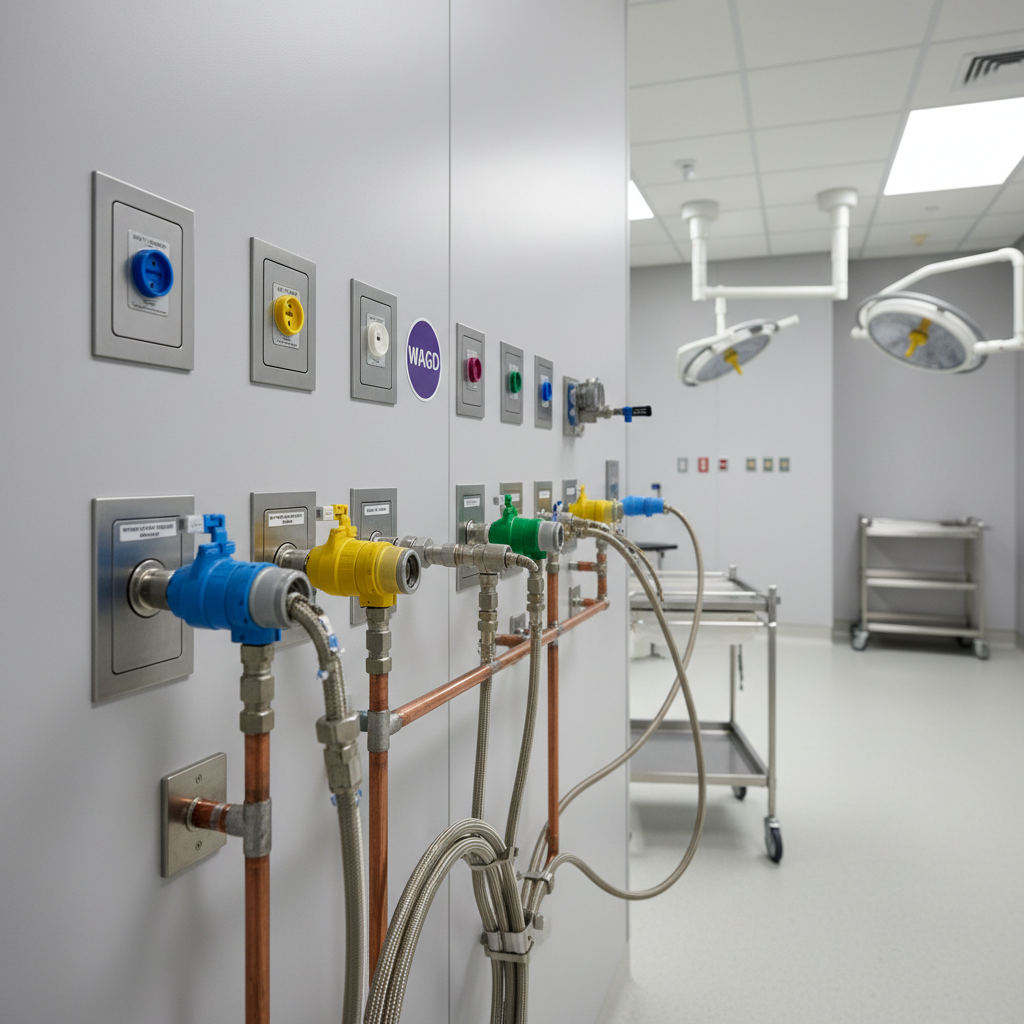
WAGD in ECT Suites: Why Behavioral Hospitals Fail Medical Gas Inspection
Medical Testing SolutionsAugust 3, 20269 min read
Share
Electroconvulsive Therapy (ECT) is a vital treatment modality for specific, severe psychiatric conditions. As behavioral health hospitals expand their services to include ECT, they often find themselves navigating the complex world of medical gas systems, an area fraught with stringent codes and standards. A common and critical point of failure in these facilities is the lack of a compliant Waste Anesthetic Gas Disposal (WAGD) system. Because ECT administration involves general anesthesia, it falls under the same rigorous NFPA 99 safety standards as a surgical operating room. Misunderstanding this single point is the primary reason so many ECT suite projects in behavioral health settings fail inspection.
This guide provides a definitive overview for hospital facility managers, risk managers, and clinical staff. We will explore why WAGD is essential, break down the NFPA 99 risk categories, detail the top reasons for failed inspections, and outline the necessary steps for remediation and compliance. Understanding these requirements is the first step toward ensuring patient and staff safety, avoiding costly project delays, and passing Joint Commission (TJC) or CMS surveys.
The Anesthesia Conundrum in ECT: More Than Just a "Procedure Room"
ECT is a medical procedure that requires the administration of a muscle relaxant and a short-acting general anesthetic. Anesthesiologists typically use agents like methohexital or propofol for induction, along with oxygen for ventilation. While the procedure itself is brief, the use of anesthesia fundamentally changes the room's classification from a simple treatment room to a critical care area where medical gases are administered.
This introduces the problem of Waste Anesthetic Gas (WAG). As the patient exhales, residual anesthetic gases are released into the room. Without a proper scavenging system, these gases accumulate, posing significant health risks to the clinical staff. Chronic exposure to WAG is linked to a range of health issues, including headaches, nausea, dizziness, and potential long-term reproductive and neurological problems. OSHA and The Joint Commission are keenly aware of these occupational hazards, making WAG management a key point of review during surveys.
Therefore, any room where general anesthesia is administered must have a system to actively capture and remove these waste gases. This is the function of a WAGD system.
NFPA 99 Category Determination: The Critical First Step
NFPA 99, Health Care Facilities Code, is the foundational standard governing medical gas systems. It employs a risk-based approach, detailed in Chapter 4, to categorize patient care locations. The category assigned to a space dictates the required level of safety and performance for its medical gas systems. The determination is based on the potential for patient harm if a system fails.
Category 1: Spaces where failure of the system is likely to cause major injury or death to patients or caregivers. Examples include operating rooms, emergency rooms, and ICUs.
Category 2: Spaces where failure of the system is likely to cause minor injury to patients or caregivers. Examples include general patient rooms and certain procedure rooms.
Category 3: Spaces where failure of the system is not likely to cause injury but could cause patient discomfort. Example: a room with only a medical air outlet for drying equipment.
Category 4: Spaces where failure of the system would have no impact on patient care.
ECT suites, because they involve general anesthesia and potential airway management, are almost universally classified as Category 1 or Category 2 spaces. This classification mandates the installation of a fully compliant medical gas system, including medical air, oxygen, and a vacuum system for both patient suction and WAGD.
Why this matters for compliance: Misclassifying an ECT suite as a Category 3 or 4 space is a critical error. It leads facilities to believe that a full-fledged, piped medical gas system isn't necessary, resulting in an immediate failure during any competent third-party verification or TJC survey.
NFPA 99 Category Requirements for Medical Gas
This table illustrates the escalating requirements based on the risk category. It should be clear why an ECT suite falls into the more stringent categories.
Feature
Category 3
Category 2
Category 1
Patient Impact of Failure
Unlikely to cause injury
Minor injury likely
Major injury or death likely
Source Equipment
Can be separate, local
Must be fully compliant
Must be fully compliant with redundancy
Piping
Standard piping
Specific medical gas piping
Specific medical gas piping
Zone Valve
Not required
Required
Required
Area Alarm
Not required
Required
Required
WAGD/Vacuum System
Not required
Required if anesthetizing
Required if anesthetizing
Verification Required?
Yes, by ASSE 6030 Verifier
Yes, by ASSE 6030 Verifier
Yes, by ASSE 6030 Verifier
Top 5 Reasons Behavioral Hospitals Fail WAGD Inspections
At Medical Testing Solutions, we perform hundreds of medical gas inspections and verifications a year. When it comes to ECT suites in behavioral health settings, we see the same critical deficiencies repeatedly. These failures often stem from retrofitting existing spaces without a full understanding of the applicable codes.
1. Using Non-Compliant Scavenging Systems
Many facilities attempt to solve the WAG problem with unapproved, ad-hoc solutions. This can range from venting to the floor, using a fan to blow gases out a window, or employing a portable suction device not rated for WAGD. None of these methods are compliant or safe. NFPA 99 requires waste gases to be collected by a dedicated WAGD inlet and removed by a medical vacuum source that is vented to the outside, away from any air intakes.
2. Missing Zone Valves and Area Alarms
NFPA 99 Chapter 5 mandates that every critical care area be isolated by a zone valve box. This allows staff to shut off the gas supply to a specific area in an emergency without affecting the rest of the facility. Furthermore, each of these areas must be monitored by a local area alarm panel that provides immediate visual and audible warnings of high or low pressure in the gas lines. Converting a former patient room to an ECT suite without adding a dedicated zone valve and area alarm is a guaranteed inspection failure.
3. Converting Patient Rooms Without Full Retrofits
The most common scenario is the conversion of an existing patient care room into an ECT suite. A standard patient room may have oxygen and suction, but it lacks the complete infrastructure for a Category 1 or 2 space. The retrofit must include:
A new zone valve box for the room.
A new area alarm panel.
Properly sized, brazed, and cleaned copper piping.
A dedicated WAGD inlet tied into the medical vacuum system.
Verification that the central source equipment (pumps and compressors) can handle the additional load.
Simply adding an outlet to an existing pipe is not sufficient and demonstrates a fundamental misunderstanding of the code.
4. Uncertified Installers and Verifiers
The installation and verification of medical gas systems must be performed by certified professionals. NFPA 99 requires that system installers be credentialed to the ASSE 6010 Certified Medical Gas Systems Installer standard. After installation, and before any patient use, the system must be tested and certified by an independent third-party inspector credentialed to the ASSE 6030 Certified Medical Gas Systems Verifier standard. Using uncertified plumbers or internal maintenance staff for this work is a major violation. Medical gas verification is not a suggestion; it is a mandatory step to ensure the system is safe and compliant.
5. Misunderstanding of "Wet Procedure Location" Requirements
If the ECT procedure is designated as a "wet procedure location," additional electrical safety requirements involving isolated power systems and Line Isolation Monitors (LIMs) may apply. While this is a separate topic from medical gases, it often goes hand-in-hand with ECT suite construction and is another common point of failure. A comprehensive risk assessment should evaluate the need for Line Isolation Monitor testing and compliance.
The High Stakes of Non-Compliance: TJC, CMS, and Staff Safety
Failing a medical gas inspection is not a minor issue. Both The Joint Commission and CMS survey directly against the NFPA 99 code. A finding of a non-compliant WAGD system can lead to:
Immediate Project Stoppage: A verifier cannot and will not certify a non-compliant system. This means the room cannot be used for patients until all deficiencies are corrected.
Costly Remediation: Emergency retrofits are always more expensive than planned construction. It may involve opening walls, running new pipes, and re-doing work that was done incorrectly.
Loss of Accreditation or Deemed Status: Severe or persistent non-compliance can jeopardize a hospital's accreditation and its ability to receive Medicare/Medicaid reimbursement.
Staff Safety Risks: Beyond regulatory citations, there is the real-world risk to your staff from WAG exposure. Proper WAG and chemical vapor monitoring is a crucial part of an ongoing safety program.
The Path to Compliance: A Remediation Checklist
If your facility is planning an ECT suite or has an existing one that you suspect is non-compliant, follow these steps to ensure safety and pass your next inspection.
1. Perform a Risk Assessment: Engage a qualified third party, like Medical Testing Solutions, to conduct a formal NFPA 99 risk assessment. This will determine the correct category for the space and define the specific system requirements.
2. Design a Compliant System: Work with an engineer to design a system that meets all NFPA 99 requirements. This includes proper source equipment, correctly sized piping, and the required valves and alarms.
3. Hire Certified Professionals: Ensure the system is installed by an ASSE 6010 certified installer. Do not leave this critical work to uncertified personnel.
4. Mandate Third-Party Verification: Budget for and schedule a final verification with an independent ASSE 6030 Certified Verifier. This is your final quality control check and the only way to get an official certification that the system is safe for patient use.
5. Implement Ongoing Maintenance: Once certified, the system must be maintained. This includes annual medical gas inspections and regular maintenance of the source equipment to ensure continued performance and safety.
Medical Testing Solutions: Your Partner in ECT Suite Compliance
Navigating the complexities of NFPA 99 for an ECT suite can be daunting, but you don't have to do it alone. Medical Testing Solutions is an ASSE-certified company with deep expertise in medical gas systems for all types of healthcare facilities, including behavioral health. We provide the essential services to ensure your project is a success:
Sales of compliant source equipment, alarms, and components
We act as a trusted partner to facility managers, helping them ensure their facilities are safe, compliant, and ready for patients.
Don't risk your accreditation or the safety of your staff. If you're planning an ECT suite or need to verify an existing one, contact the ASSE-certified experts at Medical Testing Solutions today for a no-obligation quote. Call us at +1 (754) 315-1078 or request a quote online to discuss your project.
Frequently Asked Questions
No. While both may be supplied by the same vacuum pump source, they are distinct systems with different inlets. WAGD (or 'scavenging') inlets are specifically designed to connect to the anesthesia machine's gas scavenging interface (AGSS). They cannot be used for patient suction, and medical-surgical vacuum inlets cannot be used for scavenging.
Generally, no. For a Category 1 or 2 space, NFPA 99 requires a permanent, piped system tied to the facility's central medical vacuum source. Portable units are typically not powerful enough, not vented correctly, and do not meet the code requirements for a permanent installation. They are not an acceptable substitute in a properly classified ECT suite.
Yes. TJC and CMS survey against the currently adopted edition of NFPA 99 (typically the 2012 or later edition). When a space is renovated or its use is changed (like converting a patient room to an ECT suite), it must be brought into compliance with the current code. Grandfathering does not apply to new construction or major renovations.
An ASSE 6010 Installer is a tradesperson who has been certified to have the knowledge and skill to build and install medical gas systems correctly. An ASSE 6030 Verifier is an independent inspector who tests the completed system to ensure it was installed correctly and is safe and ready for patient use. The verifier cannot be employed by the installer; they must be a neutral third party.
After the initial ASSE 6030 verification, the outlets and alarms in the ECT suite should be checked as part of your facility's annual medical gas system inspection. The central vacuum pump that supports the system should be maintained according to the manufacturer's recommendations and NFPA 99 requirements.
Request a quote for your facility
Talk with Medical Testing Solutions about your next inspection, repair or equipment request.