Installing or upgrading a nitrous oxide and oxygen (N2O/O2) sedation system in a dental office is a significant undertaking that goes far beyond simply purchasing equipment. For dental practices in Virginia Beach, VA, a successful installation hinges on meticulous planning, adherence to strict national and local codes, and expert execution. This guide provides a definitive overview of the turnkey installation process, from initial design and code compliance to final verification and staff training. You will learn the critical steps required to ensure your dental sedation system is safe, reliable, and fully compliant with all regulatory standards, protecting your patients, staff, and practice.
Medical Gas Service
Medical Gas Products
Compliance & Standards
Turnkey Dental Office Nitrous Oxide Installation in Virginia Beach, VA
Medical Testing SolutionsOctober 2, 20267 min read
1. Understanding the Regulatory Landscape: NFPA 99 & ASSE 6000
Before a single pipe is ordered, it's crucial to understand the primary codes governing medical gas systems in dental facilities. These aren't suggestions; they are stringent requirements enforced by fire marshals, building inspectors, and dental boards.
NFPA 99: Health Care Facilities Code
The National Fire Protection Association (NFPA) 99 is the foundational document for medical gas systems. For a dental office, the system will be classified as a Level 3 piped gas system. Key requirements include:
- Piping & Fittings: All piping must be medical-grade, seamless copper (Type K or L), cleaned for oxygen service, and installed with nitrogen purging during brazing to prevent internal oxidation.
- Manifolds: The central gas supply must use a manifold that ensures a continuous supply, often with automatic switchover from the primary cylinder bank to the secondary.
- Alarms: Master and area alarm panels are required to provide audible and visual warnings of system pressure changes or supply depletion. These are critical for life safety.
- Scavenging Systems: A dedicated waste anesthetic gas disposal (WAGD) or scavenging system is mandatory to capture exhaled nitrous oxide, protecting staff from chronic exposure.
ASSE 6000 Series: Personnel Certification
The American Society of Sanitary Engineering (ASSE) 6000 series establishes the professional qualifications for individuals working on medical gas systems.
- Installation (ASSE 6010): Personnel installing the system must hold an ASSE 6010 Medical Gas Systems Installer certification.
- Verification (ASSE 6030): After installation, an independent, third-party ASSE 6030 Medical Gas Systems Verifier must conduct a comprehensive series of tests before the system can be used on patients.
- Maintenance (ASSE 6040): Individuals performing ongoing maintenance must be certified as ASSE 6040 Medical Gas Systems Maintenance Personnel.
Why this matters for compliance: Using uncertified personnel for installation or verification is a major code violation. It can result in failed inspections, costly rework, and significant liability. Always ask for credentials. Medical Testing Solutions ensures all our field technicians hold the appropriate ASSE certifications for your project.
2. The Turnkey Installation Process: A Step-by-Step Guide
A turnkey installation handles every phase of the project. Here’s what to expect when working with a qualified provider.
Step 1: Design and Engineering
This initial phase lays the groundwork for a successful project. It involves:
- Needs Assessment: Determining the number of operatories, desired gas outlets, and future expansion plans.
- Blueprint Review: Analyzing the facility layout to plan pipe routing, manifold location, and alarm placement.
- Equipment Selection: Choosing NFPA-compliant manifolds, alarm panels, and zone valve boxes from reputable manufacturers like Porter, Belmed, or Accutron.
- Scavenging Design: Engineering a scavenging system with adequate vacuum flow to meet NIOSH exposure limits.
Step 2: Sourcing and Installation (ASSE 6010)
This is where the physical construction takes place, performed by certified ASSE 6010 installers.
- Manifold & Cylinder Placement: The central supply is typically located in a secure, well-ventilated room with a specific fire rating.
- Piping Installation: Medical-grade copper piping is run from the manifold to each operatory. Every joint is meticulously brazed with a continuous nitrogen purge.
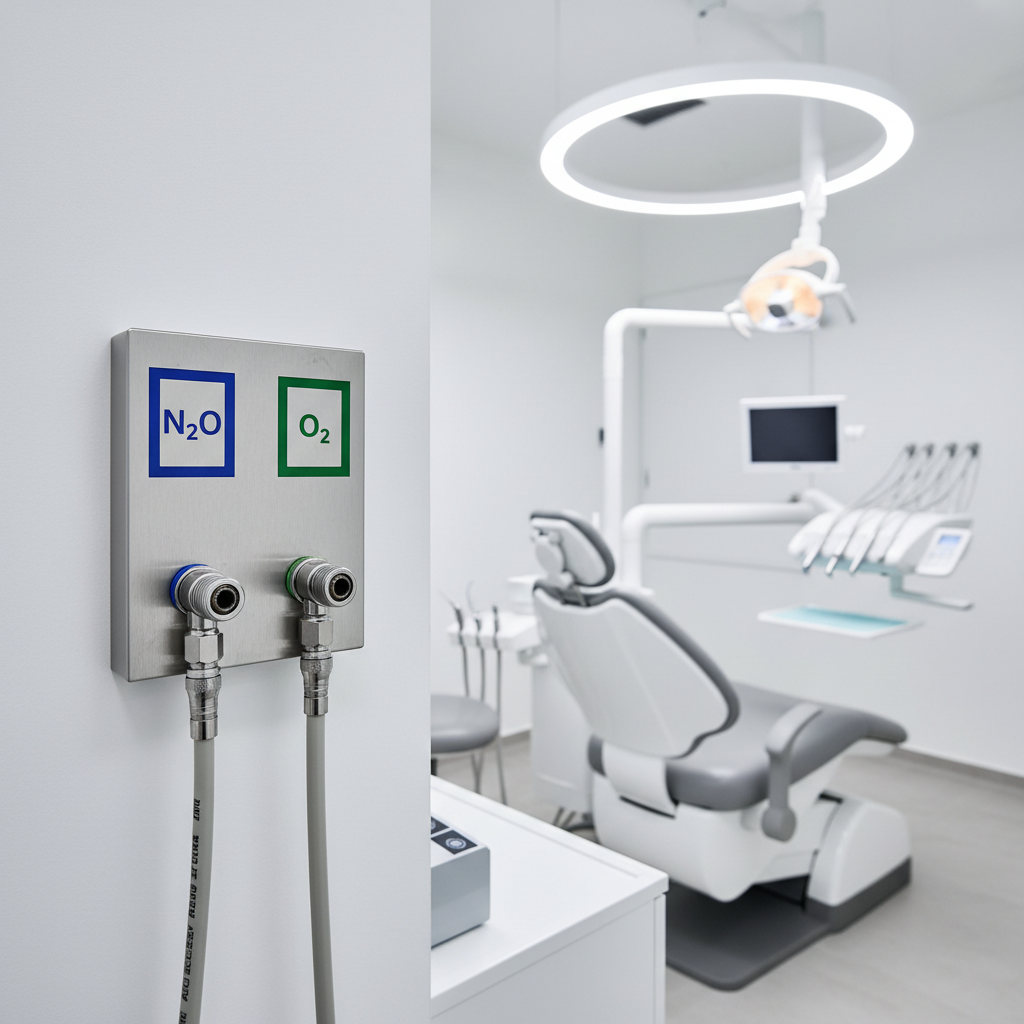
- Outlet & Valve Installation: Terminal outlets for N2O and O2 are installed in each operatory, along with local zone valve boxes for emergency shut-off.
- Alarm Wiring: Master and area alarms are wired and connected to the facility's power supply.
For a detailed overview of the installation qualifications, see our guide on Medical Gas Installation.
3. Equipment Deep Dive: Manifolds, Alarms, and Flowmeters
The core components of your system must be chosen carefully for compliance and reliability.
Nitrous Oxide Manifolds
The "heart" of the system, the manifold, controls the gas supply. A typical dental manifold is an automatic changeover type. It draws from a primary bank of cylinders; when they are depleted, it automatically switches to the secondary bank and triggers an alarm, signaling the need to replace the empty cylinders without interrupting patient care.
| Feature | Basic Manifold | Automatic Changeover Manifold | Digital Manifold |
|---|---|---|---|
| Switchover | Manual | Automatic | Automatic, with alerts |
| Pressure Alarms | Local gauge only | Integrated with master alarm | Integrated + remote monitoring |
| Best For | Not recommended for dental | Most dental practices | Large clinics, hospitals |
Master and Area Alarms
Alarms are non-negotiable safety components.
- Master Alarms: Located where they can be continuously monitored (e.g., reception), they provide warnings for the entire system, such as a changeover event or high/low line pressure.
- Area Alarms: Placed within the dental treatment area, they monitor the pressure in the specific zones they serve.
Dental Flowmeters
While not part of the "installation," the flowmeters that deliver gas to the patient are a critical final piece. Brands like Porter, Belmed, and Accutron are industry standards. Regular service is essential. If you have existing equipment, consider our dental flowmeter repair and calibration services to ensure they are functioning correctly.
4. Third-Party Verification (ASSE 6030)
After the installation is 100% complete, but before the system is used for patient care, an independent ASSE 6030 verification must be performed. This is not optional.
The verifier is a third party, separate from the installer, to avoid conflicts of interest. Medical Testing Solutions is one of the few companies qualified to perform both installation and third-party verification, though for any given project, we can only do one to maintain the required independence.
The verification process is exhaustive and includes:
- Component Check: Ensuring all installed components (pipes, valves, alarms) are the correct medical-grade type.
- Pressure Testing: The system is pressurized to 150% of its working pressure to check for leaks.
- Gas Purity & Specificity: Each outlet is tested to confirm the correct gas is flowing (no cross-connections) and that its purity meets USP standards.
- Alarm Functionality: Every alarm condition is simulated to ensure the panels activate correctly.
- Scavenging System Test: Verifying the vacuum system provides adequate flow to protect staff.
Upon successful completion, the verifier provides a comprehensive report, which is the official documentation needed to get the "green light" from inspectors. Learn more about the rigor of this process on our medical gas verification page.
5. Post-Installation: Training and Maintenance
A compliant system is only safe if your team knows how to use and maintain it.
- Staff Training: Your team should be trained on the system's normal operation, what the alarms mean, and the location of emergency shut-off valves.
- Ongoing Maintenance: NFPA 99 requires a regular maintenance schedule. This includes periodic checks of the manifold, alarm panels, and source gas. Partnering with a qualified service provider like MTS for annual medical gas inspections ensures long-term compliance and safety.
Get a Quote for Your Virginia Beach Practice
Ensuring your dental office's nitrous oxide system is installed correctly is a critical investment in patient safety and regulatory compliance. At Medical Testing Solutions, our ASSE-certified technicians have the expertise to manage your entire project, from design to final verification.
Don't leave compliance to chance. Contact our team today for a comprehensive, no-obligation quote for your Virginia Beach dental office nitrous oxide installation. Call us at (754) 315-1078 or request a detailed quote online.
Frequently Asked Questions
For a typical dental office in Virginia Beach, the on-site installation can take anywhere from 3 to 10 business days, depending on the size and complexity of the project. This does not include the initial design and equipment procurement phases.
Absolutely not. Medical gas systems require specific, degreased, and cleaned medical-grade copper tubing (Type K or L). Using standard plumbing pipes is a serious code violation and safety hazard.
The ASSE 6010 Installer is the certified professional who physically builds the system. The ASSE 6030 Verifier is an independent, third-party inspector who tests and certifies that the installer's work meets all NFPA 99 codes before it can be used for patients.
Costs vary widely based on the number of operatories, equipment choices, and facility layout. A turnkey installation can range from $15,000 to $50,000+. The only way to get an accurate figure is to request a quote based on your specific needs.
Yes. A scavenging system is mandatory under NFPA 99 and OSHA guidelines. It is essential for removing waste nitrous oxide from the breathing zone of your clinical staff to prevent long-term health risks.
Request a quote for your facility
Talk with Medical Testing Solutions about your next inspection, repair or equipment request.