Medical Testing SolutionsNovember 13, 202610 min read
Share
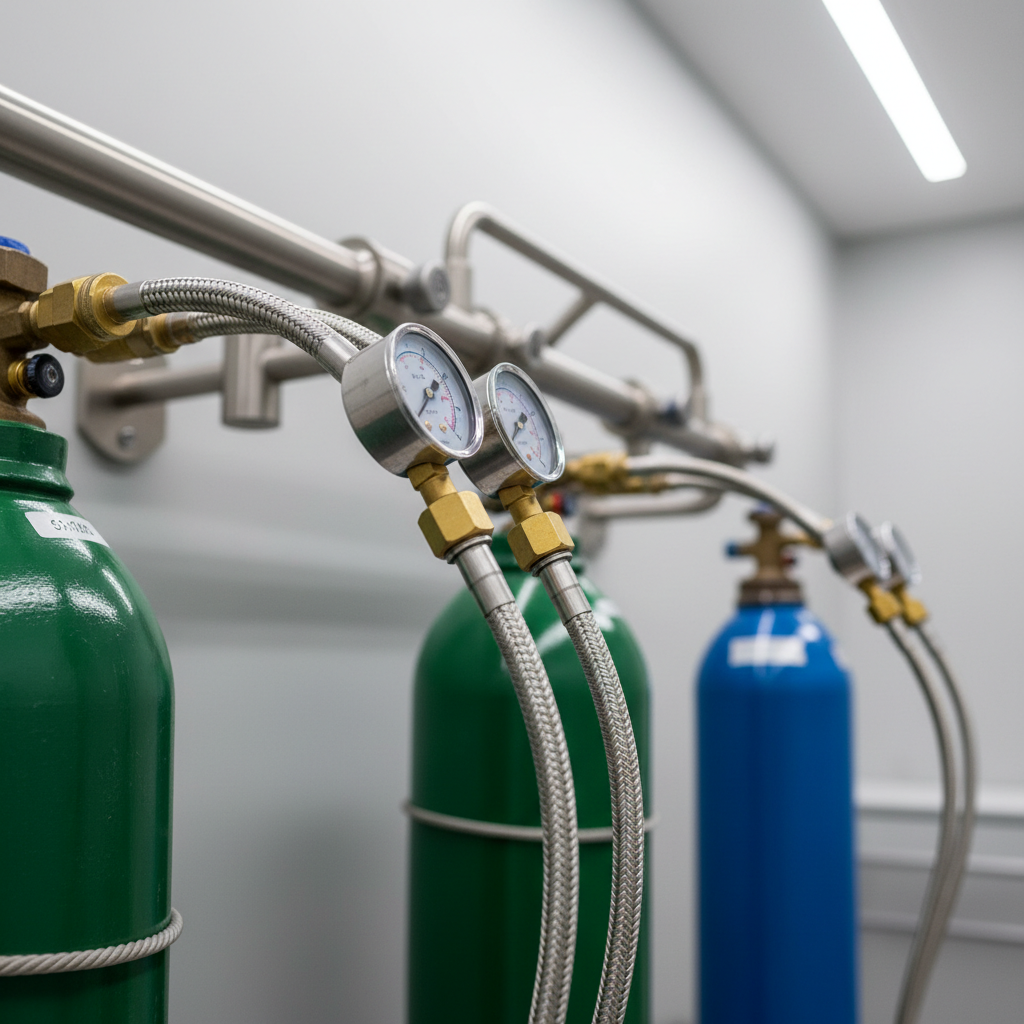
Walk into a busy oral surgery suite's tank room on a Friday afternoon, and you will often see H-size oxygen and G-size nitrous oxide cylinders wrestling against twisted, work-hardened copper coils. When a staff member cracks the cylinder valve on a fatigued connector, the line does not always just hiss. At 750 psig for liquid nitrous oxide or 2,200 psig for full oxygen cylinders, a fractured brass ferrule or split flexible inner core turns a routine tank change into a violent whip hazard or an adiabatic compression fire.
Staying ahead of dental nitrous manifold pigtail replacement is one of the cheapest and highest-leverage safety steps your practice can take. Yet during routine clinic walk-throughs, we regularly pull connectors that have been in continuous service for a decade or more without a single documented inspection.
Why Dental Manifold Pigtails Fail Under Cylinder Pressure
Manifold pigtails are the critical bridge between high-pressure portable cylinders and your stationary regulated pipeline. Unlike the hard-piped Type K or Type L copper tubing running through your walls, pigtails endure mechanical stress every time an empty cylinder comes off the rack and a full one goes on.
Over months of tank swaps, staff bend, twist, and torque the connector to align the fitting with the cylinder valve outlet. For rigid copper coils, this repeated flexing causes work hardening, the metal lattice becomes brittle and loses its ductility, especially right behind the silver-brazed sleeve at the nut. On flexible braided hoses, twisting the nut while tightening kinks the inner core or frays the outer stainless steel wire braid.
Pressure cycling accelerates this mechanical wear. Every time a new cylinder is opened, the pigtail absorbs a sudden pressure spike from zero to full tank pressure. If a staff member opens an oxygen cylinder valve too fast, the rapid pressurization creates an adiabatic compression event at the manifold header check valve. If the pigtail is lined with degraded polytetrafluoroethylene (PTFE) or contaminated with hydrocarbon debris from uncleaned fittings, that heat spike can ignite the liner inside the hose.
NFPA 99 and CGA Requirements for Manifold Connectors
Dental offices operating central nitrous oxide and oxygen supply systems fall under NFPA 99 (Health Care Facilities Code) and Compressed Gas Association (CGA) standards. Whether your clinic runs a Category 1, Category 2, or Category 3 dental gas system under NFPA 99 Chapter 15, the cylinder supply hardware must meet strict material compatibility and pressure integrity rules.
NFPA 99 Section 5.1.3.5.4 and corresponding Category 3 dental provisions require cylinder leads (pigtails) to be constructed of materials suitable for high-pressure oxygen and nitrous oxide service. They must be factory-cleaned for oxygen service in accordance with CGA G-4.1 to remove hydrocarbon oils, grease, and machining particulates. Using a standard industrial hydraulic hose or an uncleaned plumbing connector on a dental manifold is a direct code violation and a severe fire hazard.
Fittings must also use gas-specific Connections per CGA V-1 to make cross-connection physically impossible during a hurried tank change:
Oxygen Cylinders: CGA 540 thread connection (0.903"-14 NGO-RH-EXT), utilizing a bullnose metal-to-metal seat that seals without a plastic washer.
Nitrous Oxide Cylinders: CGA 326 thread connection (0.825"-14 NGO-RH-EXT), featuring a stepped diameter profile that prevents attachment to an oxygen valve.
Manifold Header Ends: Typically 1/2" or 1/4" NPT or a manufacturer-specific check-valve thread (such as Porter, Belmed, Matrx, or Amico header connections), often fitted with an integral check valve to stop blowback during cylinder swaps.
Why this matters for compliance: Under NFPA 99 Chapter 15 and state dental board sedation permits, inspectors check manifold rooms for kinked copper pigtails, frayed stainless steel braiding, leaking header check valves, and missing CGA fittings. A single damaged pigtail or leaking check valve will fail your annual inspection and can suspend your nitrous sedation operations until repaired.
If your clinic needs a complete check of its cylinder supply room, alarm panels, and operatory outlets, schedule preventive medical gas maintenance with an ASSE 6040-certified technician before your next state board audit.
Copper Coils vs. Stainless Steel Braided vs. All-Metal Pigtails
Dental manifolds generally use one of three pigtail designs: rigid coiled copper, PTFE-lined stainless steel braided hoses, or corrugated all-metal flexible hoses. Each material reacts differently to the high-pressure environment of a dental tank room.
Rigid Copper Pigtails
Historically common on older oxygen manifolds, rigid copper pigtails use a single or double loop of heavy-wall copper tubing to provide mechanical give. While copper will not burn in an oxygen-rich adiabatic flash the way polymers can, it has a high memory. Once a staff member bends a copper pigtail out of alignment to reach a poorly positioned cylinder, the metal work-hardens. Repeated bending leads to hairline stress cracks right at the brazed brass ferrule.
PTFE-Lined Stainless Steel Braided Pigtails
Most modern dental nitrous oxide and oxygen manifolds ship with flexible stainless steel braided pigtails featuring a PTFE (Teflon) inner core. They are easy to maneuver when swapping heavy H or G cylinders, reducing ergonomic strain on dental assistants. However, PTFE is permeable over time, susceptible to internal kinking if twisted, and has a lower ignition threshold than metal during rapid oxygen pressurization. For this reason, many manufacturers and CGA E-11 guidelines recommend strict replacement intervals for polymer-lined leads.
Corrugated All-Metal Flexible Pigtails
For high-pressure oxygen headers, corrugated stainless steel or Monel inner-core pigtails wrapped in a stainless steel braid eliminate polymer ignition risk entirely. They cost more upfront and feel stiffer than PTFE-lined hoses, but they provide superior resistance to adiabatic heat spikes while remaining far easier to align than solid copper coils.
Moderate (susceptible to adiabatic flash if opened rapidly)
Rigid Coiled Copper
Oxygen (CGA 540)
Inspect annually; replace when deformed
Work hardening and stress cracking at brazed joint
Very High (all-metal construction)
Corrugated Stainless / Monel
High-Pressure Oxygen (CGA 540)
Every 5 to 7 years
Fatigue cracking from extreme sharp bending
Very High (no polymer liner to ignite)
How Often Should You Replace Dental Manifold Pigtails?
Neither NFPA 99 nor the CGA publishes a single universal expiration date that applies to every brand of pigtail, because service life depends on material construction and manufacturer specifications. Instead, NFPA 99 requires facilities to follow the equipment manufacturer's instructions for maintenance and replacement.
Across major dental and medical manifold manufacturers, including Porter Instrument, Belmed, Accutron, Matrx, and Amico, the standard replacement interval for PTFE-lined flexible stainless steel pigtails is every 3 to 5 years, or immediately if physical damage appears. Every certified pigtail should carry a permanent metal tag or stamped collar showing the manufacture date or installation date, part number, maximum working pressure (typically 3,000 psig), and "Cleaned for Oxygen Service" designation.
During our annual medical gas inspections, Medical Testing Solutions technicians check those manufacture tags alongside physical wear indicators. Even if a hose is only two years old, you must pull it out of service immediately if you find any of these five defects:
Broken or frayed wire braid: Any "fishhooks" (snapped stainless wires poking out of the weave) compromise the pressure rating of the inner core.
Kinks, flattening, or sharp bends: A flattened cross-section restricts gas flow and creates a weak point that can rupture under full tank pressure.
Work-hardened or distorted copper: Copper loops that have been stretched out, flattened, or show green oxidation and cracking near the silver-brazed nut.
Damaged CGA threads or bullnose seats: Scored CGA 540 bullnose tips or stripped CGA 326 threads that require excessive wrench force to seal.
Blowing header check valves: When you disconnect an empty cylinder while the reserve bank is pressurized, gas should not hiss backward out of the disconnected pigtail.
Safe Procedure for Replacing Manifold Pigtails
Swapping a pigtail takes fifteen minutes when done correctly, but shortcuts can damage the manifold header or cause injury. While dental assistants regularly swap cylinders, replacing manifold components and testing check valves should be handled by qualified personnel or paired with your dental flowmeter repair and calibration visit.
1. Depressurize and Isolate the Cylinder Bank
Never loosen a pigtail while it is under cylinder pressure. Close the cylinder valves tightly on the bank you are servicing. If your manifold has manual header isolation valves, close them, or slowly bleed the residual pressure from the pigtail assembly according to the manifold manufacturer's manual. Verify that the bank pressure gauge drops to zero.
2. Inspect the Header Check Valve
Most dental manifolds locate a reverse-flow check valve either inside the manifold header block or integrated directly into the header end of the pigtail. When removing the old pigtail, verify whether the check valve is part of the hose assembly or the brass header adapter. If the check valve is leaking backward from the active bank, replace the check valve assembly at the same time.
3. Maintain Oxygen Cleanliness
Open the sealed plastic bag containing the new oxygen-cleaned pigtail only when you are ready to thread it onto the header. Never touch the internal surfaces of the CGA fittings with bare fingers, and never use petroleum-based pipe dope or non-certified tape. If the header connection uses tapered NPT threads, apply only sparse, oxygen-compatible PTFE tape or an oxygen-safe anaerobic sealant approved for high-pressure service, keeping the first two threads bare to prevent shredding into the gas stream.
4. Torque Without Twisting the Hose
When tightening the header connection or attaching the CGA nut to the cylinder valve, use two wrenches, a backup wrench on the stationary fitting or hose hex collar, and a working wrench on the swivel nut. Letting the flexible hose twist as you tighten the nut introduces torsional stress that shortens the life of the inner core. Do not over-torque CGA 540 or CGA 326 connections; if a fitting leaks at normal wrench pressure, the valve seat is damaged or contaminated.
5. Pressurize Slowly and Leak Test
Crack the cylinder valve slowly so the pigtail and header pressurize gradually over several seconds, preventing adiabatic heat buildup at the regulator and check valve. Once at full pressure, apply an oxygen-safe leak detection solution (such as Snoop) to both the cylinder connection and the manifold header connection. Watch for micro-bubbles for at least 30 seconds.
Protecting Downstream Sedation Equipment
A failing pigtail does more than leak gas in the tank room. When an aging PTFE inner liner degrades or a non-certified thread sealant breaks loose, microscopic particulate travels through the manifold regulator and into your central piping. Those flakes eventually lodge inside the delicate needle valves and glass tubes of your operatory sedation mixers.
At Medical Testing Solutions, we frequently see practices dealing with sticky nitrous flowmeters or drifting oxygen fail-safe valves shortly after a botched tank-room repair. Keeping your cylinder supply room clean, compliant, and properly maintained protects your entire pipeline, from the high-pressure header all the way to the nasal hood. When your facility upgrades its manifold or replaces distribution piping, our ASSE 6010 installers and ASSE 6030 verifiers provide turnkey medical gas installation and medical gas verification to keep your documentation audit-ready.
Need oxygen-cleaned replacement pigtails or an ASSE-certified technician to inspect your dental manifold room? Request a quote online from Medical Testing Solutions or call our team at (754) 315-1078 to schedule service.
Frequently Asked Questions
Most dental manifold manufacturers and CGA guidelines recommend replacing flexible PTFE-lined stainless steel braided pigtails every 3 to 5 years. Rigid copper pigtails and corrugated all-metal hoses should be inspected annually and replaced immediately if they show kinks, work hardening, frayed braiding, or damaged CGA threads.
Oxygen cylinders use a CGA 540 connection, which seals via a metal-to-metal bullnose seat. Nitrous oxide cylinders use a CGA 326 connection, which has a distinct thread diameter and stepped nipple design so that a nitrous tank can never be accidentally connected to an oxygen pigtail.
No. Under NFPA 99, all cylinder leads and pigtails used on medical and dental gas manifolds must be specifically rated for the full cylinder working pressure (typically 3,000 psig) and factory-cleaned and bagged for oxygen service per CGA G-4.1. Standard hardware or hydraulic hoses contain hydrocarbon oils that can ignite under high-pressure oxygen.
When you unscrew an empty cylinder from a pigtail while the secondary cylinder bank is still pressurized, gas should not blow back out of the open pigtail. If gas hisses out of the disconnected CGA nut, the manifold header check valve has failed and must be replaced immediately.
Never use petroleum-based lubricants, grease, or standard plumbing dope on dental gas connections, as hydrocarbons can cause an explosion in high-pressure oxygen service. CGA 540 and CGA 326 cylinder connections seal metal-to-metal and require no tape or paste on the cylinder valve threads.
Request a quote for your facility
Talk with Medical Testing Solutions about your next inspection, repair or equipment request.