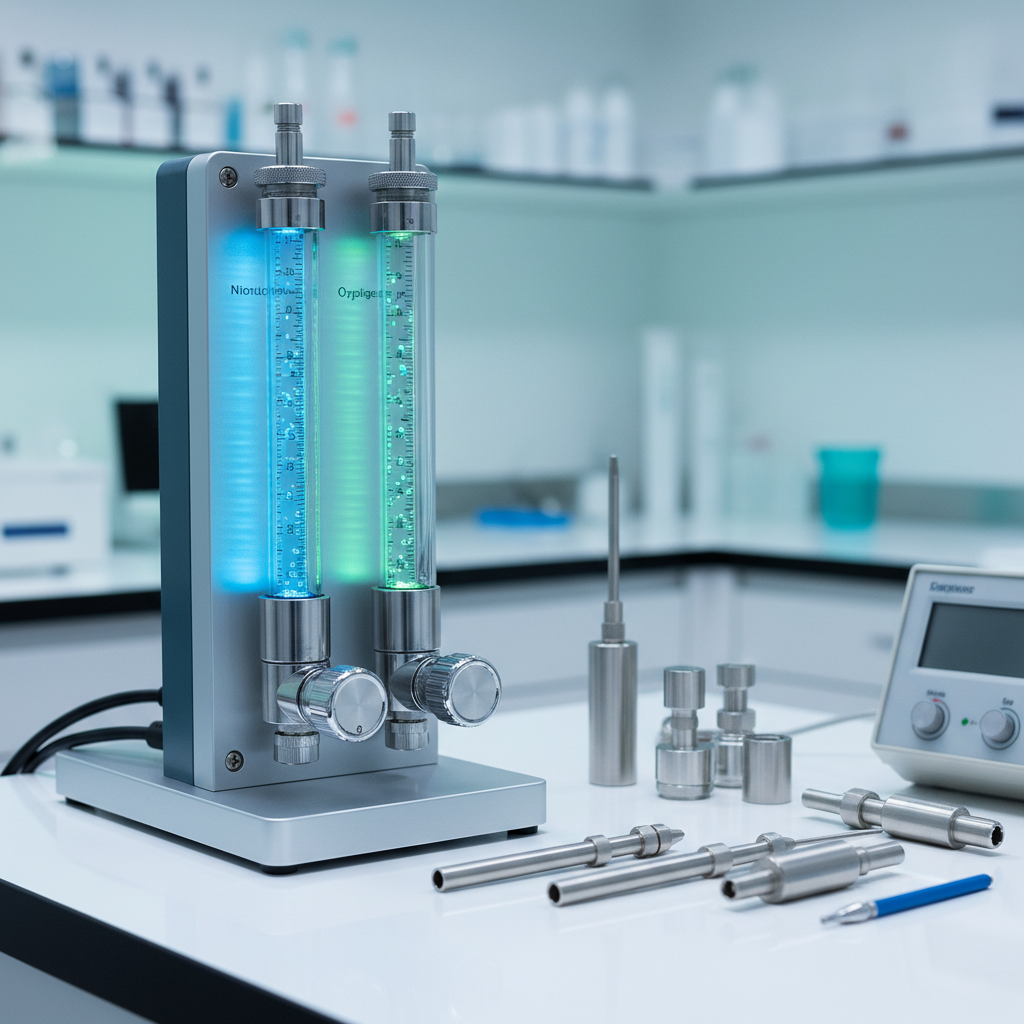
For dental practices in Omaha, Nebraska, maintaining nitrous oxide sedation equipment is essential for clinical patient safety, legal compliance, and daily operatory productivity. When an analog or digital relative analgesia machine drifts out of calibration, leaks around its control knobs, or fails to deliver an accurate 70% oxygen fail-safe concentration, the clinic cannot risk operating.
Rather than paying inflated local diagnostics rates or waiting weeks for uncertain third-party servicing, Omaha practitioners can access predictable, ASSE-credentialed support. Medical Testing Solutions provides flat-rate $750 factory-level rebuilding, testing, and NIST-traceable recalibration for dental sedation flowmeters. In this comprehensive guide, we cover the technical failure modes of leading flowmeter brands (Porter, Belmed, Accutron, and Matrx), examine regulatory testing protocols under NFPA 99 and ASSE standards, break down factory-grade service steps, and detail our seamless depot repair process for Douglas, Sarpy, and Lancaster County clinics.
The Clinical and Regulatory Stakes of Flowmeter Precision
Nitrous oxide-oxygen ($N_2O-O_2$) sedation units are categorized as life-support and patient-delivery devices. In a dental setting, a flowmeter blends pure oxygen with nitrous oxide to achieve conscious sedation while strictly preventing hypoxic mixtures.
| Diagram text |
|, |
| CLINICAL GAS MIXING BOUNDARY |
| Pure Oxygen (O2) Supply, → [ Fail-Safe Valve ] |
| v |
| Nitrous Oxide (N2O) Supply, → [ Ratio Limiter ] |
| v |
| Mixed Gas Out: Minimum 30% O2 / Maximum 70% N2O Delivered |
Under industry benchmarks and standard manufacturing controls, flowmeters must incorporate an internal proportioning mechanism ensuring that the patient never receives less than 30% oxygen (with many modern systems enforcing a baseline of roughly 30% O2 and capping $N_2O$ at 70%). Over thousands of clinical hours, however, mechanical seals dry out, diaphragm membranes stiffen, proportional needle valves accumulate microscopic particulate, and glass or acrylic flow tubes fall out of true vertical alignment.
When gas blending drifts by even 5% to 8%, two distinct hazards emerge:
- Hypoxic Delivery Risk: If the mechanical fail-safe slips, an over-sedated patient may receive sub-therapeutic oxygen levels, leading to respiratory depression.
- Ambient Waste Anesthetic Gas Exposure: Failed internal O-rings, deteriorated check valves, and loose block fittings vent raw nitrous oxide into the operatory breathing zone. Chronic ambient exposure impairs psychomotor performance and violates occupational health guidelines.
Why this matters for compliance: Under NFPA 99 (Health Care Facilities Code), Chapter 9 and Chapter 15, gas delivery equipment must operate without hazardous leaks and deliver precise calibrated outputs. ASSE 6000 guidelines mandate that gas-handling components undergo routine physical testing and certified maintenance to prevent cross-contamination, gas crossover, and mechanical failure.
Common Flowmeter Brands Serviced: Porter, Belmed, Accutron, Matrx
Every dental operatory features distinct equipment configurations. Dental practices across Omaha, from downtown clinics along Dodge Street to suburban practices in Millard, Papillion, and Elkhorn, typically run one of four primary flowmeter platforms. Each brand features proprietary mechanical architecture that requires brand-specific technical expertise.
1. Porter Instrument (MXR, MXR-1, MXR-D, Custom Cut)
Porter flowmeters, particularly the venerable MXR series, are renowned for mechanical precision and heavy brass mixing blocks.
- Key Components: Precision glass flow indicators, dual-control knobs, and an internal mechanical proportioner linked by internal gearing.
- Common Failure Points: Over-tightening of the front control knobs damages the needle valve seats, resulting in "creeping" flow rates where gas continues to weep even when dialed to zero. Internal neoprene O-rings dry out, causing leaks behind the faceplate.
2. Accutron (Ultra PC %, Digital Ultra, Newport, Personal Inhaler Plus)
Accutron systems feature single-knob total flow controls coupled with direct percentage mixing valves.
- Key Components: Calibrated glass visual tubes or digital solenoid-driven display cassettes, integrated oxygen flush buttons, and secondary check valves.
- Common Failure Points: The on-demand emergency $O_2$ flush valve spring often weakens, resulting in sticking or micro-leakage directly into the patient circuit. In digital models, sensor drift can cause an algorithmic disagreement between the LED readout and physical gas flow.
3. Belmed (PC-7, Elegance, Classic, Dual View)
Belmed flowmeters rely on modular gas blocks engineered for high mechanical reliability in both mobile cart and cabinet-mount configurations.
- Key Components: Direct-reading multi-tube blocks, quick-connect gas inlets, and internal diaphragm-based cut-off valves.
- Common Failure Points: The internal fail-safe shut-off diaphragm degrades over time. When oxygen inlet pressure drops below 35 PSI, the $N_2O$ safety valve must instantly trip closed. Contamination or spring fatigue can prevent immediate shutoff, posing an unacceptable clinical hazard.
4. Matrx / Parker Hannifin (Digital MD, MD-1, Quantiflex MD)
Matrx analog (Quantiflex) and digital units are workhorses in Midwest surgical and general dental practices.
- Key Components: Integrated pneumatic logic boards, pressure balance diaphragms, and dual-scale glass flow tubes.
- Common Failure Points: Internal balance diaphragms stiffen from age and moisture in compressed air lines, causing balance chamber failure. This imbalance leads to sudden volume drops when an assistant adjustments the gas ratio.
Clinics noticing any of these operational symptoms should immediately remove the unit from patient care and route it to our dedicated dental flowmeter repair and calibration facility.
Warning Signs Your Omaha Dental Clinic Needs Immediate Flowmeter Service
Dental teams often overlook progressive flowmeter degradation because the changes occur incrementally over months. Watch for these mechanical and functional warning signs during operatory prep:
- Bobbin or Ball Sticking: The floating ball or bobbin inside the flow tube bounces erratically, sticks to the tube wall, or fails to drop cleanly to zero when control valves are shut off. This indicates static buildup, grease contamination, or internal tube scoring.
- Audible Hissing Behind the Faceplate: A continuous hissing sound when DISS or quick-connect supply hoses are pressurized indicates that internal sub-block O-rings or supply fitting seals have ruptured.
- Oxygen Flush Valve Failure: Depressing the emergency $O_2$ flush button yields a weak blast of gas (less than 30–40 LPM), or the button fails to spring back instantly to its sealed position.
- Inaccurate Fail-Safe Shutoff: If you disconnect or turn off your oxygen line while leaving the nitrous oxide supply open, the nitrous ball must drop to zero immediately. If $N_2O$ continues to flow, your mechanical fail-safe has failed completely.
- Elevated Ambient Nitrous Readouts: Routine WAG chemical vapor monitoring shows elevated levels of $N_2O$ in operatory air (above the NIOSH Recommended Exposure Limit of 25 ppm time-weighted average during administration), tracing back to leaks around the unit housing rather than patient mask blow-by.
- Drifting Gas Ratios: Patients report light sedation despite standard percentage settings, or display signs of heavy sedation at low indicated percentages.
Comparison: Flat-Rate Professional Depot Repair vs. Local Field Service
Dental practices weighing repair options often compare nationwide flat-rate depot rebuilds with local biomedical field technicians or complete equipment replacement. The comparison below illustrates why leading dental practices in Nebraska choose flat-rate factory rebuilding:
| Operational Parameter | MTS Flat-Rate Depot Repair ($750) | Local Field Tech Dispatch | Brand-New Flowmeter Replacement |
|---|
| Direct Cost | $750 Flat Rate (Parts & Labor Included) | $200–$400 diagnostic + hourly rates + marked-up parts | $3,500 – $6,200+ per operatory |
| Testing Environment | Temperature/pressure-controlled gas bench | Field conditions / Dental operatory | Factory clean-room |
| Calibration Standard | NIST-traceable digital mass flow verification | Often visual bubble checks or field flow gauges | Factory calibration |
| Rebuild Scope | Full teardown, 100% seal/diaphragm replacement, ultrasonic clean | Spot repair of single leaking component | Not applicable (new equipment) |
| Credentialing | ASSE 6030 / ASSE 6000 Certified Technicians | Varies; general biomedical repair | Factory OEM |
| Documentation Provided | Full NIST Calibration Certificate + Test Report | Basic field service invoice | OEM paperwork |
| Turnaround Time | Fast turnaround + transit time | 2–6 weeks waiting for dispatched calls & ordered parts | Days to weeks (subject to backorders) |
Local third-party biomedical service technicians frequently lack proprietary flowmeter test fixtures and seal kits. When they attempt field repairs, they often replace only the single ruptured O-ring causing the immediate leak, leaving adjacent aged diaphragms and out-of-spec needle valves untouched.
Within six months, another component fails, forcing a second diagnostic fee and operatory downtime. In contrast, flat-rate comprehensive overhauls reset the operational life of the device.
Step-by-Step: The Medical Testing Solutions Depot Overhaul Protocol
When an Omaha dental clinic ships a sedation unit to Medical Testing Solutions, the device undergoes a rigid, multi-stage restoration protocol engineered to meet factory benchmarks. As an ASSE-certified authority performing medical gas pipeline verifications under ASSE 6030 and installations under ASSE 6010, MTS applies clinical-grade engineering standards to every bench overhaul.
| Diagram text |
|, |
| MTS FACTORY BENCH REPAIR LIFECYCLE |
| [ Intake & Baseline Leak Check ] |
| ▼ |
| [ Complete Teardown & Ultrasonic Cleaning ] |
| ▼ |
| [ Rebuild: Viton Seals, Diaphragms & Re-seating ] |
| ▼ |
| [ NIST-Traceable Dual-Gas Mass Flow Calibration ] |
| ▼ |
| [ Fail-Safe & 24-Hour Static Pressure Hold Test ] |
| ▼ |
| [ Final Documentation & Return Express Dispatch ] |
Stage 1: Intake, Diagnostic Inspection, and Baseline Run
Upon receipt at our technical facility, our technicians inspect the unit for housing fractures, bent control stems, or damaged inlet fittings. The unit is connected to high-purity medical gas test manifolds running at standardized pipeline pressures (50 to 55 PSI). Baseline flow measurements, leak rates, and fail-safe trip pressures are logged on diagnostic documentation.
Stage 2: Complete Disassembly and Ultrasonic Cleaning
The unit is completely stripped down to its core aluminum or brass manifold block. Glass flow tubes, floats, control valves, check valves, and internal linkages are separated. Components are immersed in specialized ultrasonic cleaning baths using non-hydrocarbon, medical-grade degreasers to strip old fluorosilicone lubricants, biological film, and pipeline particulate without etching critical surfaces.
Stage 3: Full Internal Component Rebuild
Every wear item inside the flowmeter is discarded and replaced with factory-grade parts:
- High-durability Viton and fluorosilicone O-rings rated for high-pressure medical oxidizers
- Internal diaphragm actuators controlling fail-safe shutoff mechanisms
- Sintered bronze or stainless steel inlet filter discs
- Precision needle valve packings and seats
- Check valve return springs to prevent gas backflow and inter-circuit gas crossover
Stage 4: Calibration Against NIST-Traceable Standards
Reassembled flowmeters are mounted to precision test benches equipped with digital mass flow meters calibrated to National Institute of Standards and Technology (NIST) traceable references.
- We calibrate flow accuracy across multiple flow rates (from 1 LPM to 10 LPM total volume).
- We calibrate percentage dials across the spectrum (100% $O_2$ down to 30% $O_2$ / 70% $N_2O$).
- We test and set the oxygen flush flow rate to deliver between 35 and 50 LPM at 50 PSI inlet pressure.
Stage 5: Safety Fail-Safe & Static Pressure Decay Testing
The rebuilt flowmeter must pass two non-negotiable safety evaluations:
- Pneumatic Fail-Safe Verification: Nitrous oxide flow is opened to maximum rate. The oxygen supply pressure is artificially throttled down. The moment oxygen supply pressure drops below 30–35 PSI, the nitrous oxide safety cut-off valve must drop $N_2O$ delivery to absolute zero instantly.
- 24-Hour Static Pressure Hold: The flowmeter manifold is isolated under 50 PSI dry nitrogen and monitored over an extended window. Any measurable pressure decay indicates a micro-leak, which fails the unit immediately.
Once verified, our technicians seal the unit, apply a tamper-evident calibration sticker, and generate an official Calibration Certificate recording all pre- and post-repair tolerances. Clinics can consult our team for related operatory compliance solutions, including annual medical gas inspections and facility-wide compliance plans.
How Omaha Dental Practices Ship Units for Rapid Depot Repair
Shipping your dental flowmeter from Omaha to our repair facility requires only a few minutes of clinic preparation. Whether your office is located near West Omaha, Midtown, Bellevue, or Council Bluffs, following these steps ensures safe transit and zero operational headaches:
| Diagram text |
|, |
| CLINIC SHIPPING CHECKLIST |
| 1. Depressurize operatory lines & disconnect quick-connect hoses. |
| 2. Unthread unit from cart post or wall mounting bracket. |
| 3. Wrap unit securely in 3+ inches of heavy-duty bubble wrap. |
| 4. Place in a heavy double-wall cardboard box; immobilize completely. |
| 5. Insert contact info, return address, and noted symptoms inside. |
| 6. Ship via standard carrier (UPS / FedEx) with tracking. |
- Depressurize and Isolate the Operatory: Shut off the local gas isolation valves or detach the quick-connect hoses from the wall or ceiling gas drops. Press the $O_2$ flush button and open both gas control knobs until internal pressure drops to zero.
- Remove the Head Assembly: Loosen the mounting collar or bracket retaining thumbscrews. Remove the flowmeter head from its mobile cart pole, telescoping arm, or recessed cabinet mount. Do not ship mounting arms, rolling carts, or gas hoses unless you specifically need them inspected, shipping only the head reduces parcel weight and shipping cost.
- Protect Delicate Components: Glass flow tubes and front control knobs are vulnerable to rough carrier sorting. Wrap the entire flowmeter head in at least three inches of high-density bubble wrap. Pay special attention to knobs and tube covers.
- Box Securely: Place the padded unit inside a rigid, double-wall corrugated cardboard box. Fill all remaining voids with dense packing material so the unit cannot shift during transit.
- Enclose Your Documentation: Include your practice name, primary contact details, email address, physical Omaha return shipping address, and a brief note describing any specific problems observed in the clinic.
- Track Your Shipment: Ship the package via your preferred carrier (UPS, FedEx, or USPS Priority) with tracking.
For clinics handling large patient volumes that cannot tolerate an open operatory, contact Medical Testing Solutions before shipping to discuss loaner options or schedule our team for comprehensive medical gas maintenance services.
Broader Dental Facility Safety: Beyond the Flowmeter Head
A perfectly calibrated flowmeter cannot deliver safe relative analgesia if the upstream gas pipeline infrastructure or downstream exhaust systems are compromised. Under NFPA 99 Chapter 15, dental clinics administering conscious sedation are subject to system-wide safety mandates.
Upstream Gas Manifolds and Line Pressures
Dental gas distribution systems rely on dual-bank manifolds delivering regulated 50–55 PSI lines for both oxygen and nitrous oxide. Line pressure variations degrade flowmeter accuracy:
- If $N_2O$ pipeline pressure spikes above 60 PSI while $O_2$ runs low at 45 PSI, mechanical balance valves within your flowmeter work under stress, skewing output ratios.
- Pipeline contamination from particulates or moisture causes rapid failure of newly replaced flowmeter internal valves.
Facilities planning operatory additions or pipeline renovations should always engage credentialed technicians for medical gas verification under ASSE 6030 and proper pipework brazing under medical gas installation (ASSE 6010) standards.
Scavenging Systems and Waste Gas Exhaust
Proper scavenging protects your clinical team from chronic $N_2O$ exposure. A functional dental flowmeter must pair with an active or passive scavenger vacuum delivering a consistent flow rate of 45 LPM.
If the vacuum draw is too low, exhaled gas escapes into the operator’s breathing zone. If the vacuum draw is set too high, it can siphon fresh sedative mixture directly away from the patient's breathing bag before it reaches their lungs.
Routine room air monitoring via environmental monitoring solutions confirms that your scavenger systems, operatory ventilation changes per hour (ACH), and flowmeter connections are operating within safe clinical thresholds.
| Diagram text |
|, |
| COMPLETE DENTAL GAS SYSTEM VERIFICATION |
| [ Supply Cylinders / Manifold ] ──> Correct Delivery Pressure (50 PSI) |
| ▼ |
| [ Medical Gas Pipeline ] ─────────> Clean, Brailed, Leak-Free |
| ▼ |
| [ Calibrated Flowmeter ] ─────────> Precision Blending (MTS $750) |
| ▼ |
| [ Scavenger Vacuum System ] ──────> 45 LPM Ambient Vapor Extraction |
When upgrading equipment or sourcing replacement hardware, explore our expansive products catalog for medical-grade regulators, quick-connect fittings, station outlets, and flow accessories.
Why Omaha Dentists Choose Medical Testing Solutions
Medical Testing Solutions is a nationally recognized leader in healthcare gas safety, testing, and compliance. Here is why dentists across the Omaha-Council Bluffs metropolitan area trust our technical depot for nitrous flowmeter reconditioning:
- ASSE-Certified Expertise: Our shop technicians and field verifiers are credentialed under ASSE 6000 standards. We understand the regulatory overlap between state dental board rules, OSHA ambient safety limits, and NFPA 99 health care guidelines.
- Transparent $750 Flat-Rate Pricing: No hidden evaluation charges, no unexpected labor invoices, and no surprise markups for replacement O-rings or check valves. You know the exact cost before the device leaves your office.
- NIST-Traceable Verification: Every rebuilt flowmeter is calibrated using calibrated digital mass flow instrumentation, complete with a signed, legal calibration certificate for your practice’s annual inspection binder.
- Comprehensive Multi-Brand Capability: We service all major dental conscious sedation platforms, including Porter MXR, Belmed PC-7, Accutron Digital Ultra, and Matrx Quantiflex.
- Rapid Turnaround: We know that an operatory without nitrous sedation hurts scheduling and revenue. Our depot prioritizes bench rebuilds to minimize clinic downtime.
Schedule Your Flowmeter Service Today
Don't let a drifting, leaking, or uncalibrated nitrous oxide flowmeter disrupt your clinical schedule or compromise patient safety. Protect your Omaha dental practice with certified $750 flat-rate depot rebuilding, precision NIST-traceable calibration, and fast turnaround from Medical Testing Solutions.
To initiate your repair, book an equipment service order, or discuss clinic-wide compliance testing, request a quote online, reach out through our contact page, or call our technical support team directly at (754) 315-1078. We will provide immediate shipping instructions and return your sedation equipment to factory-fresh operational precision.