Carbon dioxide (CO2) regulators are indispensable components in any medical or laboratory facility utilizing CO2 cylinders. These devices are crucial for stepping down the high pressure from a gas cylinder to a lower, usable, and safe pressure for equipment and applications. Without a functioning regulator, a full CO2 tank, pressurized to 800 psi or more, is both unusable and dangerous. This guide provides an authoritative overview of CO2 regulators, explaining key standards like CGA-320, the differences between medical and industrial models, pressure vs. flow regulation, and how to select the right device for your needs. As a leader in medical gas equipment and services, Medical Testing Solutions (MTS) has the expertise to ensure your facility is safe, compliant, and properly equipped.
A Comprehensive Guide to Carbon Dioxide (CO2) Regulators
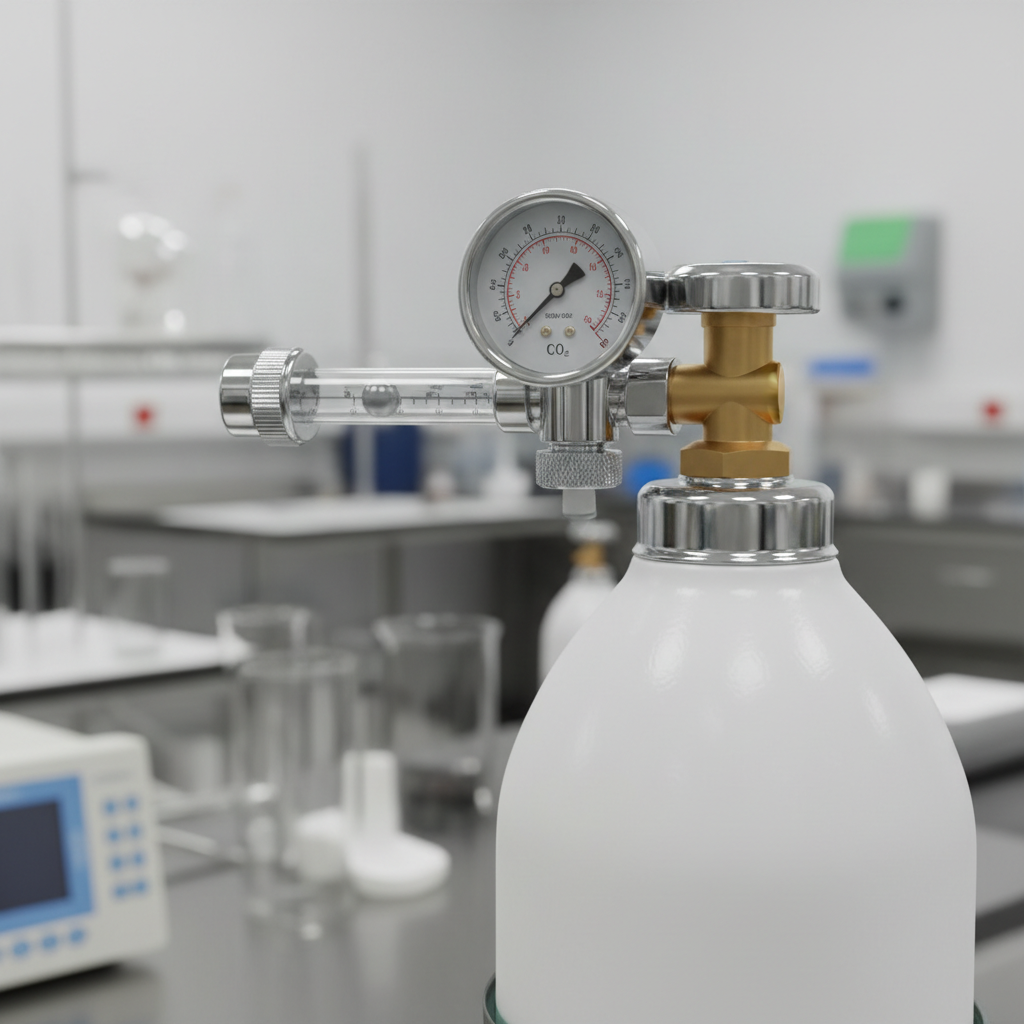
What is a Carbon Dioxide Regulator?
A carbon dioxide regulator is a valve that connects to a high-pressure CO2 cylinder. Its primary function is to reduce the high, fluctuating pressure from the cylinder to a stable, lower, and predetermined outlet pressure. This is essential for applications like insufflation during surgery, cell cultivation in incubators, and pH control in laboratory settings. A typical regulator has two gauges: one displays the remaining pressure in the cylinder, and the other shows the reduced outlet pressure being delivered to the application.
Key Standards: Understanding CGA-320
The Compressed Gas Association (CGA) establishes standards for the fittings used to connect regulators to gas cylinders. The standard connection for carbon dioxide in North America is the CGA-320 fitting. This fitting has a 0.825-inch diameter male nipple with right-handed threads.
Using the correct CGA connection is a fundamental safety requirement. Each CGA number is designated for a specific gas or gas group to prevent accidental cross-connection of incompatible gases, which could lead to equipment damage, inaccurate results, or catastrophic safety failures. NFPA 99 (Health Care Facilities Code) mandates the use of CGA-specified connections to prevent the interchange of gas-specific equipment.
Why this matters for compliance: Per NFPA 99, all medical gas system components, including regulators and their connections, must be appropriate for the specific gas service intended. Using a non-standard or adapted fitting for CO2 service is a direct violation and can result in citations during an inspection. All equipment sold and installed by Medical Testing Solutions adheres strictly to CGA and NFPA 99 standards.
Medical vs. Industrial CO2 Regulators
While industrial and medical regulators may appear similar, they are not interchangeable. The distinction is critical for patient safety and regulatory compliance.
- Medical-Grade Regulators: These are built specifically for medical applications where gas will be administered to a patient or used in a critical life-science application. They are typically constructed from specific materials like chrome-plated brass or stainless steel, manufactured and cleaned in a controlled environment to prevent contamination ("cleaned for oxygen service" is a common standard, even if not used for O2), and are often registered with the FDA. They undergo more stringent testing.
- Industrial-Grade Regulators: These are designed for applications like welding, beverage dispensing, or agriculture. The materials, cleaning processes, and testing are less rigorous. Using an industrial-grade regulator in a medical setting can introduce particulate or chemical contaminants into the gas stream, posing a significant risk to patients and compromising laboratory environments.
For any medical or clinical application, you must use a medical-grade regulator. For peace of mind, ensure your equipment is sourced from a reputable supplier and consider a Medical gas verification to confirm system integrity.
Pressure Regulators vs. Flow Regulators (Flowmeters)
The terms "regulator" and "flowmeter" are often confused, but they serve different purposes.
Pressure Regulator: The primary goal is to control pressure (measured in PSI). You set a desired output pressure, and the regulator maintains it. This is used when an apparatus requires a specific, constant pressure to operate.
- Single-Stage: Reduces pressure in one step. Best suited for applications where outlet pressure may fluctuate slightly without issue.
- Dual-Stage: Reduces pressure in two steps, providing more precise and consistent outlet pressure even as the cylinder pressure drops. Ideal for sensitive equipment.
Flowmeter: The primary goal is to control flow rate (measured in Liters Per Minute, LPM, or Cubic Feet per Hour, CFH). While it contains a regulator to step down pressure, its main feature is a graduated flow tube and a control valve that allows the user to set a specific flow rate. These are common in respiratory therapy and for applications requiring a precise volume of gas over time. Problems with these devices require specialized service, like our dental flowmeter repair and calibration services.
Choosing the right device depends entirely on the downstream equipment's requirements: does it need a specific pressure or a specific flow rate?
How to Select the Right CO2 Regulator
Follow these steps to ensure you choose the correct regulator:
- Confirm Gas Service: The regulator must be specified for CO2.
- Verify Inlet Connection: Ensure the regulator has a CGA-320 inlet to match your CO2 cylinder.
- Determine Pressure/Flow Needs: Check your equipment's specifications for the required outlet pressure (PSI) or flow rate (LPM).
- Choose Regulator Type: Decide between a single-stage or dual-stage pressure regulator for pressure control, or a flowmeter for flow control.
- Select Material: Brass is common and cost-effective. Stainless steel offers higher corrosion resistance for high-purity applications.
Top CO2 Regulator Brands: A Comparison
Several reputable brands manufacture high-quality medical gas regulators. The best choice often depends on specific application needs and budget. Medical Testing Solutions can help you source equipment from these and other top manufacturers.
| Feature | Amico | Gentec (Genstar) | Harris | Victor (ESAB) |
|---|---|---|---|---|
| Primary Use | Hospital, Clinic | Medical, Lab, Dental | Lab, Specialty Gas | Industrial, Medical |
| Regulator Types | Pressure, Flowmeter | Pressure, Flowmeter | Single & Dual-Stage | Single & Dual-Stage |
| Body Material | Chrome-Plated Brass | Chrome-Plated Brass | Brass, Stainless Steel | Brass, Forged Brass |
| Outlet Connection | DISS, Barb, Quick-Connect | DISS, Barb | 1/4" NPT, Swagelok | 1/4" NPT, Barb |
| Key Feature | Compact, durable design | High-purity options | High-precision control | Heavy-duty construction |
Installation and Safety
Proper installation is as important as selecting the right regulator. Always follow manufacturer guidelines.
- Inspect: Before connecting, inspect the cylinder valve and regulator for damage or contamination.
- Connect: Attach the CGA-320 fitting and tighten securely with a proper wrench. Do not overtighten.
- Open Valve Slowly: Stand to the side of the cylinder outlet (never in front of it) and open the cylinder valve slowly to pressurize the regulator.
- Leak Test: Use a leak detector solution (like Snoop) on all connections to check for bubbles.
For healthcare facilities, certified medical gas installation by an ASSE 6010 certified technician is crucial for safety and compliance. Our teams at MTS are certified to perform installations and verifications that meet all NFPA and ASSE standards.
Maintenance & Testing
Regulators are not "set and forget" devices. They contain sensitive internal components that can wear out. Regular inspection is key. We recommend including regulators in your facility's program for annual medical gas inspections. Look for signs of wear, gauge damage, or creeping (a rise in outlet pressure when the downstream end is closed). A faulty regulator should be immediately removed from service and replaced or repaired by a qualified technician.
Your Partner for Compliance and Safety
Choosing, installing, and maintaining the correct carbon dioxide regulator is a critical task that directly impacts patient safety and facility compliance. From selecting a model from our extensive catalog of medical gas products to professional installation and annual testing, Medical Testing Solutions is your ASSE-certified partner. Our expertise ensures that every component of your medical gas system operates safely and effectively.
If you have questions about your existing equipment or need to source new, compliant regulators, our team is here to help. Contact us today at +1 (754) 315-1078 or Request a quote today for certified equipment and services. '''
Frequently Asked Questions
Request a quote for your facility
Talk with Medical Testing Solutions about your next inspection, repair or equipment request.