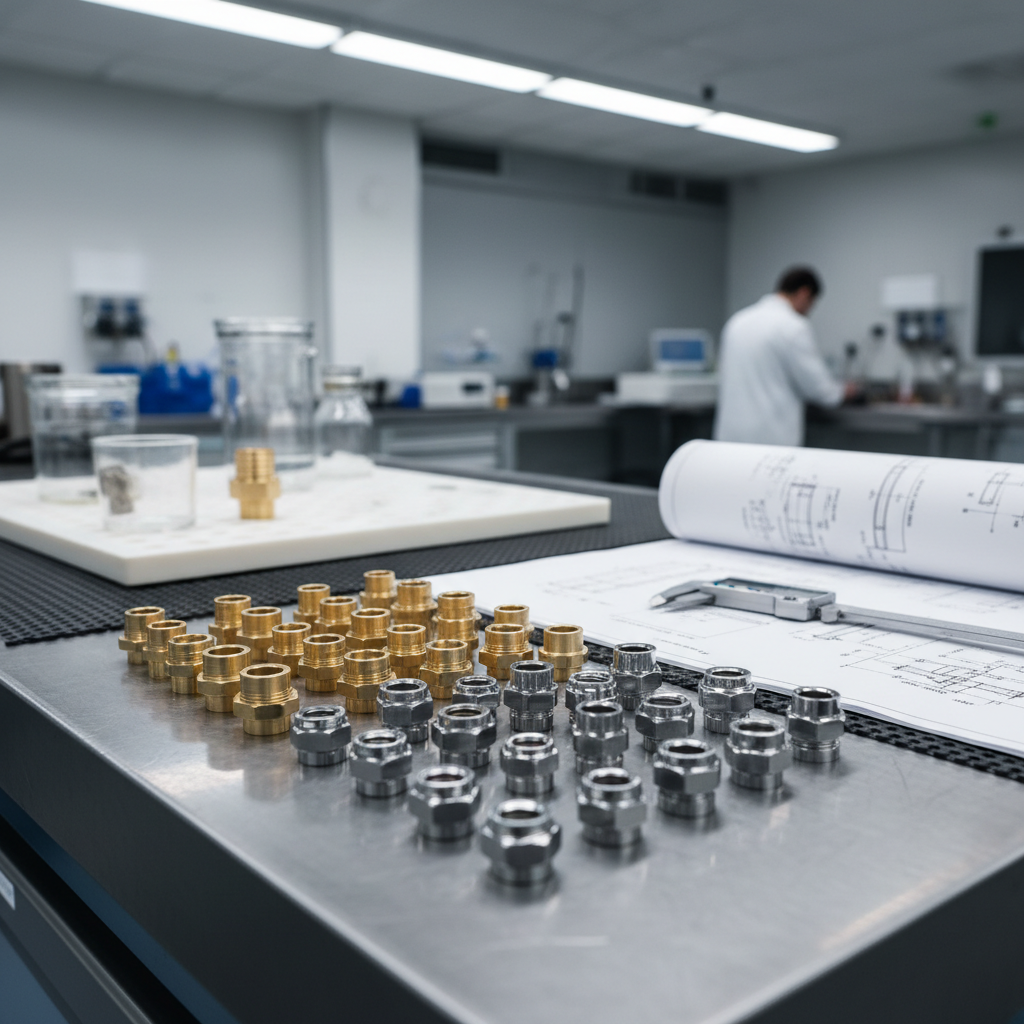
The Diameter Index Safety System (DISS) is the backbone of acute clinical gas distribution, engineered to eliminate cross-connection errors across high-pressure pipeline and equipment junctions. When selecting components for anesthesia machines, patient ventilators, boom assemblies, or secondary regulation panels, clinical engineering teams routinely turn to industry leaders like Bay Corporation for ultra-reliable, precision-machined connections.
Understanding how DISS functions, navigating specific CGA diameter indexing codes, and knowing how to inspect and service these fittings are mission-critical competencies. This Bay Corporation DISS adapter guide provides a definitive technical reference for biomeds, hospital facility engineers, and contractors. You will learn the exact mechanical standards governing DISS connections, review detailed indexing specifications across standard clinical gases, explore Bay Corporation’s primary adapter designs, and understand the rigorous testing demanded under NFPA 99.
What Is the Diameter Index Safety System (DISS)?
The Diameter Index Safety System was established by the Compressed Gas Association (CGA) under standard CGA V-5 to create non-interchangeable, threaded gas-specific connections. Unlike quick-connect terminals (such as Chemetron, Ohmeda, or Puritan-Bennett), which use distinct latch pin geometry, DISS relies on concentric, stepped mechanical diameters that physically bar incorrect mating.
A complete DISS assembly consists of three primary components:
- The Body (or Wall/Regulator Outlet): Features an external thread alongside a recessed concentric diameter bore.
- The Nipple: Houses an internal or external cylindrical shoulder engineered to match only its designated gas bore.
- The Nut: A female-threaded coupling nut that secures the shoulder of the nipple firmly into the mating body, sealing against a clean elastomeric O-ring or precision metal-to-metal contact surface.
Why this matters for compliance:
NFPA 99 (Health Care Facilities Code, 2024 edition, Section 5.1.5) mandates that secondary equipment connected to station outlets must employ gas-specific, non-interchangeable components. Utilizing unverified or improperly modified DISS fittings voids system compliance and exposes facilities to severe immediate-jeopardy citations under CMS hospital conditions of participation.
Bay Corporation has manufactured medical gas fittings for decades, machining these components to micro-inch tolerances. Their DISS product line satisfies all requirements outlined in CGA V-5, ISO 5359 (low-pressure hose assemblies for medical gases), and NFPA 99 Chapter 5.
CGA Gas Codes and Dimensional Indexing for DISS
Under CGA V-5, each medical and dental gas receives an assigned connection number. The safety system works through two concentric cylindrical steps: the bore diameter of the fitting body and the shoulder diameter of the nipple. If a clinician attempts to attach an Nitrous Oxide DISS nut and nipple onto an Oxygen DISS body, the dimensional steps will clash, preventing the threads from engaging.
Below is the definitive reference table for common hospital gases, their CGA DISS numbers, service pressures, and thread assignments.
| Medical Gas | CGA DISS Number | Nominal Delivery Pressure (psig) | Standard Thread Specification | Common Fitting Materials |
|---|
| Medical Air | DISS 1160 | 50 – 55 | 3/4"-16 UNF-2A-RH | Brass / Chrome-Plated Brass |
| Medical Oxygen | DISS 1240 | 50 – 55 | 9/16"-18 UNF-2A-RH | Brass / Chrome-Plated Brass / Stainless |
| Nitrous Oxide | DISS 1040 | 50 – 55 | 1/2"-20 UNF-2A-RH | Brass / Chrome-Plated Brass |
| Carbon Dioxide | DISS 1080 | 50 – 55 | 1/2"-20 UNF-2A-RH | Brass / Chrome-Plated Brass |
| Heliox ($He \le 80%$) | DISS 1180 | 50 – 55 | 5/8"-18 UNF-2A-RH | Chrome-Plated Brass |
| Medical Vacuum | DISS 1220 | 15 – 30 inHgV | 1/2"-20 UNF-2A-RH | Brass / Chrome-Plated Brass |
| WAGD (Waste Anesthetic) | DISS 2220 | 15 – 30 inHgV | 1/2"-20 UNF-2A-RH | Brass / Chrome-Plated Brass |
| Instrument Air | DISS 1060 | 160 – 185 | 11/16"-16 UN-2A-RH | Brass / Stainless Steel |
| Nitrogen (Drive Gas) | DISS 1120 | 160 – 185 | 5/8"-18 UNF-2A-RH | Brass / Stainless Steel |
When specifying or replacing components, verify the stamped CGA number directly on the Bay Corporation fitting body or hex nut. Inspecting these dimensions is an integral part of annual medical gas inspections conducted across Category 1 and Category 2 spaces.
Anatomy of Bay Corporation DISS Adapters
Bay Corporation manufactures a wide variety of adapters designed to bridge terminal wall units, secondary medical devices, hoses, and gas manifolds. Understanding their mechanical architecture helps ensure you choose the correct part number.
1. DISS Male Couplers & Hex Blocks
These adapters feature an external CGA DISS thread and stepped bore on one end, with an NPT (National Pipe Thread) or British Standard Pipe (BSPT) interface on the opposite end. Common uses include:
- Retrofitting older piped system outlets.
- Adding secondary ports to high-pressure manifold drops.
- Threading directly into anesthesia machine intermediate-pressure inlets.
2. DISS Female Nuts and Hand-Tight Couplings
Bay Corporation supplies two primary nut profiles:
- Hex Nuts: Intended for permanent or semi-permanent installations where tightening via open-end torque wrench is mandatory to prevent unauthorized tampering.
- Hand-Tight Nuts: Fluted, knurled aluminum or impact-resistant polymer sleeves over a brass insert. These allow respiratory therapists and nurses to quickly swap supply lines between transport ventilators and wall terminals without tooling.
3. Hose Barbs and Reusable Hose Assemblies
Designed for low-pressure flexible assemblies connecting station outlets to booms or patient care machinery. Bay Corporation offers:
- Hose Barb Nipples: Sized precisely for 1/4" or 5/16" conductive or non-conductive medical gas hoses compliant with ISO 5359.
- Ferrules and Crimp Bushings: Matched components used with professional pneumatic crimpers to prevent blow-offs under working pressure spikes.
To review genuine adapters, hoses, and replacement assemblies, visit the Medical Testing Solutions product catalog.
Common Clinical and Engineering Applications
Because DISS provides a threaded, mechanically locked interface, it is the standard connection method across critical care applications where an accidental disconnect could cause immediate patient harm.
Operating Room Booms and Anesthesia Carts
Anesthesia machines typically require continuous feeds of Oxygen, Nitrous Oxide, and Medical Air, as well as an active suction drop for Waste Anesthetic Gas Disposal (WAGD). Bay Corporation DISS fittings are standard on modern cart supply whips. Facilities utilizing continuous scavenging must also ensure WAG chemical vapor monitoring protocols are implemented to catch micro-leaks originating from worn connection seals.
| Diagram text |
|, |
| TYPICAL BOOM / SYSTEM LAYOUT |
| [ Pipeline Terminal ] |
| ▼ |
| [ Bay Corp DISS Male Body (e.g., CGA 1240 O2) ] |
| ▼ |
| [ DISS Nut & Hose Barb Nipple ] ── (Conductive Hose) |
| ▼ |
| [ Anesthesia Machine / Flowmeter Inlet ] |
Dental Surgical Suites and Sedation Systems
Oral surgery clinics and sedation operatories depend on reliable nitrous oxide-to-oxygen rationing. Nitrous oxide flowmeter packages use DISS 1040 and DISS 1240 connections to prevent dangerous cross-connection of anesthetic gases. Technicians servicing these suites should couple hardware updates with expert dental flowmeter repair and calibration to maintain precise delivery percentages.
Critical Care Ventilators and Respiratory Equipment
Transport and ICU ventilators use hand-tight Bay Corporation DISS connectors to attach high-pressure flexible whips to wall station blocks. A leak-free seal is vital: even a small leak at 50 psig can waste tens of thousands of liters of bulk liquid oxygen over a single quarter.
Bay Corporation vs. Chemetron, Ohmeda & Puritan-Bennett
Facility managers frequently ask: Should we standardize on DISS, or should we install quick-connect fittings throughout patient care areas?
While quick-connects (Chemetron, Ohmeda Diamond, Puritan-Bennett, Schrader) offer fast push-to-click functionality, they incorporate secondary moving parts, springs, poppet valves, and latches, that wear out over time. DISS, by contrast, relies on a threaded mechanical lock that cannot be accidentally bumped or knocked out of alignment.
Here is a side-by-side engineering comparison:
| Metric / Parameter | CGA DISS (Bay Corporation) | Quick-Connect (Ohmeda / Chemetron) |
|---|
| Primary Connection Type | Threaded mechanical sleeve | Spring-actuated push latch |
| Inadvertent Disconnect Risk | Near zero (requires intentional rotation) | Low-to-moderate (can unlatch if impacted) |
| Operating Pressure Range | Vacuum up to 200+ psig | Typically limited to 50–55 psig |
| Wear Points | Replaceable elastomeric O-ring | Spring, latch pins, internal poppet seal |
| Flow Restriction | Extremely low (smooth internal bore) | Moderate (poppet valve obstruction) |
| Standard Applications | Anesthesia, surgical ceilings, booms, high-pressure | Patient headwalls, general exam rooms |
When upgrading older facilities or undertaking retrofits, Medical Testing Solutions can perform complete medical gas installation services compliant with ASSE 6010 standards, helping your facility select the best terminal mix for patient safety and clinical workflow.
Step-by-Step Installation & Preventative Maintenance
Installing and maintaining Bay Corporation DISS adapters requires careful mechanical technique. Overtightening, applying improper thread sealants, or using dirty tools can introduce particulate contamination or cause fires in high-pressure enriched oxygen environments.
Step 1: Component Inspection and Verification
- Read the engraved text on the adapter body and nut to verify the CGA number matches the targeted gas line (e.g., CGA 1240 for Oxygen).
- Inspect the internal O-ring or sealing face for cracking, dry rot, swelling, or metal burrs. Never reuse a damaged elastomeric seal.
- Ensure the fitting is clean and degreased for oxygen service in compliance with CGA G-4.1.
Step 2: Thread Preparation (NPT Interface Only)
- If the Bay Corporation adapter features an NPT pipe thread on the back end, apply an oxygen-approved, halogen-free thread sealant (such as PTFE tape meeting MIL-PRF-27730A or an approved anaerobic sealant like Loctite 577).
- Warning: Never apply thread tape, pipe dope, or lubricants to the DISS threads or mating shoulder. DISS is designed to seal at the face/O-ring, not the straight UN/UNF threads.
Step 3: Mechanical Alignment & Hand Engagement
- Align the nipple perfectly concentric with the DISS body. The indexing shoulders must drop cleanly into the mating bore without forceful resistance.
- Hand-thread the coupling nut onto the body clockwise. It should turn smoothly for 3 to 4 complete rotations without binding. Cross-threading will destroy the brass threads and ruin the outlet assembly.
Step 4: Final Torque
- For Hex Nut assemblies: Use a clean, non-serrated open-end wrench to snug the fitting. Tighten to manufacturer specifications (typically 8–10 ft-lbs for brass DISS connections). Do not over-torque.
- For Hand-Tight assemblies: Firmly hand-tighten until the nut bottoms out against the shoulder. Never use channel locks or pliers on knurled aluminum hand-tight nuts.
Step 5: High-Precision Leak Testing
- Pressurize the line to operational pressure (50–55 psig for standard gases; 160+ psig for Instrument Air/Nitrogen).
- Apply an approved, non-oil-based leak detection fluid (per ASTM G115) or run an electronic pressure-decay test.
- Look for micro-bubbling around the coupling nut weep holes and rear NPT threads.
Routine servicing must be executed under a formal medical gas management plan. To book preventive service by certified ASSE 6040 professionals, contact Medical Testing Solutions for our comprehensive medical gas maintenance services.
Code Compliance: NFPA 99 and ASSE Standards
The installation, testing, and maintenance of medical gas fittings are governed by rigorous life safety codes. ASSE-certified personnel must perform or verify all modifications to Category 1 piped distribution systems.
ASSE 6010: Qualified Installation
Any modification to facility infrastructure, including the replacement of terminal station blocks or rough-in assemblies that incorporate Bay Corporation DISS male couplers, must be completed by an ASSE 6010-qualified medical gas installer. Brazing must be done under an active nitrogen purge to prevent copper oxide scale formation, which can quickly foul sensitive DISS O-ring seats downstream.
ASSE 6030: Third-Party Verification
Following any alteration, repair, or system expansion, an independent ASSE 6030 verifier must perform terminal pressure testing, cross-connection checks, and particulate analysis. Medical Testing Solutions provides credentialed medical gas verification across the United States, issuing comprehensive digital documentation that satisfies Joint Commission, DNV, and state AHJ audits.
ASSE 6040 & NFPA 99 Annual Requirements
NFPA 99 requires documented annual testing of all station outlets, station inlets, and flexible medical gas assemblies. Key inspection criteria include:
- Correct gas-specific mechanical indexing (zero interchangeability).
- Leak-rate evaluation under maximum working pressure (leakage must not exceed NFPA 99 thresholds).
- Thread condition and structural integrity of DISS hand-tight and wrench-tight nuts.
Troubleshooting Common DISS Adapter Issues
Even well-machined components like Bay Corporation adapters can experience performance issues if subjected to mechanical abuse or poor pipeline maintenance.
1. Persistent Hissing Leak After Connection
- Probable Cause: Missing, flattened, or nicked internal Viton or EPDM O-ring inside the DISS nipple/body recess.
- Resolution: Relieve line pressure, unthread the nut, and extract the damaged seal using a soft brass pick. Install a new, oxygen-clean O-ring of the exact durometer specified by Bay Corporation.
2. Hand-Tight Nut Cannot Engage Threads
- Probable Cause: Gas mismatch or cross-threaded adapter. The technician may be attempting to connect a DISS 1160 (Air) fitting to a DISS 1240 (Oxygen) body, or the straight threads have been burred by dropped equipment.
- Resolution: Verify the CGA code stamped on both fittings. If identical, inspect the lead-in threads for deformation. If threads are crossed, replace both the body and nut.
3. Binding During Insertion
- Probable Cause: Particulate buildup inside the concentric index bore, or a bent internal alignment pin on specialty gas blocks.
- Resolution: Clean the bore using lint-free, degreased swabs and pure isopropyl alcohol (ensure complete evaporation before reconnecting). If the fitting has been deformed from impact, discard and replace it.
Trust Medical Testing Solutions for Your Medical Gas Needs
Maintaining compliant, safe, and leak-free gas delivery systems requires both precision hardware and certified technical expertise. Medical Testing Solutions (MTS) is a trusted nationwide provider of ASSE-certified medical gas solutions. Headquartered in Fort Lauderdale, Florida, MTS offers end-to-end support for acute healthcare facilities, surgical centers, and outpatient networks:
- Equipment & Parts Distribution: We carry genuine Bay Corporation DISS adapters, custom medical gas hoses, secondary regulators, quick connects, and station outlets.
- Comprehensive Testing & Certification: Our field engineers perform certified medical gas certification and third-party verification to keep your facility survey-ready.
- Facility Auditing: From line isolation monitor testing in wet procedure locations to total pipeline integrity surveys, we protect your patients and your infrastructure.
Whether you need a single replacement DISS nut or complete system commissioning, Medical Testing Solutions delivers prompt service, deep regulatory insight, and dependable product inventory.
Contact Medical Testing Solutions Today
Need certified Bay Corporation DISS adapters, customized medical gas hoses, or an on-site ASSE inspection? The engineers at Medical Testing Solutions are ready to help.