Ambulatory Surgery Center Medical Gas Install in Spartanburg SC: Your Definitive Guide_updated: 2024-05-24_
Building a new Ambulatory Surgery Center (ASC) in Spartanburg, South Carolina, is a complex undertaking. Among the most critical systems you'll design and install is the medical gas network. This system is the lifeblood of your facility, delivering essential gases like oxygen, medical air, and nitrous oxide to operating rooms and recovery areas. A compliant, correctly installed system is non-negotiable for patient safety and regulatory approval. This guide walks you through the entire process, from initial blueprints to final verification, ensuring your ASC's medical gas system is built for safety and compliance from the ground up.
At Medical Testing Solutions (MTS), we specialize in the design, installation, and verification of these critical systems. We understand the stringent codes and standards governing medical gas pipelines and have the ASSE-certified expertise to guide you through every phase. This post will detail the design considerations, installation steps, required testing, and final certification process for a new ASC in Spartanburg.
Designing Your ASC's Medical Gas System: Codes and Considerations
A compliant medical gas system begins with a robust design. This phase is governed primarily by the National Fire Protection Association's standard, NFPA 99, Health Care Facilities Code. This code is not a suggestion; it is the law in South Carolina and the standard by which the Authority Having Jurisdiction (AHJ) will judge your installation.
Key Design Factors:
- Facility Layout: The architectural plans of your ASC dictate the routing of pipelines. We map out the most efficient paths from the source equipment (cylinders, manifolds, air compressors) to every patient-care location.
- Gas & Vacuum Sizing: We calculate the peak demand for each gas (Oxygen, Medical Air, Nitrous Oxide, WAGD, etc.) to determine the appropriate pipe diameters. Undersized pipes can lead to pressure drops and system failure, while oversized pipes are an unnecessary expense.
- Source Equipment: The choice of source equipment depends on your ASC's case volume and specialty. Will you use high-pressure cylinders managed by a manifold, or a bulk liquid oxygen (LOX) tank? Will your medical air be supplied by a dedicated compressor system? We help you select equipment that meets both NFPA 99 requirements and your clinical needs.
- Alarm Systems: Per NFPA 99, master and area alarm panels are required to provide immediate auditory and visual indication of system failures, such as high/low pressure or a changeover in supply.
Why this matters for compliance: A design that fails to meet NFPA 99 (2024 edition) standards will result in a failed inspection by the AHJ, causing costly delays and rework. Proper planning by an experienced firm is the most effective way to manage risk and budget.
The Installation Process: An ASSE 6010 Certified Approach
Once the design is finalized, the physical installation begins. This work must be performed by technicians holding an ASSE 6010 Medical Gas Systems Installer certification. This certification is proof that the technician has been trained and tested on the specific procedures for safely installing these systems.
Our medical gas installation process follows a strict, documented protocol:
Material Handling: All pipes and fittings (typically Type K or L copper) must be delivered to the site capped and plugged. They are cleaned for oxygen service from the manufacturer and must be stored in a clean, protected environment until installation.
Brazing Technique: All joints in a medical gas pipeline must be brazed, not soldered. During brazing, a continuous purge of oil-free, dry nitrogen is passed through the pipe to prevent the formation of toxic oxides on the interior surface. This is a critical step detailed in NFPA 99.
Component Installation: This includes the precise placement of:
- Source equipment (manifolds, compressors, vacuum pumps)
- Piping, hangers, and supports
- Zone valve boxes for each defined area
- Alarm panels and sensors
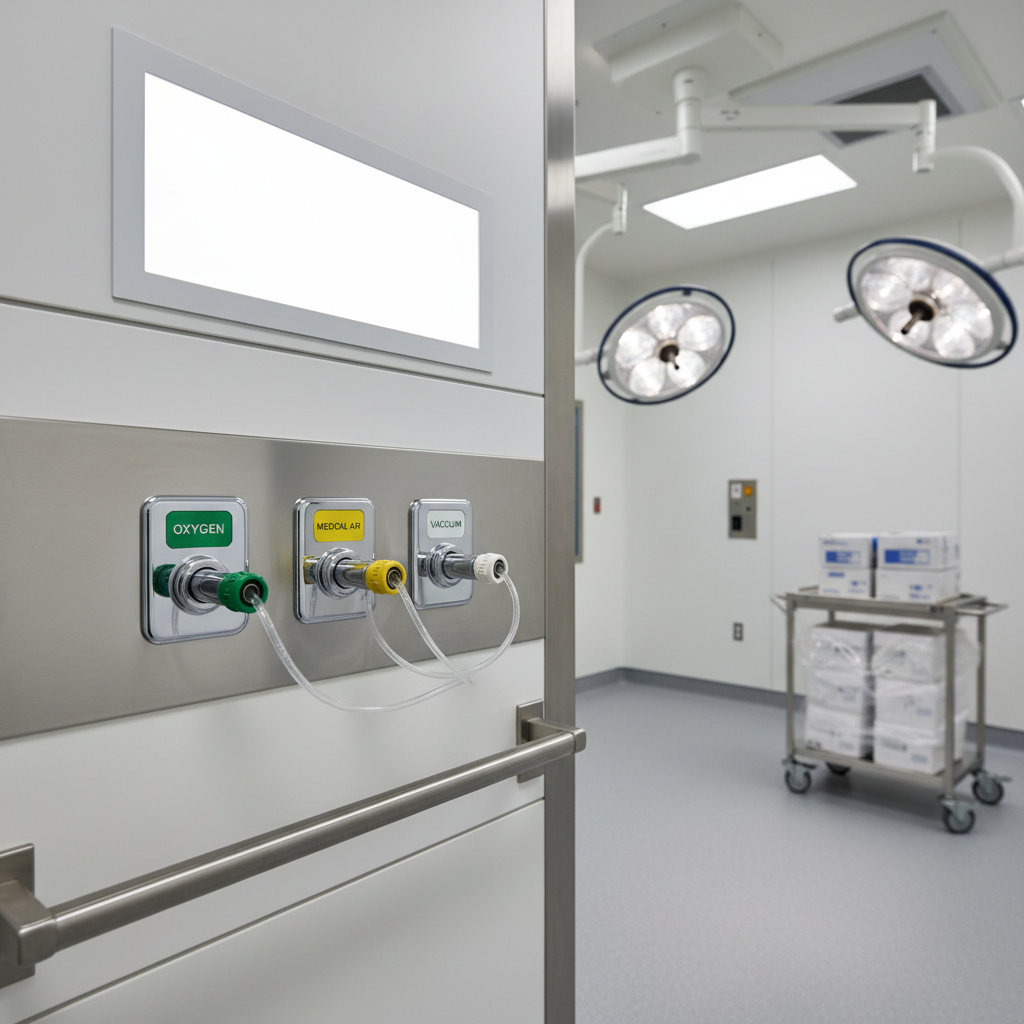
- Terminal outlets (DISS, Chemetron, Ohmeda, etc.) in patient care areas
Labeling: All pipelines must be clearly labeled with the gas name and flow direction at specific intervals and on both sides of walls or partitions they cross, as mandated by NFPA 99.