Skip to content
    New: Medical Gas Outlet Retrofit & Rebuild Matrix — cross-reference legacy Chemetron, Ohio Diamond, Puritan-Bennett & more →
    ASSE Certified 24/7
    Medical Gas Service
    Compliance & Standards

    Ambulatory Surgery Center Medical Gas Install in Rock Hill SC: A Complete Guide

    Medical Testing SolutionsOctober 16, 20267 min read
    Share
    Ambulatory Surgery Center Medical Gas Install in Rock Hill SC: A Complete Guide

    Ambulatory Surgery Center Medical Gas Install in Rock Hill, SC: A Complete Guide

    Building a new Ambulatory Surgery Center (ASC) in Rock Hill, South Carolina, is a complex undertaking. Among the most critical systems you will install is the medical gas piping network, the literal lifeblood of your facility. A compliant, correctly installed medical gas system is non-negotiable for patient safety and regulatory approval. This guide provides a definitive overview of the entire process, from initial design and engineering to final verification and the crucial sign-off from the Authority Having Jurisdiction (AHJ).

    You will learn the key phases of a ground-up medical gas installation, the specific codes and standards you must meet (like NFPA 99 and ASSE 6000), and how to partner with a certified provider to ensure a successful, on-time, and on-budget project.

    Phase 1: Design & Engineering - The Blueprint for Compliance

    Before a single piece of pipe is laid, your medical gas system must be meticulously designed and engineered to meet the specific needs of your ASC and the stringent requirements of national and local codes. This is not a step to be taken lightly; design flaws can lead to costly change orders, project delays, and significant safety hazards.

    Sizing the System: Source Equipment & Piping

    The first step is determining the medical gases required (e.g., Oxygen, Medical Air, Nitrous Oxide, Vacuum) and the number and type of outlets/inlets needed in each room, operating rooms, recovery bays, and procedure rooms. This calculation, based on the number of simultaneous use locations, dictates the size of your source equipment (manifolds, air compressors, vacuum pumps) and the diameter of the piping network.

    • Oxygen (O2): Typically supplied by a primary and secondary manifold of high-pressure cylinders.
    • Medical Air (MA): Generated on-site by a dedicated medical air compressor system, compliant with NFPA 99.
    • Nitrous Oxide (N2O): Used for anesthesia, supplied via a cylinder manifold system.
    • Vacuum (VAC): A surgical vacuum system with duplex pumps is essential for waste anesthetic gas disposal (WAGD) and surgical suction.

    Code Compliance: The NFPA 99 Framework

    The National Fire Protection Association's NFPA 99, "Health Care Facilities Code," is the foundational document for medical gas systems in the United States. Your system designer must create plans that adhere strictly to these standards.

    Why this matters for compliance: NFPA 99 categorizes systems based on risk to patients. For an ASC, most areas will be Category 1, where equipment or system failure is likely to cause major injury or death. This mandates the highest level of design, equipment, and installation rigor.

    Phase 2: ASSE 6010 Installation - Building the System

    With approved plans in hand, the physical installation begins. This work must be performed by credentialed professionals who hold the ASSE 6010 Medical Gas Systems Installer certification. This isn't a job for a standard plumber; the techniques and standards are highly specialized.

    Key Installation Steps:

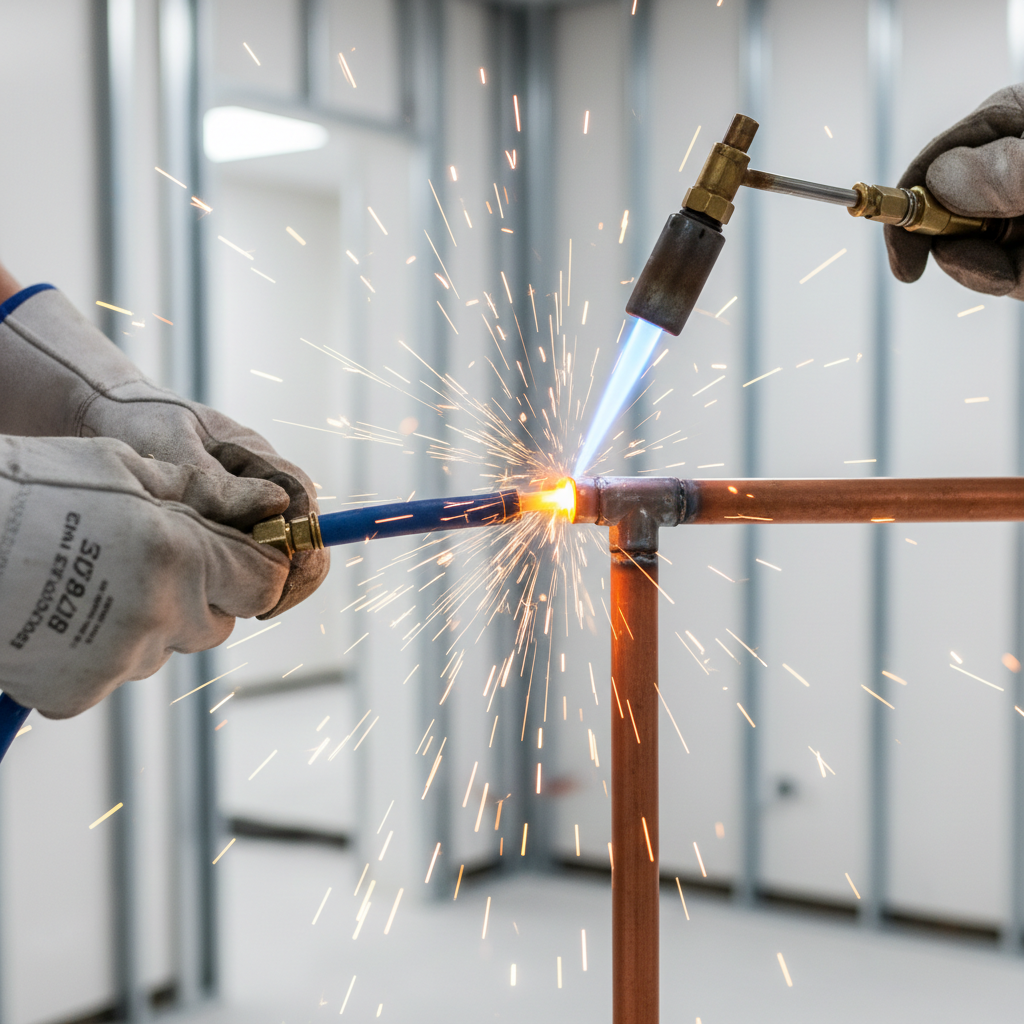
    1. Pipe Material & Brazing: All medical gas piping must be Type K or L seamless copper tubing, cleaned for oxygen service. Joints must be brazed, not soldered, using a specific brazing alloy (typically a BCuP series) while purging the interior of the pipe with oil-free, dry nitrogen. This nitrogen purge prevents the formation of carbonaceous scale on the inside of the pipe, which could otherwise be dislodged and delivered to a patient.
    2. Labeling & Identification: Every 20 feet (and at every valve and wall penetration), the pipe must be clearly labeled with the name of the gas and the direction of flow.
    3. Zone Valve Boxes: These are critical safety components. Zone valve boxes are installed to isolate specific areas or rooms of the ASC in case of an emergency or for maintenance, without shutting down the entire facility. Their placement is a key part of the design phase.
    4. Source Equipment: Manifolds, compressors, and vacuum pumps are installed, typically in a dedicated, secure mechanical room with proper ventilation.

    Medical Testing Solutions provides a team of ASSE 6010 certified installers who ensure every joint is brazed correctly and every component is placed according to code and design specifications.

    Phase 3: ASSE 6030 Verification - The Critical Safety Check

    Once the installation is complete, the system cannot be used until it has been thoroughly tested and verified by an independent, third-party ASSE 6030 Medical Gas Verifier. This is arguably the most critical step in the entire process, as it confirms the system is safe for patient use.

    Why this matters for compliance: The verifier acts as an independent auditor for the owner and the AHJ. They cannot be an employee of the installing company. Their job is to find any issues before the system is put into service. Medical Testing Solutions is a leading provider of third-party medical gas verification.

    The Verification Checklist Includes:

    • Purity & Particulate Tests: Confirming the gas is what it's supposed to be and free of contaminants.
    • Cross-Connection Test: Ensuring that, for example, the oxygen outlet is not mistakenly connected to the medical air line.
    • Pressure & Flow Tests: Verifying that all outlets provide the correct pressure and flow rate required for medical devices.
    • Alarm Testing: Confirming that all master and area alarms function correctly, signaling any pressure drops or system changes.
    • Labeling & Documentation Review: A full system audit to ensure every component is labeled and documented correctly.

    The verifier will produce a detailed report of their findings. Any deficiencies must be corrected by the installer and then re-tested by the verifier.

    Medical Gas System Components Compared

    Choosing the right components is crucial for long-term reliability. Here's a comparison of common source equipment considerations:

    ComponentTechnology OptionKey ConsiderationsNFPA 99 Chapter
    Medical Air CompressorOil-less (Scroll/Reciprocating)Lower maintenance, no risk of oil contamination. Higher initial cost.5.1.3.5
    Medical Air CompressorOil-lubricated (Scroll/Reciprocating)Lower initial cost, requires specific filters and alarms to prevent oil carryover.5.1.3.5
    Vacuum PumpRotary Vane (lubricated)Industry standard, robust, requires regular oil changes.5.1.3.6
    Vacuum PumpDry ClawNo oil, less maintenance, higher upfront cost, quieter operation.5.1.3.6
    Oxygen ManifoldAutomatic ChangeoverAutomatically switches from primary to secondary bank, ensuring continuous supply. Essential for Category 1 systems.5.1.3.4

    Phase 4: AHJ Sign-Off & Ongoing Maintenance

    With the verifier's stamp of approval, you are ready for the final inspection by the Authority Having Jurisdiction (AHJ) for Rock Hill, SC. The AHJ, which could be the local fire marshal or building inspector, relies heavily on the ASSE 6030 verifier's report to grant the Certificate of Occupancy.

    Once your ASC is operational, your responsibility doesn't end. NFPA 99 requires ongoing maintenance and inspections to ensure the system remains safe and compliant. This includes:

    Partnering with a full-service company like MTS for both installation and ongoing medical gas maintenance services simplifies compliance and ensures the long-term safety of your patients and staff.

    Your Partner for Compliant Medical Gas Systems in Rock Hill

    Navigating the complexities of an ambulatory surgery center medical gas installation requires expertise and a deep understanding of the regulatory landscape. From initial design review to ASSE 6010 installation and final ASSE 6030 verification, a certified and experienced partner is essential.

    Medical Testing Solutions has been the trusted partner for healthcare facilities in Rock Hill and across the Southeast for decades. Our certified team ensures your project is completed safely, on time, and in full compliance with NFPA 99. Ready to start your project? Contact our team today for a comprehensive quote.

    Request a Quote Online or call us at (754) 315-1078 to discuss your ASC project.


    Frequently Asked Questions

    Only individuals holding an ASSE 6010 Medical Gas Systems Installer credential, working for a qualified company, are permitted to perform the installation. This is not a job for a standard plumber.

    Installation (ASSE 6010) is the physical building of the system. Verification (ASSE 6030) is the third-party testing and inspection process that confirms the system was installed correctly and is safe for patients. The verifier must be independent of the installer.

    The timeline varies with the size and complexity of the surgery center, but it typically takes several weeks, coordinated with other construction trades. The verification process can take several days.

    Common errors include improper brazing technique (leading to internal contamination), incorrect pipe labeling, and failing to meet clearance and ventilation requirements for source equipment rooms. These are all things a certified installer and verifier are trained to prevent and identify.

    This article is provided for educational purposes and reflects industry standards as of publication. Always verify against current NFPA 99, CGA, and AHJ requirements. Medical Testing Solutions is ASSE-certified and ready to help — contact us for facility-specific guidance.

    Request a quote for your facility

    Talk with Medical Testing Solutions about your next inspection, repair or equipment request.

    Get a quote in 1 business day

    I agree to receive text messages from Medical Testing Solutions, L.L.C. at the phone number provided, including informational and marketing messages. Consent is not a condition of purchase. Message frequency varies. Message & data rates may apply. Reply STOP to opt out or HELP for help. See our Privacy Policy and Messaging Terms.

    Prefer to talk? Call (754) 315-1078

    Related articles